Exercise · Cardio
Indoor cycling at the gym
Indoor cycling is cardio on a stationary bike with adjustable resistance. You can use it for shorter, harder efforts or longer, steady rides. It works well for beginners and more advanced people since you fully control the resistance and the length of your session.
Doable at all 76 gyms GoSet follows
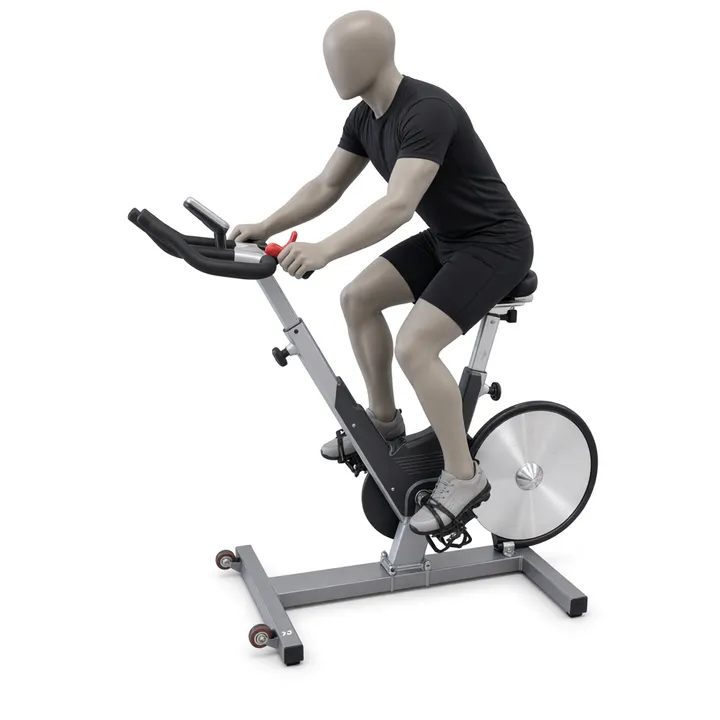
The essentials
- Set the saddle and handlebar before you start.
- Add resistance before standing up on the pedals.
Muscles worked
- Primary
- —
How to do it
- Get on the indoor cycling bike and adjust the saddle to a comfortable height, then set the handlebar before you start.
- Place your feet securely on the pedals or in the straps and hold the handlebar without gripping too hard.
- Start pedalling gently, then adjust the resistance until you find an effort you can maintain without getting out of breath right away.
- Breathe regularly and keep a smooth pedalling rhythm, without jerky strokes.
- If you want to stand up on the pedals, add resistance before standing to stay stable on the bike.
- At the end, gradually lower the resistance and slow your pedalling before coming to a full stop and getting off the bike carefully.
Common mistakes
Starting without setting saddle and handlebar
Instead : Take a minute to set the saddle and handlebar before you start. You’ll feel more stable and more comfortable to stay on the bike longer.
Standing up with no resistance
Instead : Before you stand on the pedals, turn the knob to add resistance. The bike will feel more stable and you’ll avoid bouncing on the pedals.
Cranking the resistance too high right away
Instead : Start with a moderate resistance and build up gradually. You’ll manage your breathing and control better that way.
Stopping too suddenly
Instead : Slow your pedalling and turn the resistance down gradually before you stop, so your heart rate comes down more smoothly.
Coach tips
- On an indoor cycling bike, you can track your effort by looking at time and distance if the screen shows them.
- Keep a steady, smooth pedalling rhythm so your cardio stays under control.
- Use the resistance knob to make it harder or easier instead of only trying to pedal faster and faster.
- If you plan to stand up often, always keep at least some resistance on for stability.
Variations
- Steady ride at a constant intensity, keeping the same resistance for your planned duration.
- Interval-style ride, alternating harder segments (more resistance) with easier segments (less resistance).
Sets and reps
On indoor cycling bikes, many people mainly track how long they ride (for example a set number of minutes) and total distance instead of repetitions. Sessions can be shorter and more intense or longer at a steady pace, depending on your level and how you feel that day.
Equipment
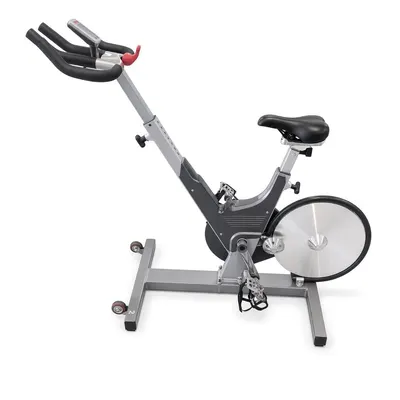
Log your Indoor cycling sets with GoSet
GoSet remembers your last time, starts your rest on its own and notes your records. Even with no signal in the basement. Coming soon to iPhone and Android.
Common questions
What can I track for progress on indoor cycling?
On an indoor cycling bike, you can track how long you ride and the distance shown on the screen if the bike has one. Over time, some people slowly increase duration or try to cover more distance in the same time.
Is indoor cycling good if I’m new to cardio?
Yes. You fully control the resistance and how long you ride. You can start shorter with lighter resistance and adjust as you feel more comfortable.
How much resistance should I use on the bike?
There’s no perfect number. Pick a resistance that lets you pedal smoothly and still speak in short sentences, then nudge it up or down based on how you feel.
Do I always need to stand up on the pedals?
No, you can stay seated for the whole ride. If you choose to stand, just make sure to add resistance first so you stay stable on the bike.