Exercise · Cardio
Recumbent bike at the gym
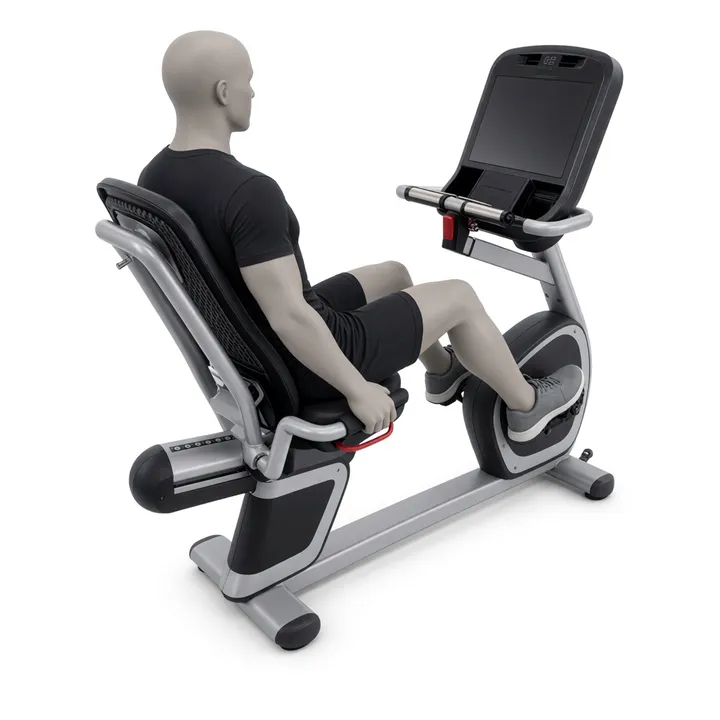
The recumbent bike is a cardio machine where you pedal in a reclined seated position with your back supported. It’s easier on posture than an upright bike and often more comfortable for longer rides. Great for starting cardio, warming up, or doing steady, lower-impact sessions.
Doable at 75 of the 76 gyms GoSet follows
The essentials
- Set the seat so your knee is slightly bent at the bottom.
- Keep your back against the backrest.
Muscles worked
- Primary
- —
How to do it
- Sit on the seat and place your feet on the pedals, strapping them in if the bike has straps.
- Set the seat so your knee is slightly bent when the pedal is at the very bottom.
- Press your lower back and hips into the backrest, keep your shoulders relaxed, and hold the handles if you need stability.
- Choose a simple program or manual mode, then start with an easy resistance level.
- Begin pedalling smoothly, avoiding jerky strokes, while keeping your back against the backrest.
- Breathe steadily and adjust resistance or speed based on how you feel during the session.
Common mistakes
Seat too close or too far
Instead : If your knee is very bent or totally straight at the bottom of the stroke, stop and slide the seat forward or back so your knee stays slightly bent.
Back lifting off the backrest
Instead : If you feel your lower back working too much or you’re leaning forward, press your back into the backrest again and lower the resistance if needed.
Pedalling too fast or too choppy
Instead : Aim for a smooth, controlled rhythm. If the pedals feel like they’re running away from you, lower the resistance or slow your cadence.
Pulling hard with your arms
Instead : Use the handles mainly for balance. If you’re pulling, loosen your grip, press your back into the seat, and let your legs do most of the work.
Coach tips
- Think about a smooth, continuous pedal stroke, with a resistance where you can hold your planned duration.
- Keep a steady breathing pattern: exhale over several pedal turns and avoid holding your breath.
- To increase intensity a bit, you can alternate slightly faster periods with easier, slower ones while staying comfortable.
- Track your time and distance on the screen so you can compare your sessions on the same bike at your gym.
Variations
- Steady-state ride at a constant intensity for a smoother, easier effort.
- Interval-style ride by changing resistance or speed (short harder bouts followed by easier recovery bouts).
Sets and reps
On the recumbent bike, people often ride anywhere from a few minutes up to 30 minutes or more, depending on fitness and cardio goals. You can use the time and distance on the screen to compare your own sessions over time.
Equipment
Log your Recumbent bike sets with GoSet
GoSet remembers your last time, starts your rest on its own and notes your records. Even with no signal in the basement. Coming soon to iPhone and Android.
Common questions
How should I set the seat on the recumbent bike?
Sit down, start pedalling slowly, then pause with one pedal at the bottom. Adjust the seat so your knee is slightly bent, not locked straight and not deeply bent. Once that’s set, your lower back should feel supported against the backrest.
Where should I feel the effort on a recumbent bike?
You should mainly feel a general cardio effort, with your legs doing the work. If you feel pain in your back, knees, or anywhere else, stop and talk to a professional.
How do I know if the resistance is right?
You should be able to pedal smoothly, say a few words without being completely out of breath, and hold it for the time you planned. If you’re burning out after a minute, lower the resistance; if you could go for ages without feeling much, increase it a bit.
Can I use my phone or read while pedalling?
Yes, as long as your back stays against the backrest, your feet stay secure on the pedals, and your pedalling stays smooth. If you lose control of your posture or rhythm, put the object away and refocus on your position.