Exercise · Legs and glutes
Leg press calf raise: how to do it right
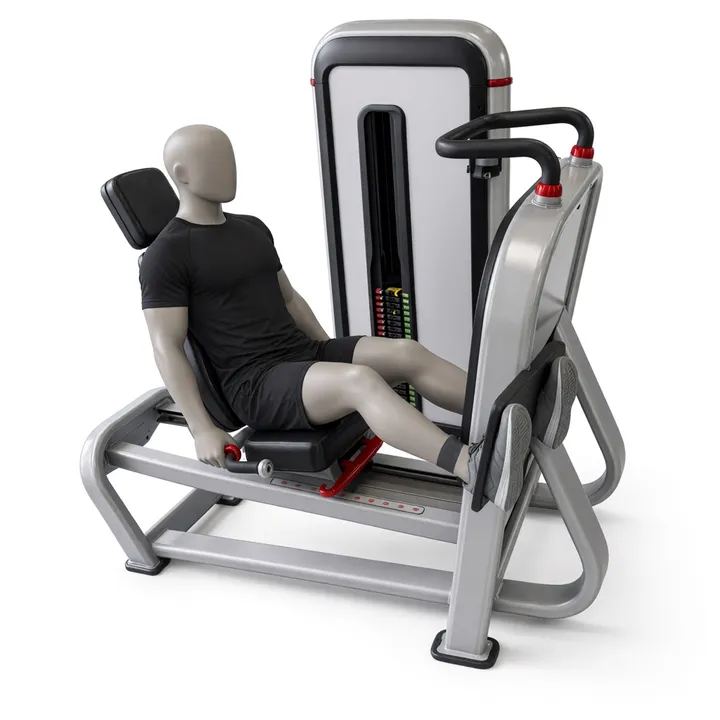
The leg press calf raise works your calves using a seated or 45° leg press machine. Your back stays supported, the weight is easy to control, and you can really focus on stretching and squeezing each rep. It’s a solid option if you want to hit your calves without worrying about balance.
Doable at all 76 gyms GoSet follows
The essentials
- Balls of your feet on the bottom edge, legs nearly straight.
- Press through your toes, then lower slowly.
Muscles worked
- Primary
- Calves
How to do it
- Sit on the leg press and place the balls of your feet on the bottom edge of the platform, heels hanging off. Keep your lower back against the pad.
- Extend your legs until they’re nearly straight, but don’t lock your knees. Keep them fixed in that position for the whole set.
- Take a breath in, then slowly lower your heels down to stretch your calves, taking about 2–3 seconds on the way down.
- Once you reach a comfortable stretch, press hard through your toes to lift as high as you can onto the balls of your feet.
- At the top, pause briefly to squeeze your calves, then lower back down slowly under control.
- Keep repeating with smooth, controlled reps, no bouncing and always keeping the platform under control.
Common mistakes
Bouncing at the bottom with the heels
Instead : Lower only to a comfortable stretch, then push back up under control. Use a slow tempo at the bottom and avoid letting the weight “slam” into your ankles.
Bending and straightening the knees during the set
Instead : Set your legs nearly straight and keep that position. Think of only moving at the ankle joint so the work stays on your calves.
Very short range of motion
Instead : Drop your heels as far as you can without pain, then rise as high as possible onto your toes. Aim for a big arc of motion instead of fast little half reps.
Using too much weight and losing control
Instead : Pick a weight that allows controlled reps with 2–3 seconds on the way down. If you start cheating with your knees or losing control of the platform, lower the weight.
Coach tips
- Match your breathing to the movement: inhale as your heels go down, exhale as you press through your toes.
- Start with your feet parallel and about hip-width apart, then adjust to what feels stable and comfortable for your ankles.
- To feel your calves more, add a 1-second pause at the bottom (heels stretched) and a 1-second squeeze at the top (on your toes).
- You can gradually add weight session to session as long as you keep full range and a controlled tempo.
Variations
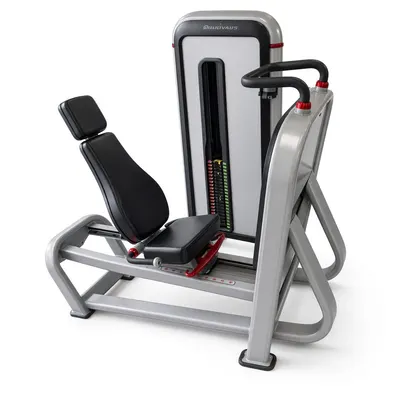
- Seated leg press version: usually feels easier on the back and simpler to control when you’re learning.
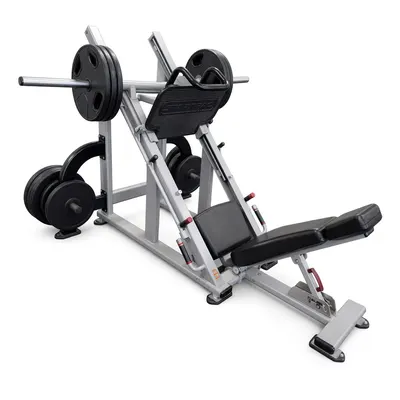
- 45° leg press version: often allows more weight, but keep the exact same control and range of motion.
- Feet narrower or wider: slightly changes the feel; stick to a stance where your ankles feel stable.
Sets and reps
People often use this exercise for about 3–4 sets of 10–20 reps, with a slow tempo to really feel the calves working. It’s commonly placed near the end of a leg workout or paired with other calf exercises.
Equipment
Alternatives for the same muscles
Log your Leg press calf raise sets with GoSet
GoSet remembers your last time, starts your rest on its own and notes your records. Even with no signal in the basement. Coming soon to iPhone and Android.
Common questions
Should my legs be fully locked out on leg press calf raises?
No, keep your legs nearly straight but not locked. You want them stable with a slight bend so your knees aren’t taking all the load.
Where exactly do I put my feet on the platform?
Place the balls of your feet on the bottom edge with your heels hanging off. That gives you room to drop your heels for the stretch and push high up on your toes.
What if I feel pain in my heel or ankle during the exercise?
Stop the set right away. Talk with a healthcare professional or other qualified specialist before continuing to train your calves this way.
Can leg press calf raises replace standing calf raises?
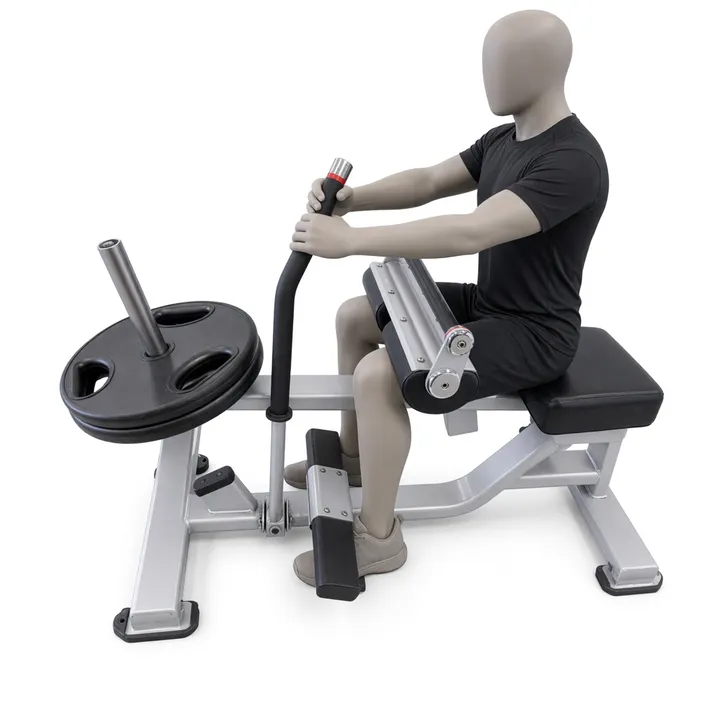
They’re a solid alternative, especially if you like having your back supported and the load easy to control. You can also rotate with seated or Smith standing calf raises depending on what your gym has.