Machine · Legs and glutes
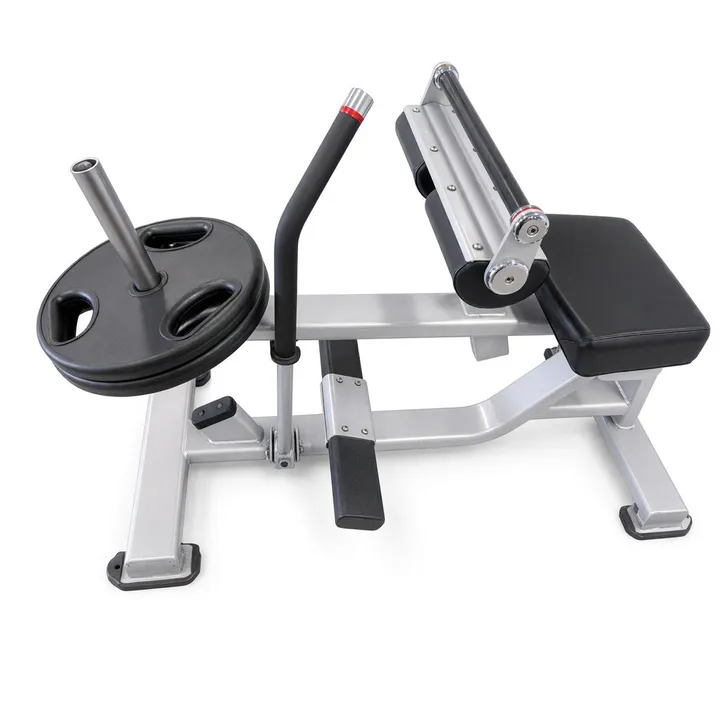
Seated calf raise machine
The seated calf raise works your calves with a plate-loaded ankle extension while you’re seated. It’s stable, easy to control, and great when you want to isolate the calves without using much back. It works well for beginners and more experienced lifters who want focused calf work.
At all 76 gyms GoSet follows
The essentials
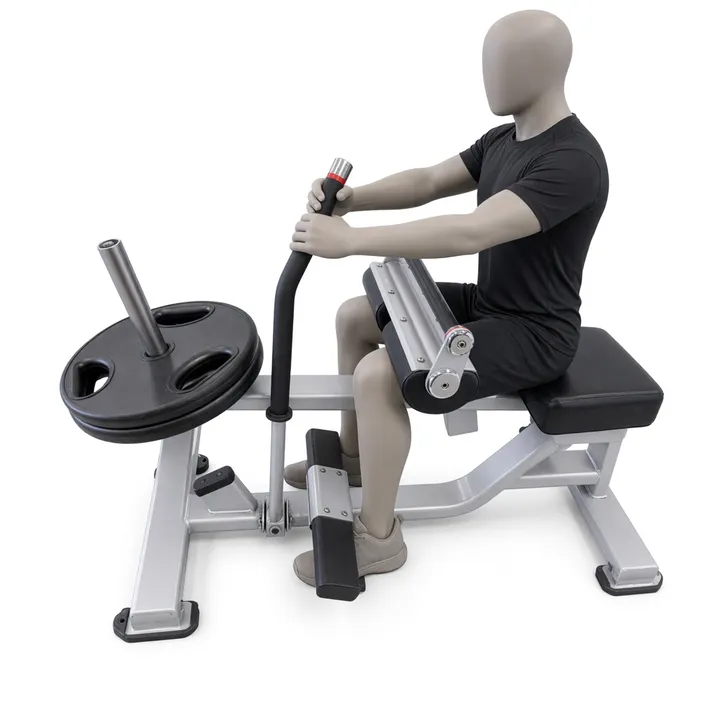
- Pad on your lower thighs, balls of your feet on the step.
- Drop your heels, then rise as high as you can.
Muscles worked
- Primary
- Calves
Setup
- Adjust the thigh pad height so it sits just above your knees, snug but not painfully tight.
- Set the foot plate so your heels can hang off with your forefeet firmly planted.
- Lock the safety or lever in place to hold the weight up while you set your position.
- Load the machine with plates that match your level, keeping room to stay in control.
- Sit all the way back on the seat, chest up, and place your hands on the handles or on the thigh pad to stabilize.
How to do it
- Place the balls of your feet on the foot plate with your heels hanging off and toes straight or slightly turned out.
- Lift your heels to take pressure off the safety, then release the safety lever if your machine has one.
- Lower your heels slowly toward the floor in a controlled way until you feel a good stretch in your calves, without bouncing.
- Press through your forefeet to raise your heels as high as you can, as if you want to get taller, and squeeze your calves at the top.
- Keep your torso stable, knees still, and breathe normally (inhale as you lower, exhale as you lift).
- Repeat with the same controlled rhythm, then re-engage the safety before relaxing the weight and stepping off the machine.
Common mistakes
Bouncing at the bottom
Instead : Slow down the way down, pause briefly at the bottom, then drive up under control. If you keep bouncing, remove some weight so your calves do the work instead of momentum.
Using a very short range of motion
Instead : Let your heels drop for a real stretch, then lift them as high as you can. Aim for long, full reps instead of quick, tiny pulses.
Moving the knees and upper body
Instead : Keep your knees fixed under the pad and your torso steady against the backrest. The movement should come from the ankle only so your calves get the main work.
Going too fast
Instead : Use about 2 to 3 seconds on the way down and 1 to 2 seconds on the way up. A controlled tempo makes your calves work more than fast, thrown reps.
Coach tips
- Think about pushing through your big toe and the front of your foot to feel the bottom and the push of each rep more clearly.
- Focus on the squeeze at the top: hold a short pause when your heels are highest to increase the calf work.
- If you’re new to this, start lighter and focus on full range of motion before adding more plates.
- Keep a slight forward lean from the hips and a neutral back if that feels more comfortable, as long as your lower body stays stable.
Variations
- Add a 1–2 second pause at both the bottom and top of each rep to increase control and time under tension for your calves.
- Work one leg at a time with a lighter load if your machine allows, to address strength differences between right and left.
Sets and reps
The seated calf raise is often done for 3–4 sets of 10–20 controlled reps, with a solid stretch at the bottom. Many people like to place it near the end of a lower-body session.
Exercises on this machine
Log your Seated calf raise sets with GoSet
GoSet remembers your last time, starts your rest on its own and notes your records. Even with no signal in the basement. Coming soon to iPhone and Android.
Common questions
Where should I place my feet on the seated calf raise?
Set the balls of your feet on the plate with your heels hanging off. Keep your toes straight or slightly turned out and make sure your forefeet feel solid so you can lower and lift without slipping.
I only feel the thigh pad, not my calves.
That usually means the weight is too heavy and your range of motion too short. Drop the load, use a fuller stretch and higher lift, and add a brief pause at the top. Also, adjust the pad so it’s snug, not digging hard into your thighs.
Should my knees be fully straight?
On this machine your knees stay slightly bent and fixed under the pad. You don’t lock or bend them during the set: the movement should come mainly from your ankles moving up and down.
What if my ankles or knees hurt on this exercise?
Stop the exercise right away and talk with a healthcare professional or other qualified specialist before you continue. You can try reducing the load or range of motion, but not if the pain is still there.