Machine · Legs and glutes
Seated leg curl machine
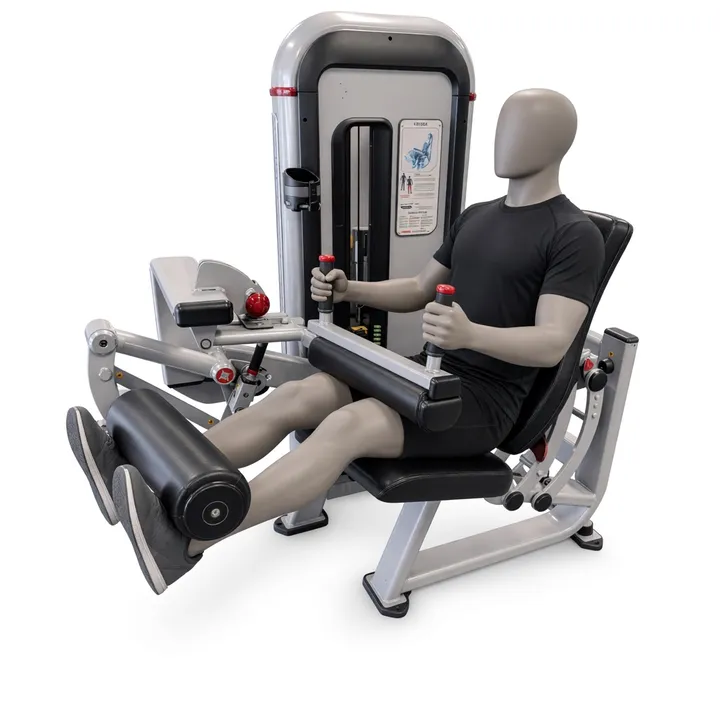
The seated leg curl is a machine where you work your hamstrings by bending your knees while staying supported by the backrest. It’s great to isolate the back of your thighs without worrying about balance. Helpful for beginners and more experienced lifters.
At all 76 gyms GoSet follows
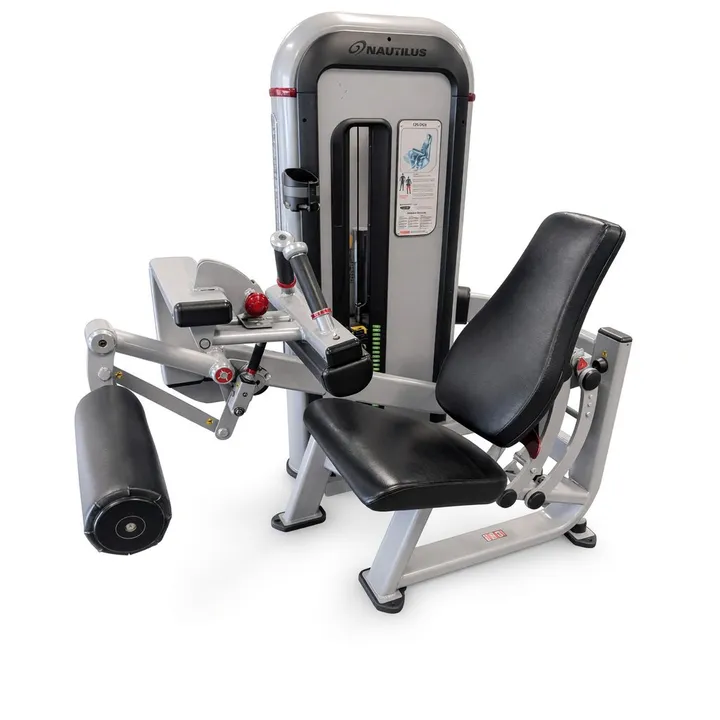
The essentials
- Lock the pad just above your knees.
- Bend your knees fully, then return slowly.
Muscles worked
- Primary
- Hamstrings
Setup
- Adjust the backrest so your knees line up with the machine’s pivot point.
- Set the lower pad behind your ankles, just above the heel, with your legs almost straight.
- Set the thigh pad so your legs stay firmly on the seat.
- Select a weight on the stack that you can move in control, without swinging.
- Sit with your hips all the way back, back against the pad, and grab the handles if the machine has them.
How to do it
- Start with your legs almost straight, knees slightly bent, not fully locked.
- Take a breath, keep your torso against the backrest and your hips stable.
- Bend your knees and pull the pad down in 1–2 seconds, until you feel a solid contraction in the back of your thighs.
- Hold for about 1 second at the bottom without bouncing or slamming the stack.
- Slowly return your legs in 2–3 seconds, controlling the weight back to almost the starting position.
- Keep your breathing steady: exhale while curling down, inhale as you come back up.
Common mistakes
Lifting your hips off the seat
Instead : Keep the thigh pad snug on your legs and think about pressing your hips into the seat. If your hips still lift, lower the weight.
Swinging the weight
Instead : Slow down the start of the movement. Think smooth at the beginning, then a bit faster through the middle, never jerky. Pick a load you can control the whole way.
Fully locking out the knees at the top
Instead : Keep a small bend at the top of each rep. Don’t snap your knees straight, and keep tension on the back of your thighs.
Rounding your lower back
Instead : Press your lower back into the pad and keep your torso steady. Adjust the seat if you feel cramped or pushed too far forward.
Coach tips
- Use a controlled tempo, for example 2 seconds to curl down, 1 second hold, 2–3 seconds back up.
- If you struggle to feel your hamstrings, focus on driving the pad with the back of your ankles through the whole range.
- You can use the small weight jumps on the stack to do drop sets, lowering the weight as you go, as long as your form stays solid.
- Keep your feet relaxed instead of forcing the toes up or down, so you can focus on bending at the knee.
Variations
- Single-leg seated leg curl, with a bit less weight, to work on a weaker side.
- Partial reps in the bottom half of the movement to add time under tension once you’re comfortable with the machine.
Sets and reps
People often do 3 to 4 sets of 8 to 15 reps on this exercise, depending on whether they want more strength or more controlled muscle work. It’s often used after a bigger compound leg movement.
Exercises on this machine
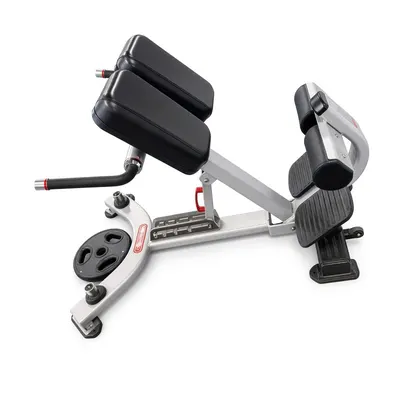
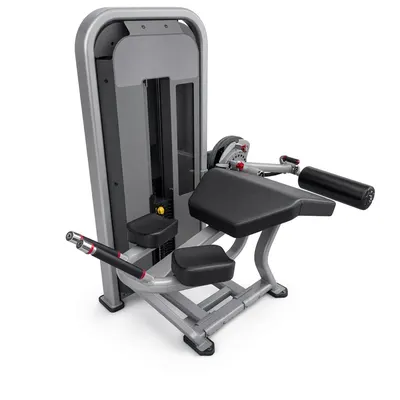
Machine taken? Try instead
Log your Seated leg curl sets with GoSet
GoSet remembers your last time, starts your rest on its own and notes your records. Even with no signal in the basement. Coming soon to iPhone and Android.
Common questions
Where should I feel the seated leg curl?
Mainly in the back of your thighs, along the hamstrings. You might feel a bit of tension around the calves, but if you get sharp pain in your knee or lower back, stop and talk to a professional.
Should I fully straighten my legs between reps?
No. Come back to almost straight with a slight bend in the knees. This keeps tension on the hamstrings and avoids snapping the joint.
I don’t feel my hamstrings, what can I do?
Lower the weight, keep your hips and back glued to the seat, and think about pulling with the back of your thighs, not your feet. Take 2–3 seconds on the way up; that often helps you feel the work more.
Seated or lying leg curl, which is better?
Both target the hamstrings. The seated version is often more stable and easier to control for your back. If your gym has both, you can alternate based on what’s free and what feels more comfortable for you.