Exercise · Chest
Barbell bench press: how to do it right
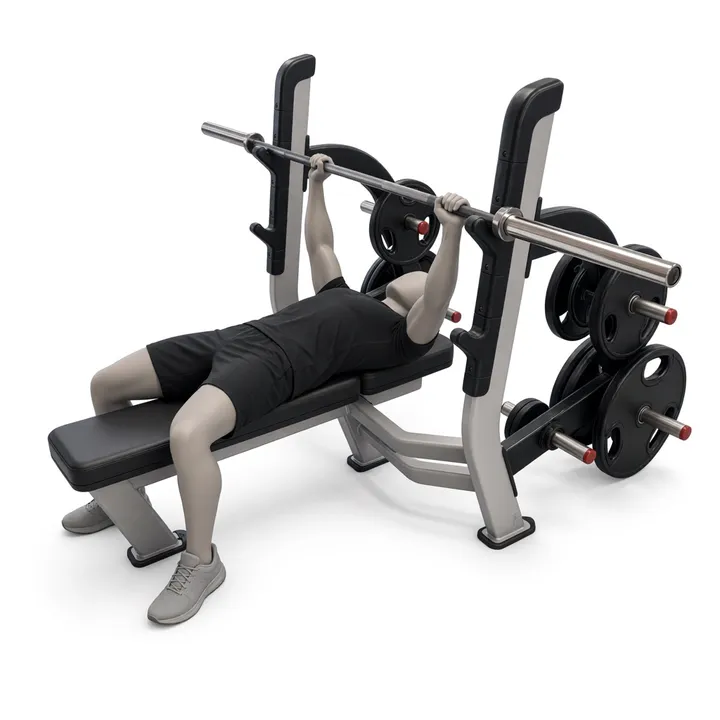
The barbell bench press is the classic lift to work your chest, with solid support from your shoulders and triceps. You do it lying on a flat bench with a free bar. It’s a good option if you want a stronger upper body and an easy way to track your training weights.
Doable at all 76 gyms GoSet follows
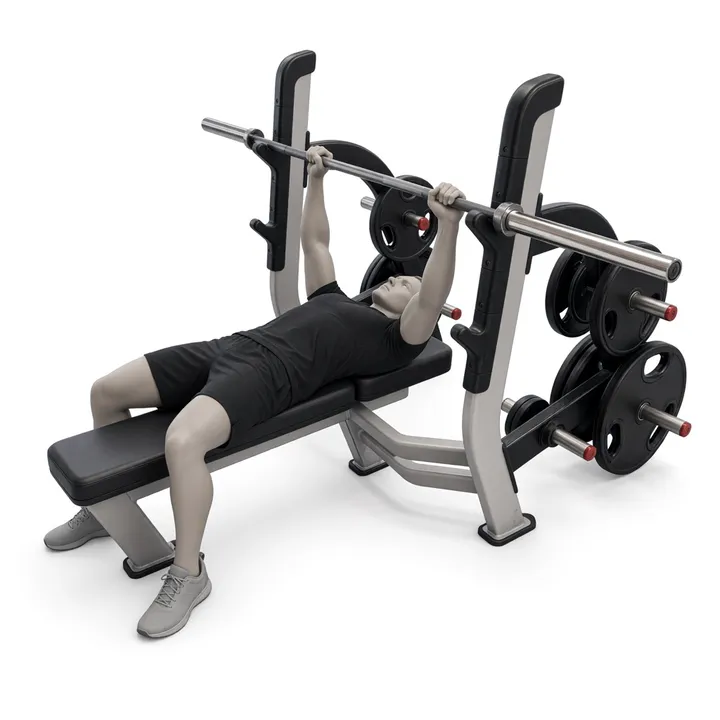
The essentials
- Feet planted, shoulder blades squeezed.
- Lower the bar to mid-chest.
- Ask for a spotter on heavy sets.
Muscles worked
- Primary
- Chest
- Secondary
- Shoulders · Triceps
How to do it
- Lie on the bench with your eyes roughly under the bar. Plant your feet firmly on the floor, slightly back, and squeeze your shoulder blades into the bench.
- Grab the bar a bit wider than shoulder-width, palms forward. Keep your wrists straight over your elbows, bar sitting in the middle of your palm.
- Unrack the bar by pressing it up, then bring it over the upper part of your chest with your arms almost straight and your shoulders still locked to the bench.
- Take a breath in, then lower the bar in control to mid-chest, keeping your elbows under the bar. Take about 2 to 3 seconds to lower.
- Lightly touch your chest (no bouncing), squeeze your chest hard and press the bar up as you breathe out, back to almost straight arms.
- Guide the bar back to the hooks under control, without pushing it too far behind your head, then relax your grip only once it’s fully racked.
Common mistakes
Bouncing the bar off your chest
Instead : Keep the rep controlled. Take 2 to 3 seconds to lower, touch your chest gently and press up using muscle, not the rebound.
Shoulders lifting off the bench
Instead : Think “pin your shoulder blades to the bench” from start to finish. Keep your chest slightly up and your shoulders pulled back, even at the top.
Bar path too close to your face
Instead : Aim for mid-chest on the way down. The bar should move on a slight diagonal path, not straight above your face, to keep your shoulders more stable.
Hips lifting off the bench
Instead : Keep your feet planted and lightly brace your abs and glutes. Use a weight you can press without having to over-arch your lower back or lift your hips.
Coach tips
- For the grip, start with your forearms vertical when the bar is on your chest. If your elbows point too far in or out, adjust your grip width.
- Use a controlled tempo: 2 to 3 seconds down, a short pause on the chest, then a stronger push up while keeping the bar steady.
- Breathing idea: take a big breath at the top, hold it as you lower, then breathe out as you press the bar back up.
- On heavy sets, ask for a spotter standing behind your head to help you lift off and rack the bar safely.
Variations
- Slightly narrower grip to put more work on your triceps, while keeping your elbows closer to your body.
- Slightly wider grip (without overdoing it) to feel your chest more, as long as you keep the bar controlled.
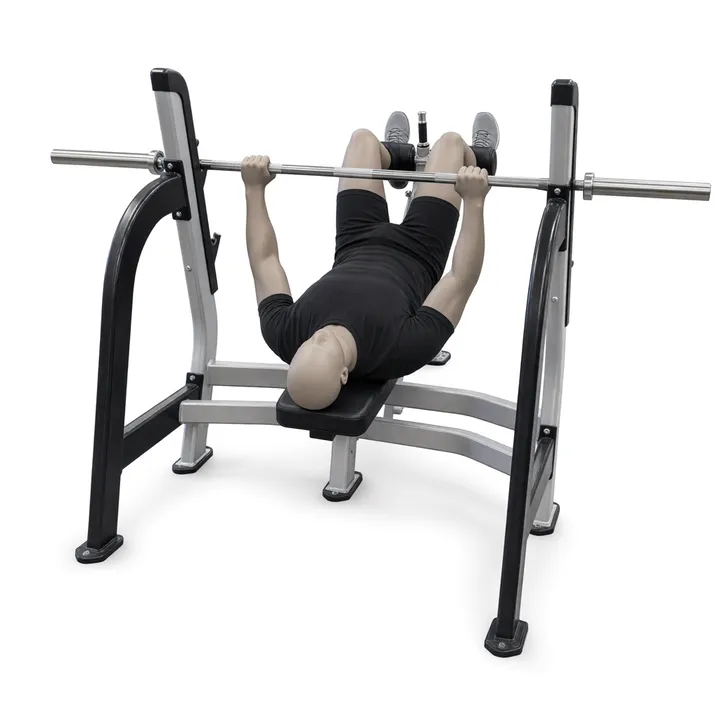
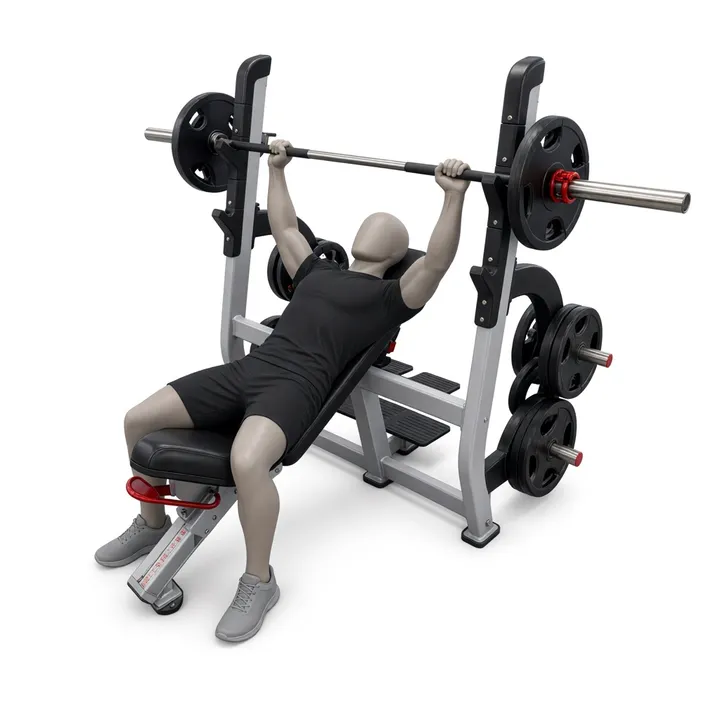
- If the free bar feels intimidating, stick to lighter sets, or use another press (incline, decline, or a machine) that you have in your gym.
Sets and reps
People often do 3 to 5 sets of 3 to 12 reps on the barbell bench press, depending on whether the focus is more on strength or hypertrophy. Many lifters pick a weight they can press while still having 1 to 3 reps left in the tank.
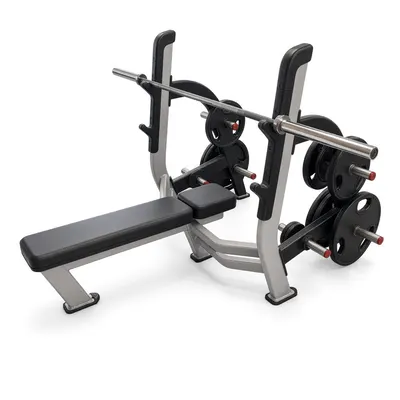
Equipment
Alternatives for the same muscles
Log your Barbell bench press sets with GoSet
GoSet remembers your last time, starts your rest on its own and notes your records. Even with no signal in the basement. Coming soon to iPhone and Android.
Common questions
Where exactly should the bar touch my chest?
Aim for mid-chest. Not too high toward the neck, not too low toward the stomach. If your forearms are close to vertical when the bar touches, you’re in a good zone.
Do I always need a spotter?
For heavy sets or when you’re close to failure, it’s a good idea to ask someone to help with the lift-off and racking. If you train alone, stay with weights you can control and leave yourself a safety margin.
My shoulders get tired before my chest, is that normal?
Chest, shoulders and triceps all work together here. You can adjust the bar path (down to mid-chest) and keep your shoulder blades squeezed to feel your chest more. If your shoulder joint hurts, stop and talk to a professional.
How do I know if my grip is too wide or too narrow?
When the bar is on your chest, check your forearms. If they lean a lot inward or outward, adjust your grip. A bit wider than shoulder-width, with wrists stacked over elbows, works well for many people.