Exercise · Core · One side at a time
Cable woodchopper: how to do it right
The cable woodchopper is a rotational cable exercise that targets your obliques. It works your core while you move, not just in a static hold. It’s a good option if you want to train your midsection using the cable machine you already have at your gym.
Doable at all 76 gyms GoSet follows
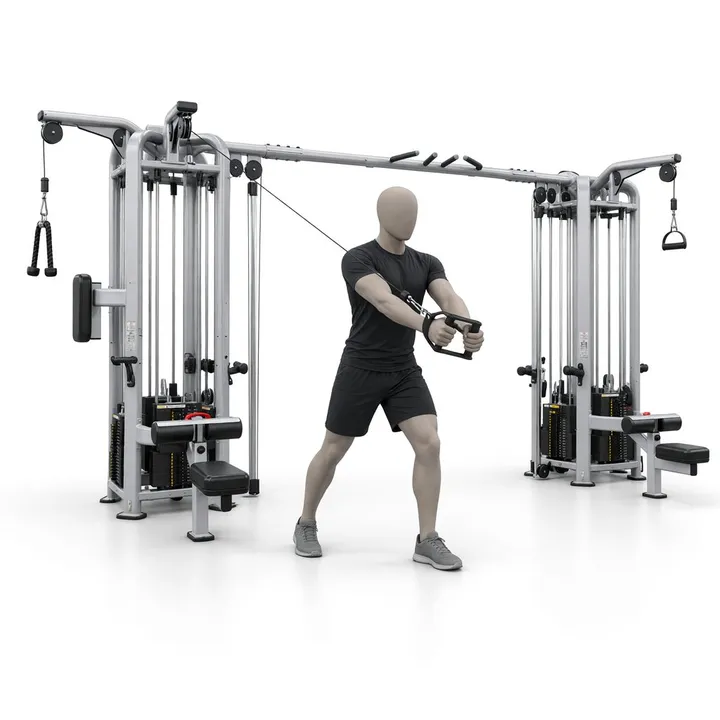
The essentials
- Rotate your torso with long arms.
- Pivot on your back foot.
- Do all reps on one side, then switch.
Muscles worked
- Primary
- Obliques
- Secondary
- Core
How to do it
- Set the cable to the height you want (often between shoulder and head height) and attach a single handle.
- Stand sideways to the cable with your feet slightly wider than shoulder-width and the cable under light tension.
- Grab the handle with both hands, arms long but not locked, and brace your core before you start moving.
- Inhale, then rotate your torso, pulling the handle across your body on a diagonal line, keeping your arms long and pivoting on your back foot.
- Bring the handle to the end of your comfortable range of motion, keep your core tight, and finish the movement as you exhale.
- Return slowly to the starting position over 2–3 seconds, staying in control, do all your reps on one side, then switch.
Common mistakes
Bending the arms and pulling mostly with the shoulders
Instead : Keep your arms long with a slight bend and think about turning your torso instead of rowing with your arms. The rotation should come from your core, not an arm pull.
Locking the feet and blocking the hips from turning
Instead : Let your back foot pivot as you rotate. That helps your hips follow the movement and keeps the rotation more natural for your torso.
Rotating fast and letting the cable yank you back
Instead : Control the way back. Use a weight that lets you return over 2–3 seconds, with no jerks and no sudden twist at the end.
Twisting mostly through the neck
Instead : Keep your head in line with your torso. Your eyes can follow the movement a bit, but avoid cranking the twist just with your neck.
Coach tips
- Start light so you can feel your obliques rotating your torso instead of your arms doing all the work.
- Breathe smoothly: usually inhale on the way back toward the machine, exhale as you rotate and pull across.
- Keep a soft bend in your knees to help your hips move freely and keep you stable.
- If rotation feels awkward, shorten the range of motion at first and increase it as you feel stronger and more comfortable.
Variations
- High-to-low woodchopper: cable set high, pulling down on a diagonal for a top-to-bottom chop feel.
- Low-to-high woodchopper: cable set lower, pulling up on a diagonal to work the rotation in the other direction.
- Kneeling woodchopper: perform it on your knees to reduce leg involvement and focus more on torso rotation.
Sets and reps
People often do the cable woodchopper for 2–4 sets of 8–15 reps per side, depending on the load and control they want. It’s commonly placed after bigger core drills or near the end of a workout for more targeted oblique work.
Equipment
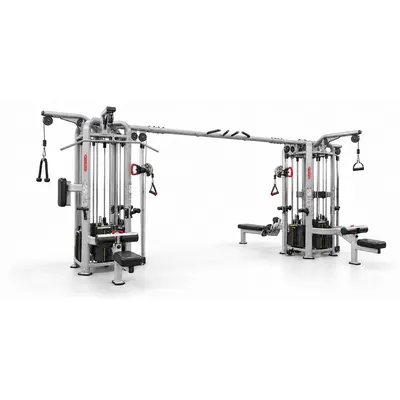
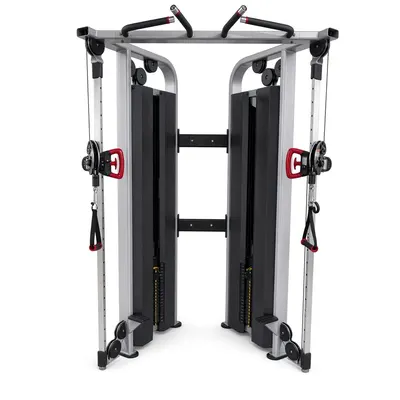
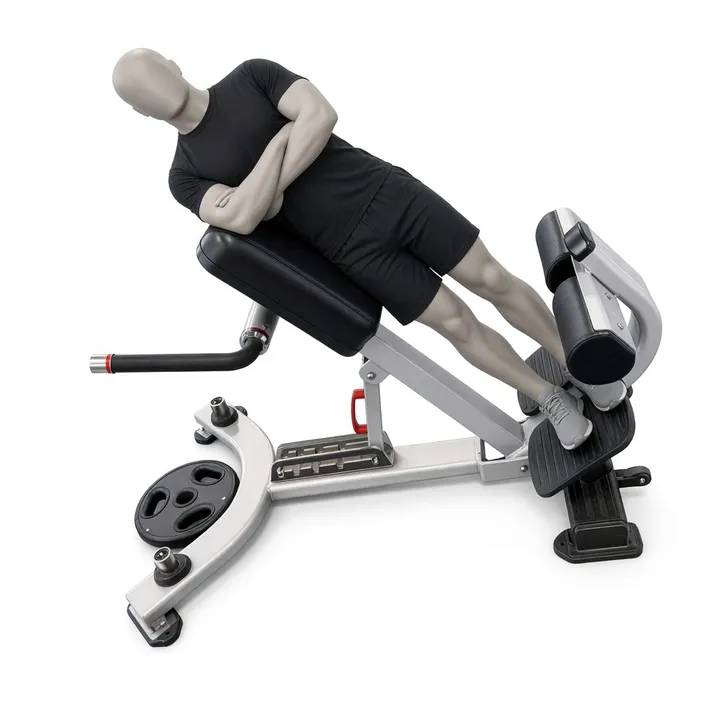
Alternatives for the same muscles
Log your Cable woodchopper sets with GoSet
GoSet remembers your last time, starts your rest on its own and notes your records. Even with no signal in the basement. Coming soon to iPhone and Android.
Common questions
Which muscles does the cable woodchopper work most?
The cable woodchopper mainly targets your obliques, with your core working as a unit to control the rotation. You’ll mostly feel it along the sides of your abdomen.
Should I set the cable high or low for woodchoppers?
You can do them high-to-low or low-to-high. What matters is keeping a diagonal path and rotating your torso with long arms. Pick the version where you feel most in control.
Do I need to do the same reps on each side?
Yes, do all your reps on one side, then switch and match the number of reps on the other side to keep your core work balanced.
What if I feel sharp pain in my core or elsewhere?
Stop the exercise right away and talk to a health or training professional before trying this movement again or increasing the weight.