Machine
Cable crossover: how to set up and move well
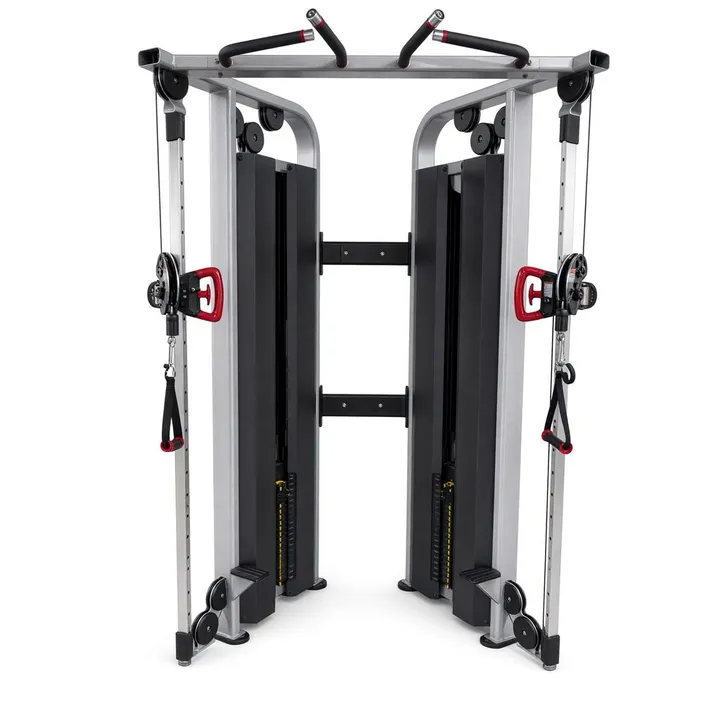
The cable crossover is the two-column pulley station that lets you do a ton of exercises with constant tension. You can pull, press, rotate, work one side at a time, stand, sit or kneel. It’s a very versatile machine to control your movement and your range of motion.
At all 76 gyms GoSet follows
The essentials
- Elbows at your sides.
- Curl without swinging your torso.
Muscles worked
- Primary
- —
Setup
- Start by picking your exercise in your app’s cable crossover list (row, curl, extension, etc.).
- Adjust the pulley height for the exercise: higher, shoulder level or lower, so the cable follows a natural line with your arm or torso.
- Choose the right handle or attachment (bar, rope, single handle) based on what the exercise calls for.
- Set a weight that lets you finish all your reps under control, without jerking or cheating with your back.
- Stand in the middle or slightly to one side, far enough to keep tension on the cable, but not so far that it pulls you off balance.
How to do it
- Plant your feet firmly on the floor, comfortable width, knees slightly bent for stability.
- Keep your core braced, lower back neutral, shoulders away from your ears and head in line with your spine.
- Grab the handles and set your arms and body in the exercise’s start position (arms straight or bent, standing, seated, kneeling, etc.).
- Breathe in at the start position, then begin the movement by pulling or pushing the cable along the planned path, without snapping or swinging.
- Control the way back for about 2 to 3 seconds, keeping tension on the cable and the same torso posture.
- Bring the handles back to the start position under control, then carefully rack the attachment when your set is done.
Common mistakes
Letting the machine pull you forward or twist you
Instead : Step closer or farther to find a distance where you can keep your balance, bend your knees a bit more and brace your core. If you still swing around, the weight is likely too heavy.
Moving your whole body instead of the joint you want to work
Instead : Picture only the joint for the chosen exercise doing the work (shoulders, elbows, hips, torso). Slow down and lower the weight so the rest of your body stays solid.
Losing tension at the start or end of each rep
Instead : Stand far enough so the cable is always slightly tight, even at the start. Try not to let the weight stack rest fully between reps.
Jerking with your back or hiking your shoulders
Instead : Gently bring your shoulder blades together, keep your shoulders down and control the start of the movement. Aim for a smooth motion, not speed.
Coach tips
- On the cable crossover, control is everything: think smooth reps with a slower return (around 2 to 3 seconds) to really feel the tension.
- Keep your breathing steady: breathe in on the easier part of the rep and breathe out on the harder part.
- For single-arm moves like the single-arm cable row, allow only a small, controlled torso rotation, not a big twist of your whole body.
- Start with slightly smaller ranges of motion, then increase gradually as you feel more stable on the machine.
Variations
- On the same station, you can do horizontal rows (seated or standing), vertical pulls, biceps curls and triceps extensions without changing machines.
- You can switch from two-arm to single-arm work on many cable exercises to train stability and address side-to-side strength differences.
- You can also use the crossover’s pull-up bar for neutral-grip or wide-angle pull-ups, depending on your program.
Sets and reps
On the cable crossover, many exercises are often done for 2 to 4 sets of 8 to 15 reps, whether you’re pulling, pressing or training your torso. Some moves like kneeling cable crunches or cable woodchoppers are also commonly done in slightly longer, controlled sets.
Exercises on this machine
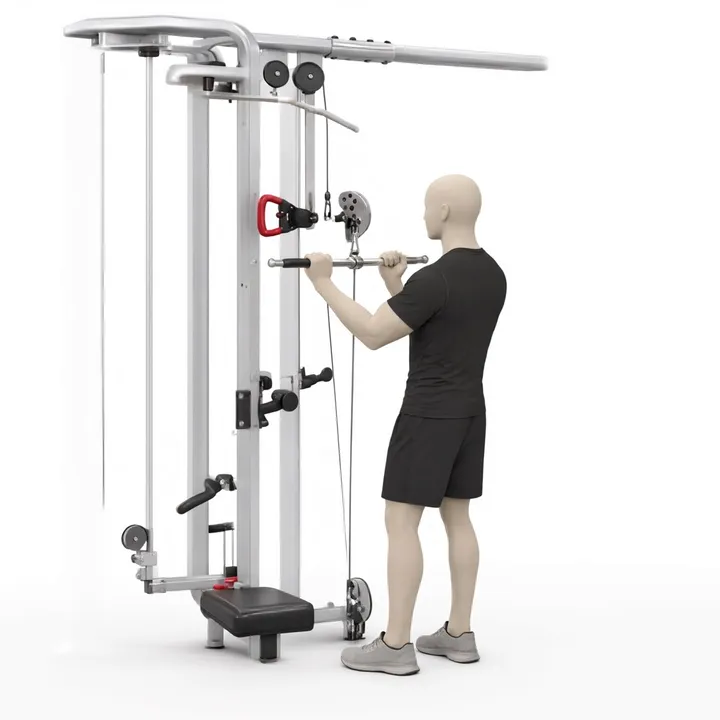 Cable biceps curlBiceps
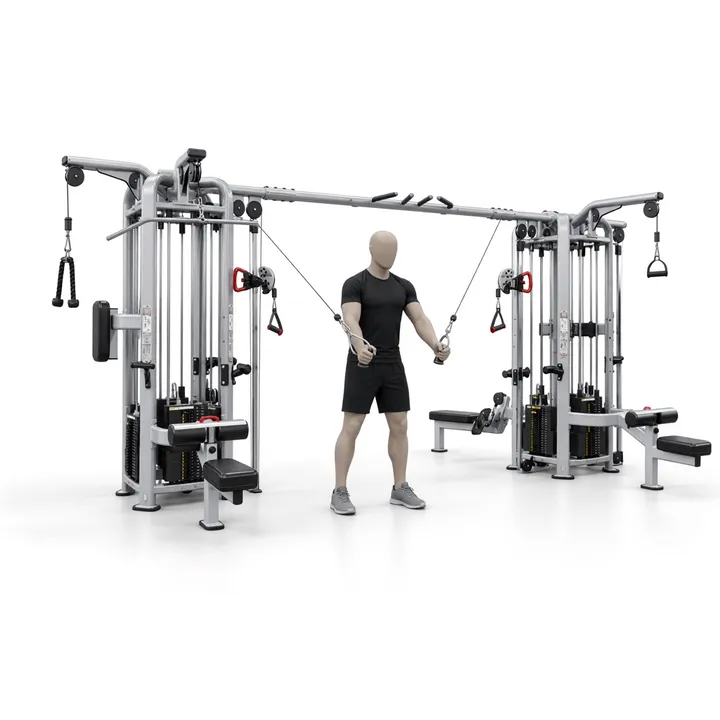 Cable crossoverChest
 Face pullShoulders
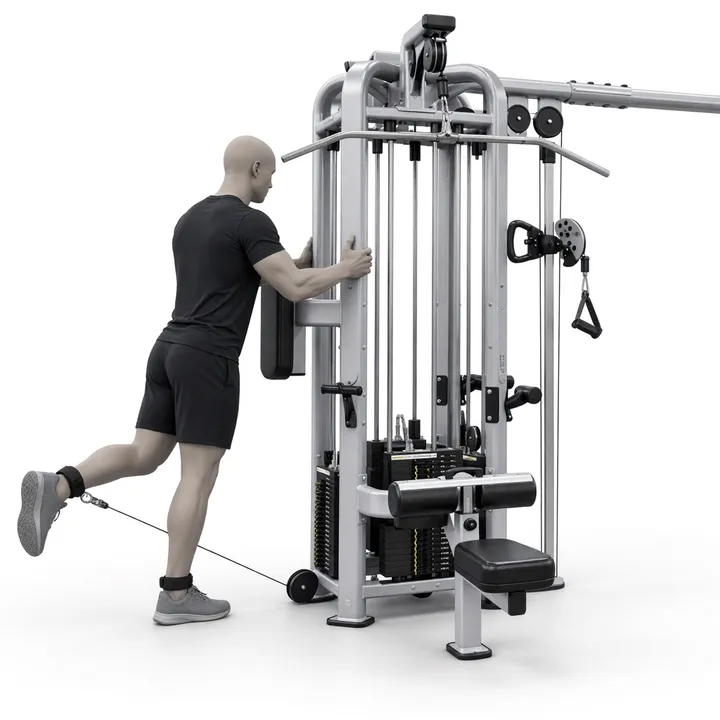 Cable glute kickbackGlutes
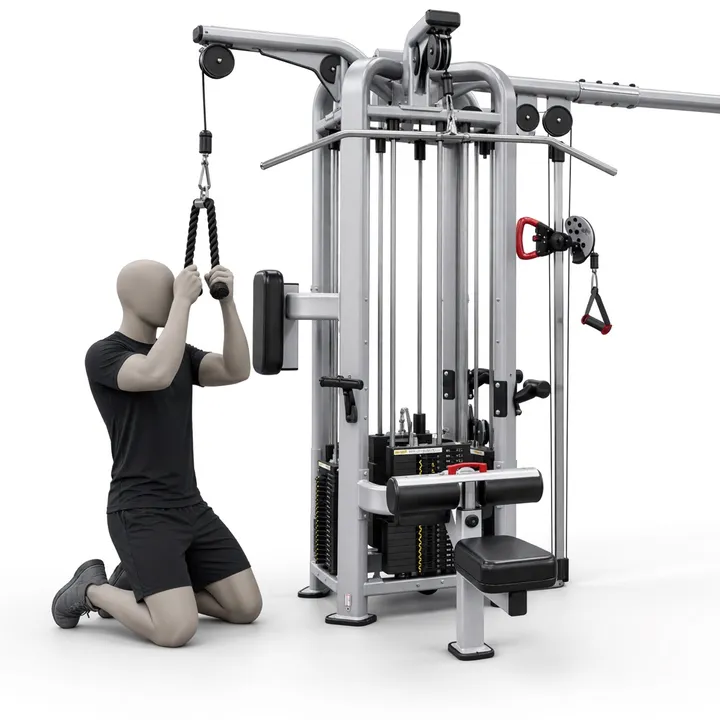 Kneeling cable crunchCore
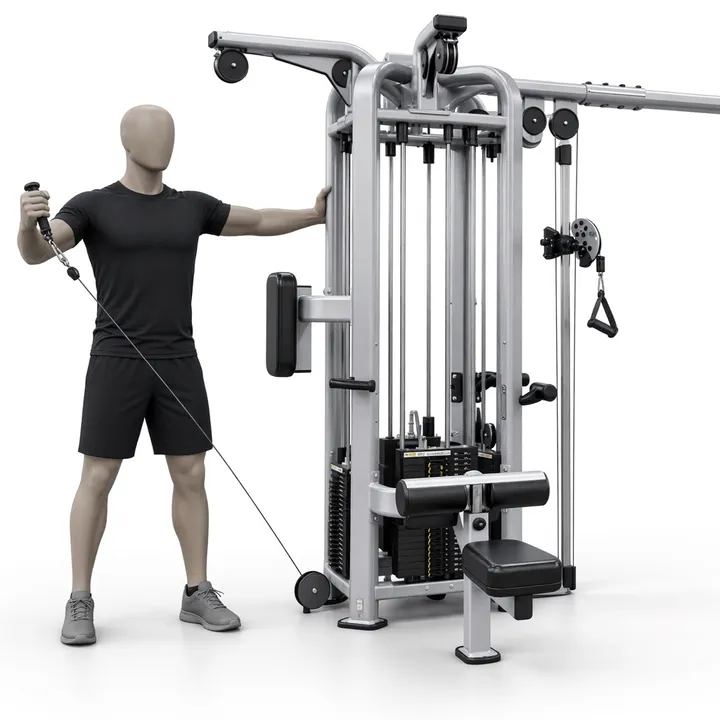 Cable lateral raiseShoulders
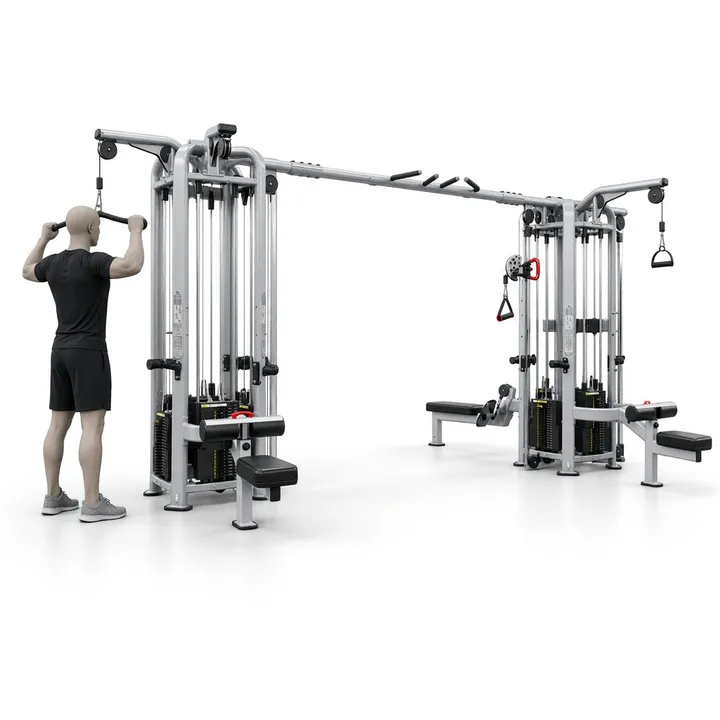
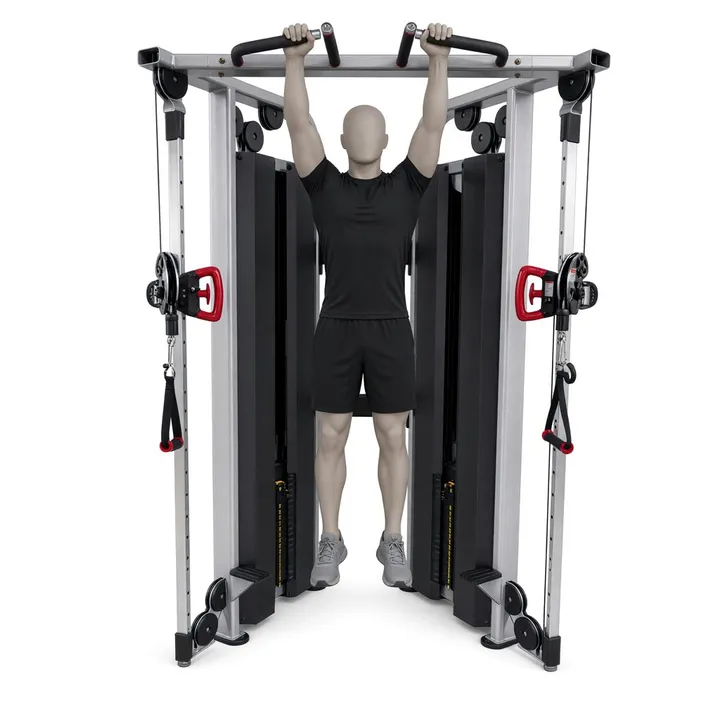 Neutral-grip pull-up on cable crossoverBack
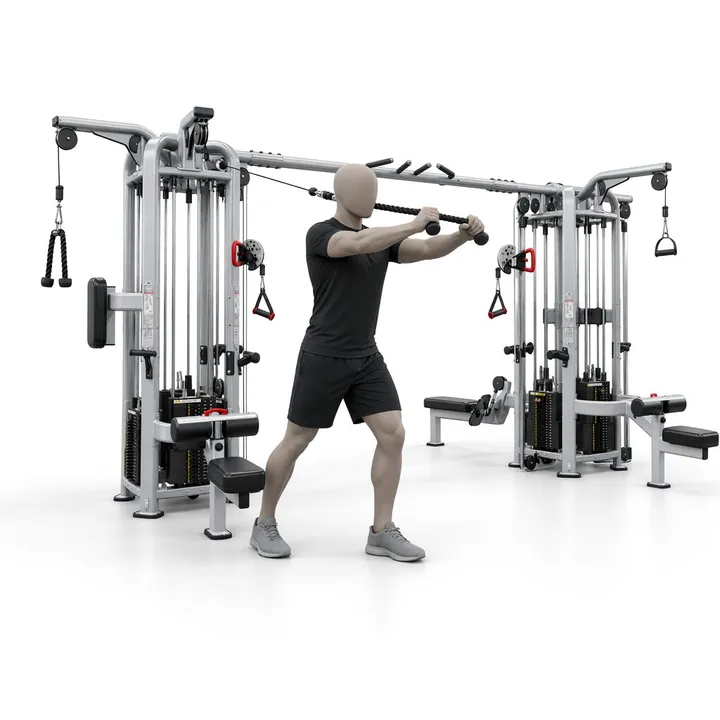 Overhead cable triceps extensionTriceps
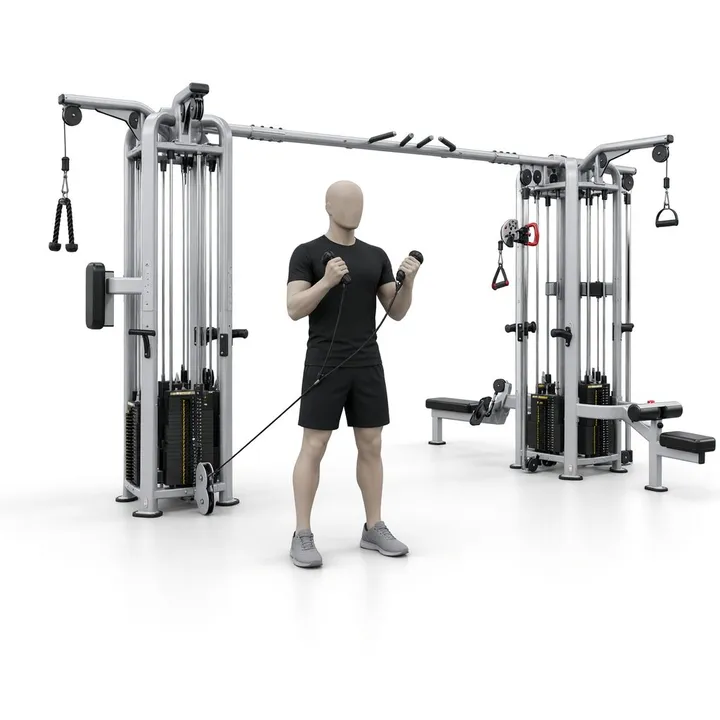 Rope hammer curlBiceps
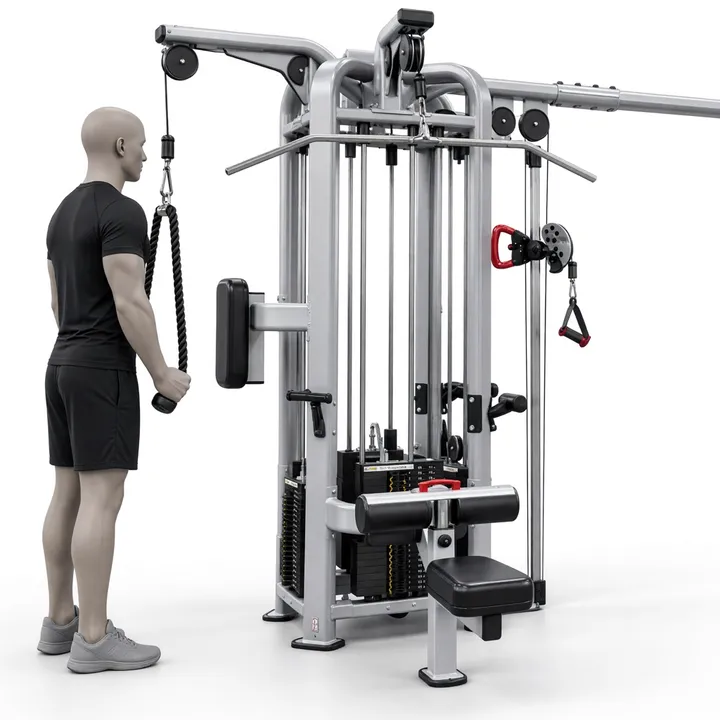 Rope triceps pushdownTriceps
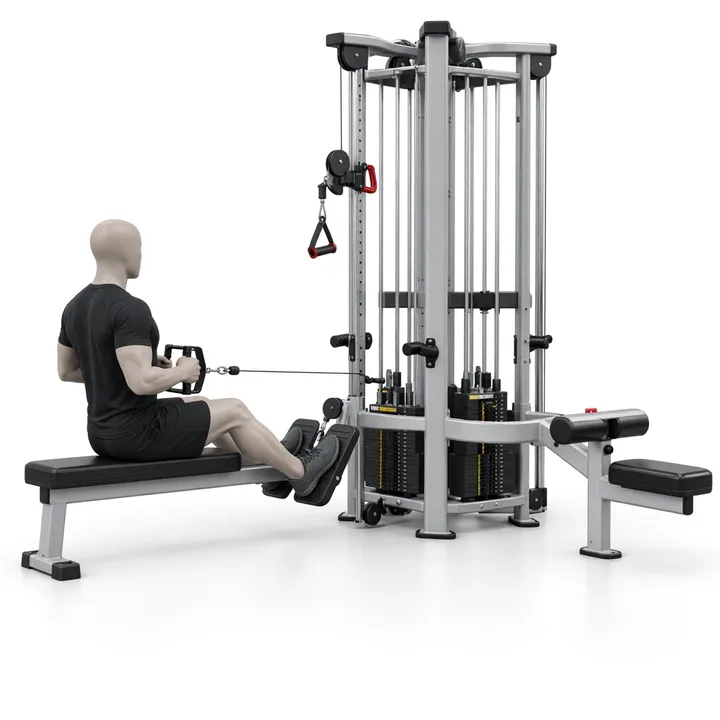 Seated cable rowBack
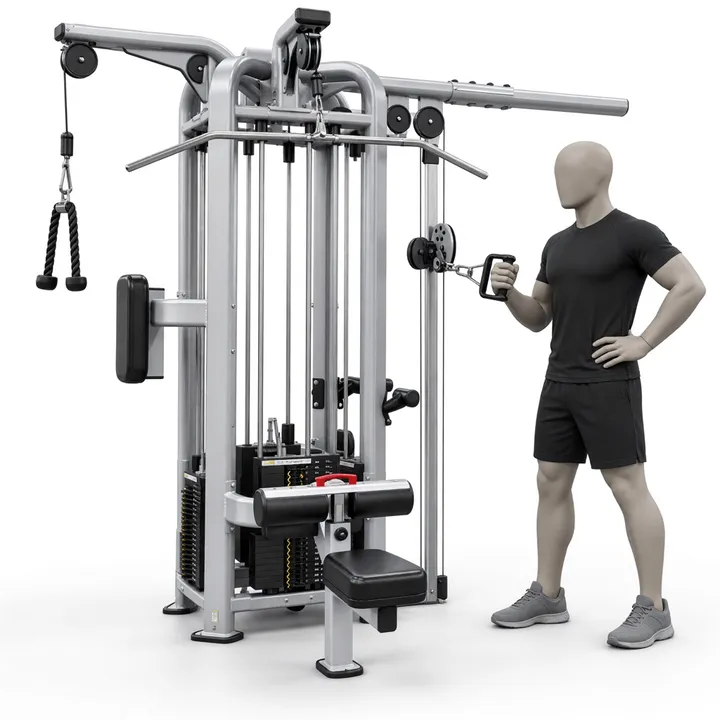 Single-arm cable rowBack
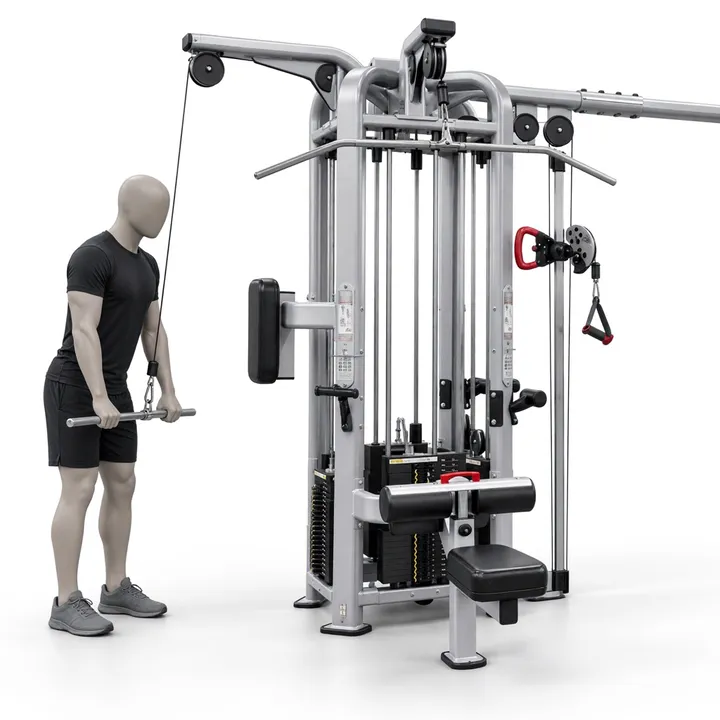 Straight-arm pulldownBack
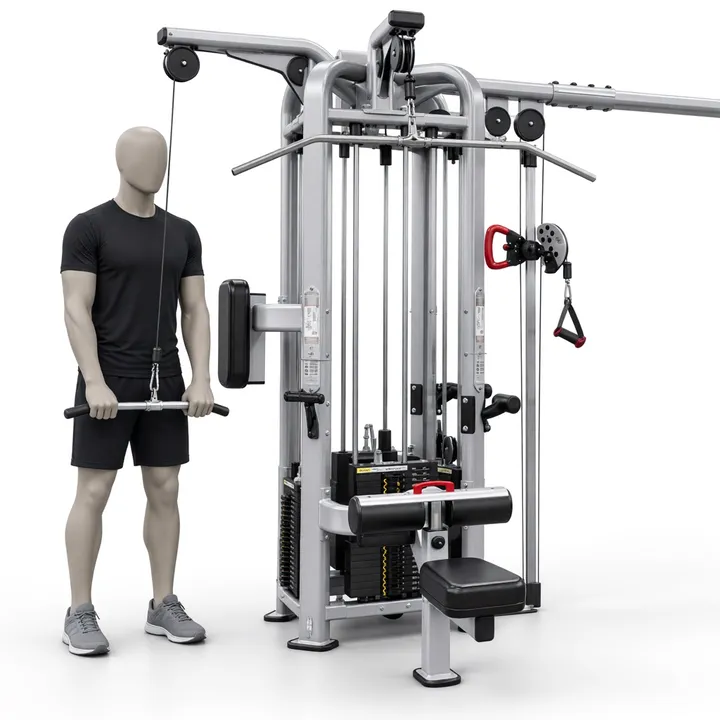 Cable triceps pushdownTriceps
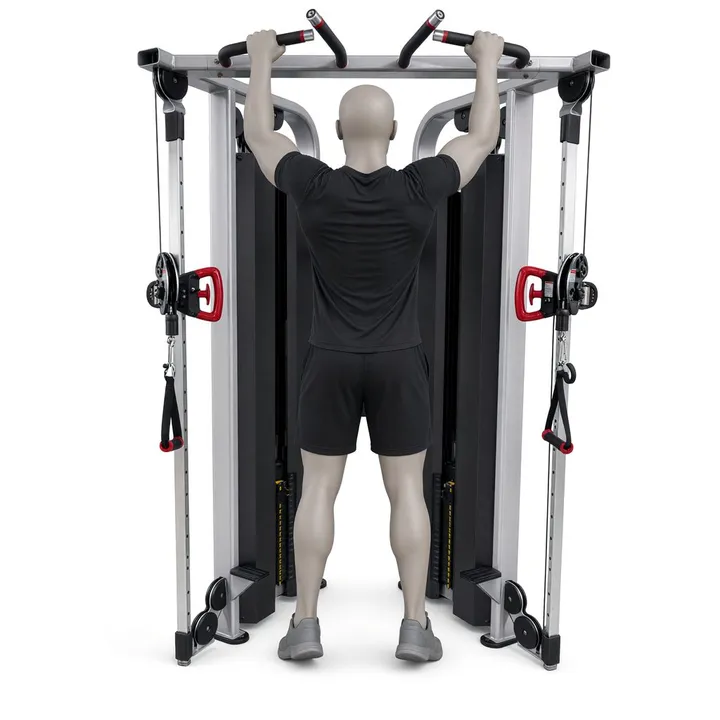 Wide-angle pull-up on cable crossoverBack
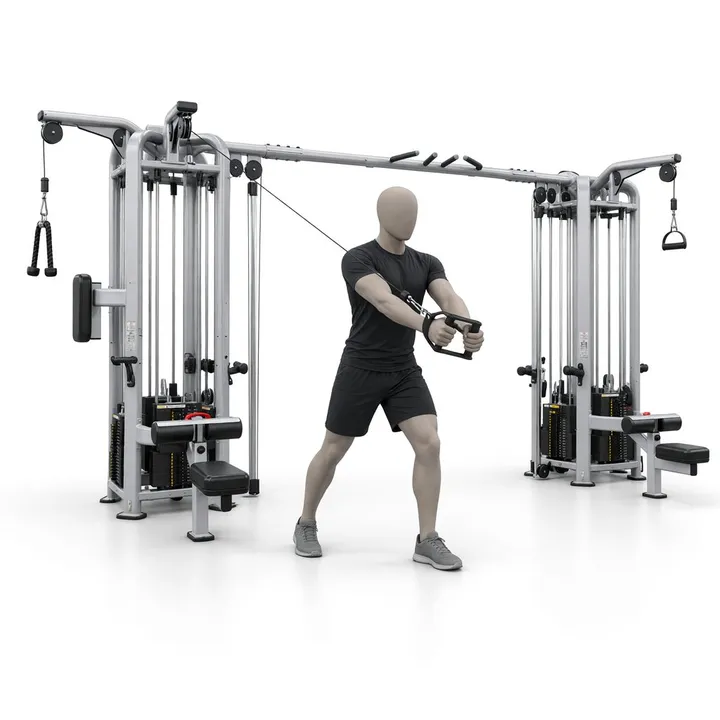 Cable woodchopperObliques
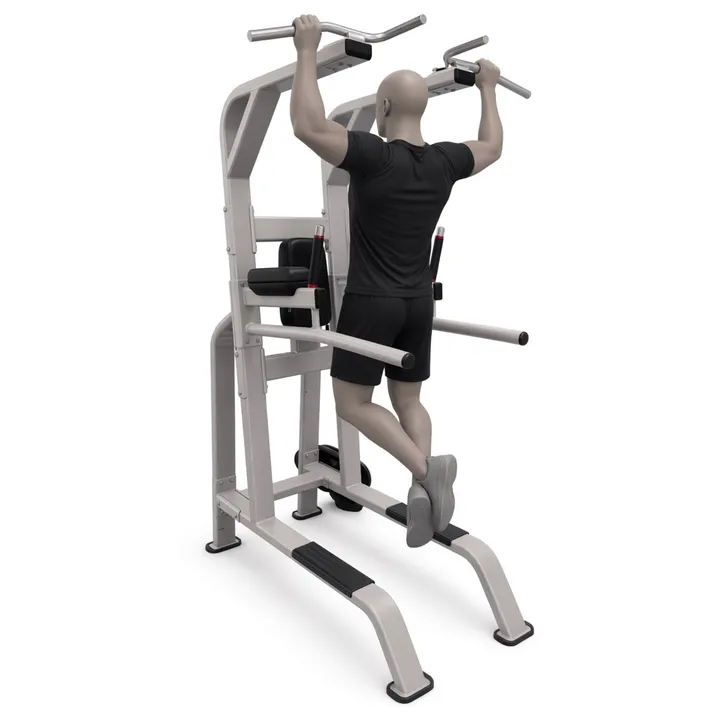 Chin-upBack · Biceps
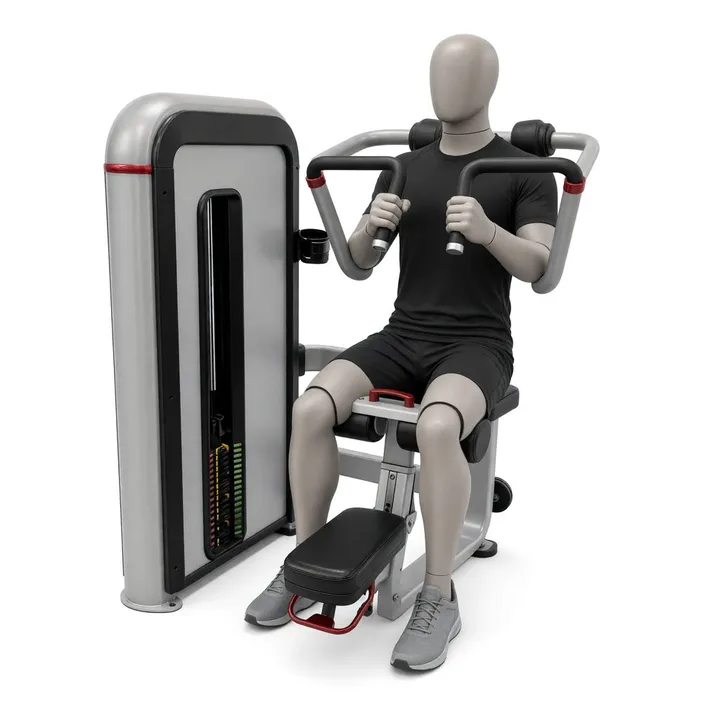 Close-grip lat pulldownBack
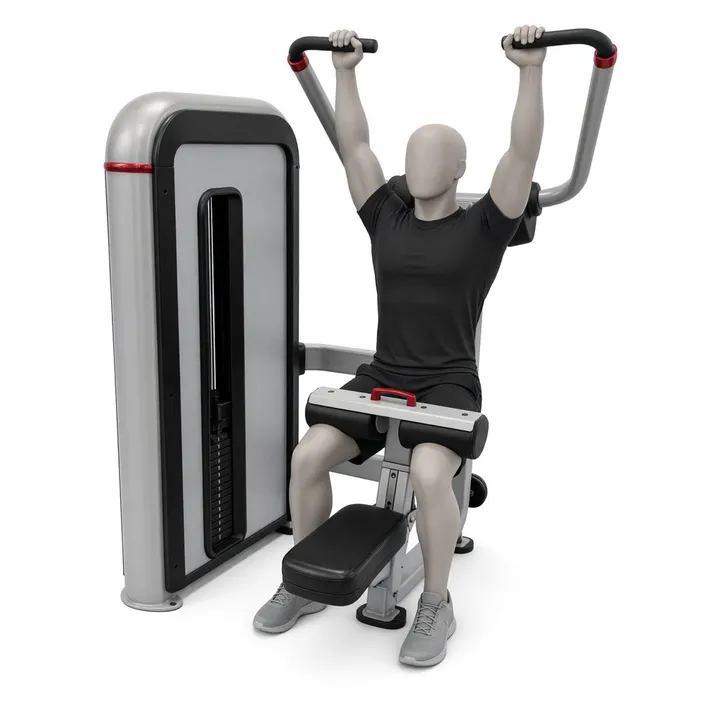 Underhand lat pulldownBack · Biceps
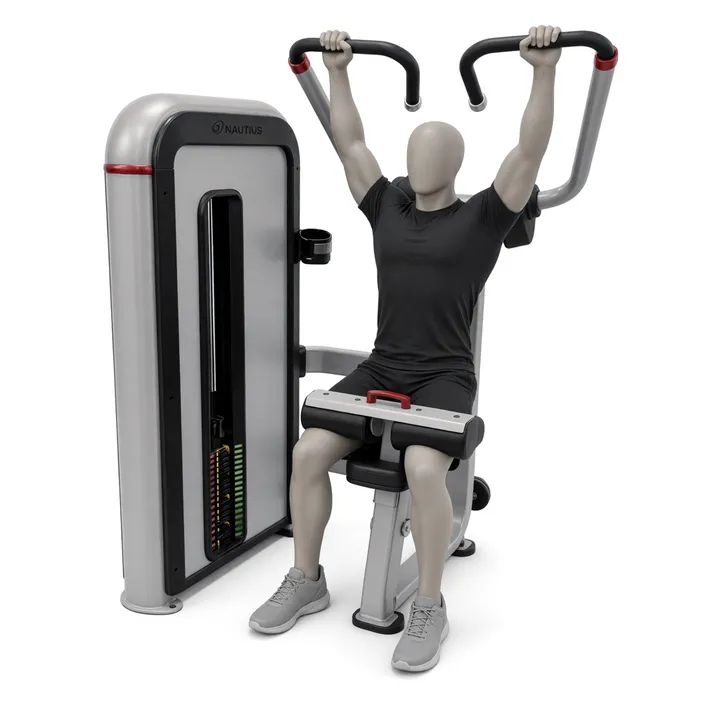 Wide-grip lat pulldownBack
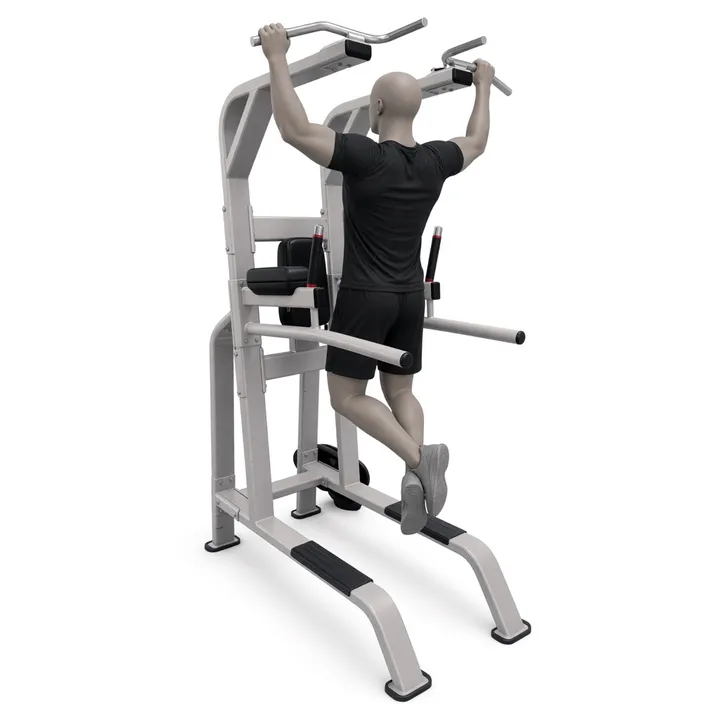 Pull-upBack
Log your Croisé aux câbles (cable crossover) sets with GoSet
GoSet remembers your last time, starts your rest on its own and notes your records. Even with no signal in the basement. Coming soon to iPhone and Android.
Common questions
What is the cable crossover station used for?
It’s a very versatile machine that lets you do curls, rows, presses, rotations and torso work with constant tension. You can use it for things like cable biceps curls, seated cable rows, pull-ups on the crossover bar, kneeling cable crunches and cable woodchoppers.
How do I know what height to set the pulleys?
First, check the exercise name in your app. Face pulls or vertical pulls are often done from a higher pulley; horizontal rows or cable curls are usually from mid or low height. The idea is that the cable should follow a natural line with your arm or torso, without awkward angles.
Do most gyms have a cable crossover?
Based on GoSet’s data, 76 out of 76 tracked gyms in Quebec have a cable crossover. So wherever you train, there’s a good chance your gym has one.
I feel unusual pain on a cable crossover exercise, what should I do?
Stop the exercise right away and don’t push through the pain. Talk to a health professional or a training specialist before you go back to it or change how you’re doing it.