Exercise · Back
Wide-grip lat pulldown at the cable machine
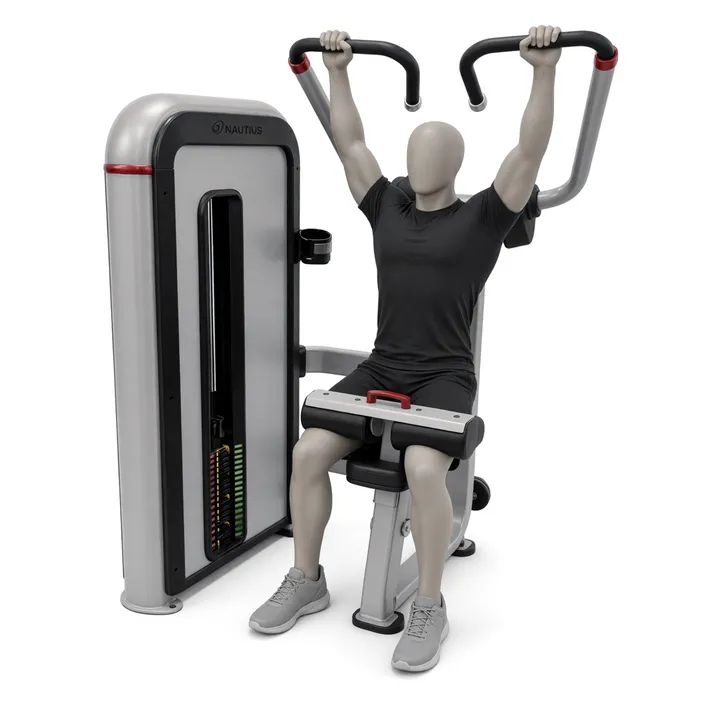
The wide-grip lat pulldown works mainly your back, with help from your biceps and shoulders. It’s a solid option if pull-ups are still hard or if you want a guided pulling exercise. You’ll find it on lat pulldown machines and most cable stations in your gym.
Doable at all 76 gyms GoSet follows
The essentials
- Lock your thighs under the pads.
- Pull the bar to your upper chest, elbows down.
- Return slowly to straight arms.
Muscles worked
- Primary
- Back
- Secondary
- Biceps · Shoulders
How to do it
- Sit at the lat pulldown or cable station and adjust the thigh pad so your thighs are locked in firmly, feet flat on the floor.
- Grab the bar wider than shoulder-width, palms facing forward, arms straight to start, with your torso slightly leaned back without exaggerating.
- Keep your chest open and shoulders down, looking straight ahead, not up at the ceiling.
- Inhale, then pull the bar down toward the top of your chest by driving your elbows down, close to your sides, without arching through your lower back.
- When the bar reaches near the top of your chest and your elbows are under or slightly behind you, pause briefly while keeping control.
- Exhale as you return slowly to straight arms, keeping control of the weight all the way up. Avoid letting the stack slam.
Common mistakes
Shrugging the shoulders toward the ears
Instead : Think about keeping your shoulders down the whole time. Before each set, “set” your shoulders down, then hold that position through your reps.
Pulling the bar too low past the chest
Instead : Stop the bar near the top of your chest. If you have to lean way back or pull the bar down to your stomach, the weight is too heavy or your range is too big.
Swinging with the lower back
Instead : Keep your feet planted and your core braced. Lean back slightly at the start and hold that angle. If you have to throw your body back to move the bar, lighten the load.
Letting the weight snap up on the way back
Instead : Control the way up. Aim for about 2 to 3 seconds to return to straight arms and avoid letting the weight stack clang.
Coach tips
- Start with a weight that lets you keep solid form and avoids using momentum from your back.
- Think about “driving your elbows down to your pockets” to feel your back working more than just your biceps.
- Use a controlled tempo: about 1 second to pull the bar down, a short pause, then 2 to 3 seconds to go back up.
- Breathe steadily: inhale at the top before you pull, exhale as you pull the bar to your chest, then reset your breath as you control the way up.
Variations
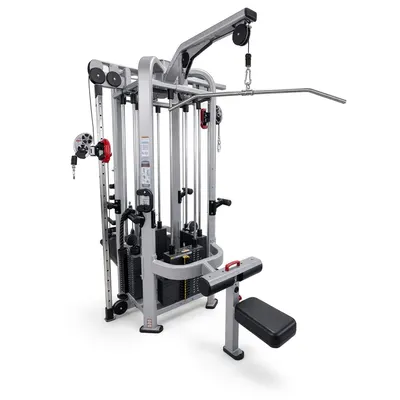
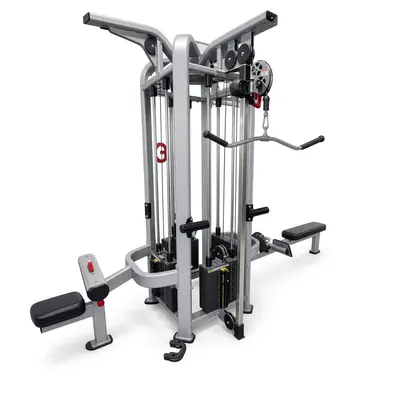
- Wide-grip pulldown on a multi-station cable machine or cable station, using the same technique but with slightly different seat or pad setups.
- Wide-grip pulldown on a high pulley of a cable crossover, sitting on a stable bench in front of the pulley.
- Wide-grip pulldown on a multi-station if your gym does not have a dedicated lat pulldown but has an adjustable high cable.
Sets and reps
You often see the wide-grip lat pulldown done for 3 to 4 sets of 8 to 12 reps with controlled form. Many people use it early in their back workout or after an assisted pull-up variation.
Equipment
Alternatives for the same muscles
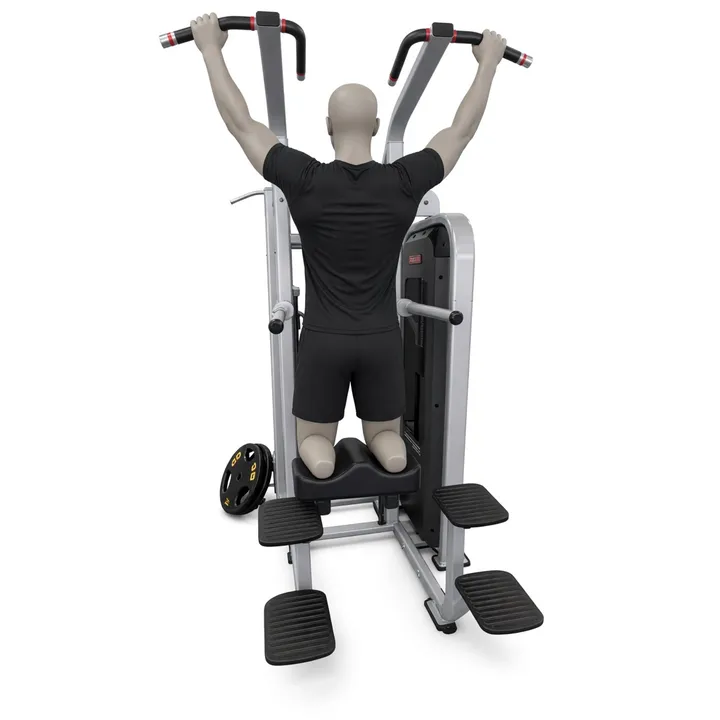
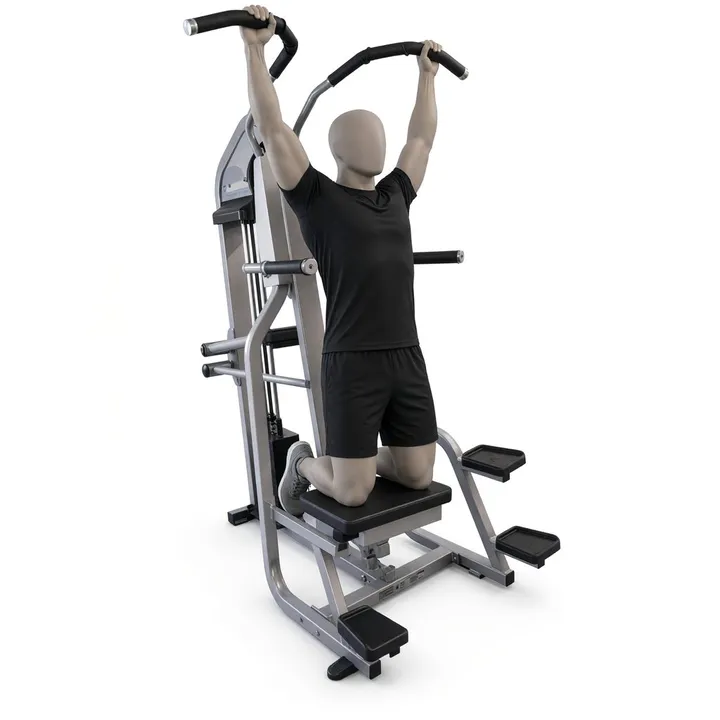
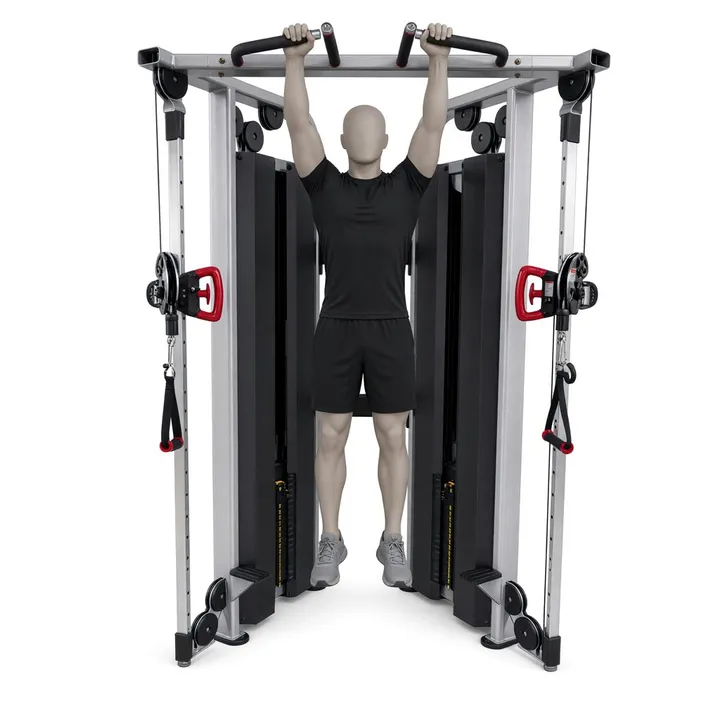
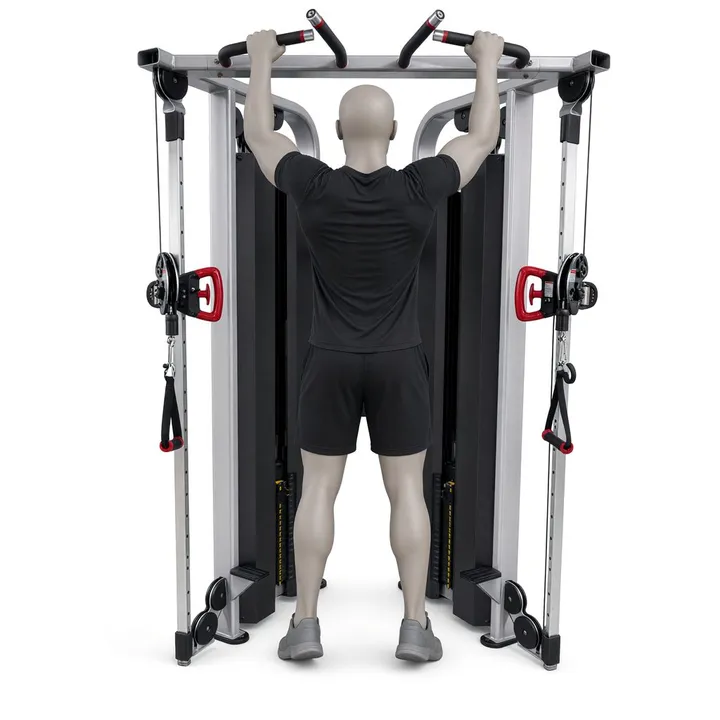
Log your Wide-grip lat pulldown sets with GoSet
GoSet remembers your last time, starts your rest on its own and notes your records. Even with no signal in the basement. Coming soon to iPhone and Android.
Common questions
I only feel my biceps on lat pulldowns, is that normal?
Your biceps will always help, but to feel your back more, first lower your shoulders, then focus on driving your elbows down instead of just “pulling with your hands”. Keep your grip firm but not overly tight.
I have to lean way back to pull the bar down, what should I do?
A small lean is enough. If you need to swing your torso back to move the bar, reduce the weight and focus on keeping your torso stable through the whole movement.
Can lat pulldowns replace assisted pull-ups?
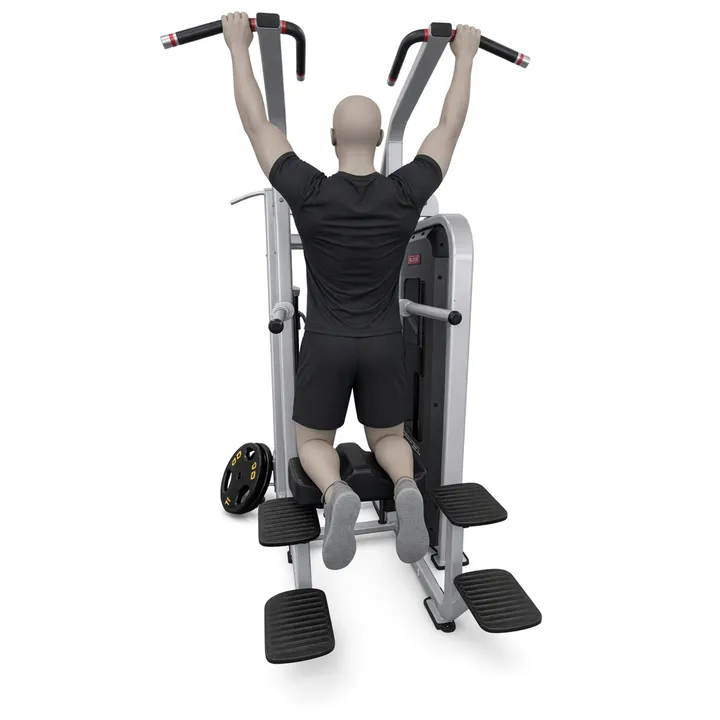
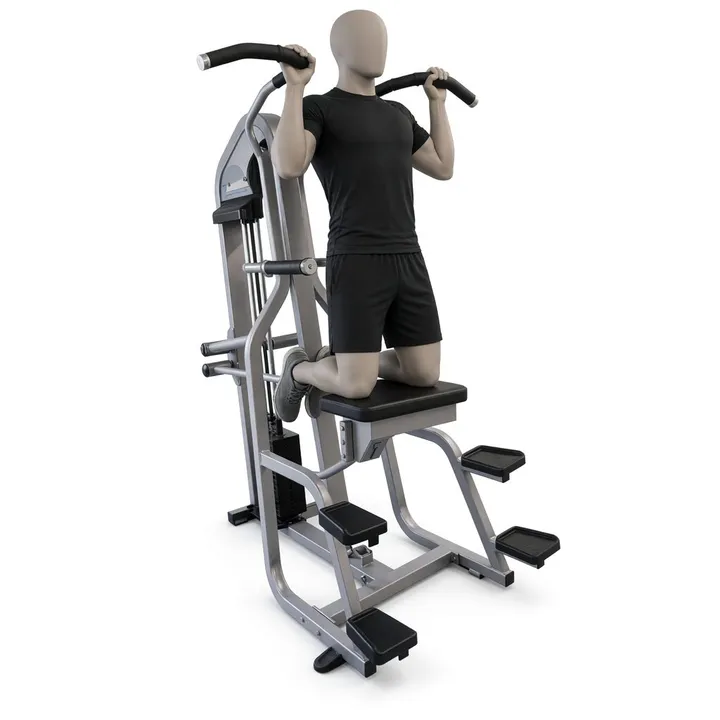
Both work your back, biceps, and shoulders. Lat pulldowns are easier to fine-tune in terms of load. Many people alternate between pulldowns and assisted pull-ups depending on their level and how they feel that day.
What if I feel pain in my neck or shoulders during pulldowns?
Stop the set and talk to a health or training professional before continuing. Sometimes a small tweak to grip, weight, or position helps, but it should be checked with someone in person.