Exercise · Back
Assisted neutral-grip pull-up on the machine
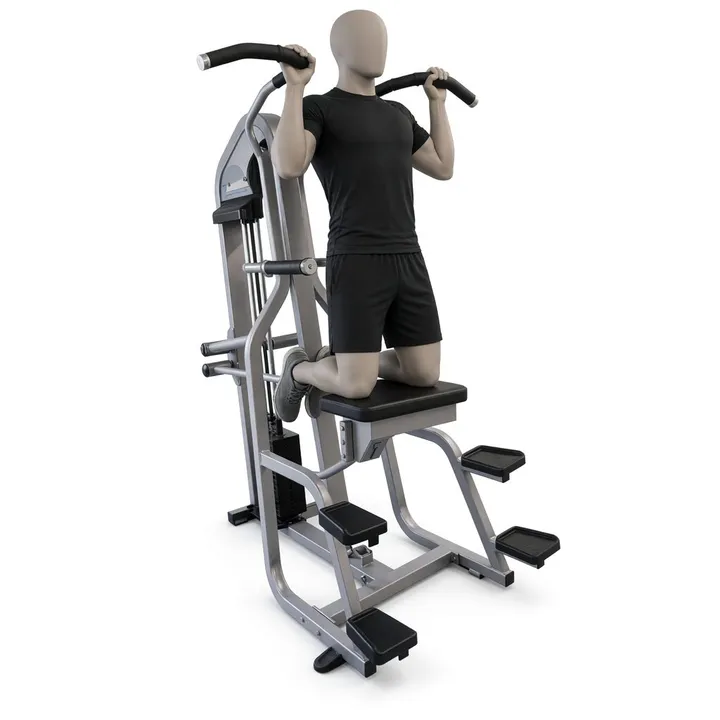
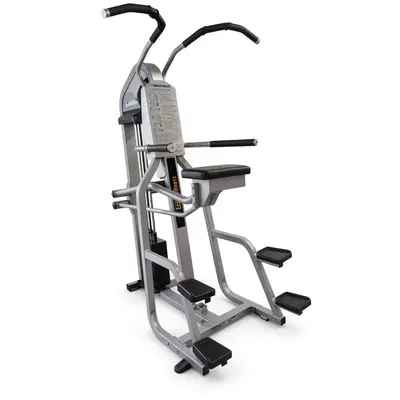
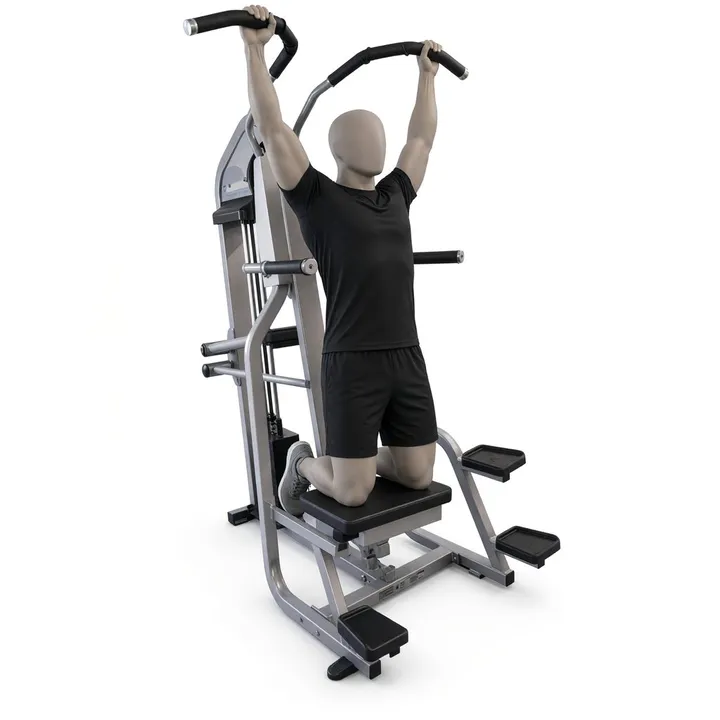
The assisted neutral-grip pull-up is done on the pull-up/dip machine with a knee pad. It targets mainly your back and also your biceps, with a comfortable parallel hand position. It’s a solid choice if you want to practice pull-ups without yet lifting your full bodyweight.
Doable at all 76 gyms GoSet follows
The essentials
- Place your hands on the parallel grips.
- Pull up with your chest tall.
- Lower yourself with control.
Muscles worked
- Primary
- Back
- Secondary
- Biceps
How to do it
- Set the assistance weight: the heavier you set it, the more the machine helps you up.
- Step onto the side platforms, place one or both knees on the pad, and grab the parallel handles with your palms facing each other.
- Lower yourself to fully extended arms under control, keeping your chest tall and your legs quiet on the pad.
- Inhale, then pull your body up with your chest tall until your upper chest comes close to your hands.
- Pause briefly at the top without shrugging into your shoulders, then lower yourself in about 2 to 3 seconds under control.
- Return to the bottom position with straight arms without swinging, then start the next rep. Carefully step off the pad when your set is done.
Common mistakes
Using too much or too little assistance
Instead : Start with enough help so you can control every rep. When it feels too easy, lower the assistance a bit so your back and biceps do more of the work.
Pulling only with your arms
Instead : Think about pulling the handles down using your back. Keep your chest tall and shoulders stable, like you’re bringing your chest to the bar, not just bending your elbows.
Dropping fast at the bottom
Instead : Keep the way down at about 2 to 3 seconds. Don’t let the pad shoot up under your knees; keep tension from top to bottom of the movement.
Swinging your legs and body
Instead : Stay tight through your torso and keep your legs calm on the pad. If you swing, you’re likely using too little assistance or going too fast: add a bit of help and slow the tempo.
Coach tips
- Match your breath to the reps: inhale at the bottom, exhale as you pull up to stay stable and strong.
- Look slightly forward, not at the floor; this helps keep your chest tall and your back engaged.
- Keep your elbows close to your sides as you pull to feel your back more and reduce stress on the shoulders.
- Over time, try to slowly reduce the assistance so you can work toward unassisted neutral-grip pull-ups.
Variations
- Knees on the pad or feet crossed behind you if the machine allows, to find the most stable position for you.
- Partial range at the top if you don’t yet have full strength, always keeping full control.
- Add a 1-second pause at the top of each rep to control the position and feel your back working.
Sets and reps
People often do this exercise for 3 to 4 sets of 6 to 12 reps, with the assistance adjusted to maintain good form. It usually fits well early in a back workout while you’re fresh.
Equipment
Alternatives for the same muscles
Log your Assisted neutral-grip pull-up sets with GoSet
GoSet remembers your last time, starts your rest on its own and notes your records. Even with no signal in the basement. Coming soon to iPhone and Android.
Common questions
Should I use one knee or both on the pad?
You can use one knee or both, depending on the machine and what feels more stable. The key is keeping your body straight, without twisting or swinging during the reps.
How do I know if the assistance is set right?
If you can do your reps without swinging, with a controlled lower phase, and you feel like you could do 1 or 2 more, the assistance is probably good. If you’re jerking the weight or losing control, add a bit more help.
Do my arms have to fully straighten at the bottom?
You can go to almost straight arms to use a good range of motion, but don’t let your shoulders shrug up toward your ears. Keep some tension in your back and always control the bottom position.
Can I do this exercise often?
Assisted pull-ups often show up 1 to 2 times per week in back workouts. What matters most is that you recover between sessions and keep your technique solid every time.