Exercise · Back
Assisted pull-up on the machine
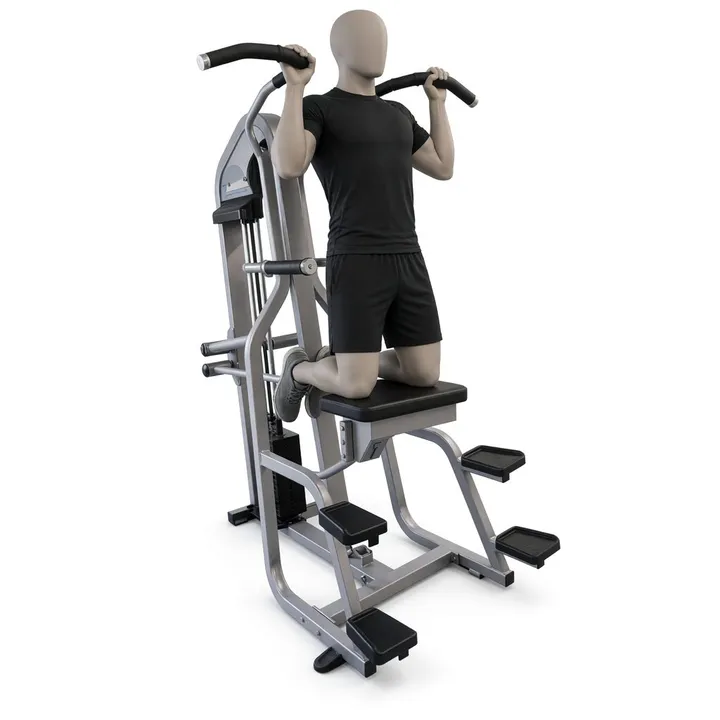
The assisted pull-up is the counterweight version of a regular pull-up. You mainly work your back and biceps with a controlled vertical pull. Great option if you’re learning pull-ups or want more volume than you can get with just bodyweight.
Doable at all 76 gyms GoSet follows
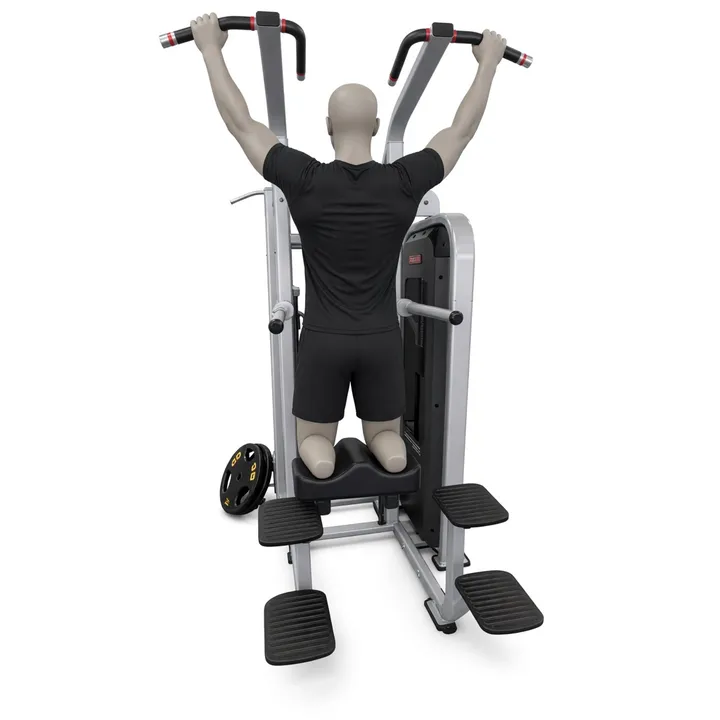
The essentials
- More assistance = easier.
- Pull your chin over the bar, lower to straight arms.
Muscles worked
- Primary
- Back
- Secondary
- Biceps
How to do it
- 1. Pick your grip on the bar (often overhand, slightly wider than shoulder-width) and set the assistance: more weight on the stack = easier reps.
- 2. Step up on the platform if there is one, place one or both knees on the pad, and grab the bar firmly.
- 3. Start with arms almost straight, shoulders pulled slightly down, eyes forward, and your torso stable without excessive arching.
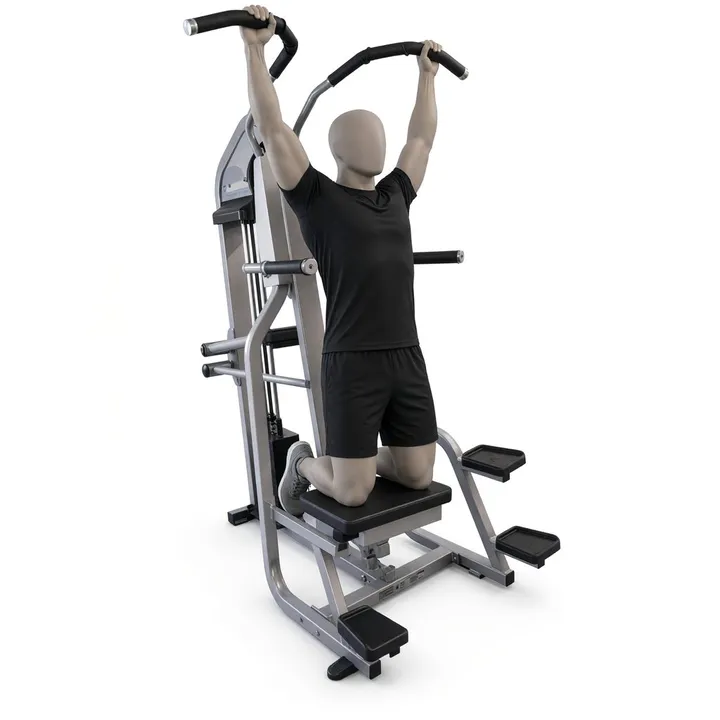
- 4. Inhale, then pull your body up by bringing your elbows down toward your sides until your chin comes over the bar.
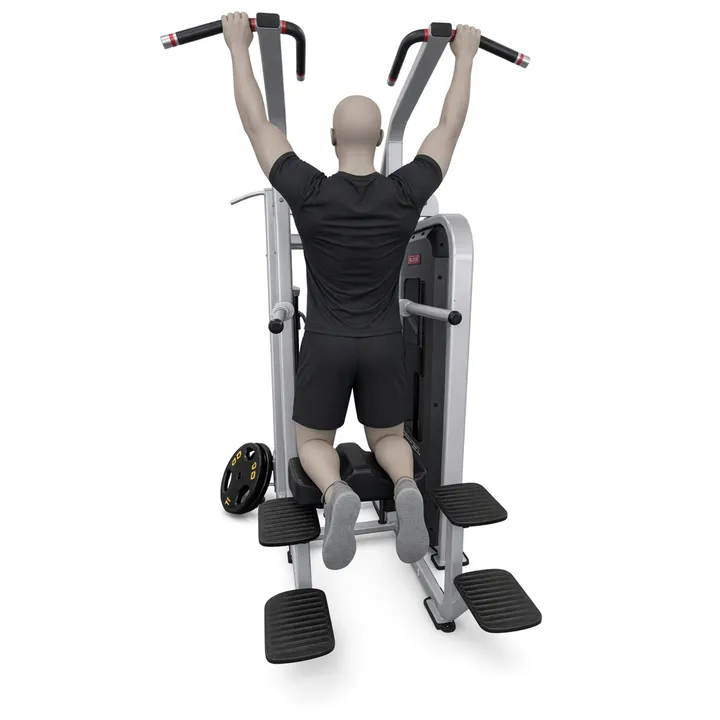
- 5. Lower yourself in about 2 to 3 seconds, controlling the way down, until your arms are almost fully straight without dropping into the bottom.
- 6. Pause briefly at the bottom to reset your position, breathe, and repeat for controlled reps.
Common mistakes
Letting the assistance fling you up and down
Instead : Always control the descent. Think about braking the pad with your knee and your back. Aim for 2 to 3 seconds on the way down instead of bouncing at the bottom.
Pulling mostly with the arms
Instead : Think about "pulling with your back." Before bending your elbows, gently pull your shoulders down, away from your ears, then bring your body up to the bar.
Too short range of motion
Instead : Try to get your chin above the bar at the top and return close to straight arms at the bottom while staying in control. If you can’t, increase the assistance.
Swinging your legs or torso
Instead : Keep your core tight and your gaze on a fixed point in front of you. Reduce momentum, even if that means slowing the movement or adding more assistance to stay in control.
Coach tips
- Start with enough assistance to keep your technique solid, then slowly reduce the assistance over time as you get stronger.
- Breathe out on the way up and in on the way down. Keep a steady rhythm instead of holding your breath the whole time.
- Hands slightly wider than shoulder-width are a good starting point. Adjust if you feel too much strain in your wrists.
- If the machine lets you use your feet instead of your knees, choose the position where you feel most stable and in control.
Variations
- Assisted chin-up (underhand grip) to put a bit more emphasis on the biceps.
- Assisted neutral-grip pull-up (parallel handles) for a wrist-friendly option.
- Assisted wide-grip pull-up for a different angle for your back, if the machine allows it.
Sets and reps
You often see this exercise done for 3 to 4 sets of about 5 to 12 reps, depending on the assistance. More assistance usually means you can do more clean reps.
Equipment
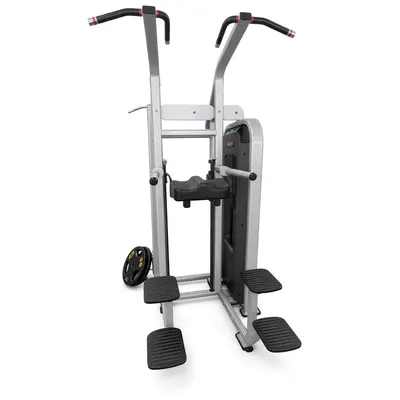
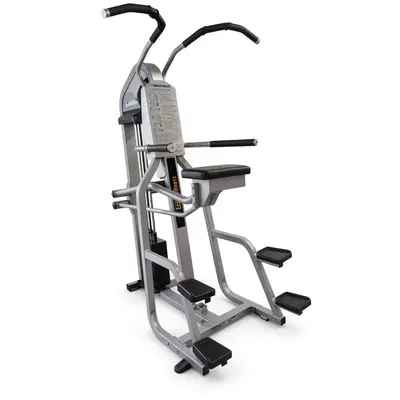
Alternatives for the same muscles
Log your Assisted pull-up sets with GoSet
GoSet remembers your last time, starts your rest on its own and notes your records. Even with no signal in the basement. Coming soon to iPhone and Android.
Common questions
I’m a beginner, how much assistance should I use?
Pick a weight that lets you go up and down with control, chin above the bar on every rep. If you need to cheat with momentum, add more assistance.
Do my arms need to be completely straight at the bottom?
You can go close to straight arms to get a good range of motion, but avoid hanging hard at the bottom. Keep some tension in your back and stop before any pain.
I only feel my biceps, not my back. Is that normal?
It can happen. Focus on bringing your elbows down toward your sides and gently pulling your shoulders down at the start of the movement. Slowing the reps often helps you feel your back more.
When should I move to unassisted pull-ups?
You can start testing a few unassisted reps once you control the machine well with full range of motion. Many people combine both to keep good training volume.