Exercise · Back
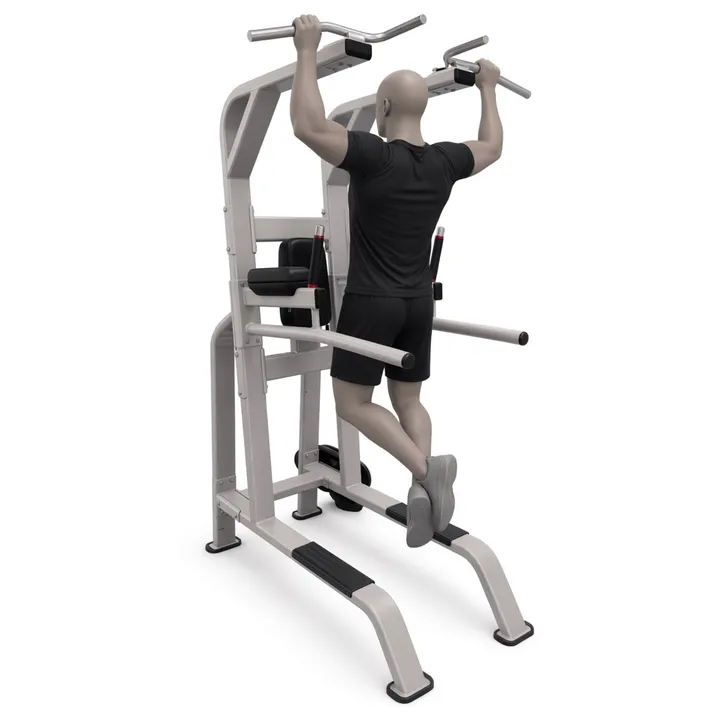
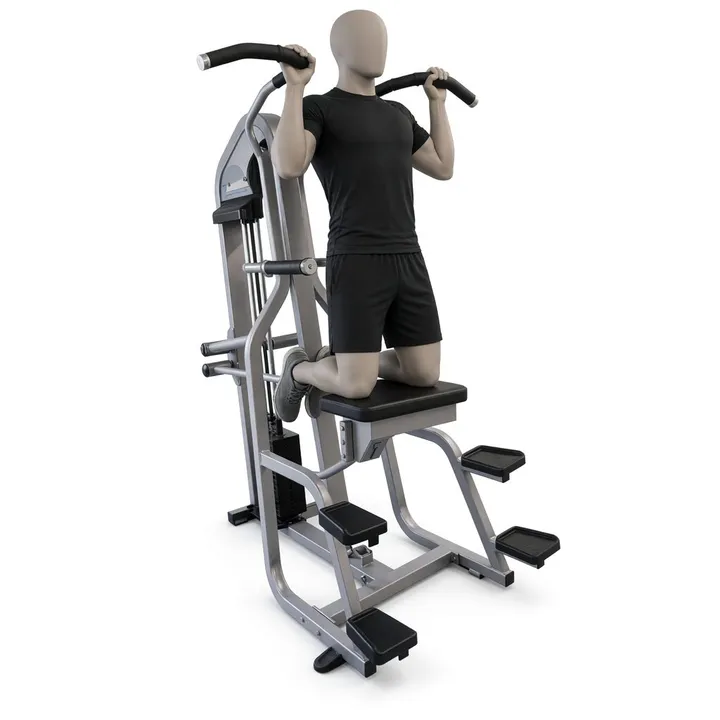
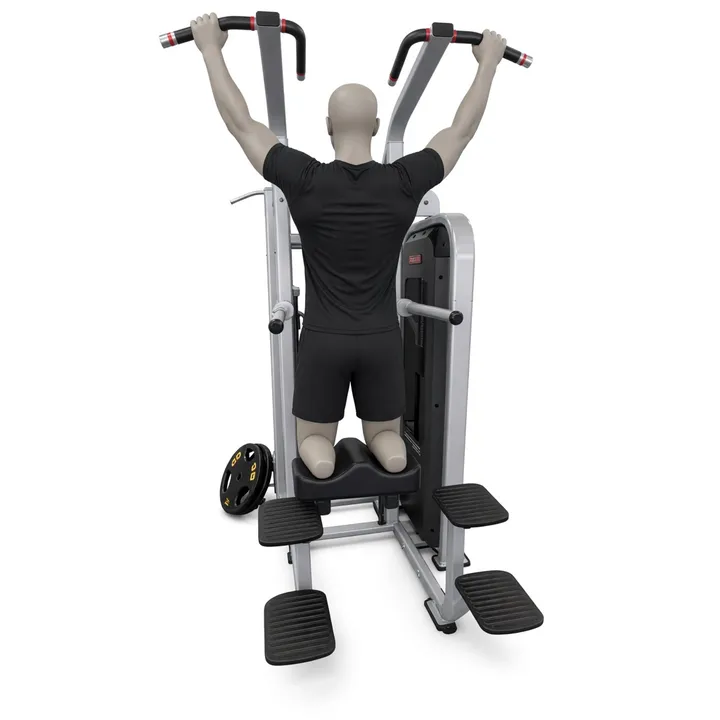
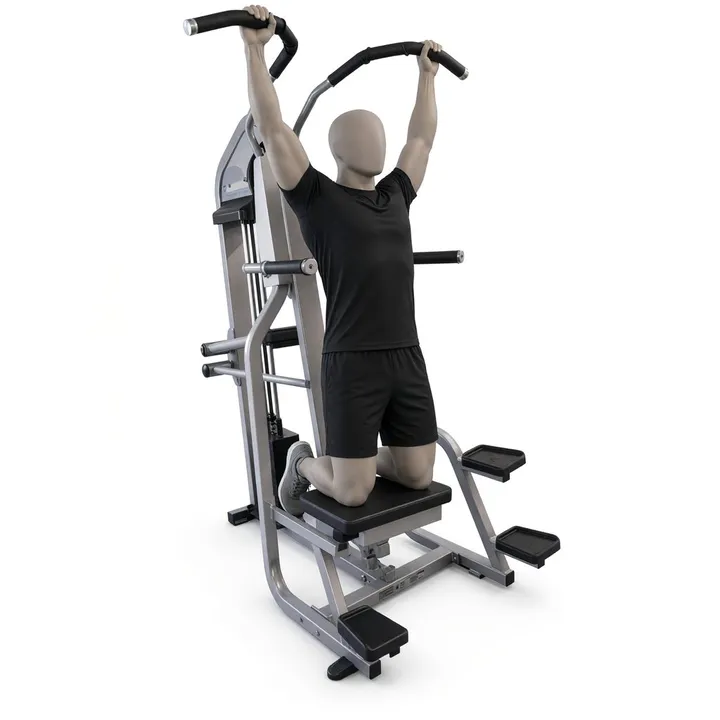
Assisted chin-up on the machine
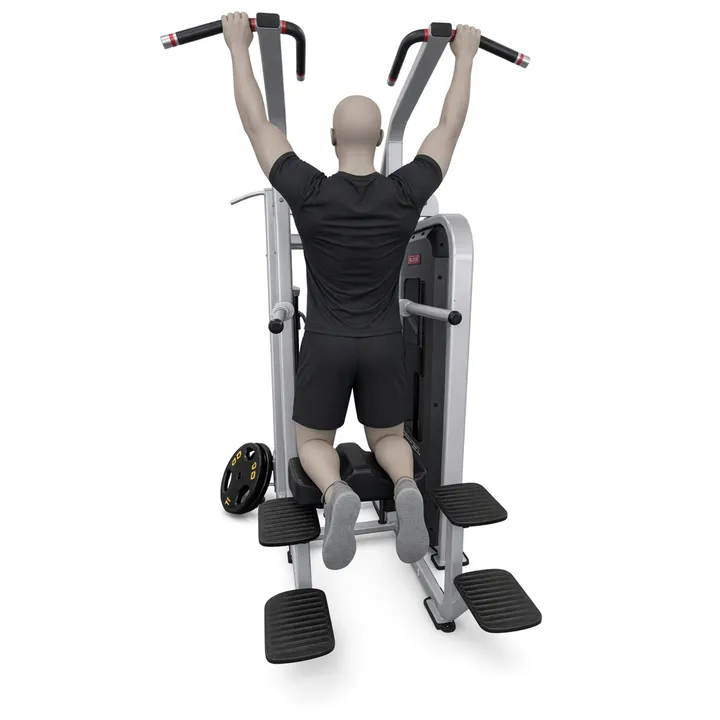
The assisted chin-up is the machine-supported version of chin-ups with palms facing you. It mainly works your back and biceps, with help from your forearms and traps. It’s great to learn proper chin-up form or to get more controlled reps in.
Doable at all 76 gyms GoSet follows
The essentials
- Palms facing you, shoulder-width grip.
- Pull up without swinging.
Muscles worked
- Primary
- Back · Biceps
- Secondary
- Forearms · Traps
How to do it
- Set the assistance weight: the higher the number, the more the machine helps you. Pick a level that lets you move up and down without using momentum.
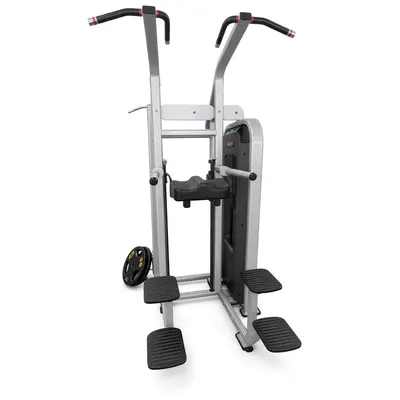
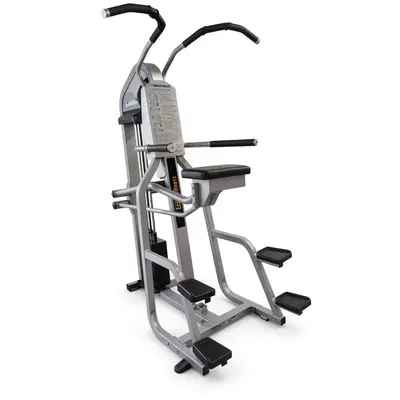
- Step onto the foot platform, place your knees on the knee pad if your machine has one, and grab the handles with palms facing you, hands about shoulder-width apart.
- Lightly brace your core, look forward, and let your body hang at the bottom of the movement with arms almost straight, without completely dropping your shoulders.
- Breathe in, then pull your body up toward the handles, thinking about pulling with your back and biceps. Go up until your upper chest approaches your hands, without swinging your legs.
- Control the way down for 2 to 3 seconds while exhaling, returning close to the arms-almost-straight position.
- Keep the same rhythm for all your reps, then lower the step or remove one knee at a time to safely get off the machine.
Common mistakes
Letting the assistance launch you up
Instead : Use less assistance and keep a steady tempo. Move up smoothly and control the way down for 2 to 3 seconds, without bouncing at the bottom.
Swinging the legs to cheat the reps
Instead : Keep your thighs closer together, knees steady on the pad, and brace your core a bit. Think about moving only at the shoulders and elbows.
Pulling only with your arms
Instead : Before bending your elbows, think of pulling the handles with your back. Keep your chest open and your shoulders stable to get your back more involved.
Holding your breath the whole movement
Instead : Take a breath at the bottom, pull while holding the air, then slowly exhale as you control the way down. Keep a steady breathing rhythm from rep to rep.
Coach tips
- Start with enough assistance to keep solid form, then gradually reduce the help over the weeks to work toward unassisted chin-ups.
- Think “bring your chest to the bar” instead of just “bend your elbows”. That usually helps you feel your back more, not only your biceps.
- Use a short half-second pause at the top without shrugging your shoulders, then take 2 to 3 seconds to lower yourself for full control of each rep.
- If shoulder-width grip bothers your wrists, slightly adjust how wide you hold the handles while keeping palms facing you and a comfortable path for your arms.
Variations
- Assisted neutral-grip pull-up if you prefer parallel handles for less wrist stress and a different feel in your back.
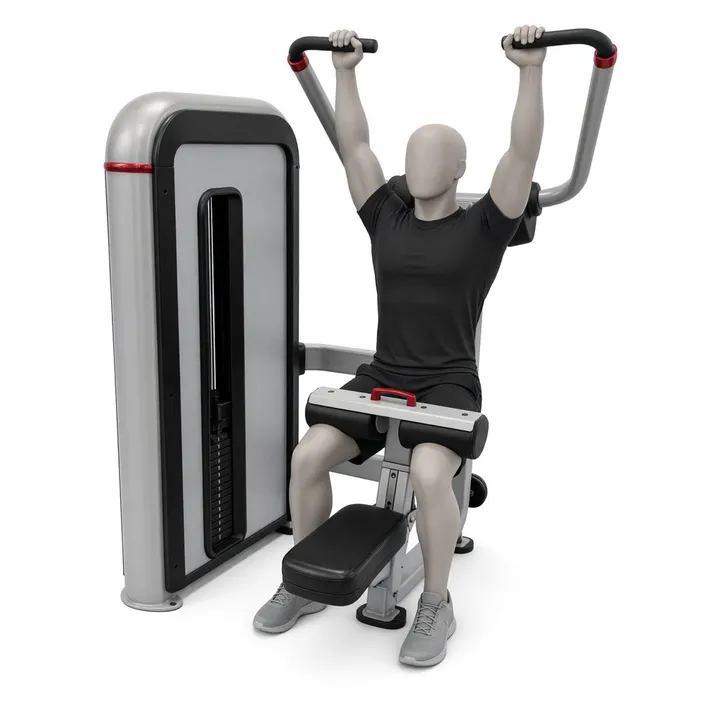
- Underhand lat pulldown to train a similar movement while seated if the assisted machine is busy or doesn’t feel right for you.
- Chin-up without assistance once you can do several controlled sets on the machine with very little help.
Sets and reps
For strength training, people often do 3 to 4 sets of 6 to 12 controlled reps on the assisted chin-up, depending on the assistance level and their experience. Some like to finish a back workout with one or two lighter sets to practice technique.
Equipment
Alternatives for the same muscles
Log your Assisted chin-up sets with GoSet
GoSet remembers your last time, starts your rest on its own and notes your records. Even with no signal in the basement. Coming soon to iPhone and Android.
Common questions
How much assistance should I use on the assisted chin-up?
Pick a level where you can do all your reps without swinging and with a controlled lowering. If you lose control or start using momentum, add some assistance. If it feels too easy, reduce it a bit.
Where should I feel the assisted chin-up?
You should mainly feel it in your back and biceps. Your forearms and traps will also work. If you feel sharp pain in your shoulders, elbows, or wrists, stop the exercise and talk with a professional.
I don’t fully reach the bottom stretch. Is that okay?
Yes, you can keep your arms almost straight without forcing a deep stretch in your shoulders. What matters is control, no bouncing at the bottom, and using a range of motion that feels comfortable for you.
What’s the difference between the assisted chin-up and neutral or wide-grip versions?
With palms facing you, you’ll usually feel your biceps more along with your back. Other grips like neutral or wide change how the back and arms feel the work a bit, but the basic vertical pulling pattern stays similar.