Machine · Back
Assisted pull-up and dip (knee pad)
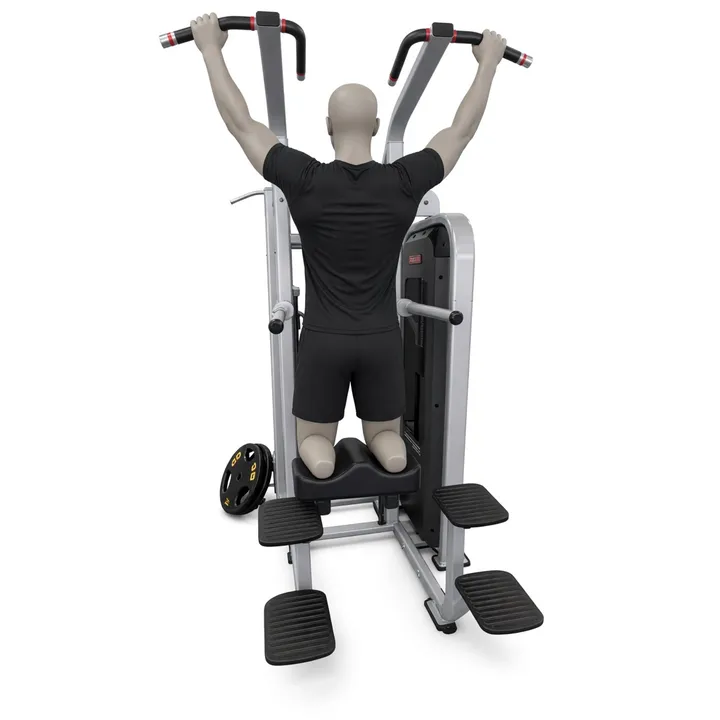
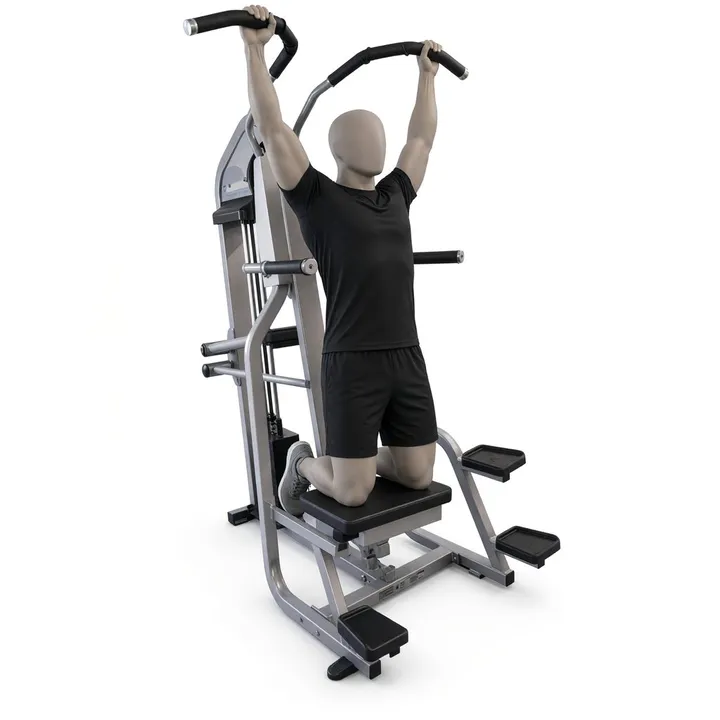
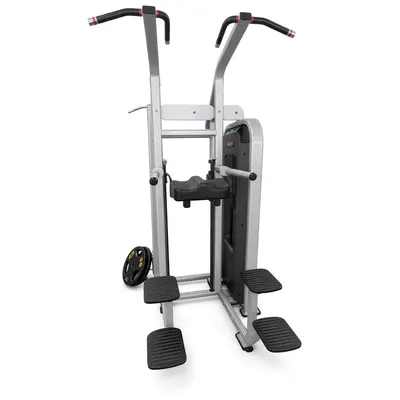
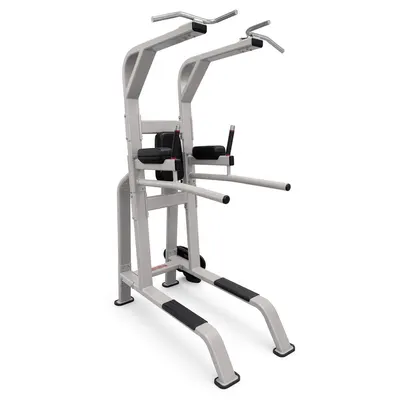
This machine helps you do pull-ups and dips even if you’re not ready to do them with full bodyweight. It mainly trains your back and triceps with good control. It’s a solid option to progress without rushing your body.
At all 76 gyms GoSet follows
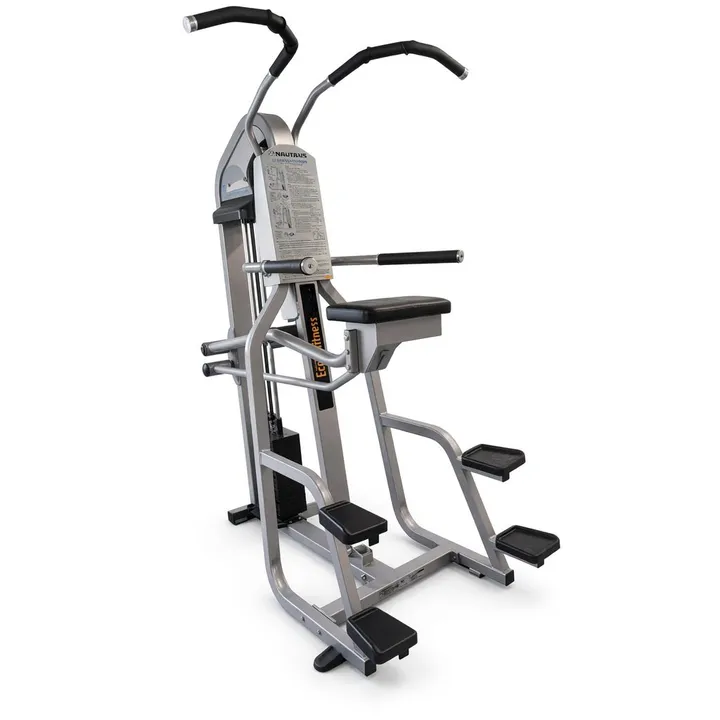
The essentials
- Palms facing you, shoulder-width grip.
- Pull up without swinging.
Muscles worked
- Primary
- Back · Triceps
Setup
- Select the exercise on the machine (pull-up handles or dip bars).
- Set the assistance weight: the more weight you add, the more the machine helps you up.
- Adjust the knee pad height so you can step onto it without jumping.
- Step onto the platform or handles and grab the bars with a comfortable grip.
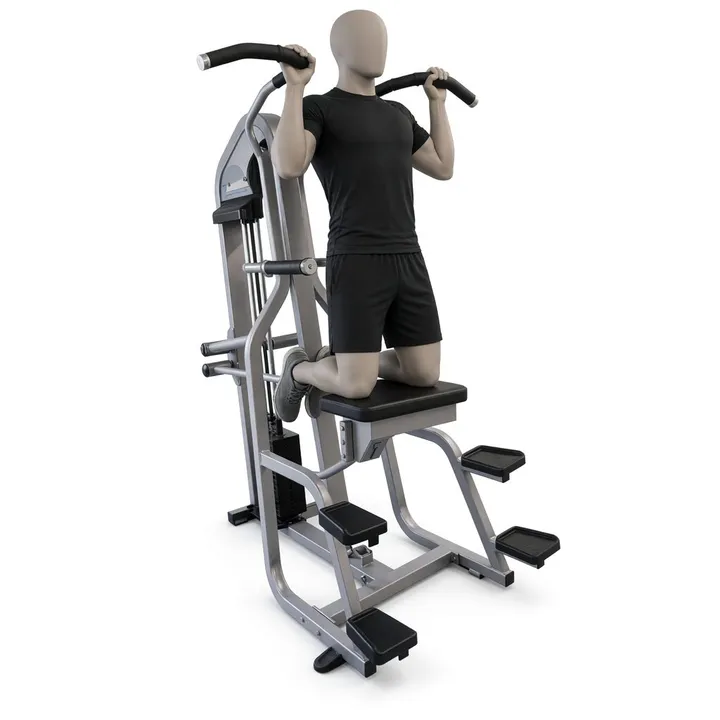
- Place your knees on the pad as it comes up and brace your core before starting.
How to do it
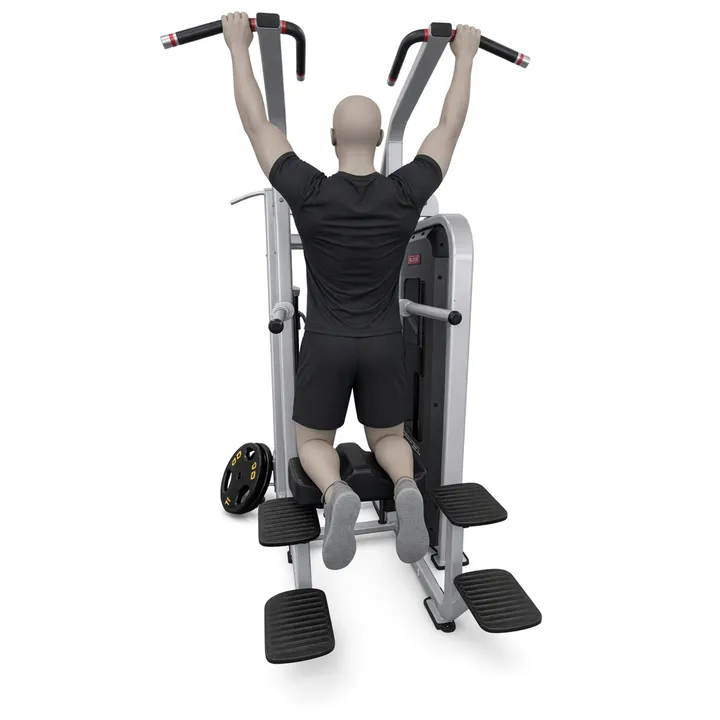
- 1. For assisted pull-ups: keep your torso fairly upright, look forward, arms almost straight without locking your elbows.
- 2. Breathe in, then pull with your back and arms to lift your body, bringing your upper chest toward the handles.
- 3. Keep your shoulders away from your ears, move with control, and avoid kicking with your legs.
- 4. Stop the upward phase when you are close to the handles, without jamming your shoulders, and hold for a brief second.
- 5. Lower yourself in 2 to 3 seconds under control, back to near the starting position.
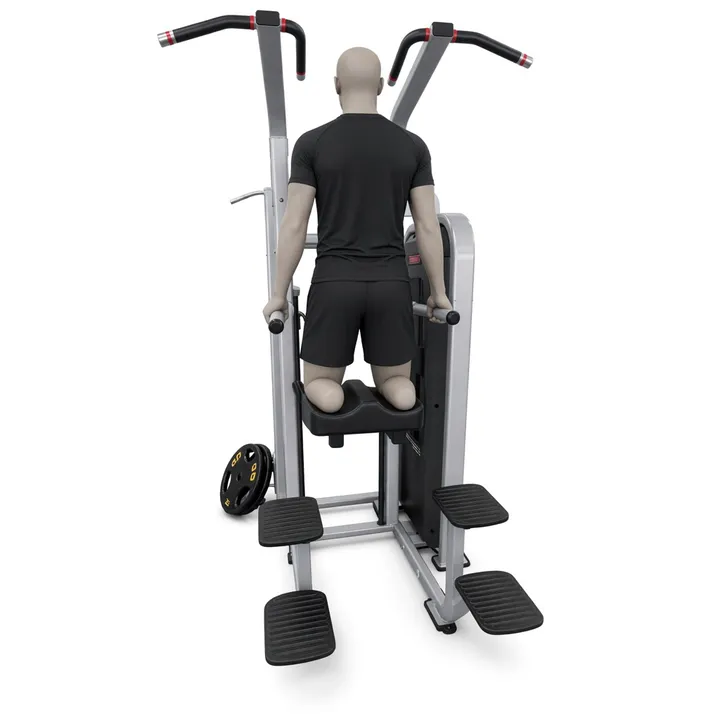
- 6. For dips: stand between the bars, slight forward lean, then press up with your triceps and bend your elbows to go down, always with a smooth tempo.
Common mistakes
Too much or too little assistance
Instead : Start with enough assistance to control the lowering phase. If you’re swinging or using your legs to cheat, add more help. If it feels too easy, remove a bit of weight next time.
Letting shoulders shrug up toward the ears
Instead : Before each rep, think about gently drawing your shoulders down and opening your chest. If you feel them creeping up, pause, reset your position, then continue.
Bouncing off the knee pad
Instead : Lower all the way under control, pause briefly at the bottom, then come back up without bouncing with your knees. Focus on a steady tempo, especially at the bottom range.
Very short range of motion
Instead : Aim for a solid elbow bend at the top and come back close to full extension at the bottom, without locking out. Adjust the range to stay comfortable in your joints and pain-free.
Coach tips
- For breathing: inhale at the bottom, exhale as you pull or push yourself up on each rep.
- Use a steady tempo: about 1 second up and 2 to 3 seconds down.
- For pull-ups, try different grips (supinated, neutral, wider) to change how the upper body works.
- On dips, keep your elbows in a natural path, not flared too wide or glued to your sides, to feel your triceps more.
Variations
- Assisted chin-up (supinated grip): palms facing you for a different feel in your back.
- Assisted neutral-grip pull-up: parallel handles, often more comfortable on the shoulders.
- Assisted wide-grip pull-up: hands wider apart to change the back angle, with controlled range of motion.
Sets and reps
People often use this machine for 3 to 4 sets of 5 to 12 reps, depending on level and assistance. It’s common to place it early in an upper body workout, when you’re fresh.
Exercises on this machine
Machine taken? Try instead
Log your Assisted pull-up and dip (knee pad) sets with GoSet
GoSet remembers your last time, starts your rest on its own and notes your records. Even with no signal in the basement. Coming soon to iPhone and Android.
Common questions
How do I choose the right assistance weight?
You want clean form with a bit of energy left at the end of the set. If you lose control halfway through, add assistance. If you finish the set very fresh, remove one step of weight next time.
Where should I place my hands for assisted pull-ups?
You can use a supinated grip (palms toward you), a neutral grip (parallel handles), or a wider grip. Pick the one that feels stable and comfortable for your shoulders, and rotate them between workouts if you like.
What if I feel discomfort in my shoulders or elbows?
Stop the exercise right away and talk to a health or training professional. You can try a smaller range of motion or a different grip, but not if the pain stays.
When should I move to unassisted pull-ups or dips?
Once you can do several sets with low assistance, with solid form and a bit of room left in the tank, you can start trying a few bodyweight reps on a separate pull-up or dip station.