Machine · Back
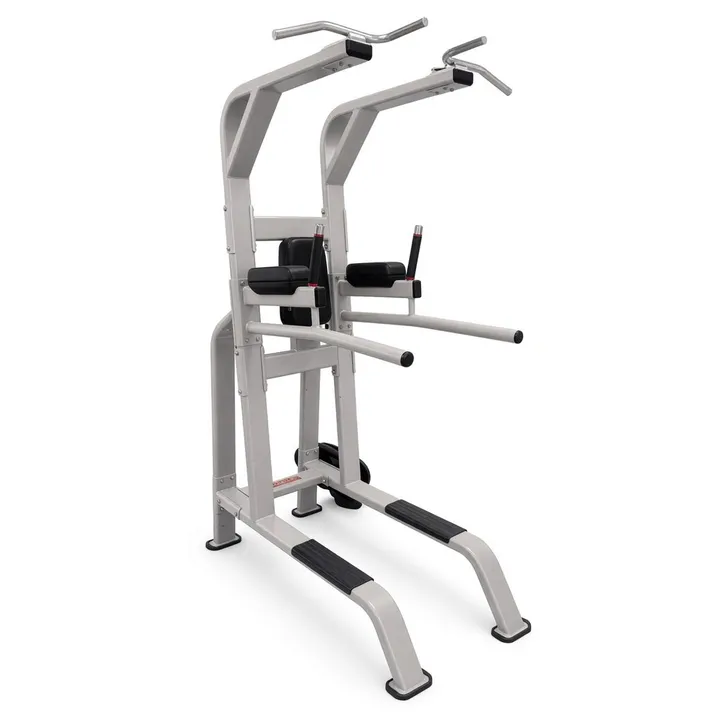
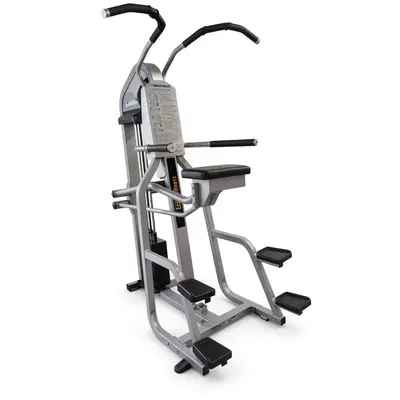
Power tower (pull-up, dip, knee raise)
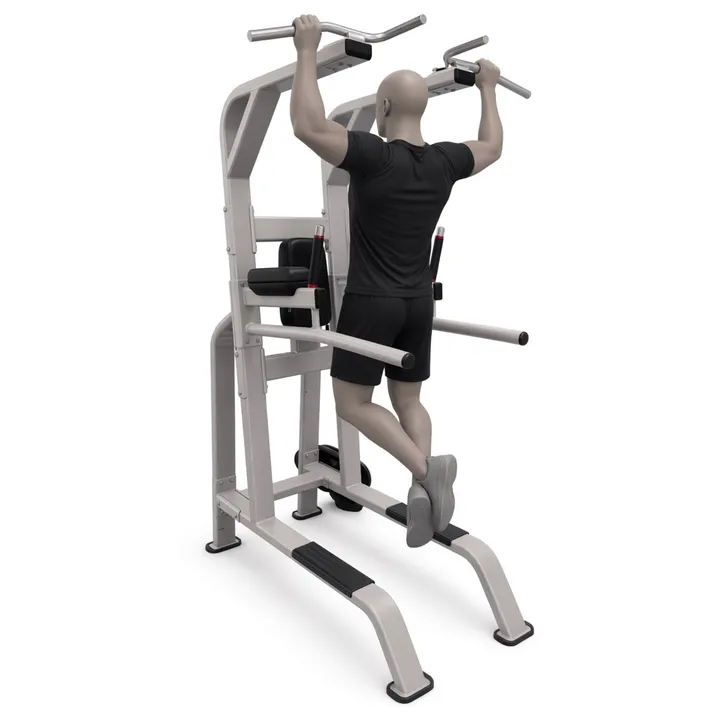
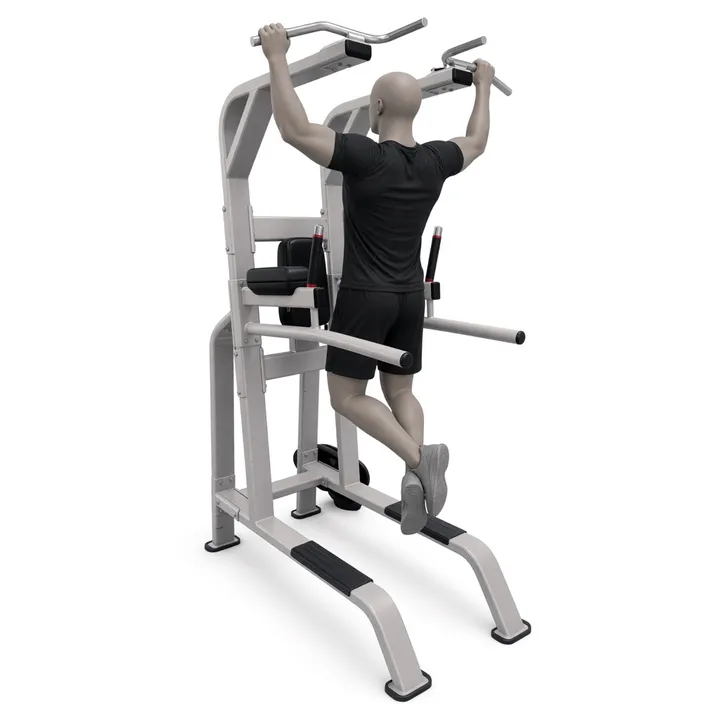
The power tower is a bodyweight station with a pull-up bar, dip handles and knee-raise support. It lets you train your core, back and triceps with your own bodyweight, and you can add load as you get stronger. Super practical if you like simple, effective movements.
At all 76 gyms GoSet follows
The essentials
- Lower until your elbows are around 90°.
- Keep your shoulders away from your ears.
Muscles worked
- Primary
- Core · Back · Triceps
Setup
- Make sure the tower is stable, clear of obstacles and not wobbling.
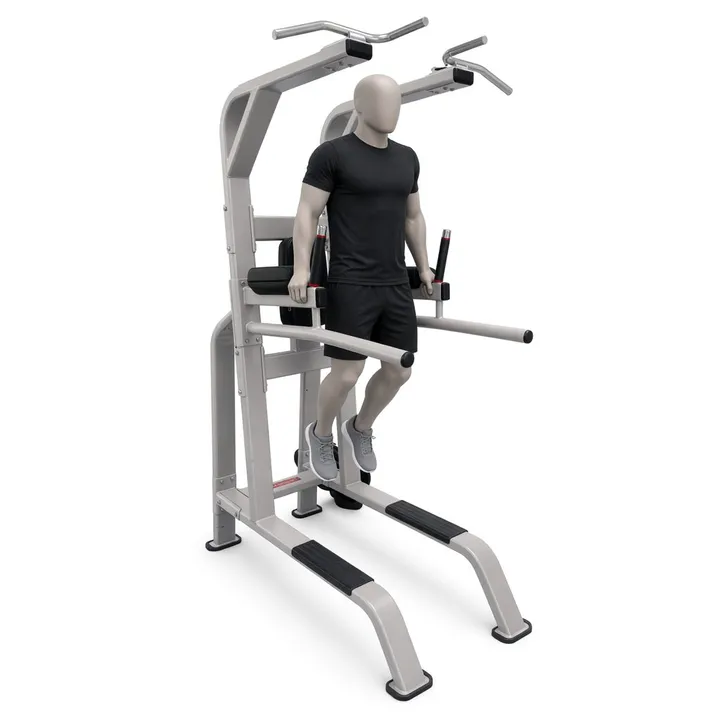
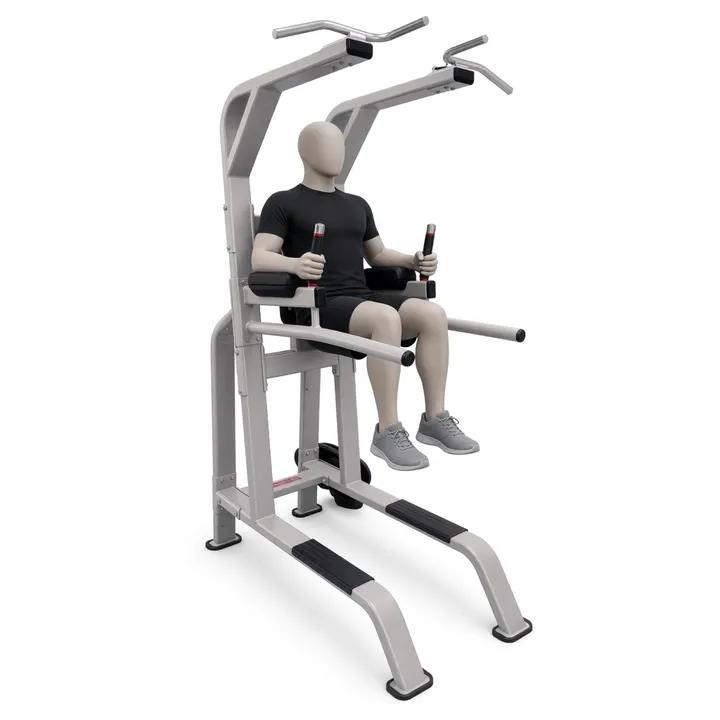
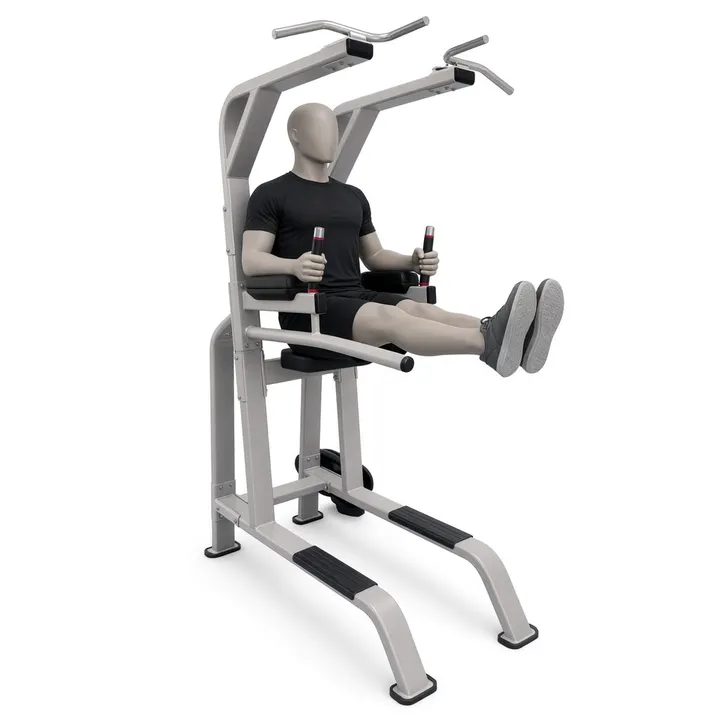
- Pick the section you’ll use: top bar for pull-ups, horizontal handles for dips, arm pads and handles for knee or leg raises.
- Check that the bar and handles are not slippery; wipe them if needed.
- If you plan to add weight (belt, dumbbell between feet), set it up before you get on the tower.
- Place a low bench or step near the tower if you need help reaching the bar or handles.
How to do it
- Carefully step onto the footholds or bench, then grab the bar or handles with a solid grip.
- Set your starting position: shoulders engaged, core tight, legs slightly bent or crossed behind you for stability.
- Keep your gaze forward, neck in line with your spine, and do not let your shoulders shrug up towards your ears.
- Perform the working part of the movement (pull, push or raise) over about 1 to 2 seconds.
- Control the lowering or return over 2 to 3 seconds, avoiding any dropping or swinging.
- At the end of the set, come back to a stable support position, then step down carefully, keeping your grip until your feet are firmly on a stable surface.
Common mistakes
Letting your body swing a lot
Instead : Bring your legs a bit closer together, brace your core and think about moving in a controlled path. Slow down the lowering phase to about 2 to 3 seconds. Use a smaller range of motion if you lose control.
Shoulders creeping up to your ears
Instead : Before starting, gently pull your shoulders down and slightly back. Keep that position during the whole set, especially on pull-ups and dips.
Snapping the elbows at lockout
Instead : Try to keep a small bend in your elbows at the top of dips or pull-ups so you stay in control instead of slamming the joint into full lock.
Jumping off the tower
Instead : Keep holding the bar or handles until your feet touch a stable support (foothold or bench). Then step down calmly to avoid unnecessary impact through your back and shoulders.
Coach tips
- Breathe out during the effort (when you push or pull) and breathe in on the way back down. Avoid fully holding your breath.
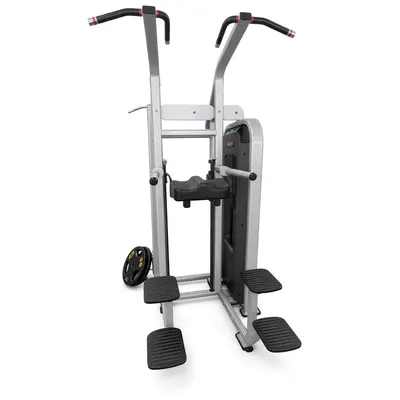
- If you’re new to this, use a shorter range of motion and focus on control. An assisted chin-up and dip machine (with knee pad) can help you build up to the tower.
- Once you’re solid with bodyweight, you can add load with a dipping belt or a dumbbell between your feet, keeping the same smooth technique.
- Place your hands at a width that feels natural on the bar or handles: not too wide, not too narrow, so your shoulders stay comfortable.
Variations
- Supinated grip on the pull-up bar (palms facing you) to work your back and core from a slightly different angle.
- Knee raises or straight leg raises in the captain’s chair, focusing on a slow, controlled return to challenge your core.
- Dips with bent or crossed legs behind you to help stabilize your body if straight legs feel uncomfortable.
Sets and reps
On the power tower, people often do short to moderate sets, such as 3 to 5 sets of a few reps for pull-ups and dips, and somewhat higher reps for knee or leg raises. Most of the time it’s done with bodyweight, with the option of adding load depending on your level.
Exercises on this machine
Machine taken? Try instead
Log your Power tower (pull-up, dip, knee raise) sets with GoSet
GoSet remembers your last time, starts your rest on its own and notes your records. Even with no signal in the basement. Coming soon to iPhone and Android.
Common questions
Which muscles does the power tower work?
This station mainly targets your core, back and triceps. Depending on whether you’re doing pull-ups, dips, or knee/leg raises, the emphasis shifts, but these areas stay the most involved.
What if my bodyweight is too heavy to start?
You can use an assisted pull-up and dip machine with a knee pad to reduce the load you have to lift. That way you keep a similar movement while you build enough strength to move to the tower.
Can I replace knee raises from the tower?
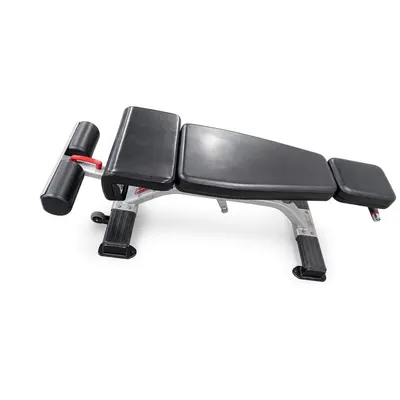
Yes. You can use an adjustable ab bench or do abdominal crunches instead. You’ll still work your core, just with a different support setup.
How do I add extra weight on the tower?
Once you control the movement with bodyweight, you can add resistance with a dipping belt or by holding a dumbbell between your feet. Start light and keep every rep smooth and controlled.