Exercise · Core
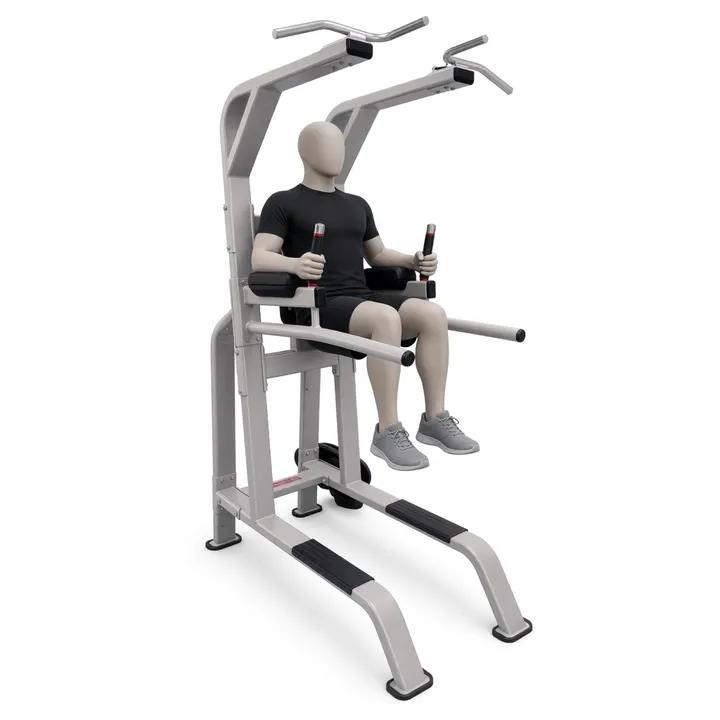
Captain’s chair knee raise on power tower
Captain’s chair knee raises, on a pull-up/dip/knee raise tower, mainly target your core and your hip flexors. It’s a solid option to work in suspension without hanging from your hands. Great if you want something harder than floor crunches for your trunk.
- Core
- Hip flexors
Doable at all 76 gyms GoSet follows
The essentials
- Back against the pad, forearms on the rests.
- Raise your knees by curling your pelvis up.
Muscles worked
- Primary
- Core
- Secondary
- Hip flexors
How to do it
- Set yourself up in the tower. Forearms firmly on the pads, hands on the handles if there are any, back pressed against the large pad.
- Keep your shoulders down, neck long, core tight. Let your legs hang under you with your feet slightly in front of your body for balance.
- Take a breath in. Start the movement by gently curling your pelvis, then raise your knees toward your chest while keeping your back against the pad.
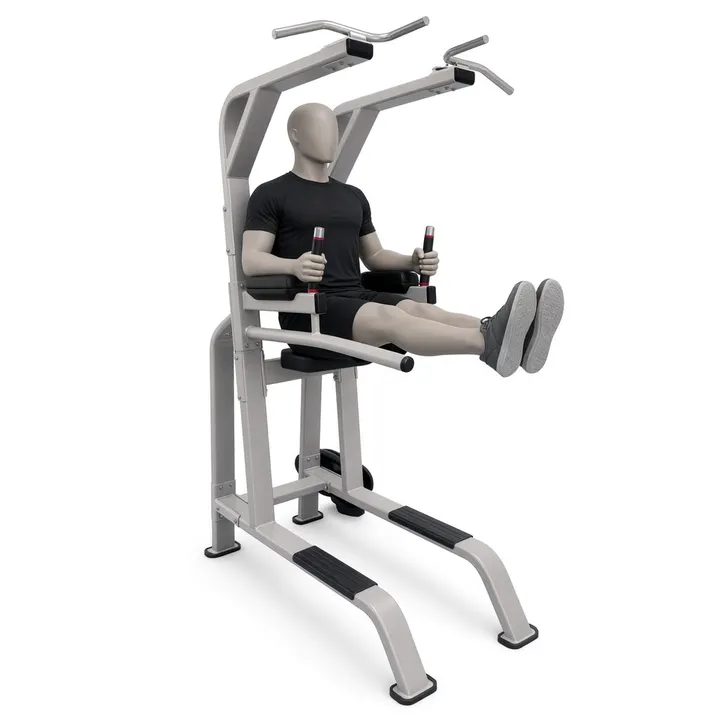
- Lift until your thighs are at least parallel to the floor, or a bit higher if you stay in control. Think about bringing your pelvis closer to your ribs in front.
- Lower your legs in 2 to 3 seconds, under control, without letting them swing. Keep your core engaged the whole time.
- Return fully to the starting position on each rep, then repeat for your planned number of repetitions.
Common mistakes
Swinging the legs to get higher
Instead : Slow it down. Take 1 to 2 seconds to lift and 2 to 3 seconds to lower. If you’re swinging, reduce the range of motion and stop before your legs pick up too much speed.
Letting the back come off the pad
Instead : Press your lower back into the pad before every set. As you bring your knees up, focus on curling your pelvis instead of arching your back.
Dropping the head and sinking into the shoulders
Instead : Look straight ahead. Gently push into the forearm pads to keep your shoulders down and your neck long. The upper body stays stable; the pelvis is what moves.
Going down too fast and losing control
Instead : Count 1-2-3 on the way down. If you can’t control it, do fewer reps or use a slightly smaller range of motion.
Coach tips
- Breathe out as you lift your knees and finish exhaling at the top to help your core engage. Breathe in on the way down.
- Start with a medium range of motion, then gradually go higher as long as you keep control and avoid using momentum.
- If your shoulders or arms tire quickly, keep your sets short with clean form instead of forcing and twisting around.
- Between sets, relax your shoulders and forearms, shake out your arms, then reset with your back firmly pressed to the pad before starting again.
Sets and reps
This exercise often shows up for 2 to 4 sets of about 8 to 15 reps, depending on your level and control. You can place it early or late in your workout to focus on core work.
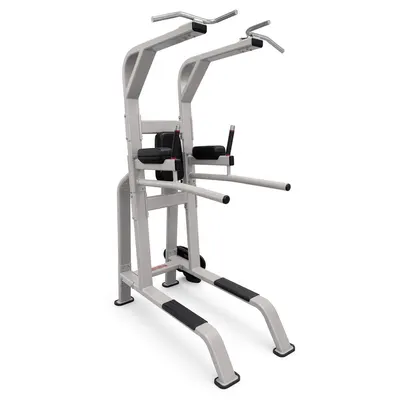
Equipment
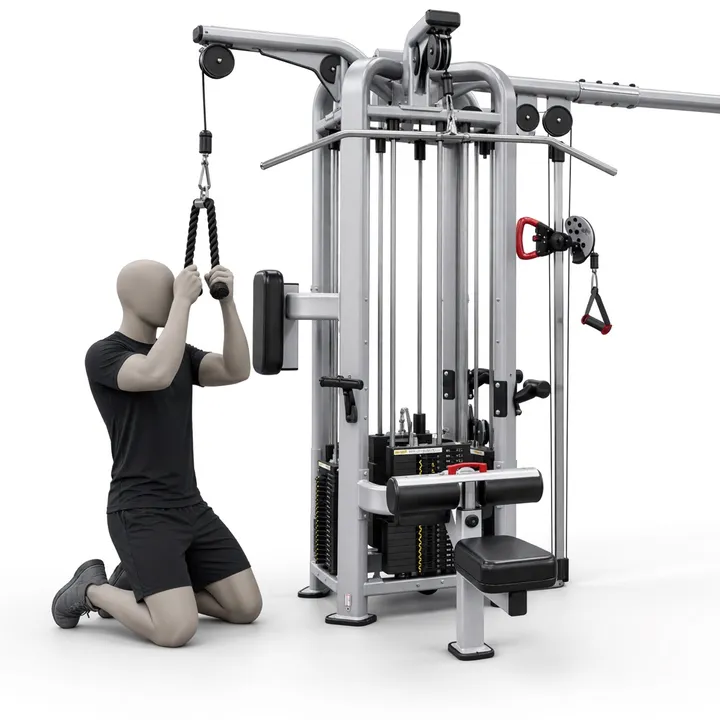
Alternatives for the same muscles
Log your Captain’s chair knee raise sets with GoSet
GoSet remembers your last time, starts your rest on its own and notes your records. Even with no signal in the basement. Coming soon to iPhone and Android.
Common questions
Where should I feel captain’s chair knee raises?
You should mainly feel your core working, with your hip flexors helping. If you mostly feel your shoulders or elbows, you’re likely hanging passively instead of staying active in the chair.
What if I feel pain in my lower back during this exercise?
Stop the set. Use a smaller range of motion and keep your lower back pressed into the pad. If the pain keeps coming back, talk to a professional and switch to one of the alternative exercises that feels better for you.
Do I need to bring my knees very high?
You don’t have to go to the absolute max. Lift high enough to feel your core work while keeping your back on the pad and avoiding any swinging. Over time, you can go higher if you maintain the same control.