Exercise · Core
Decline sit-up on ab bench
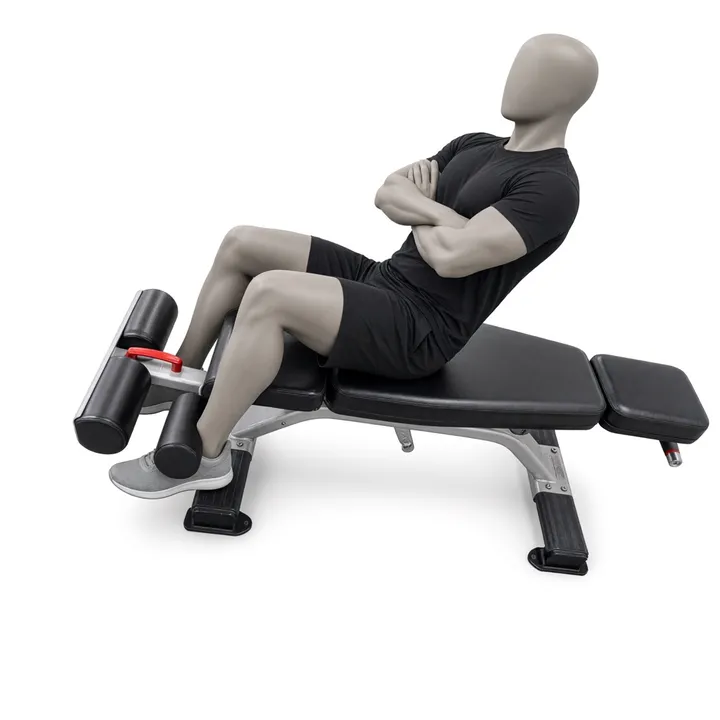
The decline sit-up is a harder version of the classic sit-up. The bench angle increases the load on your core and can also bring your hip flexors into the movement. It’s a good option if you already control your abs well on the floor and want more of a challenge.
- Core
- Hip flexors
Doable at all 76 gyms GoSet follows
The essentials
- Feet locked under the pads.
- Curl up, then lower slowly.
Muscles worked
- Primary
- Core
- Secondary
- Hip flexors
How to do it
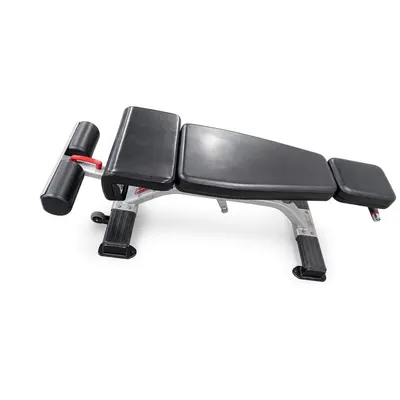
- 1. Set the adjustable ab bench to a light or moderate decline, then lock your feet firmly under the pads.
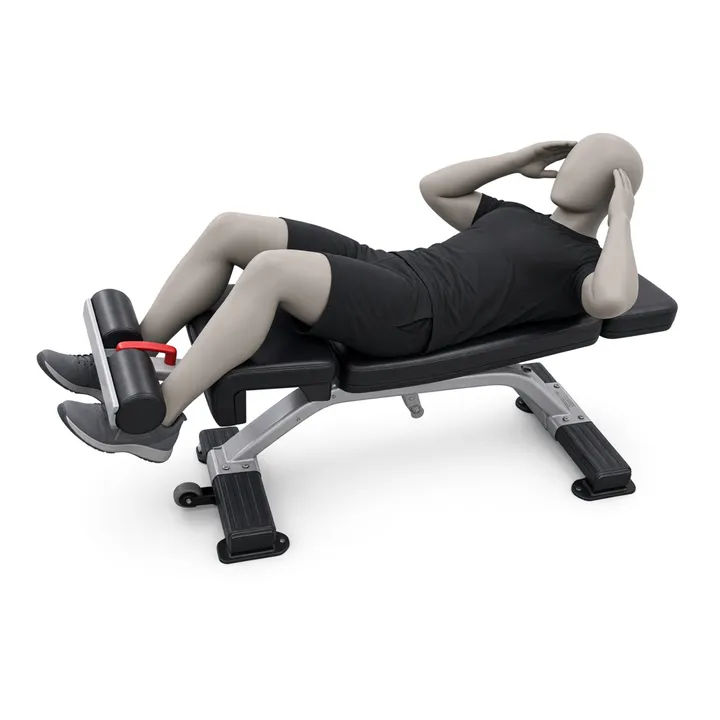
- 2. Lie back on the bench with your lower back in contact, arms crossed on your chest or hands by your temples without pulling on your neck.
- 3. Take a big breath in at the bottom, torso extended, eyes looking up.
- 4. Breathe out as you curl up, rolling your spine and bringing your ribs toward your hips until you sit up or almost all the way up.
- 5. Pause briefly at the top with your core braced, without crushing your lower back.
- 6. Lower slowly in 2 to 3 seconds, controlling your spine back to the bench, then start the next rep smoothly without bouncing.
Common mistakes
Bouncing at the bottom and using momentum
Instead : Keep light control at the bottom instead of letting your back slam the bench. Keep tension in your core and think of curling up, not throwing yourself up.
Pulling on your neck with your hands
Instead : Keep your elbows open and your hands just lightly supporting. Imagine someone is holding your head: your core should lift you, not your arms.
Overarching the lower back and overusing hip flexors
Instead : Start each rep by gently bringing your ribs down and bracing your core. If you mostly feel the front of your hips, reduce the decline or range of motion and focus on control before making it harder.
Dropping too fast on the way down
Instead : Count 2 to 3 seconds on the way down. If you can’t control that, sit up a bit less high or pick an easier alternative like the decline crunch.
Coach tips
- Start with a small decline. The steeper the angle, the more your core works and the more the hip flexors will kick in.
- Use a controlled tempo: 1 to 2 seconds up, 2 to 3 seconds down, keeping some tension in your core at the bottom.
- Breathe out as you come up and breathe in as you go down. Use the exhale to keep your core tight throughout the rep.
- Adjust difficulty with arm position: arms crossed on your chest is easier, hands by your temples or arms overhead makes it harder.
Variations
- Partial range in the top half of the movement to keep tension on the core if the full version is too hard.
- Start with arms crossed on your chest, then progress to hands by your temples once you control the movement well.
- Use a smaller decline to reduce stress on the hip flexors and focus more on core control.
Sets and reps
This movement is often done for moderate sets, around 8 to 15 reps, with a strict focus on a controlled lowering phase. Many people leave a few reps in the tank to avoid losing form at the end of the set.
Equipment
Alternatives for the same muscles
Log your Decline sit-up sets with GoSet
GoSet remembers your last time, starts your rest on its own and notes your records. Even with no signal in the basement. Coming soon to iPhone and Android.
Common questions
I mostly feel the front of my hips, is that normal?
Your hip flexors do help with the movement, so you can feel them working. If they take over or it becomes uncomfortable, reduce the decline, limit the range of motion, or use an alternative like the decline crunch.
What’s the difference between a decline sit-up and a decline crunch?
With the decline sit-up you come up higher, which can make the hip flexors work more. The decline crunch uses a smaller range of motion and focuses more on curling through the core.
What if my back hurts during the exercise?
Stop the movement right away. Talk to a health professional before trying it again or pushing through. In the meantime you can go with a gentler core option, based on their advice.
I’m a beginner, should I do this exercise?
It’s more suited to someone who already handles basic core work on the floor. If you find it hard to control, start with options like the decline crunch or the other alternatives listed for the bench or floor.