Exercise · Core
Machine crunch: how to do it properly
The machine crunch lets you train your core on a guided path. The movement targets the front of your abs, with some work for the obliques. It’s a solid option if you want to load your abs without worrying too much about balance and stability.
Doable at all 76 gyms GoSet follows
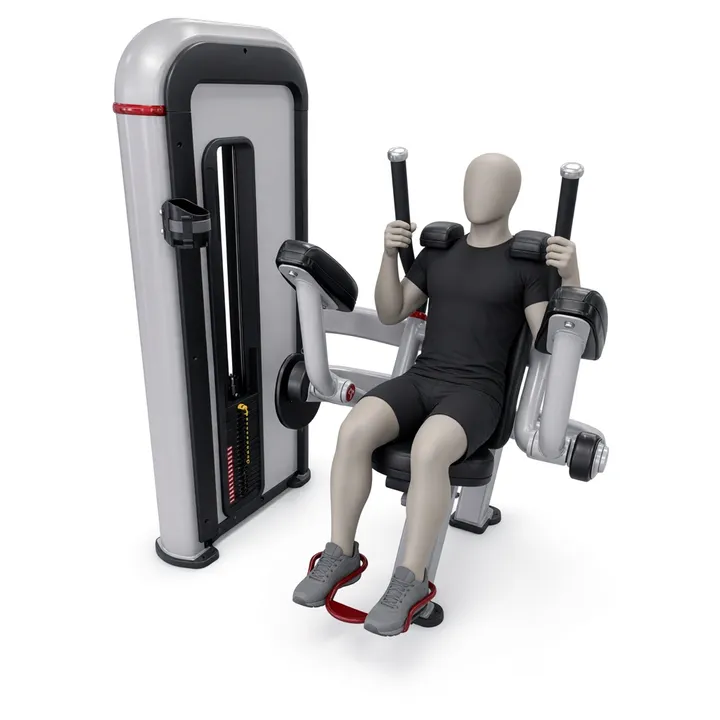
The essentials
- Curl your torso, bringing ribs toward hips.
- Don’t pull with your arms.
Muscles worked
- Primary
- Core
- Secondary
- Obliques
How to do it
- Adjust the abdominal crunch machine so the pivot lines up roughly with your waist and the handles or pad sit naturally under your shoulders or in front of your chest.
- Sit all the way back on the seat, feet flat, back against the pad if there is one, and hold the handles just to stabilize.
- Inhale, brace your core lightly, then start the movement by curling your torso, bringing your ribs toward your hips.
- Keep curling down until you feel a strong contraction in your abs, without aggressively jamming your neck forward.
- Exhale near the bottom, keep the tempo controlled, then return by slowly uncurling your torso over 2 to 3 seconds until you’re back at the start without letting the weight drop.
- Keep your arms quiet the whole time: let your torso do the work and use your hands mainly for balance and control.
Common mistakes
Pulling with your arms or shoulders
Instead : Hold the handles like you’re holding something fragile. Focus on curling your torso and bringing ribs toward hips, not on pulling the handles down.
Dropping too fast and bouncing the weight
Instead : Slow the way down to about 2–3 seconds and avoid letting the plates slam. Keep a bit of tension at the bottom and top of each rep.
Jamming your neck and head forward
Instead : Keep your neck in line with your torso. Imagine holding a small ball under your chin without crushing it. The goal is to move your torso, not your head.
Very short range with no real squeeze
Instead : Control a real curl of the torso. Go low enough to feel a strong core contraction, then come all the way back up instead of staying half‑bent.
Coach tips
- Start light to find the right setup and motion, then only add weight once you can fully control the torso curl.
- Breathe out as you curl your torso and breathe in on the way back up, keeping a bit of tension in your core the whole time.
- Use a steady rhythm: about 1–2 seconds to curl down, 2–3 seconds to return, no jerking.
- If you want a bit more oblique work, do some sets with a slight torso twist to one side, then the other, and keep that rotation smooth and controlled.
Variations
- Machine crunch with a slight torso rotation to bring the obliques in a bit more, with controlled twisting.
- Machine crunch with a 1–2 second pause at the bottom to increase time under tension for your core.
Sets and reps
This exercise often sits in the middle or toward the end of a workout, for about 2–4 sets of 10–20 controlled reps, depending on load and fatigue.
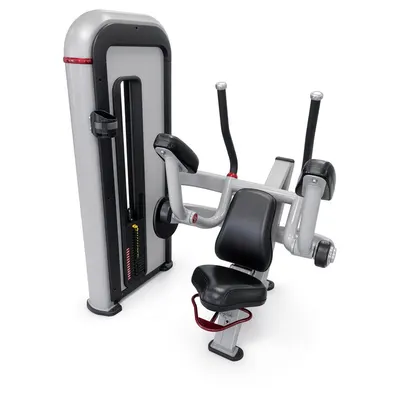
Equipment
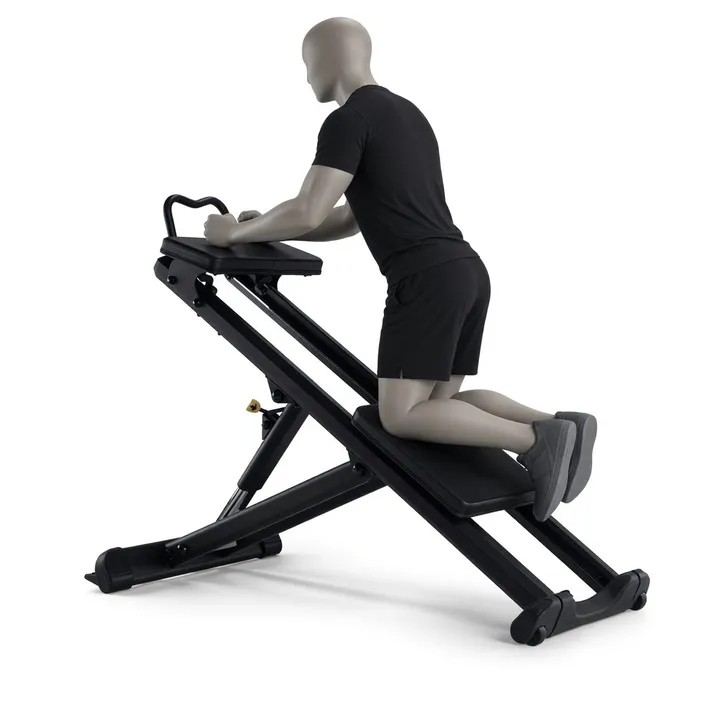
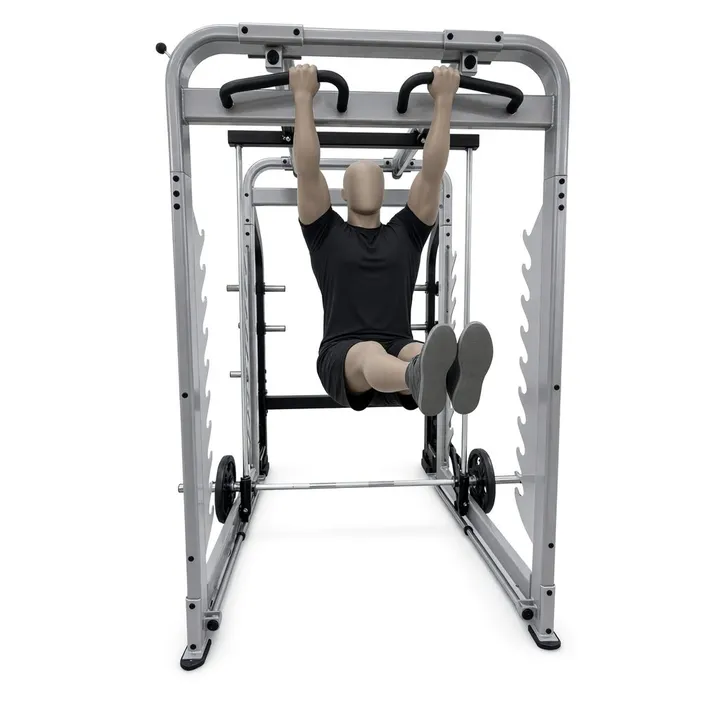
Alternatives for the same muscles
Log your Machine crunch sets with GoSet
GoSet remembers your last time, starts your rest on its own and notes your records. Even with no signal in the basement. Coming soon to iPhone and Android.
Common questions
Where should I feel the machine crunch?
You should mainly feel your core working, with a strong contraction through the front of your abs. You might also feel the sides a bit if you add some rotation. If you feel it mostly in your arms or neck, lower the weight and refocus on curling your torso.
How much weight should I use on the ab crunch machine?
Pick a weight you can control without yanking with your arms or bouncing the stack. Often that means a load where the last reps of the set are challenging, but your form stays solid from start to finish.
Does the machine crunch replace other ab exercises?
It’s a good guided exercise to load your core, but it works well alongside other moves like floor crunches, kneeling cable crunches, or leg raises. You can mix them based on what your gym has.
What if I feel pain during the machine crunch?
Stop the set right away. Don’t push through pain, and talk with a health or training professional before you return to this exercise.