Machine · Back
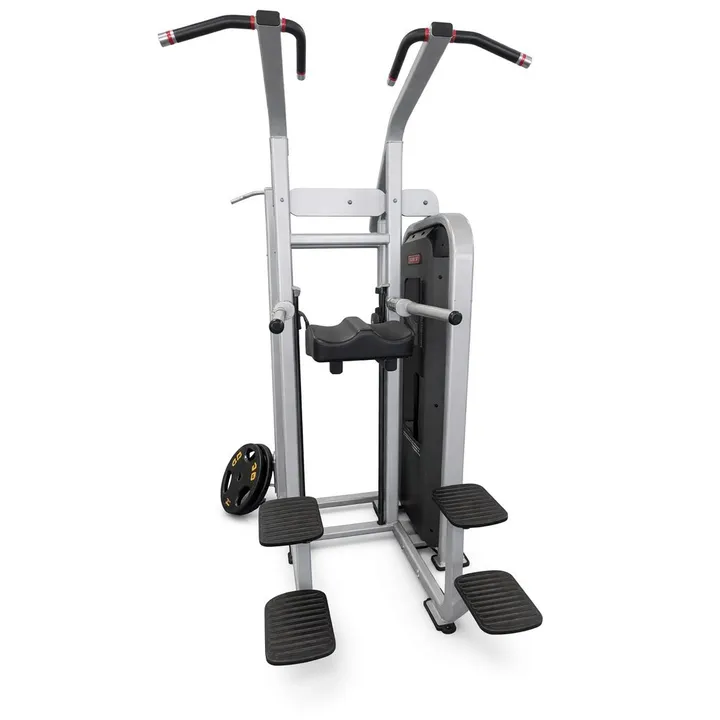
Assisted chin-up and dip machine
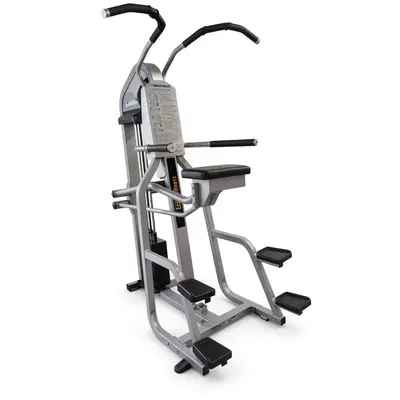
The assisted chin-up and dip machine uses a counterweighted knee platform so you can practice these movements with help. You adjust the assistance so your back and triceps work at a level that fits you, even if you’re not ready for full bodyweight yet. Great to build confidence and control.
At all 76 gyms GoSet follows
The essentials
- Palms facing you, shoulder-width grip.
- Pull up without swinging.
Muscles worked
- Primary
- Back · Triceps
Setup
- Pick your assistance on the weight stack: the more weight you add, the easier the movement gets.
- Check the chin-up and dip handles and grab the ones you need for your exercise.
- Set the knee pad in the low position and make sure it moves up and down freely.
- Step onto the foot supports or small platform, grab the handles first, then place your knee on the pad.
- Keep your core slightly braced and your shoulders pulled back, not shrugged toward your ears.
How to do it
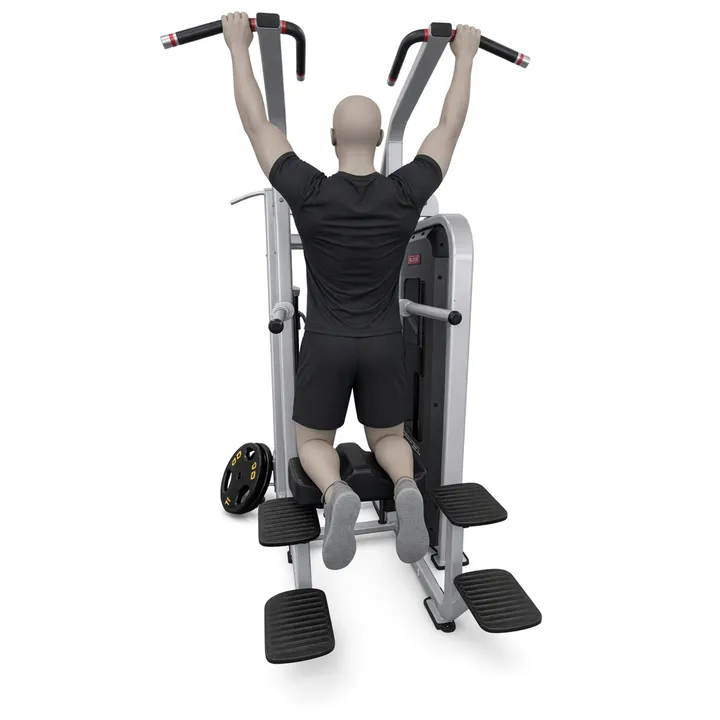
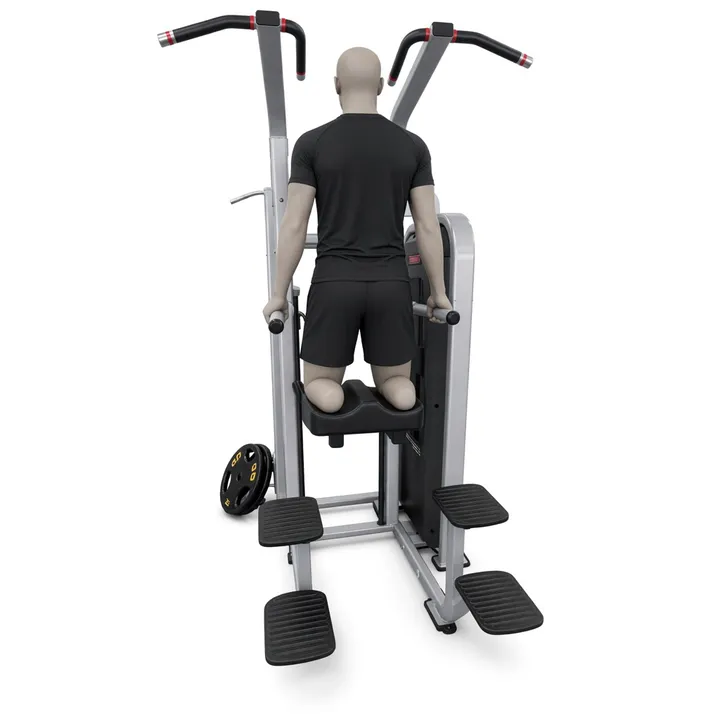
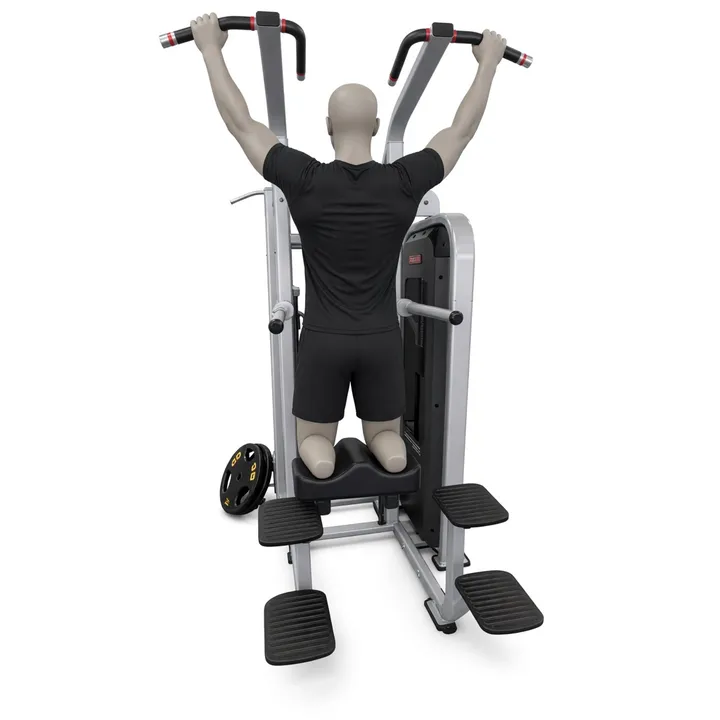
- Decide if you’re doing chin-ups or pull-ups (handles above your head) or dips (parallel handles at your sides).
- Climb onto the pad with one or both knees, keeping a strong grip on the handles.
- For each rep, lower yourself slowly, controlling the pad for about 2 to 3 seconds, until you feel a good stretch without losing control.
- Push or pull yourself back up using your arms and back or triceps until your arms are almost straight, without snapping the elbows.
- Keep your torso steady, avoid swinging your legs or bouncing your knees on the pad.
- At the end of the set, bring the pad up, step back onto the foot supports, and only then let go of the handles once you’re stable.
Common mistakes
Using way too much or too little assistance
Instead : Start with enough assistance to do your reps without cheating. Once you’re in control, slowly reduce the assistance over time.
Letting the pad bounce
Instead : Control the way down and up. Keep a bit of tension at the end of each rep so the pad doesn’t slam or jerk.
Shrugging the shoulders up
Instead : Keep your shoulders pulled back and down. Think about moving your shoulders away from your ears throughout the movement.
Cutting the range of motion short
Instead : Lower until you feel solid tension in your back or triceps, without pain, then come up to almost full extension. Aim for a comfortable but full range for you.
Coach tips
- Breathe steadily: inhale on the controlled way down, exhale as you come back up.
- Keep a calm tempo, especially at the bottom. Aim for about 2 to 3 seconds on the descent, no bouncing at the bottom.
- For assisted pull-ups, keep your chest slightly lifted to help your back work, without over-arching your lower back.
- Over time, reduce the assistance step by step to move closer to unassisted chin-ups and dips.
Variations
- For assisted pull-ups, you can change your grip width (narrower or wider) to slightly change how your back feels the movement.
- For assisted chin-ups, turn your palms toward you for a different feel in your upper back.
- For assisted dips, keep your body more upright or with a slight forward lean to adjust where you feel the effort in your arms and upper body.
Sets and reps
On this machine, people often do 3 to 4 sets of 6 to 12 reps with enough assistance to keep clean technique. Many start with more assistance and then gradually lower the weight on the stack over the weeks.
Exercises on this machine
Machine taken? Try instead
Log your Assisted chin-up and dip sets with GoSet
GoSet remembers your last time, starts your rest on its own and notes your records. Even with no signal in the basement. Coming soon to iPhone and Android.
Common questions
How do I choose the right assistance level?
Pick a weight that lets you do your reps under control, without swinging and without cutting the range of motion. If you could do many more reps than planned, reduce the assistance. If you can’t hold form, add some assistance.
Should I use one knee or both knees on the pad?
You can use one or both knees depending on the pad size and what feels stable. The key is to feel secure, without your knee sliding or twisting to the side.
Does this machine really train my back and triceps like unassisted versions?
Yes, the movement stays very similar. The machine just takes off part of your bodyweight. Your back and triceps are still working, just with a load that matches your current level.
What if I feel sharp pain in my shoulders or elbows?
Stop the set right away and step off the machine under control. Talk with a healthcare professional or training specialist before using it again.