Exercise · Back
Pull-up on a bar: how to do it properly
The pull-up is where you pull your body up to a fixed bar with your palms facing forward. It mainly works your back and also your biceps. It’s a solid bodyweight strength test, good for beginners and advanced lifters, with many options to scale it.
Doable at all 76 gyms GoSet follows
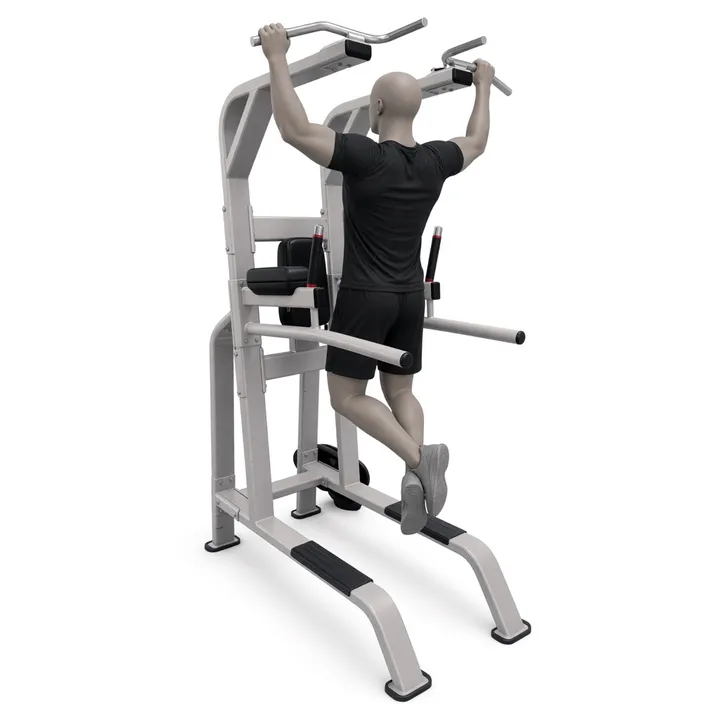
The essentials
- Grip slightly wider than your shoulders, palms forward.
- Pull your chin over the bar, lower to straight arms.
Muscles worked
- Primary
- Back
- Secondary
- Biceps
How to do it
- Place your hands slightly wider than shoulder-width on the bar, palms facing forward, and hang with straight arms, body stable.
- Cross your legs or keep them slightly in front of you to avoid swinging.
- Take a breath in, brace your core and start pulling your elbows down close to your body.
- Pull until your chin goes over the bar, without kicking your legs.
- Lower yourself in control for about 2 to 3 seconds until your arms are completely straight.
- Repeat the next rep with the same range of motion, no jerking and without losing your grip.
Common mistakes
Only going halfway up
Instead : Aim to get your chin over the bar and lower all the way to straight arms. Cut the reps or use an assisted version so you can keep that full range of motion.
Swinging with the legs
Instead : Keep your abs tight and your legs crossed or slightly in front. Add a small pause at the bottom before each rep to restart under control.
Pulling with the hands only
Instead : Think about pulling the bar toward you by driving your elbows down beside your body. You’ll feel your back working, not just your biceps.
Dropping too fast on the way down
Instead : Control the way down for 2 to 3 seconds. If you almost drop straight to the bottom, make it easier with assisted pull-ups or fewer reps.
Coach tips
- Breathe by taking air in at the bottom and exhaling as you pull up; keep a steady rhythm throughout the set.
- If you can’t do a full rep yet, use assisted pull-ups or controlled partial reps in your hardest range.
- Keep your head neutral, looking slightly forward, not at the ceiling or straight down at your feet, to stay solid and stable.
- When several clean reps feel easy, you can make it harder by slowing down the lowering phase even more.
Variations
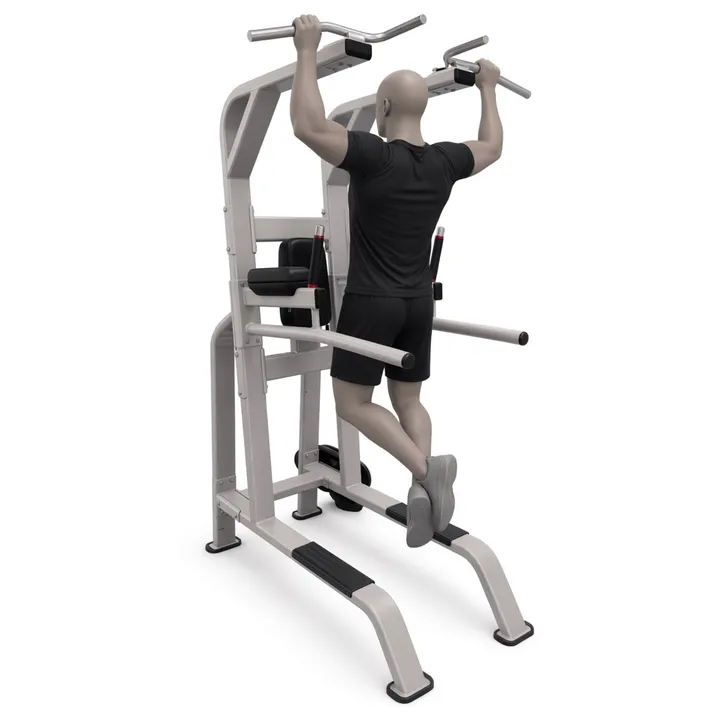
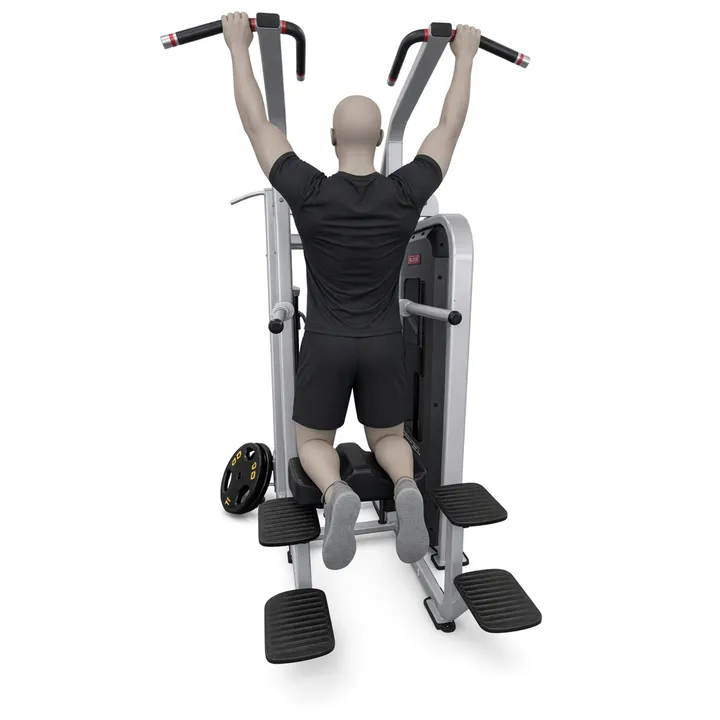
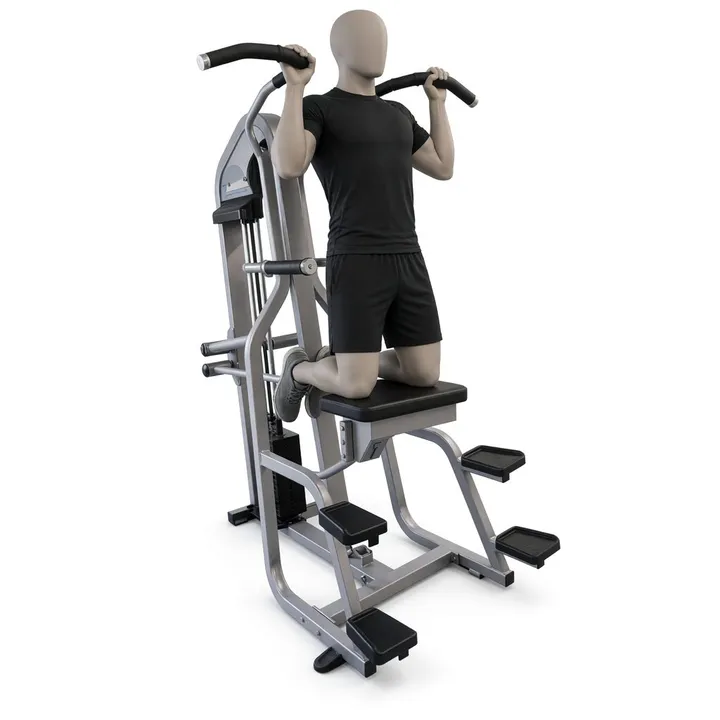
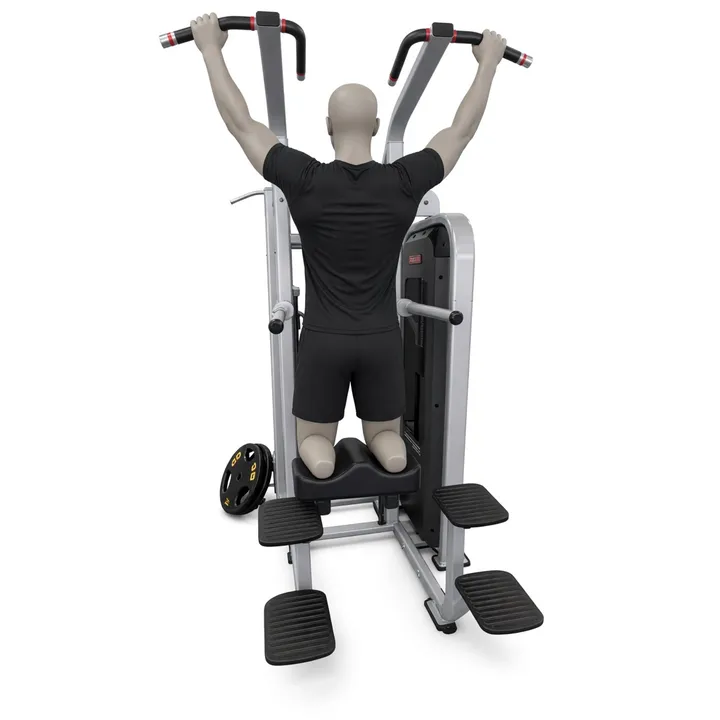
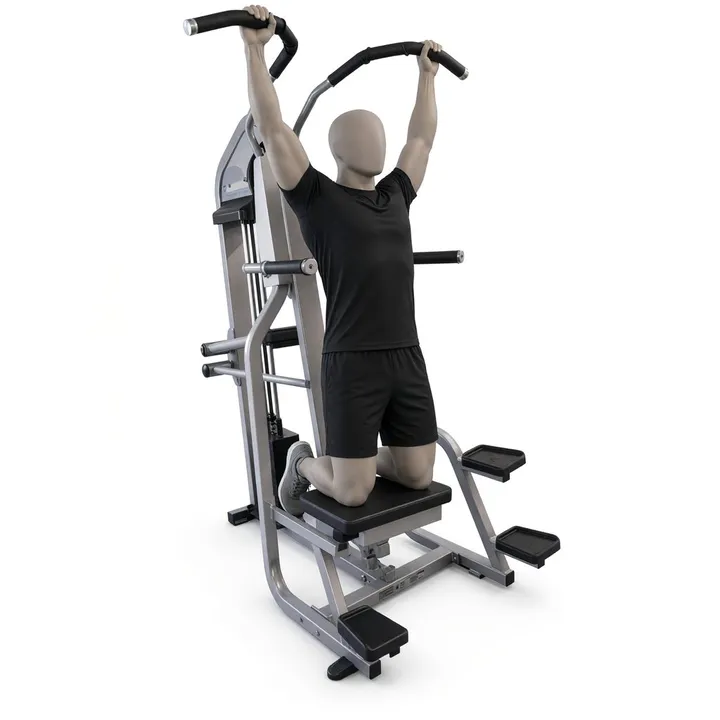
- Assisted pull-up to learn the pattern with less load.
- Chin-up (palms facing you) to involve the biceps more.
- Assisted wide-grip pull-up to change the feel while keeping good range of motion.
Sets and reps
Pull-ups are often done for sets of reps, for example several sets of about 3 to 10 reps, depending on your level. Some people also use ascending or descending sets to accumulate more quality reps.
Equipment
Alternatives for the same muscles
Log your Pull-up sets with GoSet
GoSet remembers your last time, starts your rest on its own and notes your records. Even with no signal in the basement. Coming soon to iPhone and Android.
Common questions
I can’t do a single pull-up, what should I do?
Start with assisted pull-ups or use a slight jump to help you get up and control only the way down for 2 to 3 seconds. Over time, that will build the strength you need for your first full rep.
Where can I do pull-ups in my gym?
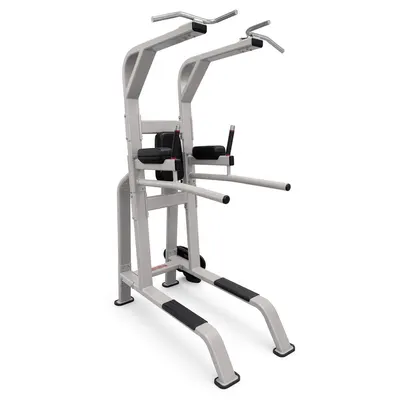
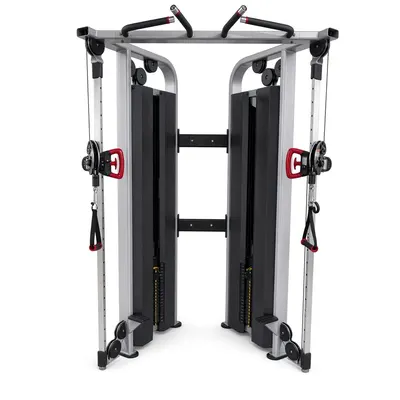
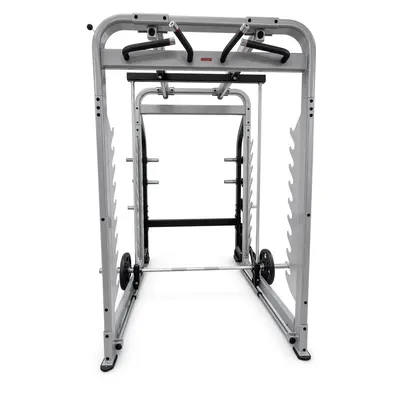
Look for a power tower with a pull-up bar, or a pull-up bar built into a machine like a Smith machine or a cable crossover frame. You just need a solid bar above your head where you can hang with straight arms.
Do I have to touch my chest to the bar?
You don’t have to. For a standard pull-up, getting your chin over the bar and lowering back to straight arms is already a very good range of motion.
If I feel joint pain during pull-ups, should I keep going?
If you feel pain, stop the exercise. Talk to a health professional before doing more or trying another variation like an assisted pull-up.