Exercise · Back
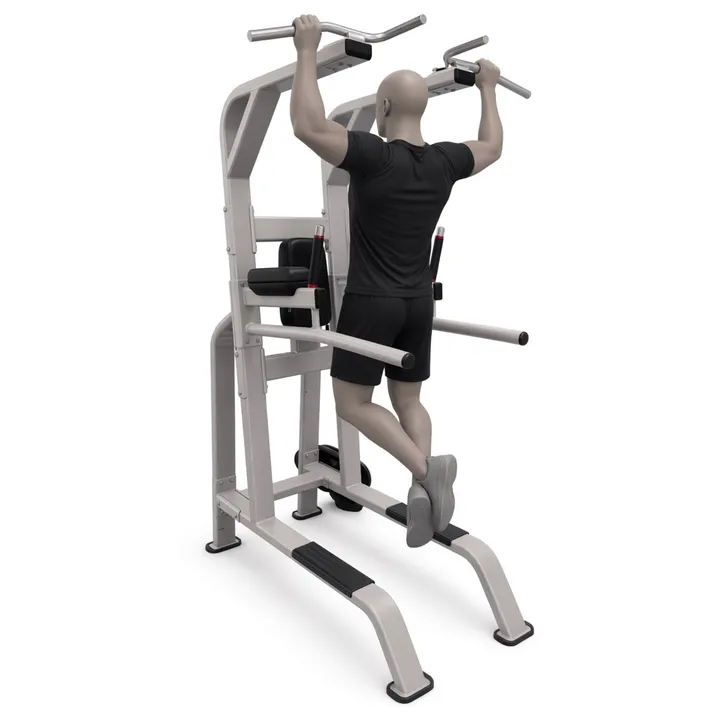
Chin-up on a pull-up bar
The chin-up is the palms-facing-you version on the bar. It hits your back and biceps hard, with help from your forearms and traps. It’s a solid bodyweight strength test, good for stronger lifters and also as a long-term goal if you’re still building up.
Doable at all 76 gyms GoSet follows
The essentials
- Palms facing you, shoulder-width grip.
- Pull up without swinging.
Muscles worked
- Primary
- Back · Biceps
- Secondary
- Forearms · Traps
How to do it
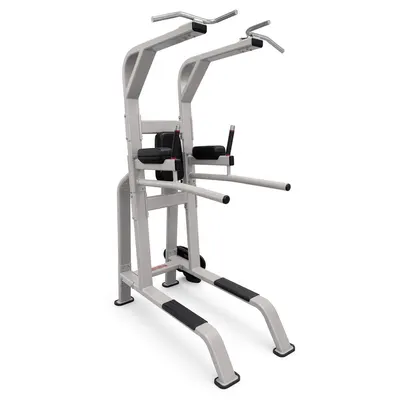
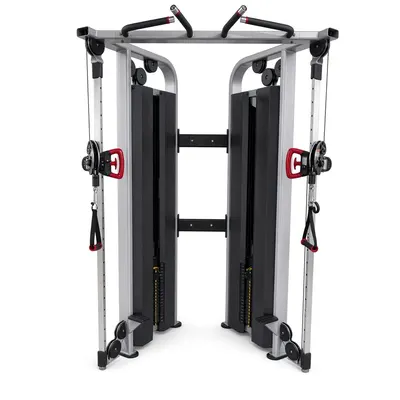
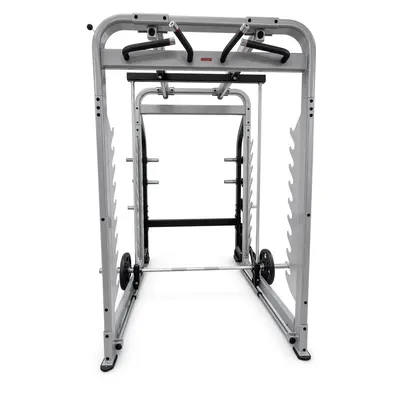
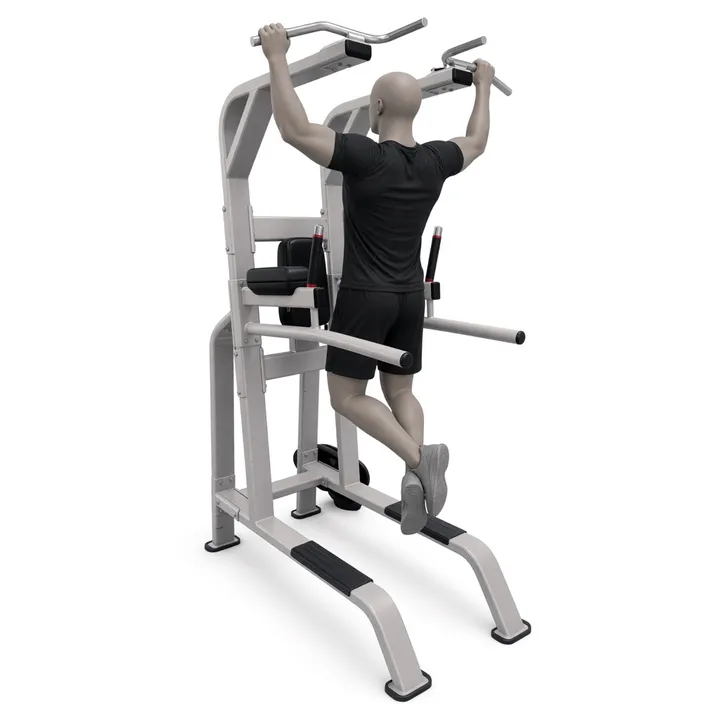
- 1. Set up under a pull-up bar on a power tower, Smith machine with bar, or a station on the cable crossover, palms facing you, hands shoulder-width apart.
- 2. Hang with your arms almost straight, legs crossed or bent behind you, core tight, body still.
- 3. Inhale, then pull your body toward the bar by bending your elbows and bringing your chest toward the bar, without kicking with your legs.
- 4. Pull until your chin goes over the bar or your elbows are well bent, keeping your shoulders away from your ears.
- 5. Exhale as you lower yourself back down slowly over 2 to 3 seconds, returning close to the arms-straight position without fully relaxing your shoulders.
- 6. Pause briefly at the bottom, keep your body tight, then start the next rep without swinging your legs.
Common mistakes
Using a big leg swing for momentum
Instead : Shorten your range of motion and keep your legs crossed or lightly bent behind you. Focus on pulling with your back and biceps, moving your body as one solid piece, no kicking.
Letting your shoulders shrug up to your ears
Instead : Before you start pulling, think about drawing your shoulders down. During the chin-up, keep your neck long and your traps as relaxed as you can, like you’re trying to keep your ears away from the bar.
Dropping too fast on the way down
Instead : Count 2 to 3 seconds on the way down. If you lose control on the descent, do fewer reps per set or switch to an option like the assisted chin-up.
Grip too narrow or too wide
Instead : Keep your hands about shoulder-width, palms facing you. A grip that’s too close or too wide can make the pull awkward and less comfortable for your forearms and traps.
Coach tips
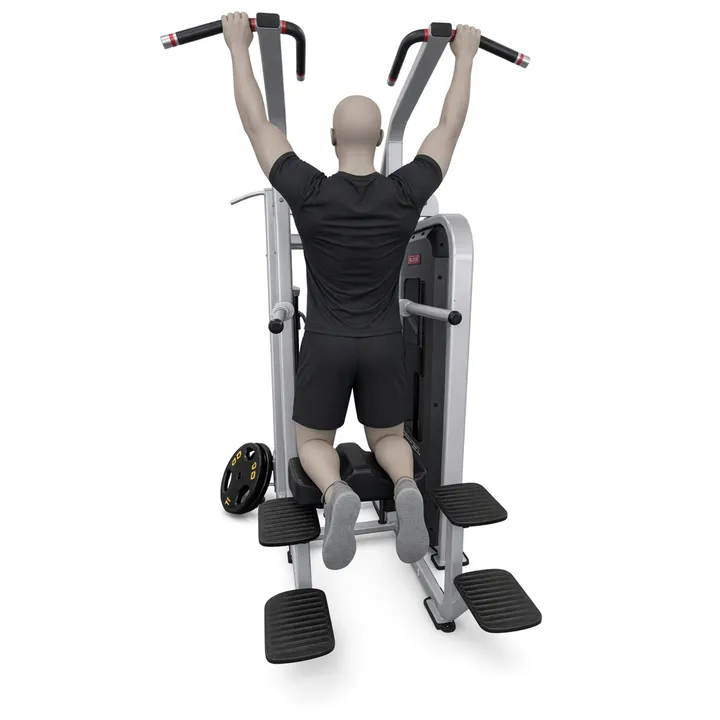
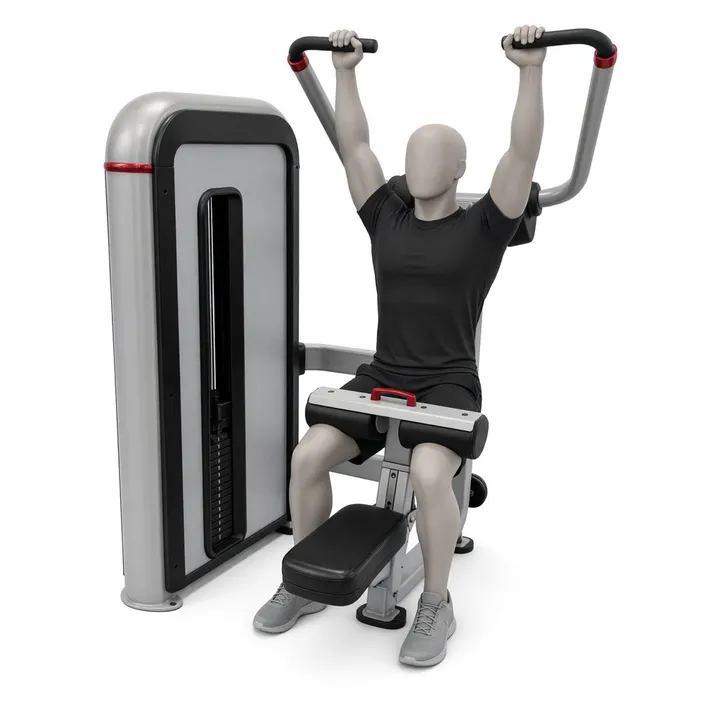
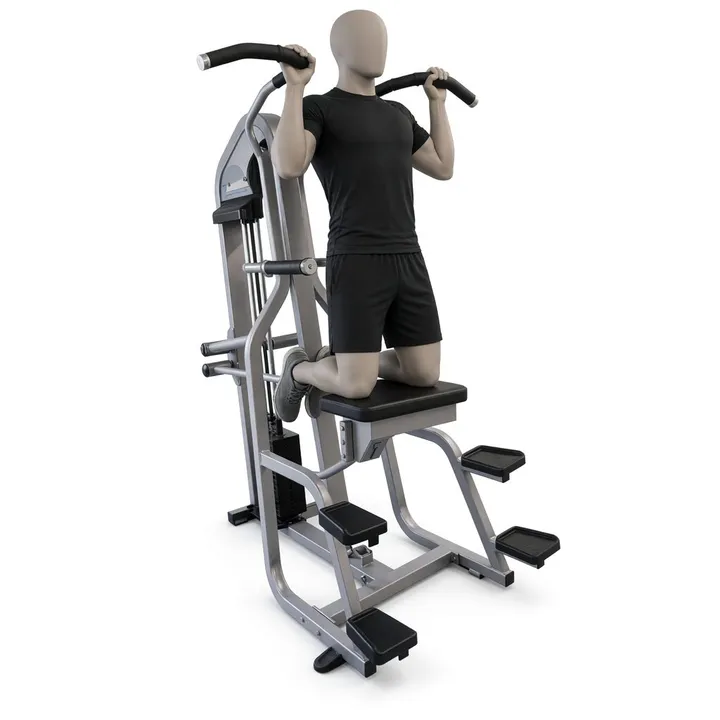
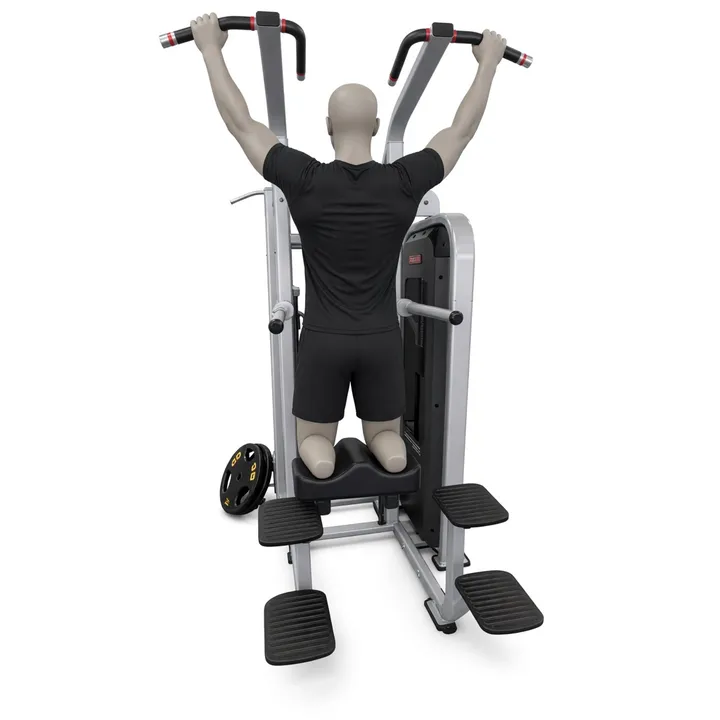
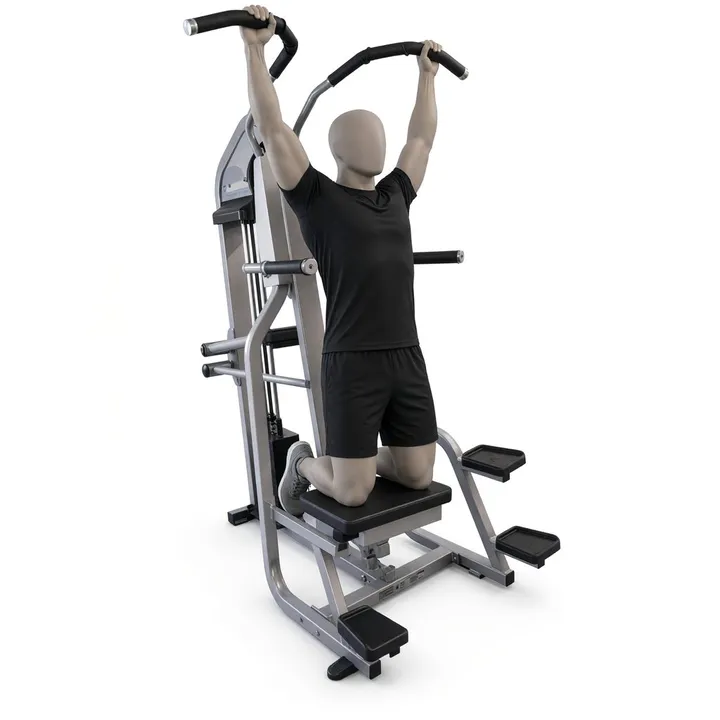
- If you can’t do a full chin-up yet, use the assisted chin-up or the underhand lat pulldown to build your back and biceps in a similar pattern.
- Use a controlled tempo: pull up with intent, then lower over 2 to 3 seconds to really feel your back and biceps working.
- Think inhale at the bottom before you pull and exhale as you come up. It helps you stay braced and keeps your body from swinging.
- If your forearms burn out first, start with fewer reps per set and focus on clean technique before you add more volume.
Variations
- Assisted chin-up to practice the same movement with less load.
- Underhand lat pulldown for a similar pattern while seated, easier to control if full chin-ups are too hard.
- Pull-up (overhand) to change how your back works compared with the chin-up.
Sets and reps
For general strength, people often do 3 to 5 sets of a few controlled reps, especially when the exercise is challenging. More advanced lifters sometimes do longer sets, as long as the form stays tight and there’s no swinging.
Equipment
Alternatives for the same muscles
Log your Chin-up sets with GoSet
GoSet remembers your last time, starts your rest on its own and notes your records. Even with no signal in the basement. Coming soon to iPhone and Android.
Common questions
I can’t do a single chin-up yet, what should I do?
You can start with the assisted chin-up or the underhand lat pulldown. Both train your back, biceps, forearms, and traps in a similar way, and you can adjust the load to work toward your first full chin-up.
Where can I do chin-ups in a gym?
Look for a power tower with a pull-up bar, a Smith machine with a pull-up bar, or a bar on a cable crossover station. Grab the bar palms facing you, hands shoulder-width apart, like a standard chin-up setup.
I feel it mostly in my forearms, not my back. Is that normal?
That’s common at first. Make sure your grip is shoulder-width with palms facing you, and think about bringing your chest up to the bar instead of just pulling with your hands. With practice and a controlled descent, you’ll feel your back and biceps more.
Is a chin-up easier than a regular pull-up?
For many people, the chin-up feels a bit easier because the biceps help more. It’s still a demanding move for your back, biceps, forearms, and traps, so you can use both versions depending on what you want to focus on.