Exercise · Back
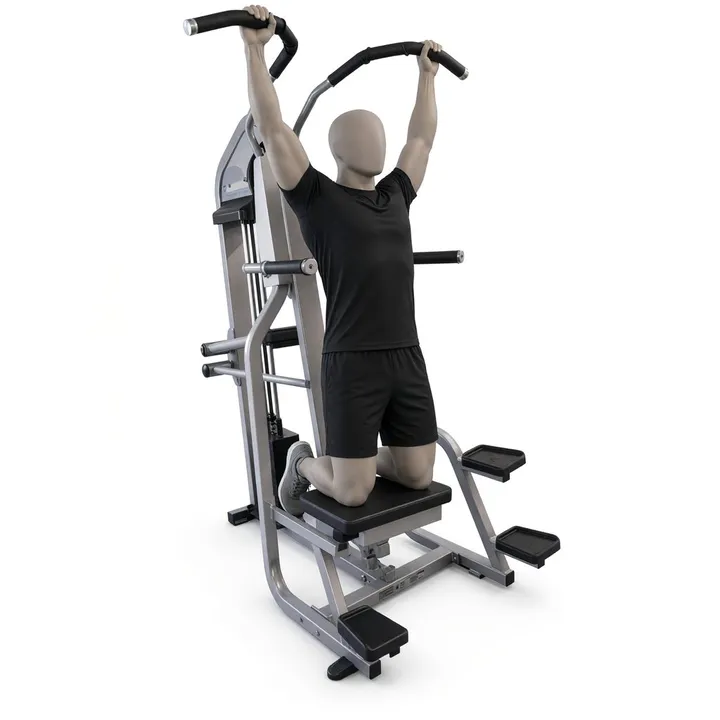
Assisted wide-grip pull-up on the machine
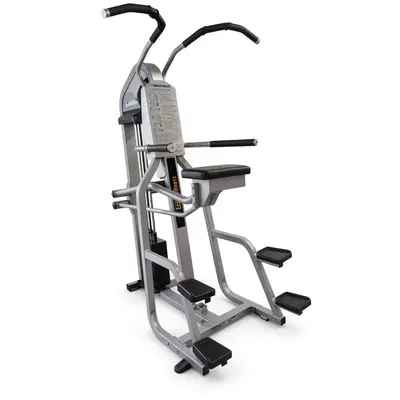
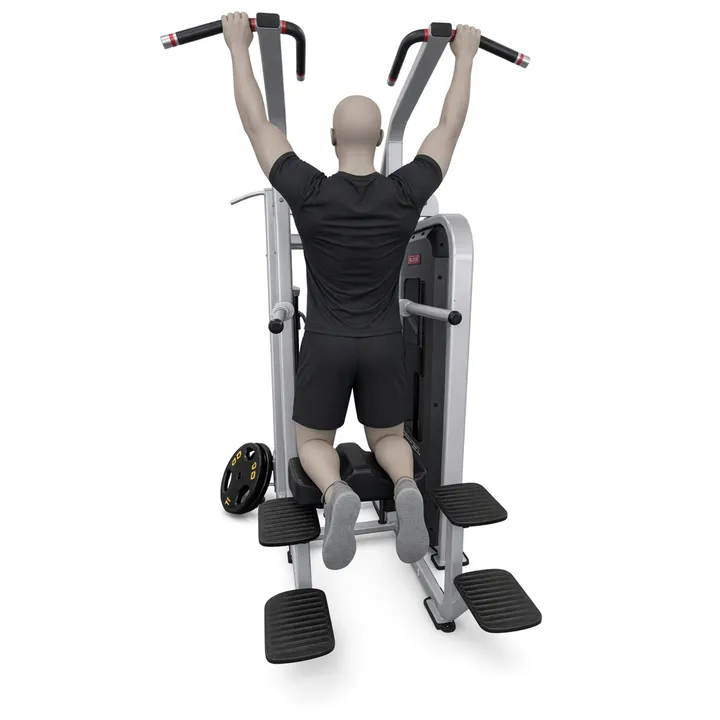
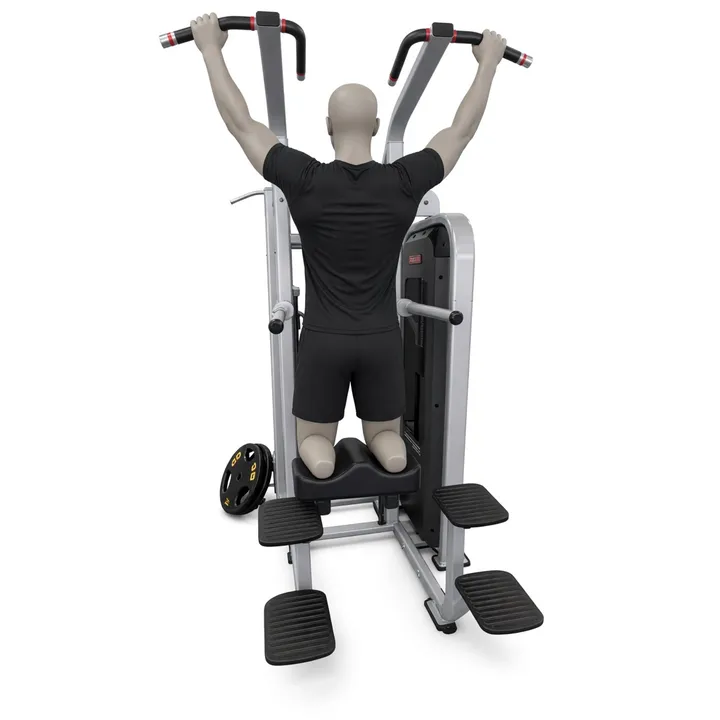
The assisted wide-grip pull-up is the helped version of the classic wide pull-up, done on the assisted pull-up and dip machine with a knee pad. It mainly works your back, with solid help from your biceps, while the counterweight lets you adjust how much of your body weight you lift.
Doable at all 76 gyms GoSet follows
The essentials
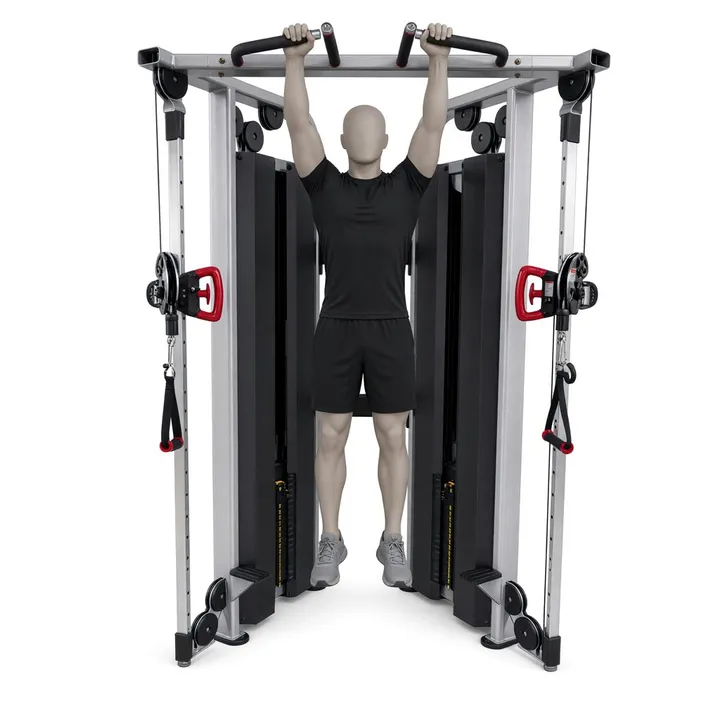
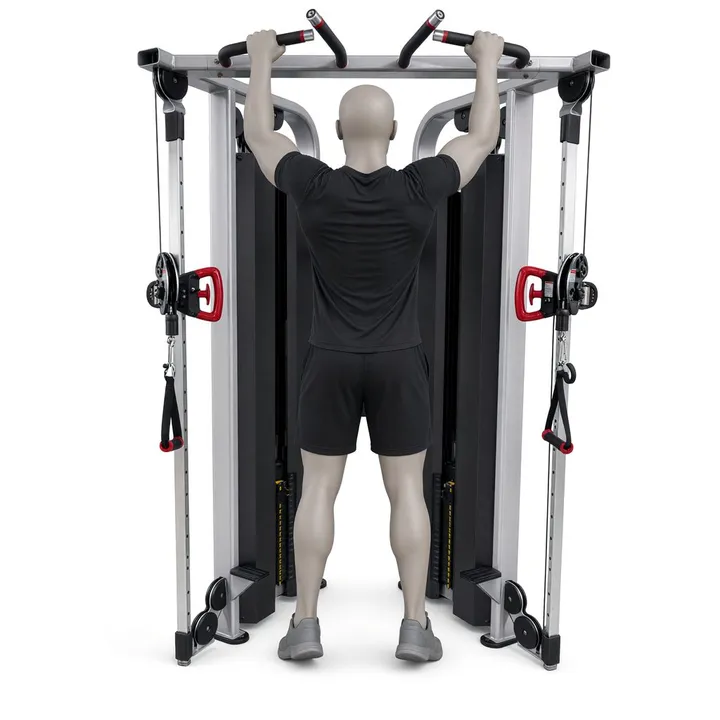
- Place your hands at the wide ends of the bar.
- Pull up with your chest high.
- Avoid swinging your body.
Muscles worked
- Primary
- Back
- Secondary
- Biceps
How to do it
- Set the assistance weight: the heavier the stack, the more help you get. Pick a level that lets you finish your reps without losing form.
- Step onto the foot platforms, grab the bar at the wide ends with your palms facing away, then place one knee on the pad.
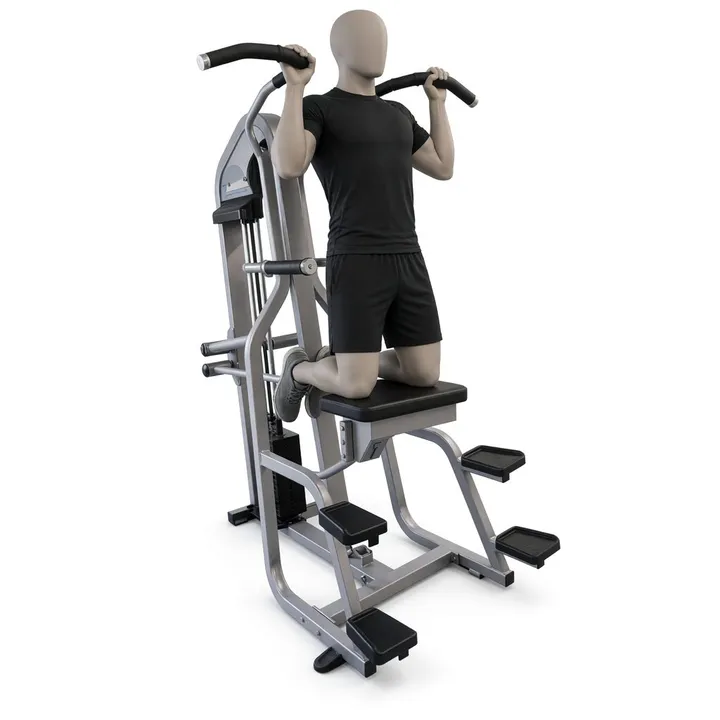
- Lower yourself under control until your arms are almost straight, keeping your shoulders pulled down instead of letting them shrug up.
- Pull yourself up with your chest high, bringing your elbows toward your sides until your chin reaches bar height.
- Pause briefly at the top to stabilize, then lower yourself in 2–3 seconds, keeping control and avoiding any swing.
- Repeat for your reps, keeping the same range of motion and tempo on every rep.
Common mistakes
Using momentum and swinging
Instead : Slow your way down to about 2–3 seconds and keep your core tight. If you need to jump or swing to get up, increase the assistance so your back and biceps do the work.
Letting shoulders rise toward your ears
Instead : Before you pull, think about pulling your shoulders down, away from your ears. Keep that tension the whole set so your back stays engaged.
Cutting the range of motion short
Instead : Lower until your arms are almost straight without going completely loose, then pull until your chin reaches the bar. If you can’t do that range, lighten the load by adding more assistance.
Looking down and rounding your back
Instead : Keep your eyes forward or slightly up and lift your chest. That usually helps your back stay more stable and your pulling path more consistent.
Coach tips
- Inhale at the bottom before you pull, then exhale as you come up. It helps you keep a steady rhythm and control.
- Take your time setting your hands at the wide ends of the bar so your grip is wide and solid for the whole set.
- If your form breaks down at the end of the set, stop one rep earlier or use a bit more assistance on the next set.
- Aim for a controlled tempo: about 1 second up and 2–3 seconds down to keep tension on your back and biceps longer.
Variations
- Assisted chin-up (supinated grip) to shift a bit more emphasis to your biceps.
- Assisted neutral-grip pull-up for a shoulder-friendly hand position.
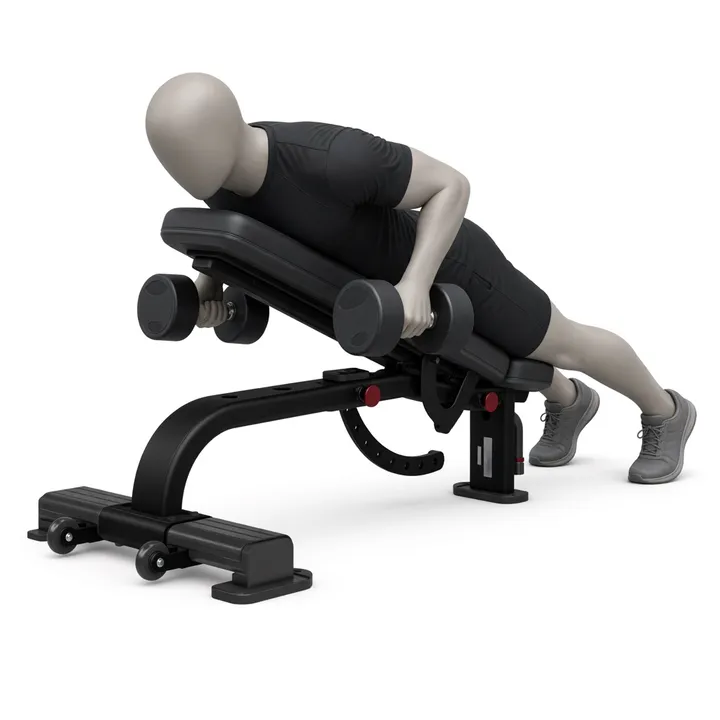
- Chest-supported dumbbell row if the assisted machine is busy or you want a more horizontal pull.
Sets and reps
People often use 3–4 sets of 6–12 reps here, adjusting assistance so technique stays solid on every rep.
Equipment
Alternatives for the same muscles
Log your Assisted wide-grip pull-up sets with GoSet
GoSet remembers your last time, starts your rest on its own and notes your records. Even with no signal in the basement. Coming soon to iPhone and Android.
Common questions
How much assistance should I use on assisted wide-grip pull-ups?
Pick an assistance level that lets you keep your chest high, no swinging, for all your reps. If you get yanked down or can’t use full range, add assistance. If it feels too easy and weightless, use a bit less assistance.
Where should I place my hands for a wide grip?
Place your hands at the wide, flared ends of the bar. Your hands should be wider than your shoulders, but you should still feel like you can grip hard and stay stable.
Do my arms need to fully lock out at the bottom?
You can go to almost straight arms, but keep a bit of tension in your shoulders so you don’t go totally loose. Lower under control instead of letting the weight pull your shoulders up.
What if I feel shoulder pain during assisted wide-grip pull-ups?
Stop the exercise right away and talk to a qualified professional before doing it again. You can switch to another pulling variation that doesn’t hurt, like the chest-supported dumbbell row.