Exercise · Back
Chest-supported dumbbell row
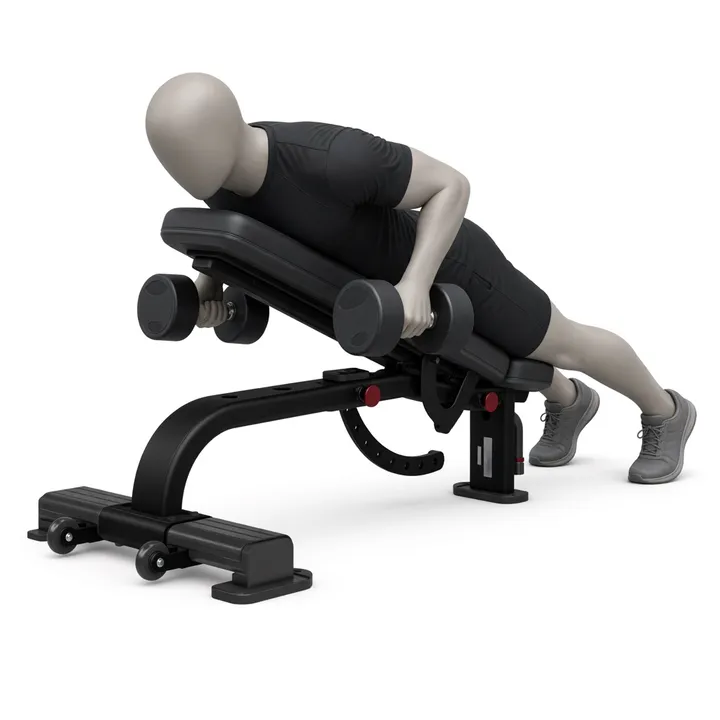
The chest-supported dumbbell row is a back exercise done lying face down on an incline bench. It mainly targets your back, with help from your biceps and traps, while taking pressure off your lower back. It’s great if you want to focus on a clean pull without using momentum.
Doable at all 76 gyms GoSet follows
The essentials
- Chest on the incline bench.
- Drive your elbows back and squeeze your shoulder blades.
Muscles worked
- Primary
- Back
- Secondary
- Biceps · Traps
How to do it
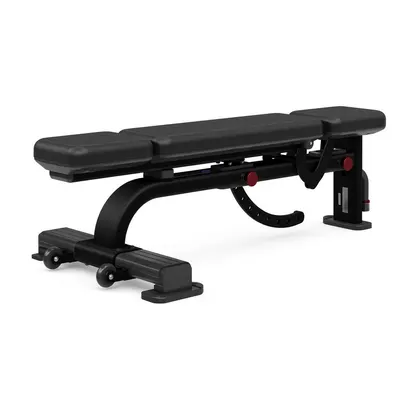
- Set an adjustable bench to a slight incline (around 30–45 degrees) and place a pair of dumbbells on the floor in front of it.
- Lie face down on the bench with your chest on the pad, feet firmly on the floor, and the top of your chest near the edge of the bench.
- Grab the dumbbells with a neutral grip, arms almost fully extended under your shoulders, and let your shoulders relax down.
- Take a breath in, then drive your elbows back, keeping the dumbbells close to your body and squeezing your shoulder blades together at the top.
- Pause briefly at the top without shrugging your shoulders up, then lower the dumbbells in 2–3 controlled seconds as you breathe out.
- Return to the starting position without letting your shoulders roll forward or bouncing the dumbbells off the floor or the bench.
Common mistakes
Shrugging the shoulders toward the ears
Instead : Think about pulling your elbows toward your hips and keeping your shoulders down. You want to squeeze your shoulder blades together, not let your traps take over by shrugging.
Over-arching or excessively rounding the lower back
Instead : Keep your abs lightly braced and your body resting on the bench. Set yourself up so you’re comfortable on the pad without pushing your hips or belly hard into the bench.
Pulling mostly with your arms
Instead : Before you pull, think about gently bringing your shoulder blades toward each other. During the row, focus on driving your elbows back instead of just “lifting” the dumbbells.
Using too much momentum
Instead : Pick dumbbells you can control. Row up in about 1 second, pause briefly at the top, then lower in 2–3 seconds without dropping the weights.
Coach tips
- Match your breathing to the pull: inhale at the bottom, exhale as you row the dumbbells up to help you stay stable on the bench.
- Keep your wrists neutral, in line with your forearms, so your back and biceps do the work instead of straining your wrists.
- If you’re new to the movement, start with lighter dumbbells to find your groove and really feel your back working.
- Keep a slight bend in your elbows at the bottom instead of hanging completely off your shoulders, so you maintain tension in your back.
Variations
- You can play a bit with the incline of the adjustable bench: a higher incline feels more like a horizontal row, while a lower incline feels a bit closer to a vertical pull.
- You can turn your hands slightly toward a more supinated position (palms a bit more forward) to get more biceps involvement while keeping your chest on the bench.
Sets and reps
In strength training, this movement often shows up for 3 to 4 sets of about 8 to 12 reps, with a controlled lift and a 2–3 second lowering. It’s easy to track by noting the weight of each dumbbell and how many reps you complete.
Equipment
Alternatives for the same muscles
Log your Chest-supported dumbbell row sets with GoSet
GoSet remembers your last time, starts your rest on its own and notes your records. Even with no signal in the basement. Coming soon to iPhone and Android.
Common questions
What should I feel during the chest-supported dumbbell row?
You should mainly feel your back working, with solid help from your biceps and traps. If you mostly feel your lower back, adjust your position on the bench and reduce the weight. If you feel sharp pain, stop the exercise and talk to a professional.
What incline should I use for the bench?
A moderate incline usually works well, not fully flat and not almost upright. The key is that your chest rests comfortably on the pad, your arms can extend under your shoulders, and you can pull the dumbbells without hitting the bench.
What if my gym doesn’t have dumbbells?
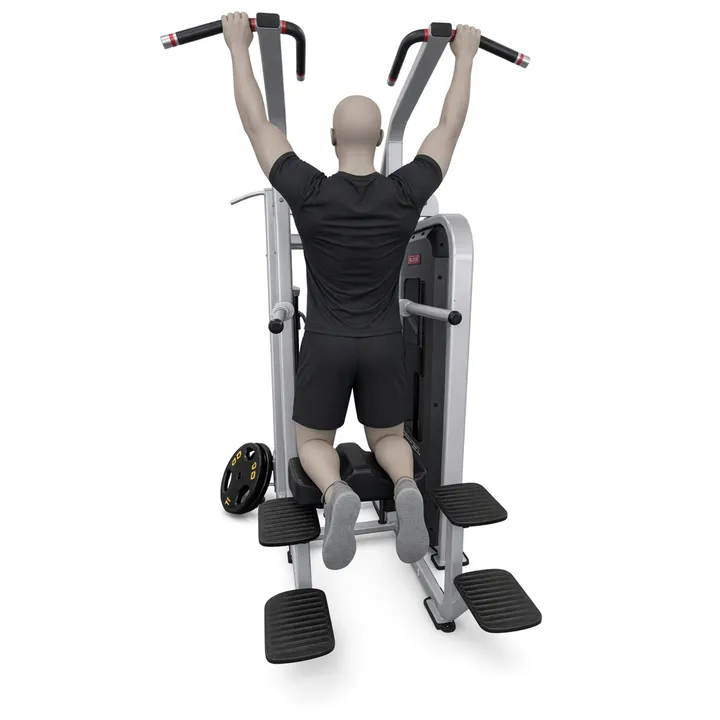
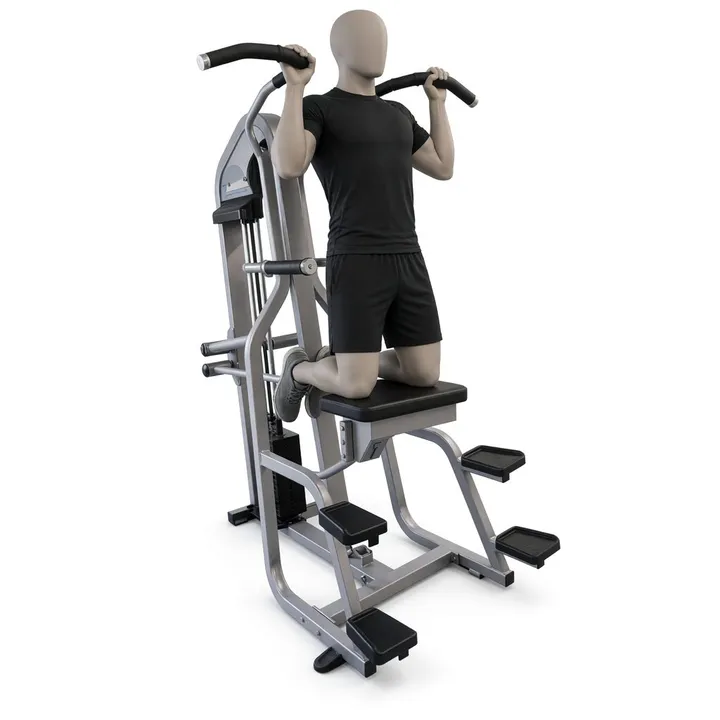
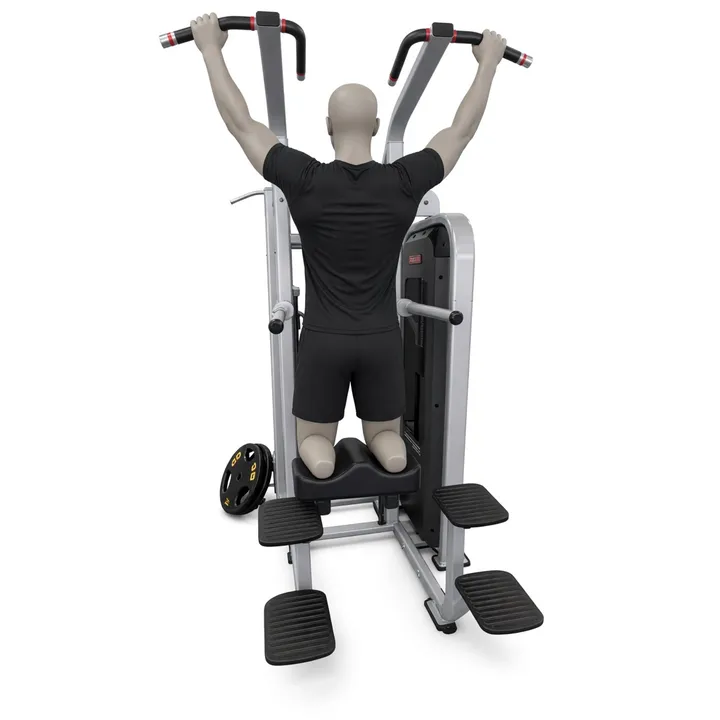
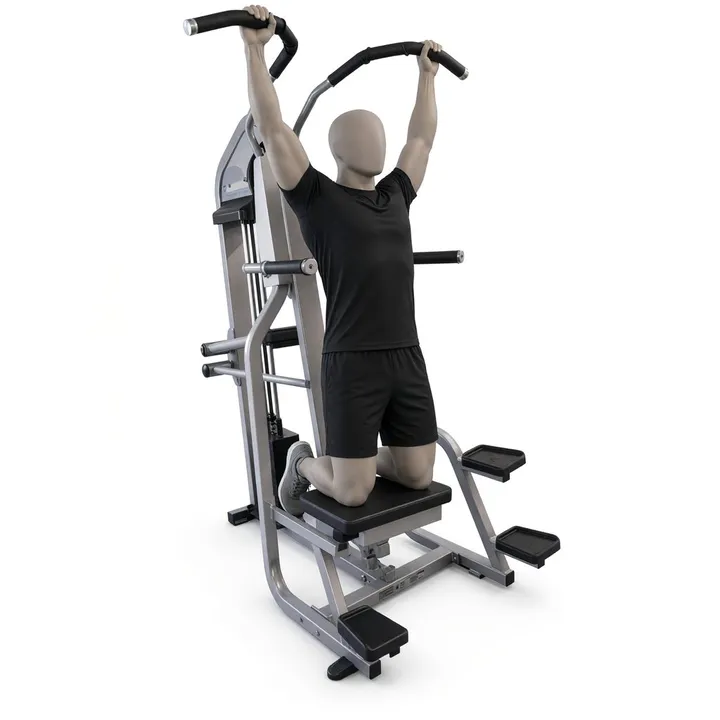
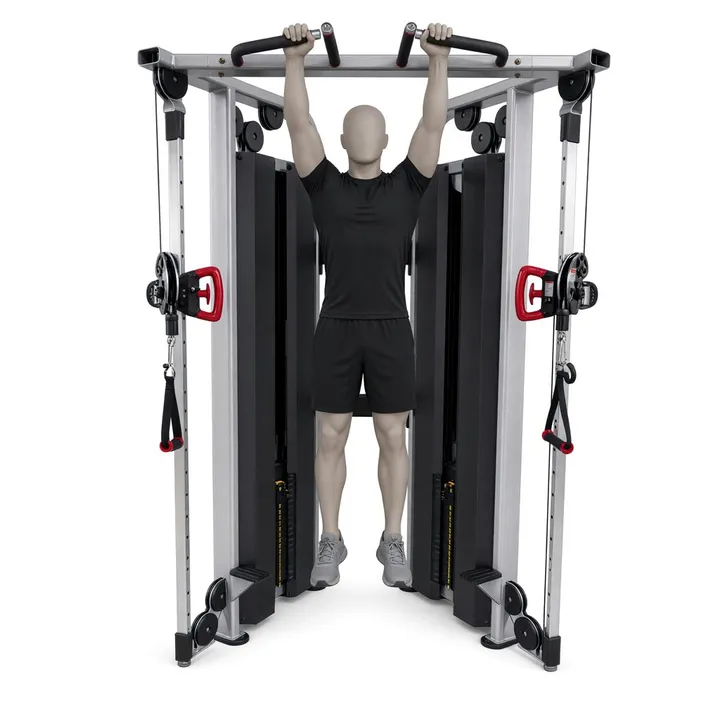
For a similar back stimulus, you can look at the assisted pull-up variations listed as alternatives, depending on what’s available in your gym.
Why choose the chest-supported row over a regular bent-over row?
With your chest supported on the bench, your lower back doesn’t have to work as hard to stabilize you. That makes it easier to focus on your pulling technique and back contraction, especially if you tend to cheat with momentum on bent-over rows.