Machine
Adjustable bench: how to use it properly
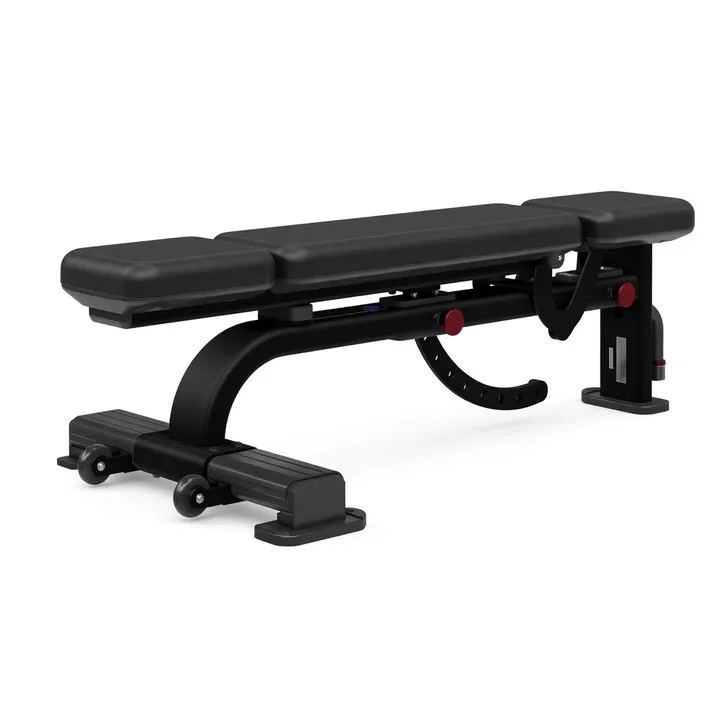
The adjustable bench is one of the main tools on any gym floor. You can use it flat, on an incline or almost upright for many exercises with dumbbells, barbell or Smith machine. It works well for both upper and lower body training, for beginners and more advanced lifters.
At all 76 gyms GoSet follows
The essentials
- Upper back on the bench, padded bar on your hips.
- Chin tucked, rise until your hips are level.
Muscles worked
- Primary
- —
Setup
- Place the bench in a clear area where you can move safely with your dumbbells or under the Smith bar.
- Set the backrest of the bench (flat, incline or almost upright) based on the exercise you plan to do.
- If your bench has an adjustable seat, tilt it slightly up to help you stay anchored when the weight gets heavier.
- Pick your dumbbells with an appropriate load; in many gyms the jump is around 2 kg or about 5 lb between pairs.
- For barbell or Smith exercises, make sure your head and shoulders are fully supported by the bench, not hanging off the edge.
How to do it
- Sit or lie on the bench with your hips in contact and your feet planted on the floor or on the bench, depending on the exercise.
- Place your back against the pad without over-arching; keep a comfortable contact across the supported area.
- Before your first working set, test the movement with little or no weight to see if the bench angle feels right.
- During the exercise, control the lowering phase for about 2 to 3 seconds and avoid bouncing on the bench or collapsing into it.
- Keep your breathing steady: usually inhale on the easier part of the rep and exhale on the main effort, without holding your breath for long.
- At the end of the set, bring the weight down to the floor or onto your thighs in a controlled way before you get up from the bench.
Common mistakes
Bench placed too far or misaligned under the bar/Smith
Instead : Before you lie down, make sure the bar or start position lines up properly with your chest or shoulders for that exercise. Adjust the bench position first, then load heavier.
Bench angle chosen at random
Instead : Pick the angle based on the movement: flatter for lying work, more incline or upright for shoulder-type movements. Always do a few test reps to check that it feels good on your joints.
Unstable feet or on your toes
Instead : Set your feet flat at a comfortable width, or on the bench when the exercise calls for it, like some hip thrusts. The goal is to be solid, not wobbling through the reps.
Sitting up with the dumbbells far from your body
Instead : To finish a set, bring the dumbbells toward your chest or onto your thighs, then sit up while keeping them close. Avoid twisting your back with straight arms.
Coach tips
- For lying or incline dumbbell work, take 2 to 3 seconds to lower, add a small controlled pause, then press back up smoothly without using momentum.
- On heavier sets, grip the dumbbells firmly and drive your hips into the bench and your feet into the floor to stay stable.
- You can run several movements on the same bench in one workout, like a dumbbell press, a chest-supported row and an arm exercise.
- If a certain incline angle feels rough on a joint, move the backrest one notch up or down and test again with a light weight.
Variations
- Use the bench flat, on an incline or almost upright to change angles with the same dumbbell exercises.
- Place the bench in front of the Smith machine to do lying, incline or seated bar variations with the guided bar.
- Use the bench as support for single-arm or single-leg work, like one-arm rows or Bulgarian split squats with dumbbells.
Sets and reps
The adjustable bench is often used for several exercises in the same workout, for example 2 to 4 upper body movements plus one or two lower body options. Many people aim for around 3 sets of 8 to 12 reps on their dumbbell bench exercises, depending on their training goal.
Exercises on this machine
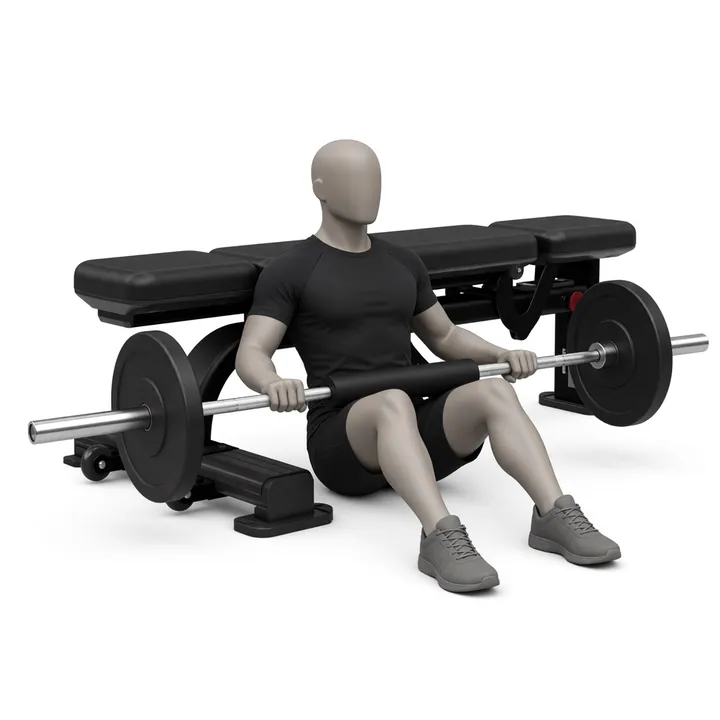 Barbell hip thrustGlutes
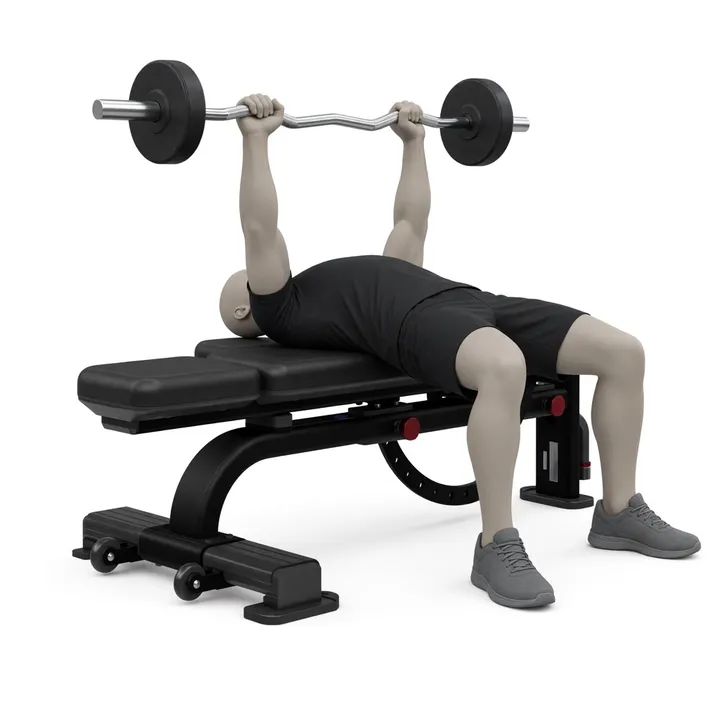 Barbell skull crusherTriceps
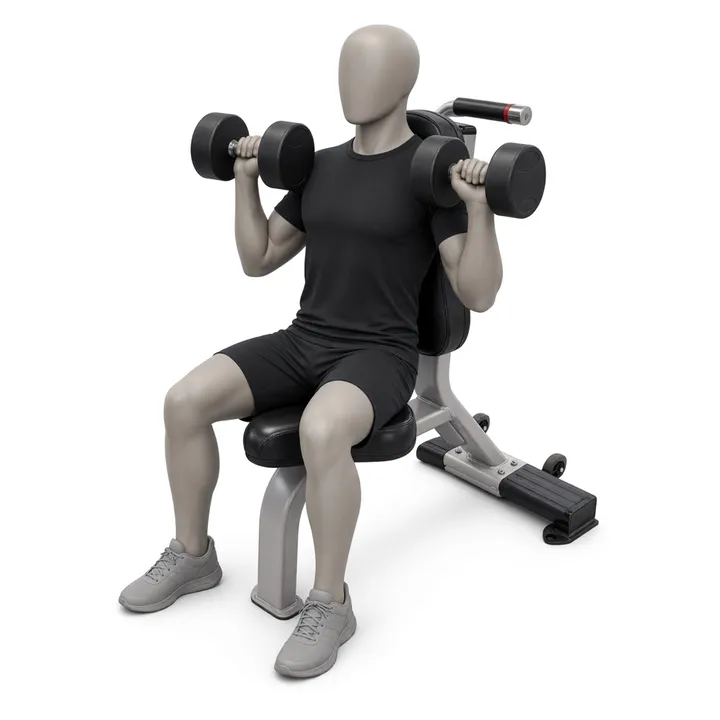 Arnold pressShoulders
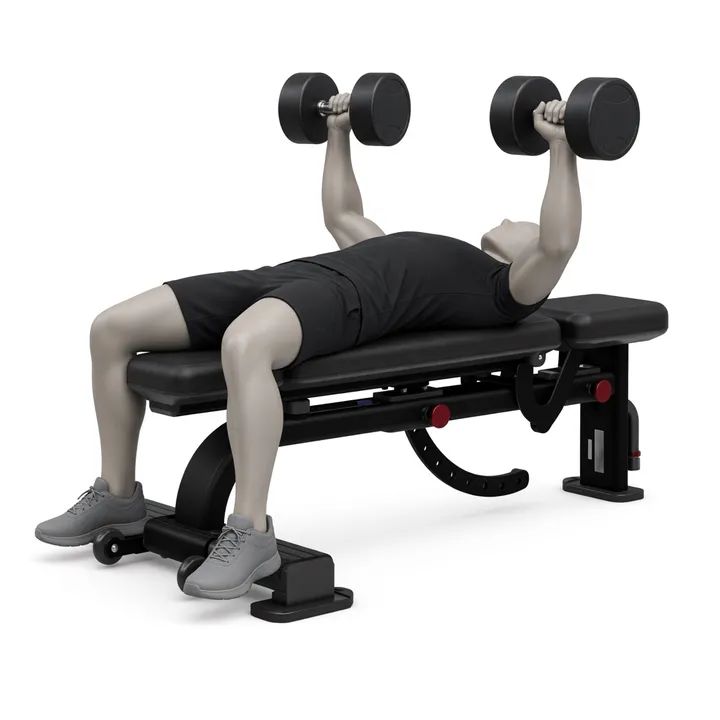 Dumbbell bench pressChest
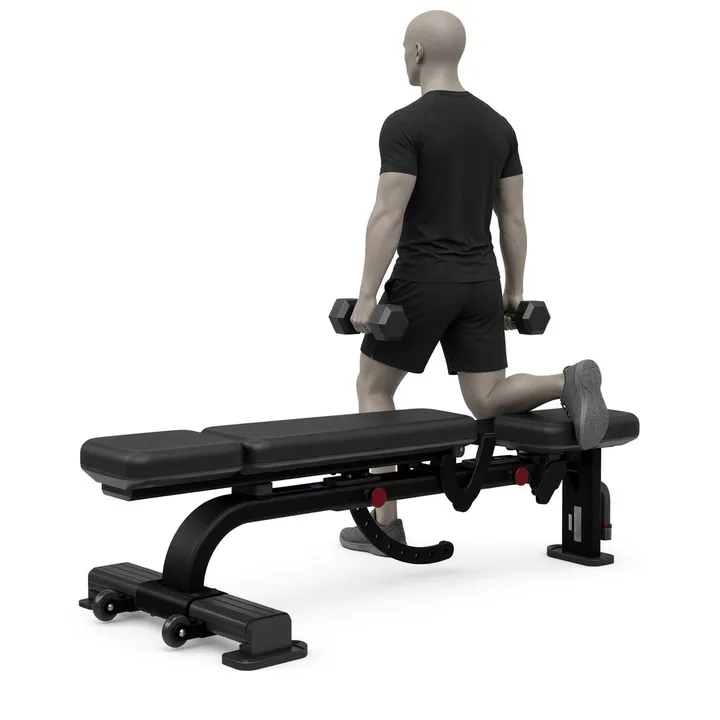 Dumbbell Bulgarian split squatQuadriceps · Glutes
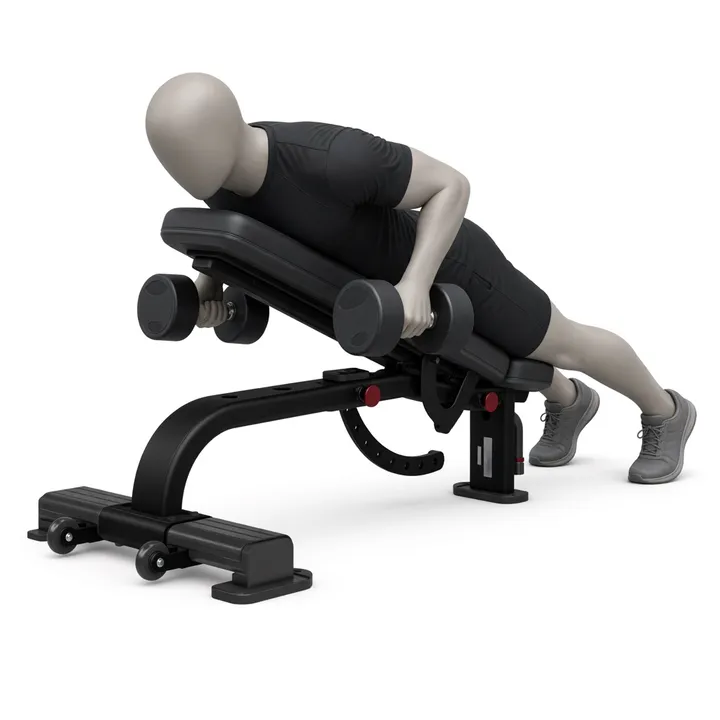 Chest-supported dumbbell rowBack
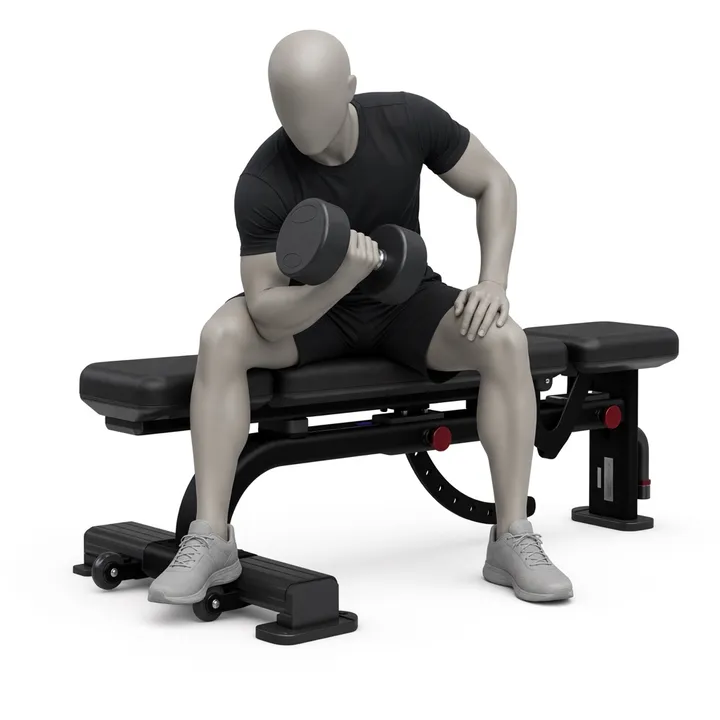 Concentration curlBiceps
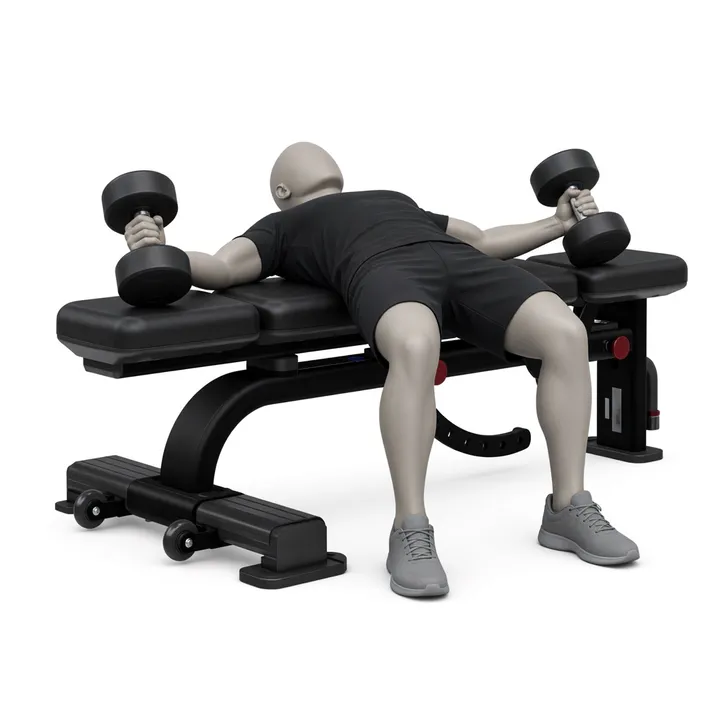 Dumbbell flyChest
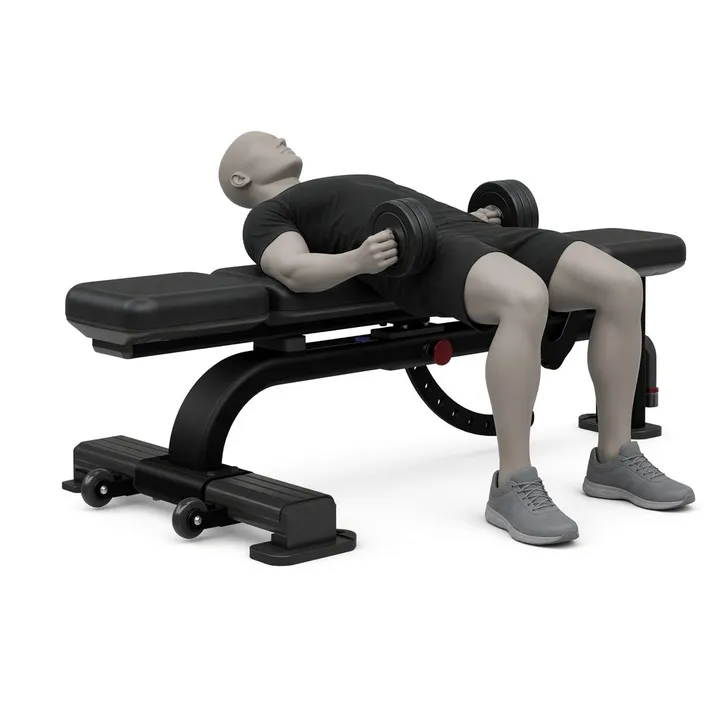 Dumbbell hip thrustGlutes
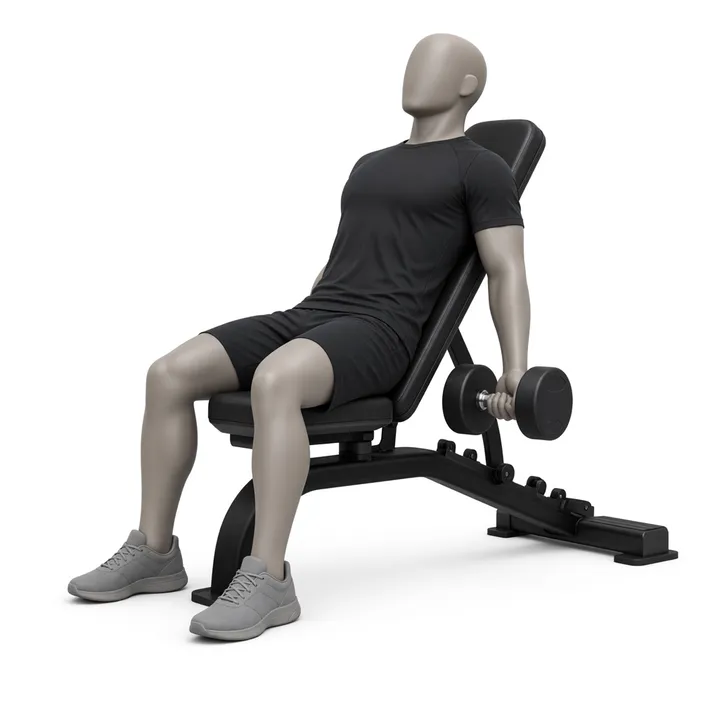 Incline dumbbell curlBiceps
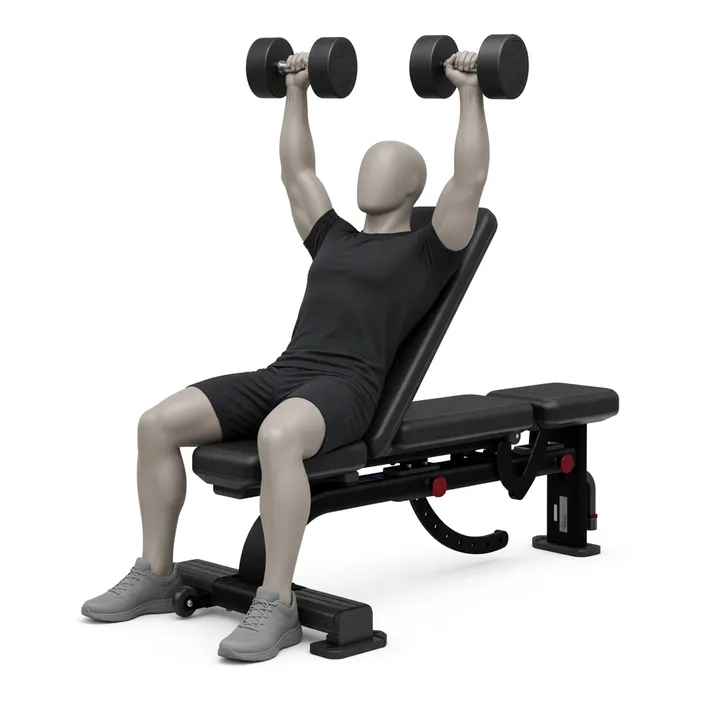 Incline dumbbell pressChest
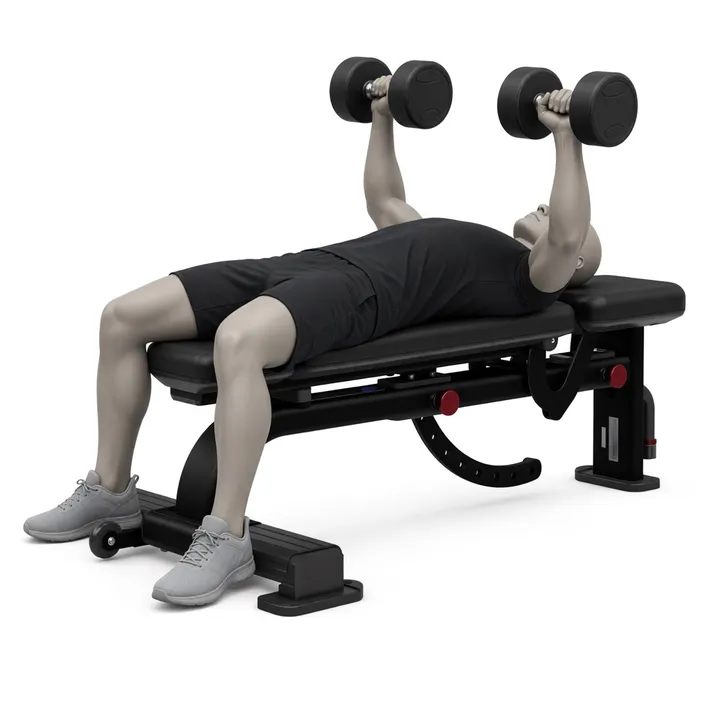 Lying dumbbell triceps extensionTriceps
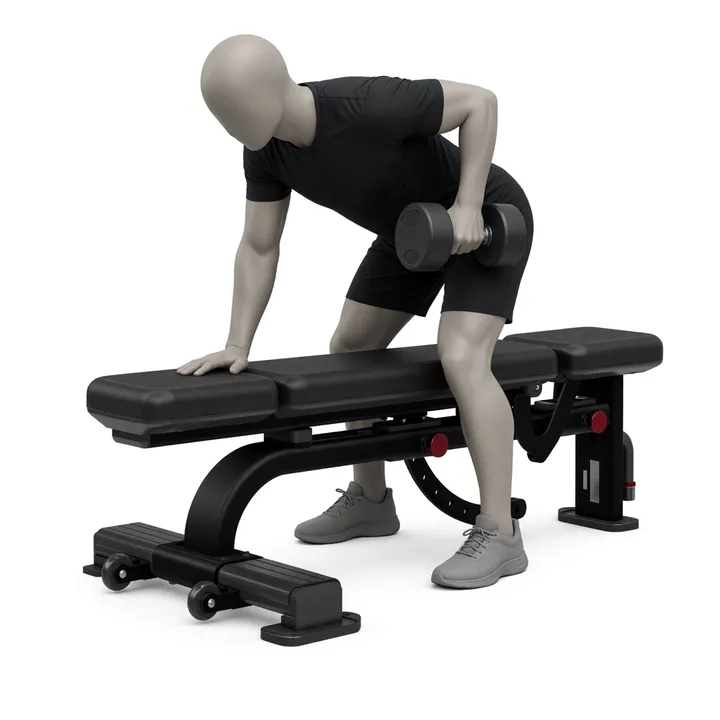 One-arm dumbbell rowBack
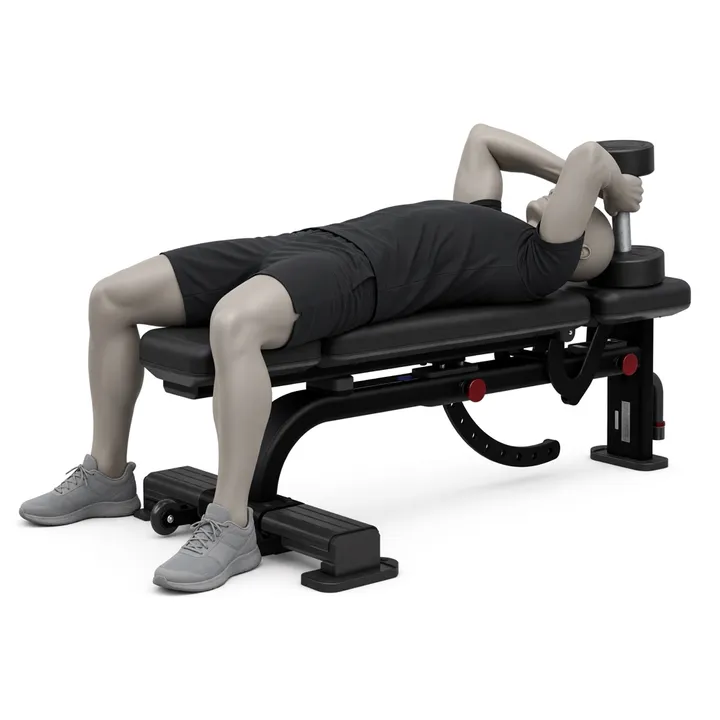 Dumbbell pulloverChest · Back
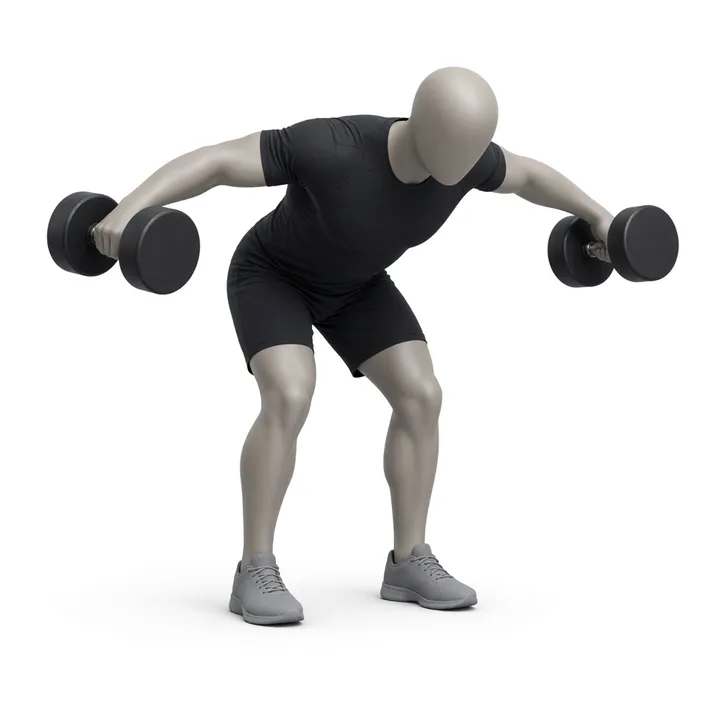 Dumbbell reverse flyShoulders
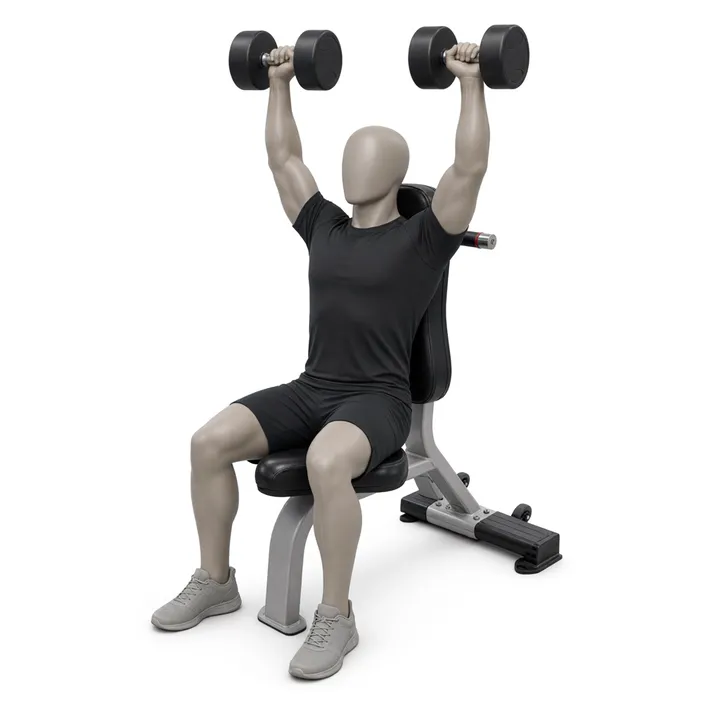 Seated dumbbell shoulder pressShoulders
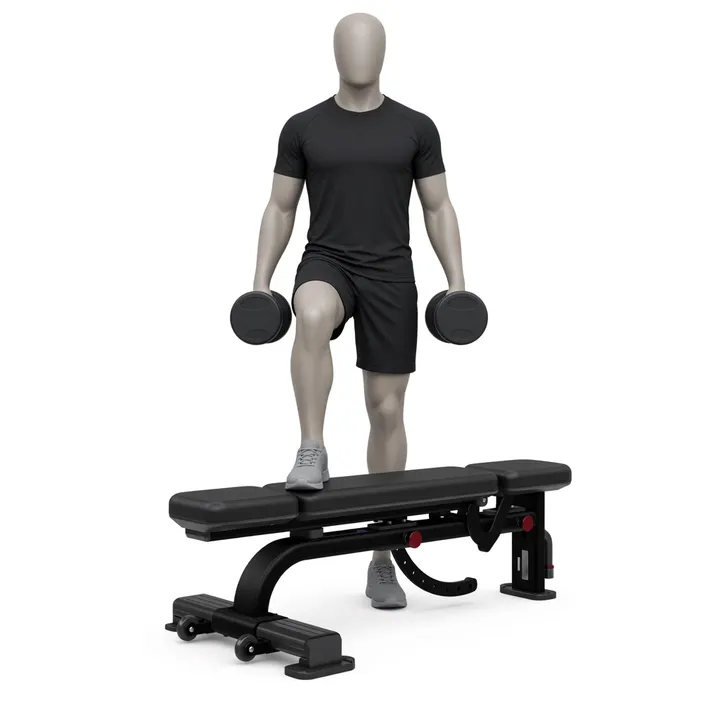 Dumbbell step-upQuadriceps · Glutes
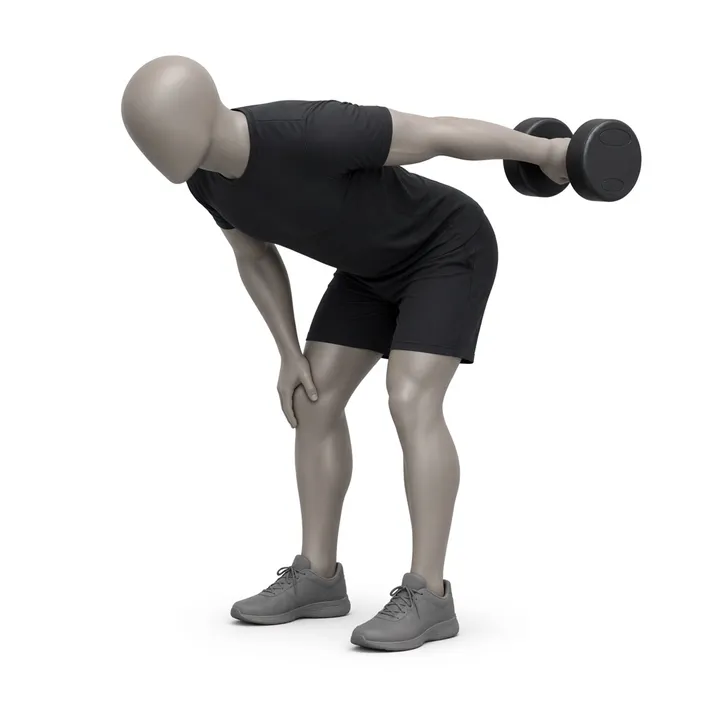 Dumbbell triceps kickbackTriceps
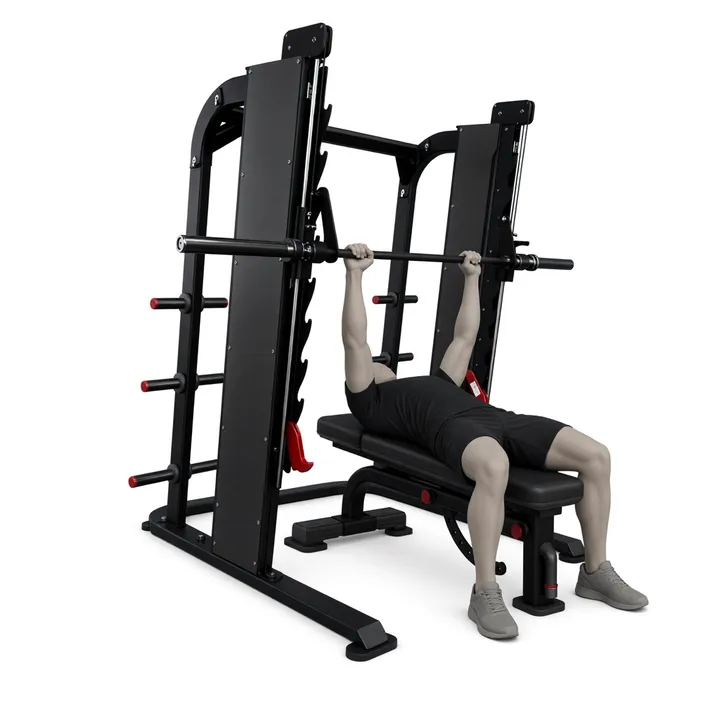 Smith machine bench pressChest
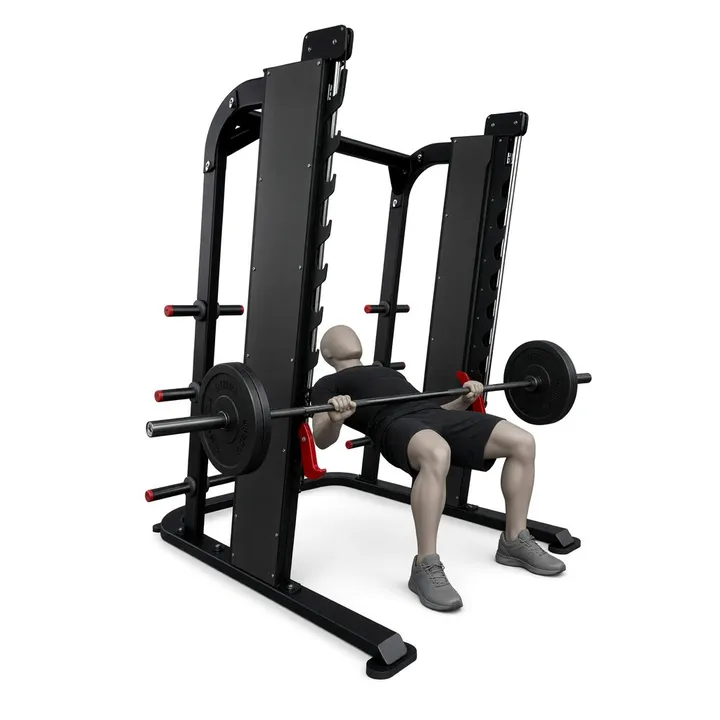 Smith machine hip thrustGlutes
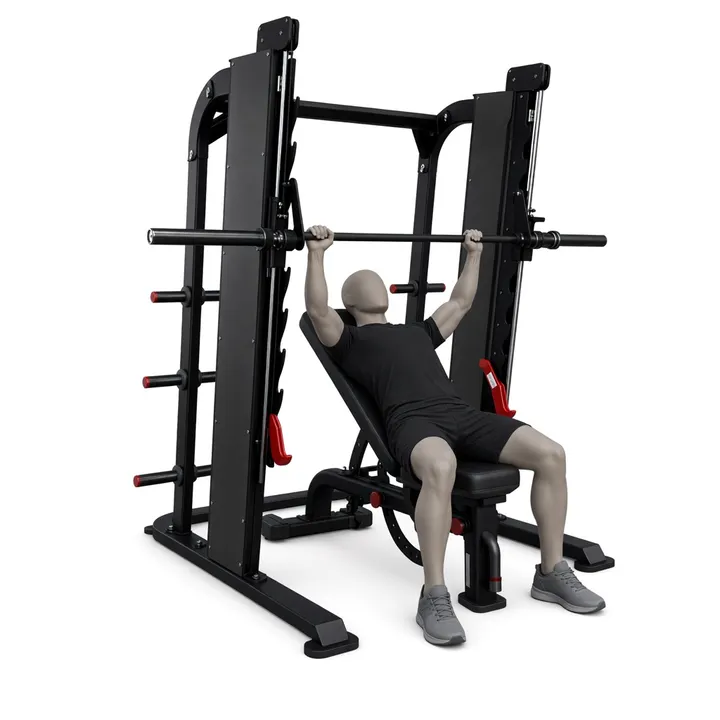 Smith machine incline pressChest
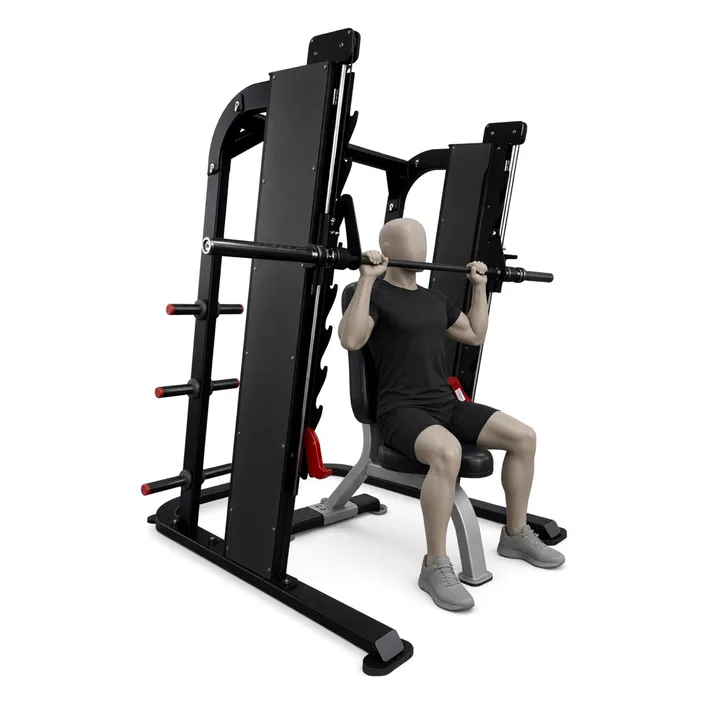 Smith machine shoulder pressShoulders
Log your Banc ajustable sets with GoSet
GoSet remembers your last time, starts your rest on its own and notes your records. Even with no signal in the basement. Coming soon to iPhone and Android.
Common questions
What’s the point of an adjustable bench versus a fixed bench?
An adjustable bench lets you train flat, on an incline or almost upright with the same dumbbells, barbells or Smith machine. You can do presses, flyes, chest-supported rows, arm work, and even lower body moves like Bulgarian split squats or step-ups.
How do I choose the right bench angle for dumbbell exercises?
The flatter the bench, the closer it is to a lying movement. As you raise the backrest, you move toward a seated position, which works well for many shoulder and some curl exercises. Take time to test different notches with a light load to see where you feel solid and comfortable.
Can I use the adjustable bench with the Smith machine?
Yes. In many gyms the adjustable bench is used under the Smith for movements like bench press, incline press, shoulder press or hip thrust. Just be sure the bench is centred and stable before you start your set.
Will my gym have an adjustable bench?
Across the gyms tracked by GoSet in Quebec, the adjustable bench is found everywhere. It’s one of the most commonly used pieces of equipment on the floor.