Exercise · Shoulders
Seated dumbbell shoulder press
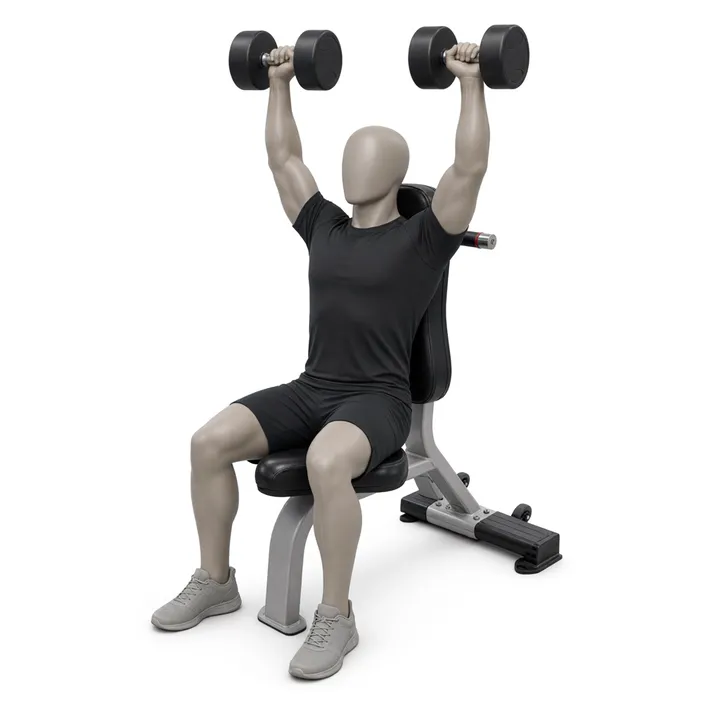
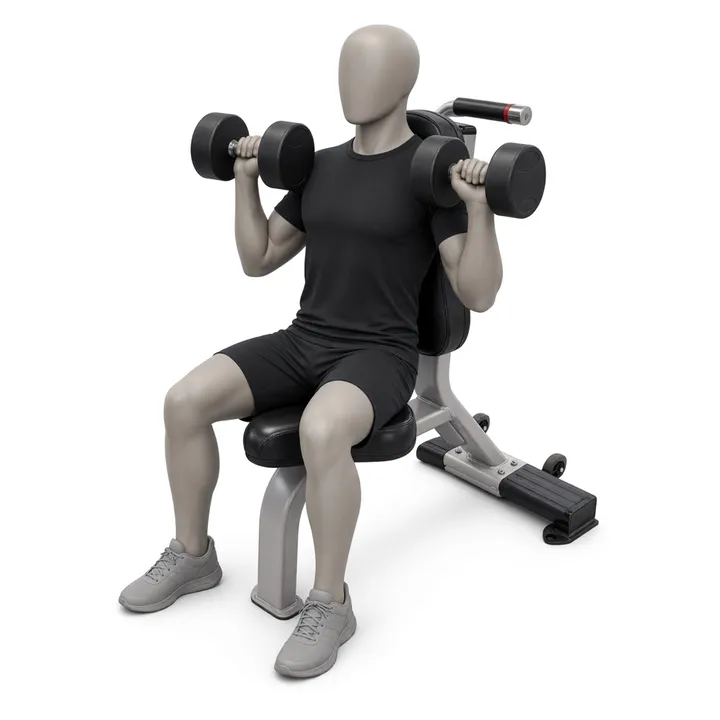
The seated dumbbell shoulder press is an overhead press done on a bench with a backrest. It targets your shoulders first, with help from your triceps. Because you’re supported and seated, it’s a good option to load the movement while staying more stable than standing.
Doable at all 76 gyms GoSet follows
The essentials
- Back against the pad.
- Press overhead without clanking the dumbbells.
Muscles worked
- Primary
- Shoulders
- Secondary
- Triceps
How to do it
- 1. Set a bench with the backrest close to upright and sit all the way back, back against the pad, feet planted on the floor.
- 2. Grab two dumbbells, rest them on your thighs, then bring them up to shoulder height with your palms facing forward or slightly turned toward you.
- 3. Keep your ribcage neutral, lower back against the pad, and forearms roughly vertical under the dumbbells.
- 4. Inhale, then press the dumbbells overhead in 1–2 seconds, without clanking the dumbbells together at the top.
- 5. Stop just before fully locking out your elbows, breathe, then lower in 2–3 seconds until just above the lowest comfortable point for your shoulders.
- 6. Stay in control for the whole set, without over-arching your back or letting your lower back peel off the pad.
Common mistakes
Over-arching the lower back
Instead : Pick a weight you can control, press your lower back into the pad, and bring your feet a bit closer under you for more stability. If you need to arch hard to finish reps, drop the weight.
Going too low and pinching the shoulders
Instead : Stop the descent before you feel a sharp pinch at the front of the shoulder. The range is fine as long as you feel solid and pain-free.
Banging the dumbbells together at the top
Instead : Aim for a path where the dumbbells come close without touching. Think of pressing up and slightly in, keeping your wrists stacked over your elbows.
Moving too fast and jerky
Instead : Slow the lowering phase to 2–3 seconds, keep constant contact between your back and the pad, and choose a weight that lets you control every rep.
Coach tips
- Control your breathing: inhale at the bottom or while lowering, exhale as you press the dumbbells up.
- Start with lighter dumbbells to find a comfortable elbow and wrist position, then build the weight up step by step.
- If the bench is adjustable, set it close to vertical, not fully flat, so your back is supported.
- Keep your wrists neutral and aligned with your forearms, instead of letting them bend back under the weight.
Variations
- Neutral grip (palms facing each other) can feel more comfortable on the shoulders for some people while still hitting them hard.
- Top-half range of motion if the bottom portion feels cranky, so you can keep training the shoulders without discomfort at the bottom.
Sets and reps
For strength or muscle, people often do 3–4 sets of 6–12 reps with a load that leaves 1–3 reps in the tank. For lighter control work, some choose 2–3 sets of 12–15 reps with smaller dumbbells.
Equipment
Alternatives for the same muscles
Log your Seated dumbbell shoulder press sets with GoSet
GoSet remembers your last time, starts your rest on its own and notes your records. Even with no signal in the basement. Coming soon to iPhone and Android.
Common questions
What should I feel during the seated dumbbell shoulder press?
You should mainly feel your shoulders working, with your triceps helping near the top. If you feel sharp pain in the shoulder or neck, stop the set and talk to a professional before continuing.
Where should my elbows be, flared or closer in?
Aim for a middle position, not glued to your sides and not straight out in line with your shoulders. Find an angle that feels solid where you feel your shoulders work without joint pain.
Is it normal to be weaker seated than standing?
Yes, that’s common. Seated, you’re more supported but you can’t use your legs and lower body as much to help. Focus on your progress on the same exercise rather than comparing across different presses.
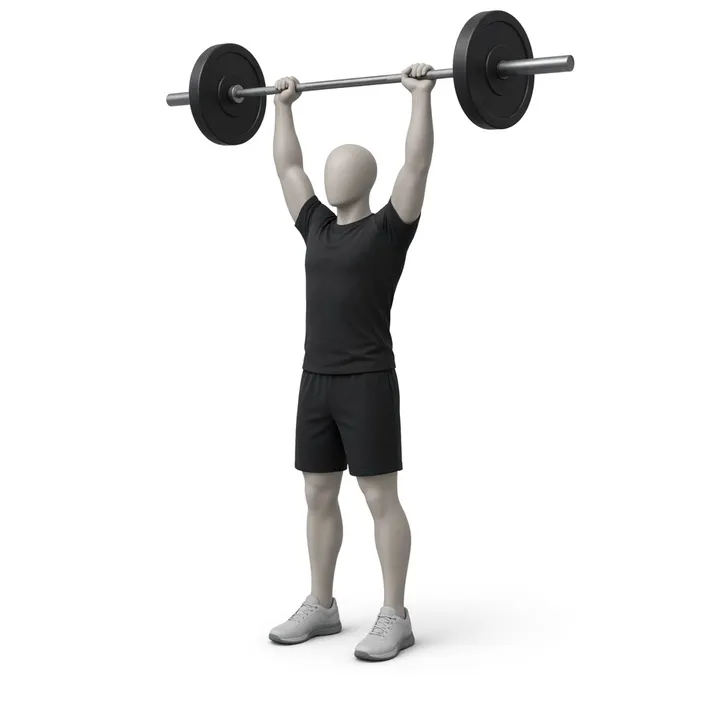
Can I swap the standing overhead press for the seated version?
Yes, the seated version with a backrest also trains your shoulders and triceps, with more stability. It’s often a good pick if you want to focus on technique or just feel better pressing while seated.