Machine · Shoulders
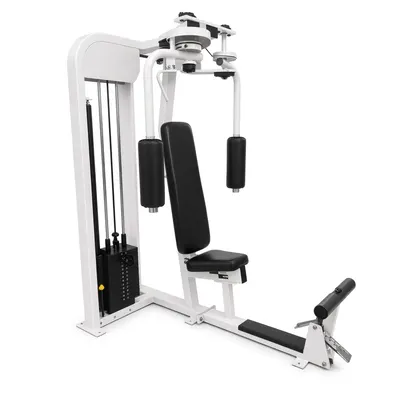
Upright utility bench at the gym
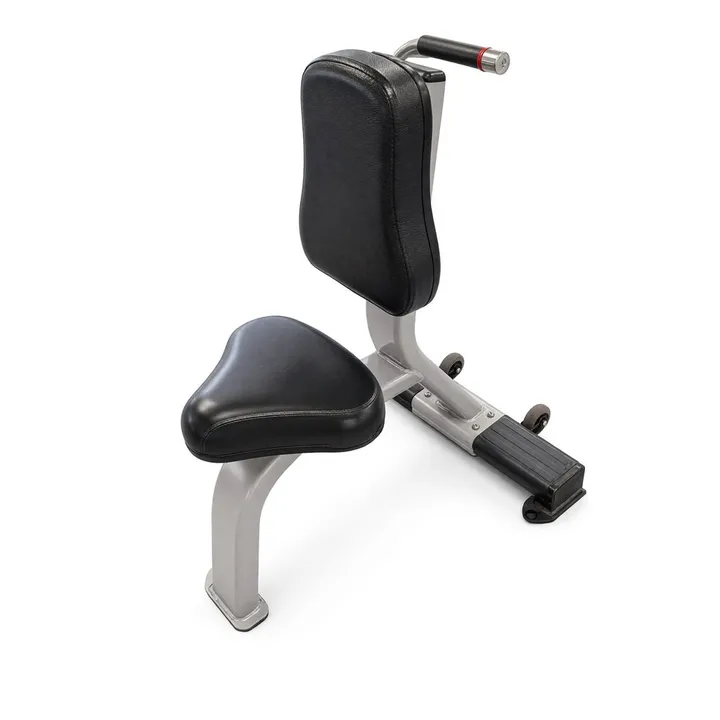
The upright utility bench is the seat with a straight backrest for your seated dumbbell work. It’s mainly used for shoulder exercises where you want more stability and support. Great to keep good posture and better control your weights.
At all 76 gyms GoSet follows
The essentials
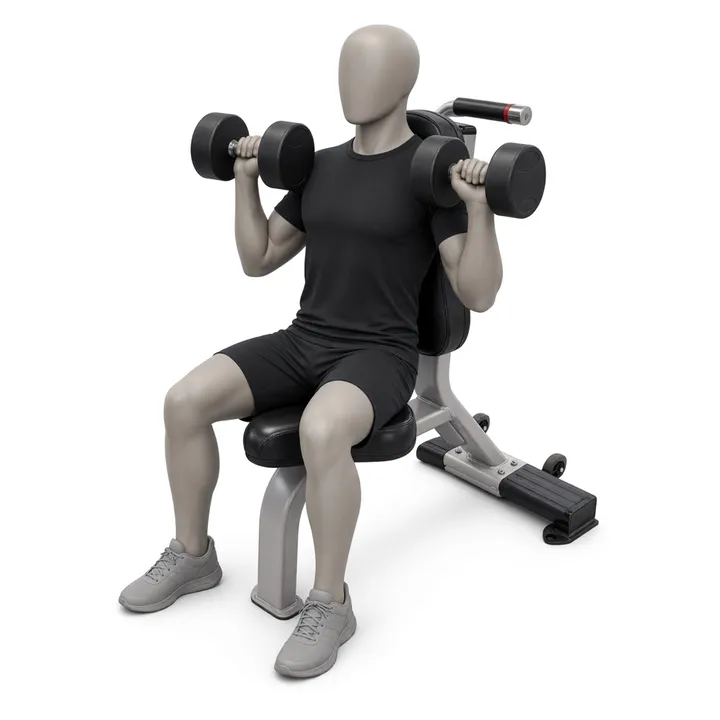
- Start with palms facing you in front of your shoulders.
- Rotate your wrists as you press up.
Muscles worked
- Primary
- Shoulders
Setup
- Place the bench in a clear area so you can move the dumbbells without hitting people or equipment.
- Adjust how far the bench is from the dumbbell rack so you don’t have to walk too far with heavy weights.
- Check that the bench is stable: no wobbling legs, all feet flat on the floor.
- Pick your dumbbells, increasing the weight in small steps based on your strength and control.
- Sit all the way back on the seat with your back in full contact with the backrest before starting your set.
How to do it
- Sit on the bench with your feet flat on the floor, slightly wider than hip-width for better balance.
- Press your lower back and shoulder blades into the backrest and keep your chest open without over-arching.
- Bring the dumbbells onto your thighs one at a time, then use your legs to help kick them up into the start position of your seated exercise.
- Keep your hips in contact with the seat for the whole set and avoid sliding forward to the edge of the bench.
- Keep your head neutral, looking straight ahead, without dropping your chin or lifting it toward the ceiling.
- At the end of the set, bring the dumbbells back onto your thighs before lowering them to the floor under control.
Common mistakes
Sitting on the edge of the bench
Instead : Sit all the way back with your hips and back against the backrest. This gives you more stability for your seated shoulder work.
Not using the backrest
Instead : Slide your hips closer to the backrest and pin your shoulder blades to it. The support helps you control your seated dumbbell movements better.
Poor foot position
Instead : Keep your feet flat, a bit wider than hip-width. If you feel off balance, widen your stance slightly or move your feet a bit forward.
Getting dumbbells up and down without control
Instead : Use your thighs to help lift the dumbbells into position and rest them back on your thighs before lowering them to the floor, instead of dropping them.
Coach tips
- For seated shoulder exercises, use a controlled tempo, for example about 1 second up and 2 to 3 seconds down with the weight.
- Breathe with your belly: inhale in the lower part of the rep, exhale as you press or lift the dumbbells.
- If your lower back is arching too much, bring your feet a bit closer to the bench and brace your core to keep your back against the support.
- Start with lighter weights on new seated exercises so you can learn to use the back support properly before going heavier.
Variations
- You can angle the bench slightly toward a mirror to check your shoulder alignment during your seated exercises.
- Some gyms have benches with a slightly angled backrest: pick the one that lets your shoulders feel comfortable during your seated dumbbell work.
Sets and reps
The upright utility bench is often used for shoulder-focused exercises in 3 to 4 sets of 8 to 15 reps, depending on your level and the weight you can control well.
Exercises on this machine
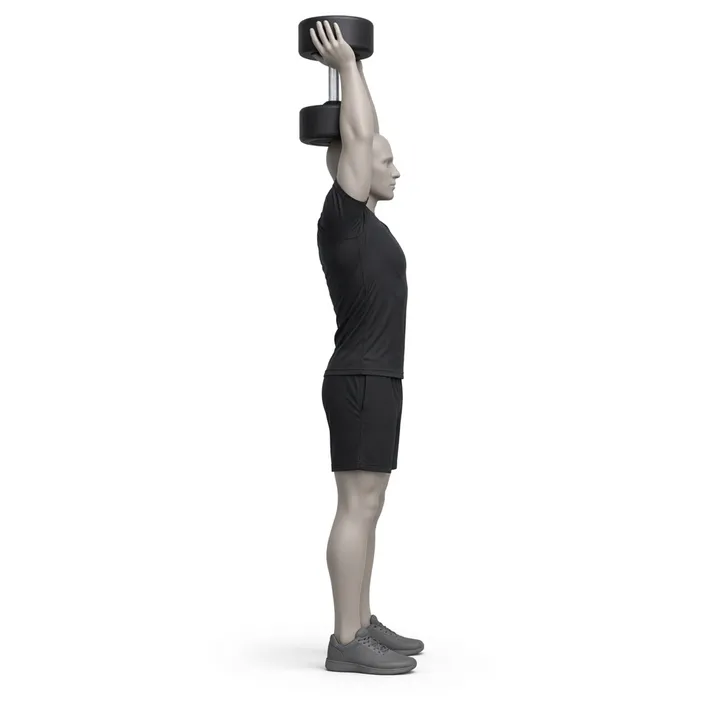
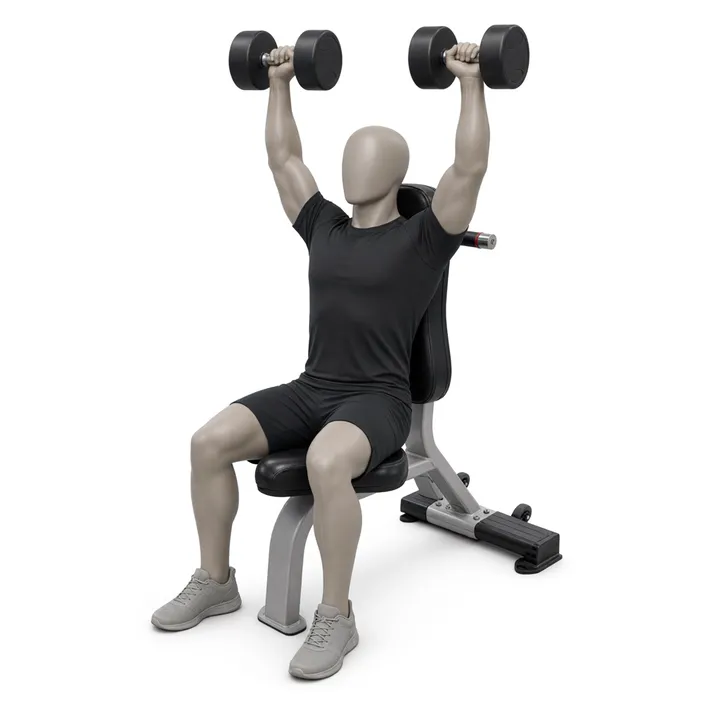
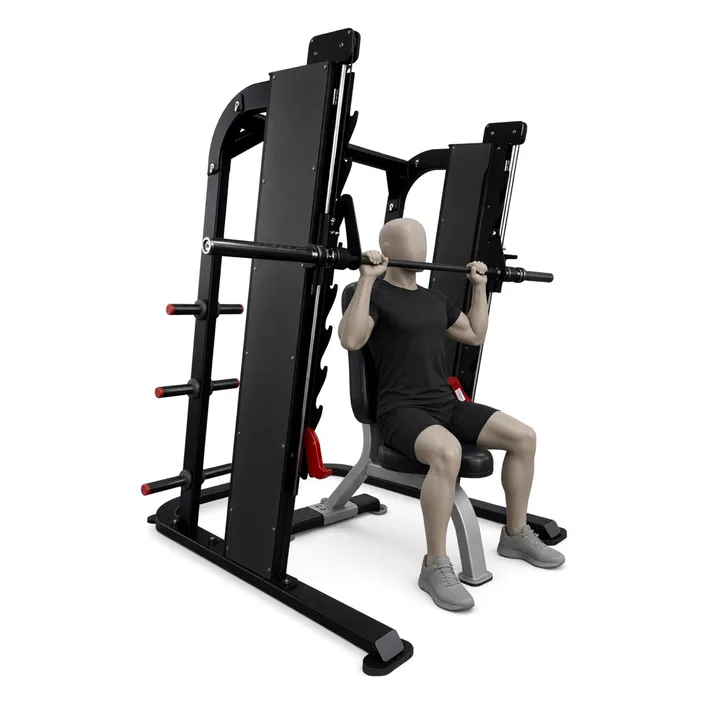
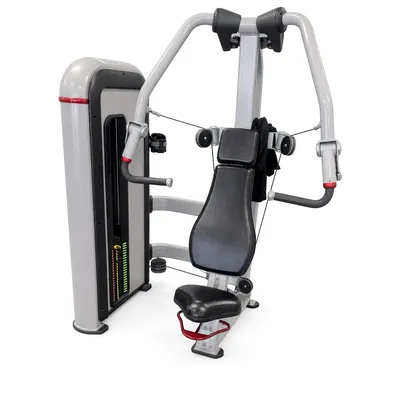
Machine taken? Try instead
Log your Upright utility bench sets with GoSet
GoSet remembers your last time, starts your rest on its own and notes your records. Even with no signal in the basement. Coming soon to iPhone and Android.
Common questions
What is the upright utility bench for?
It’s mainly for seated dumbbell work like shoulder pressing. The backrest gives you support so you can keep good posture and control your movements better.
How do I stay stable on the upright utility bench?
Keep your feet flat and slightly wider than hip-width, sit all the way back on the seat and press your back into the backrest. From there you can move the dumbbells without losing balance.
What exercises can I do on this bench?
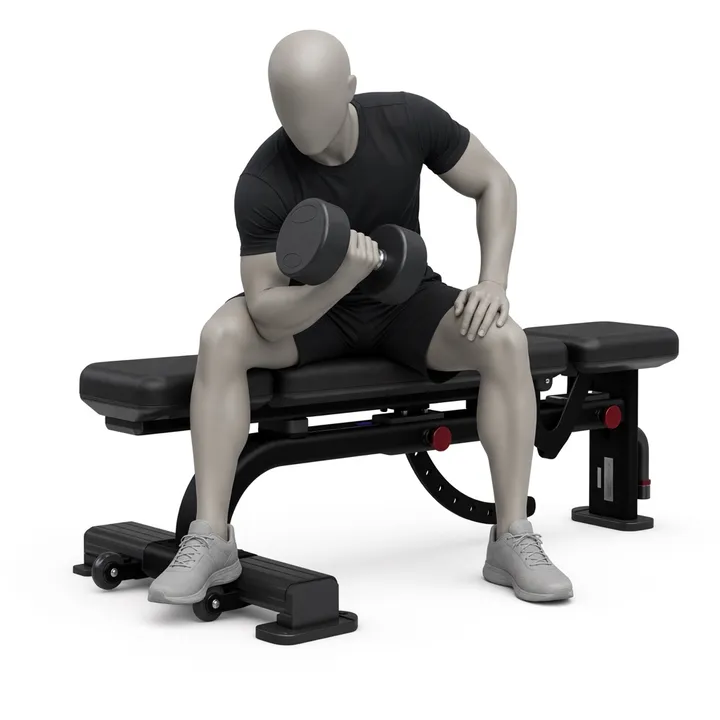
You can use it for things like seated dumbbell shoulder press, Arnold press, overhead dumbbell triceps extensions, and concentration curls.
What if my shoulders or back hurt on this bench?
Stop the exercise, take a break, and talk to a health or training professional before continuing or pushing through that area.