Machine · Chest
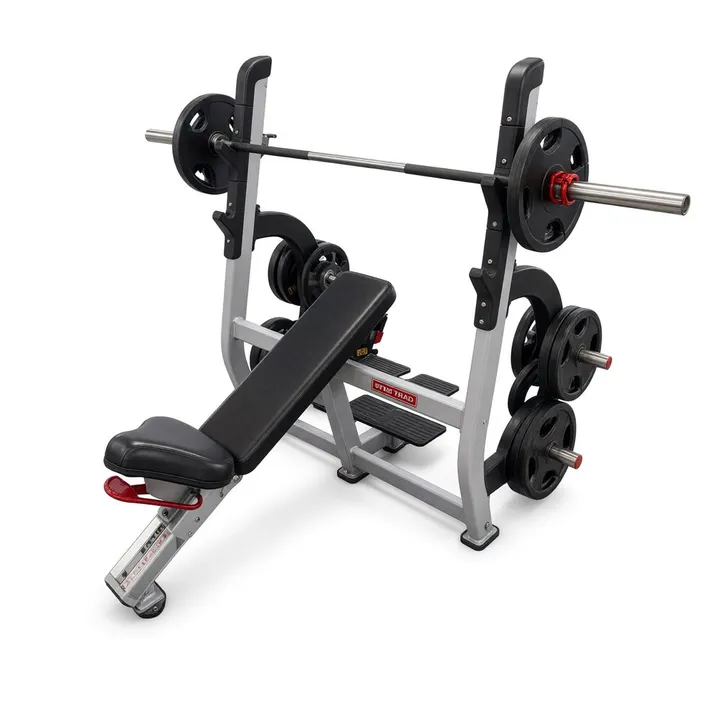
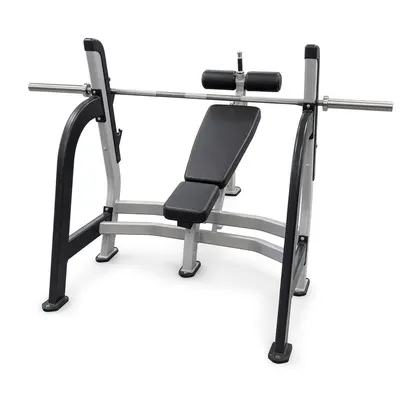
Olympic incline bench at the gym
The Olympic incline bench lets you do the barbell incline bench press. It mainly works your upper chest, shoulders, and triceps. It’s a solid option if you want something different from a flat bench or a chest press machine.
At all 76 gyms GoSet follows
The essentials
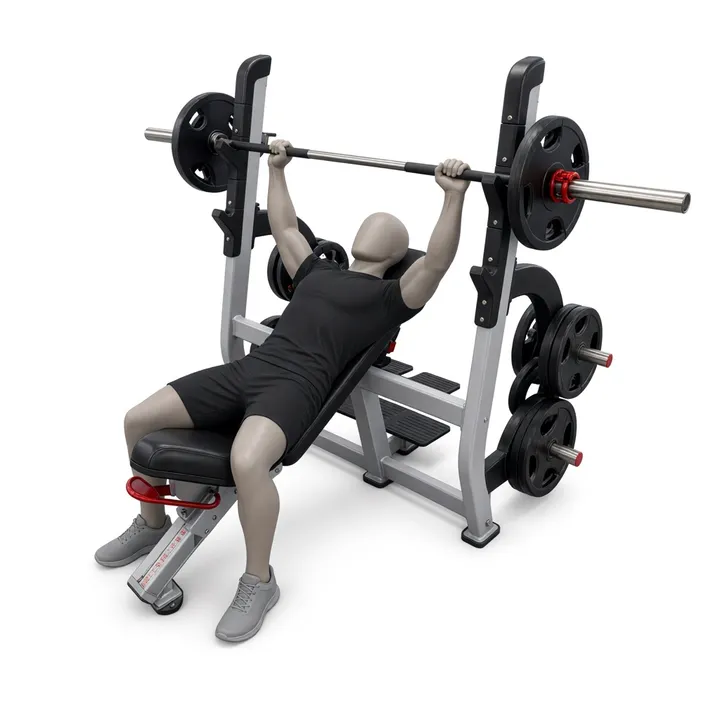
- Shoulder blades pinned to the bench.
- Lower the bar to your upper chest.
Muscles worked
- Primary
- Chest · Shoulders · Triceps
Setup
- Position the bench so that when you lie down, your eyes are just under the bar.
- Adjust the incline if possible so you’re between flat and upright, without being fully vertical.
- Make sure the bar is centred and the plates are secured with collars.
- Pick a load you can control and remember the bar itself weighs about 20 kg with no plates.
- Plant your feet firmly on the floor and get stable before unracking the bar.
How to do it
- Lie on the bench with your upper back and glutes on the pad, feet on the floor, eyes on the bar.
- Grip the bar slightly wider than shoulder-width, wrists straight, palms facing forward.
- Inhale, squeeze your shoulder blades into the bench, and unrack the bar by pressing it over your chest.
- Lower the bar toward your upper chest or upper torso in about 2 to 3 seconds, keeping your elbows under control.
- Lightly touch or come close to your torso without bouncing, then press up as you exhale until your arms are almost straight.
- Guide the bar back into the hooks on the rack, making sure it’s secure before you relax your grip.
Common mistakes
Lowering the bar too high toward the neck
Instead : Aim for your upper chest or upper torso, not your throat. Adjust the path slightly so your shoulders feel comfortable.
Bouncing the bar off the chest
Instead : Control the descent over 2 to 3 seconds and stop the bar at a light touch or just above the torso, with no rebound.
Wrists bent back under the bar
Instead : Keep the bar in line with your forearm. Squeeze the bar and think about pushing with your palm, not your fingers.
Hips lifting off the bench
Instead : Keep your glutes on the bench and use your legs for stability, not to thrust your hips up.
Coach tips
- Use a controlled tempo, for example 2 to 3 seconds down, a brief pause, then a smoother, faster press up.
- Take a solid breath before unracking and keep your chest up; exhale as you press the bar away.
- If you’re new to this or lifting heavier, ask someone to help you with the lift-off and re-rack.
- You can adjust your grip slightly narrower or wider to find what feels best on your shoulders.
Variations
- Slightly closer grip to put more emphasis on the triceps and a bit less on the chest.
- Slightly wider grip to put more emphasis on the chest, as long as your shoulders feel good.
- One-second pause at the bottom of each rep to improve control and reduce momentum.
Sets and reps
On this bench, the barbell incline press is often done for 3 to 5 sets of about 5 to 12 reps, depending on the load and your focus. Some people use it as their main chest exercise, others as a follow-up after something like a chest press or flat bench.
Exercises on this machine
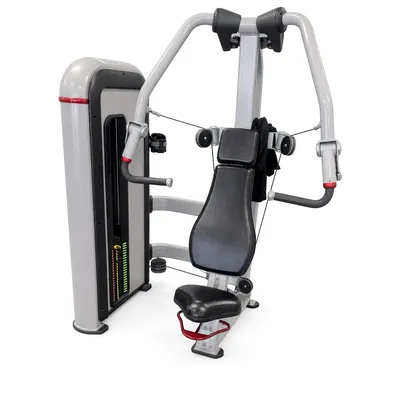
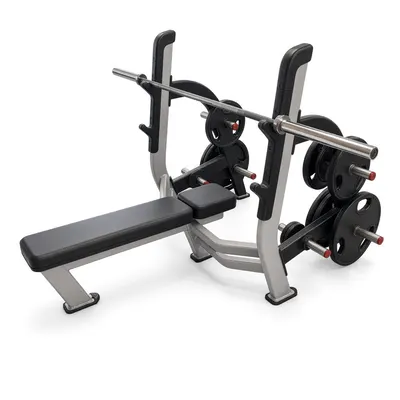
Machine taken? Try instead
Log your Olympic incline bench sets with GoSet
GoSet remembers your last time, starts your rest on its own and notes your records. Even with no signal in the basement. Coming soon to iPhone and Android.
Common questions
Which muscles does the Olympic incline bench work?
It mainly works your chest, shoulders, and triceps. The incline angle puts a bit more focus on the upper chest and shoulders compared with a flat bench.
How much does the bar on the incline bench weigh?
On this type of Olympic bench, the bar is usually around 20 kg when there are no plates on it.
What if my shoulders feel uncomfortable on incline bench?
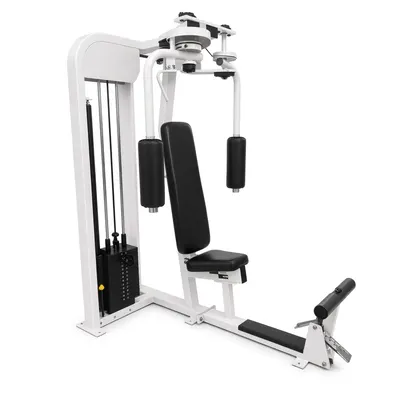
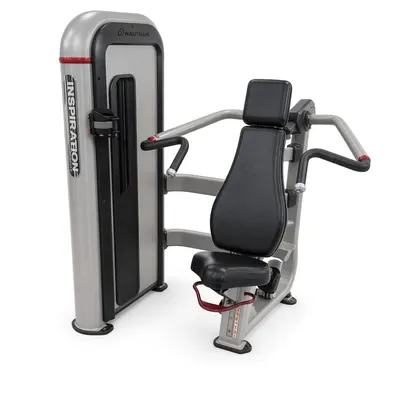
Stop the set, lighten the weight, and see if a slightly closer grip or a bit shorter range of motion helps. If the pain keeps coming back, talk to a professional and switch to options like the chest press or pec deck for now.
Can I use the incline bench safely without a spotter?
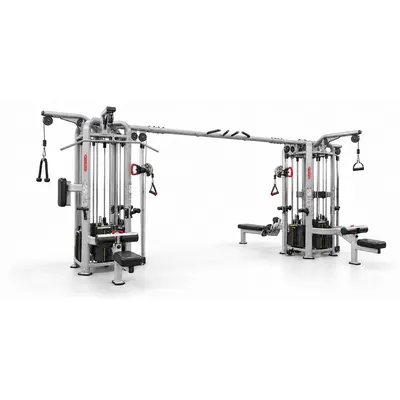
Yes, but stay with a weight you can control well and keep a few reps in the tank. If you want to push closer to failure more safely, you can also use options like the chest press or a multi-station cable machine.