Exercise · Shoulders
Standing overhead press from the rack
The standing overhead press is a classic barbell lift to build strong shoulders. You press the bar over your head while keeping your body tight and steady. It challenges your shoulders, your triceps, and your core to stay solid the whole time.
Doable at all 76 gyms GoSet follows
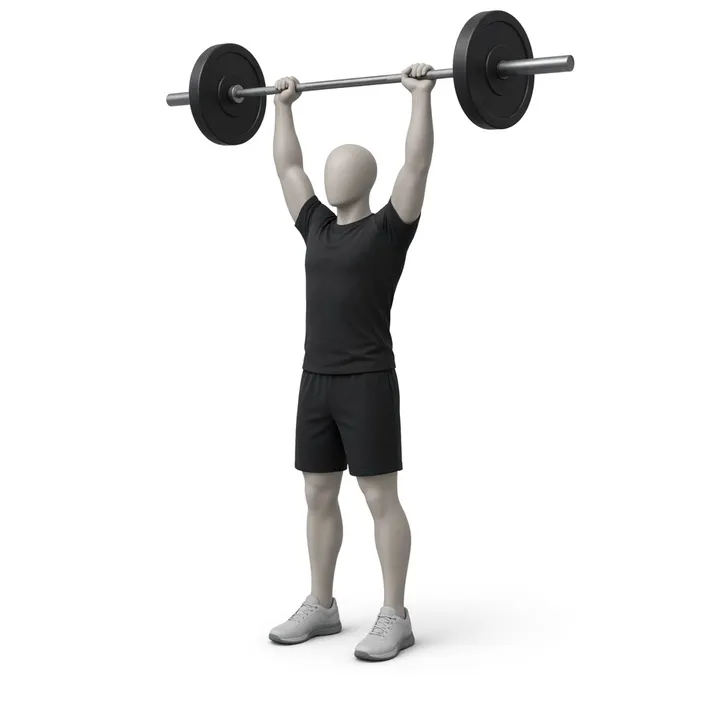
The essentials
- Squeeze your glutes and abs.
- Press the bar straight up overhead.
Muscles worked
- Primary
- Shoulders
- Secondary
- Triceps · Core
How to do it
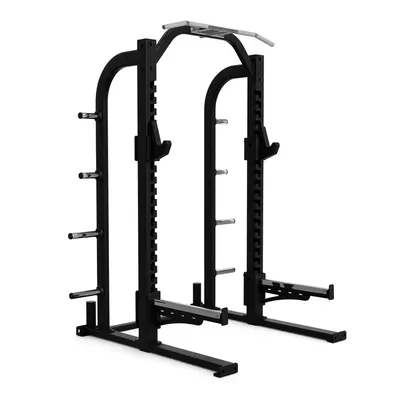
- Set the bar in the squat rack just below shoulder height. Grab it with a grip slightly wider than shoulder-width, thumbs around the bar.
- Get under the bar and rest it on the top of your chest or just under your collarbones. Brace your abs and squeeze your glutes, feet about hip-width apart.
- Unrack the bar by standing up tall, take one or two steps back to clear the rack, then plant your feet firmly on the floor.
- Take a breath in, squeeze your glutes and abs even more, keep your ribs down, then press the bar straight up overhead as you breathe out.
- At the top, your arms are almost straight and the bar is over the middle of your feet, with your head slightly through under the bar.
- Lower the bar back to the top of your chest under control in 2 to 3 seconds, keep your core tight, then go into the next rep.
Common mistakes
Overarching to move more weight
Instead : Brace your glutes and abs before every rep and keep your ribs down. If you have to lean back a lot to finish the rep, the weight is too heavy for now.
Pressing the bar in a big arc forward
Instead : Think of pressing the bar in a straight line over the middle of your feet. Let your head move slightly back at the start, then bring it through under the bar once it passes your forehead.
Elbows drifting too far back
Instead : At the start, keep your elbows under the bar or slightly in front, not way behind it. This helps you press stronger and keep a more stable bar path.
Dropping the bar too fast
Instead : Don’t let the bar fall down. Control it for 2 to 3 seconds, keep your core tight, and bring it close to your face on the way down without hitting your chin or chest.
Coach tips
- Use a controlled tempo: drive the bar up with intent, then lower it in 2 to 3 seconds to really feel your shoulders working.
- Breathe at the top or bottom of the rep. Often, you breathe in before you press, hold some tension, then breathe out near the end of the press.
- Keep your feet rooted in the floor, about hip-width or slightly wider. You can put one foot a bit in front if it helps you feel more stable.
- Start with a weight you can control through the full range of motion. Then increase gradually once your form stays solid from the first to the last rep.
Variations
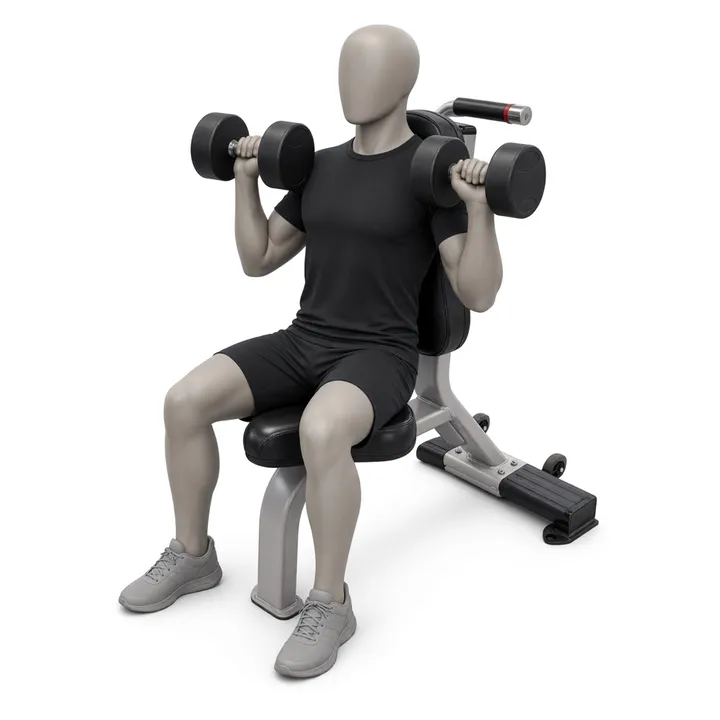
- Seated dumbbell shoulder press for more stability while still challenging shoulders and triceps.
- Arnold press with dumbbells to change the angle and feel on your shoulders.
- Half-kneeling landmine press for a more angled press that still works the shoulders and core hard.
Sets and reps
For general strength, people often do 3 to 5 sets of 5 to 10 reps on the standing overhead press, with about 1 to 3 minutes of rest depending on the load.
Equipment
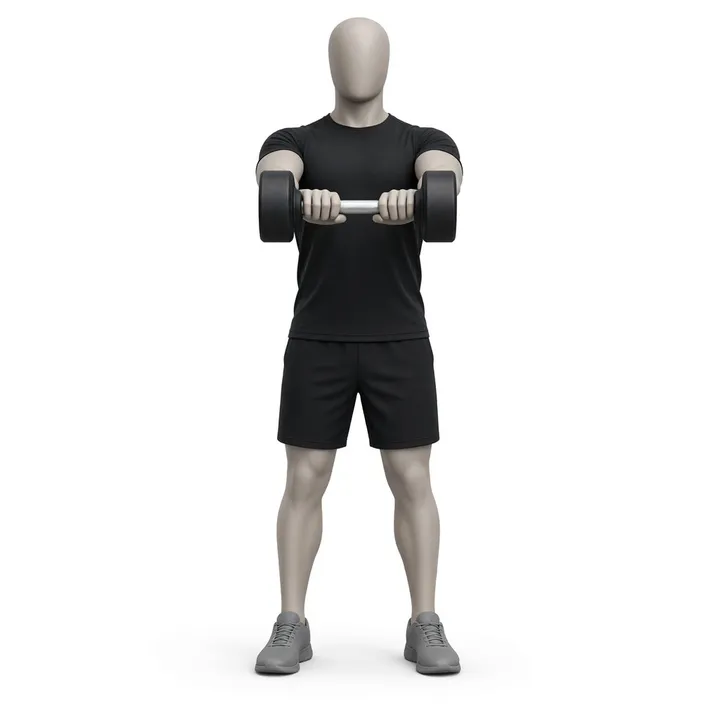
Alternatives for the same muscles
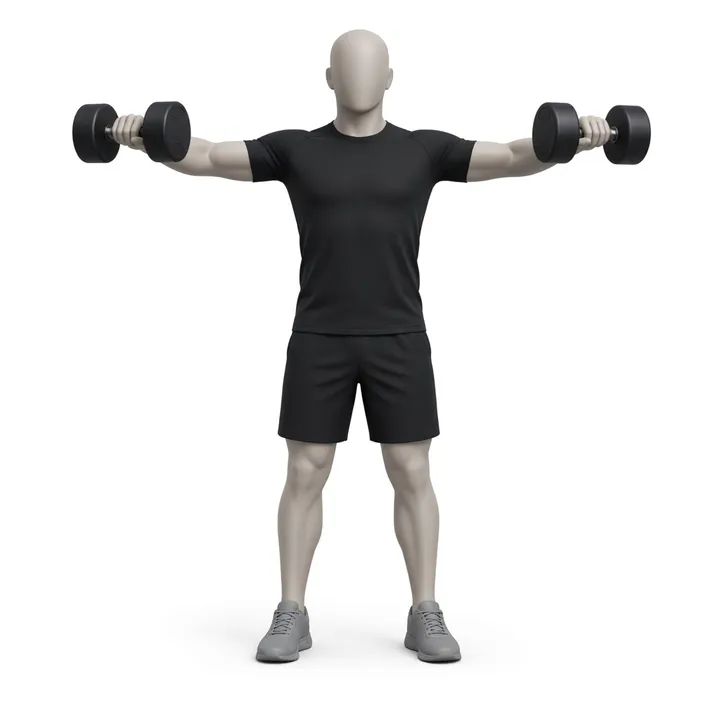
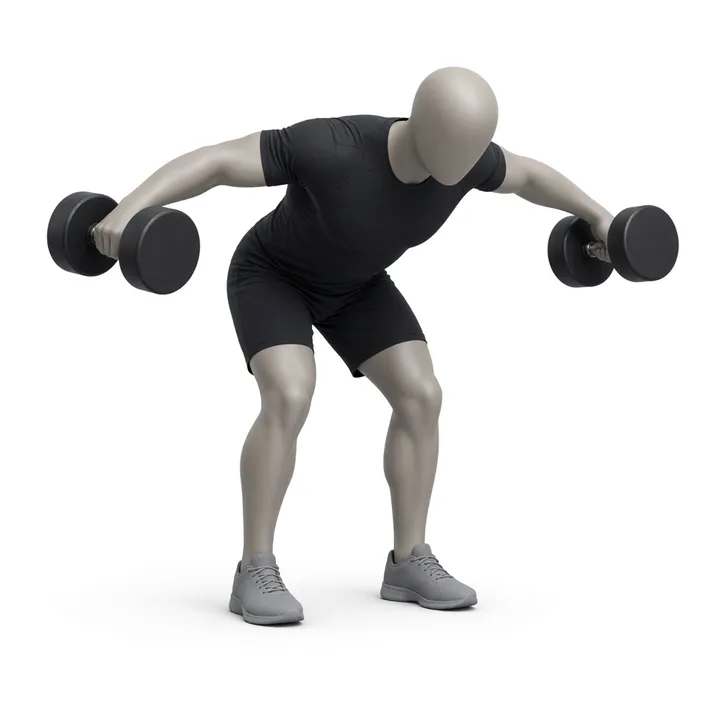
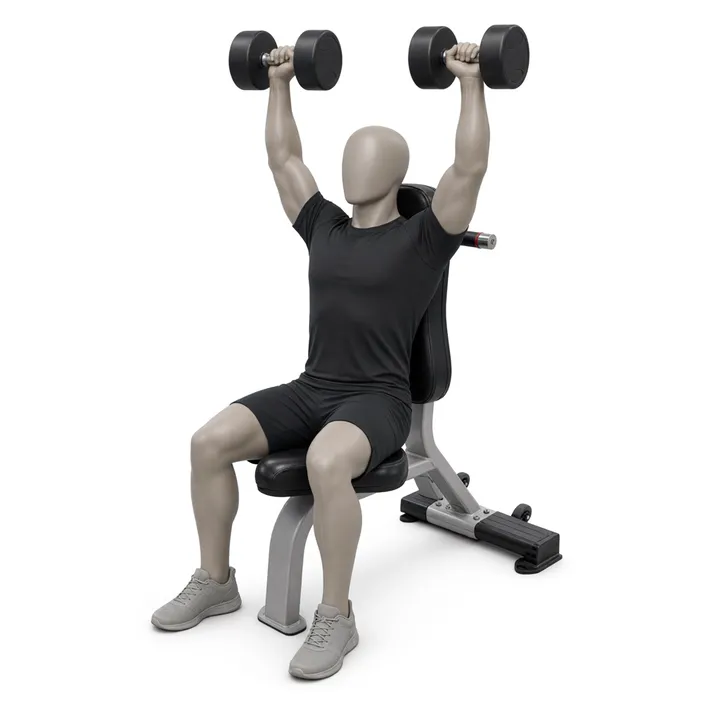
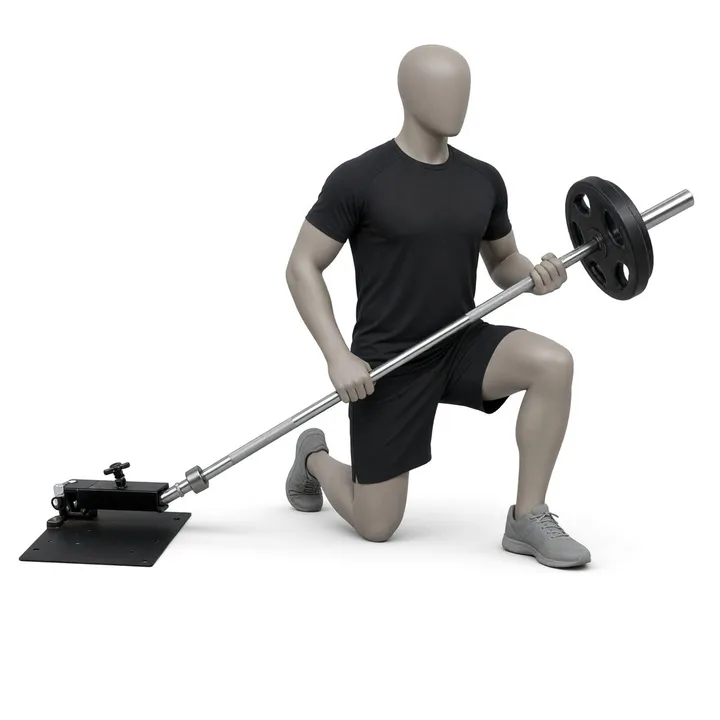
Log your Standing overhead press sets with GoSet
GoSet remembers your last time, starts your rest on its own and notes your records. Even with no signal in the basement. Coming soon to iPhone and Android.
Common questions
What should I feel on the standing overhead press?
You should mainly feel your shoulders working, with your triceps helping at the top. Your core stays tight to keep you upright, but you should not feel pain. If something hurts, stop and talk to a professional.
Where should the bar be at the bottom?
Bring the bar down to the top of your chest, close to your collarbones, without bouncing. The bar path should stay close to your face, but not touch it, from top to bottom.
Can I use my legs to help the press?
The standing overhead press is usually done without leg drive. If you need to push with your legs on every rep, the weight is probably too heavy for this movement.
What grip width should I use on the bar?
A grip slightly wider than shoulder-width works well for most people. Your forearms should be almost vertical when the bar is on your chest, that’s a good sign your grip is set well.