Exercise · Shoulders
Dumbbell lateral raise
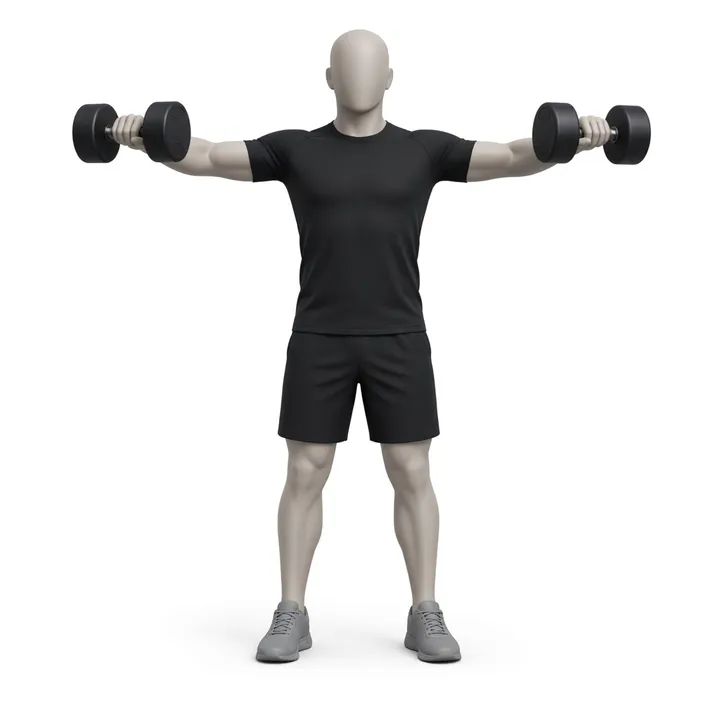
The dumbbell lateral raise mainly targets your shoulders, with some work from your traps. It’s a good exercise to feel each rep and build control in your arms. It works well both at the start or near the end of a shoulder workout.
Doable at all 76 gyms GoSet follows
The essentials
- Slight bend in your elbows.
- Raise to shoulder height without momentum.
Muscles worked
- Primary
- Shoulders
- Secondary
- Traps
How to do it
- Stand with a dumbbell in each hand, arms by your sides, palms facing in, feet about hip-width apart.
- Keep a slight bend in your elbows and your shoulders down, without shrugging your traps.
- Inhale, then raise your arms out to the sides up to shoulder height, without using momentum from your lower body.
- Move in control, like you’re pushing the air out to the sides instead of throwing the dumbbells up.
- Pause briefly at the top without going higher than shoulder level, and keep your wrists stable.
- Lower your arms in 2 to 3 seconds while exhaling, back to your sides, then start the next rep.
Common mistakes
Lifting higher than shoulder level
Instead : Stop the raise when the dumbbells reach shoulder height. Above that you often lose tension on the shoulders and start compensating more with the traps.
Swinging with your back or legs
Instead : Pick a weight you can lift without cheating. Keep your knees almost locked, your torso steady, and think about “pulling with the shoulders” instead of jerking your upper body.
Arms fully straight or elbows moving all over
Instead : Keep a slight bend in your elbows and hold that angle through the whole movement. Your arms go up and down together without bending and straightening back and forth.
Shoulders rising toward your ears
Instead : Before you lift, set your shoulders down. If you feel your traps cramp and rise, lower the weight and focus on keeping your shoulders down.
Coach tips
- Start with light dumbbells so you can control a 2 to 3 second lowering phase, then slowly increase the weight over time.
- Keep your breathing steady: inhale at the bottom, exhale as you lift, and keep your core braced the whole time.
- If you tend to cheat, add a small pause at the bottom between reps to break any momentum.
- Many people like to use this exercise later in their shoulder session, often in slightly higher rep ranges with a slower tempo, especially on the way down.
Variations
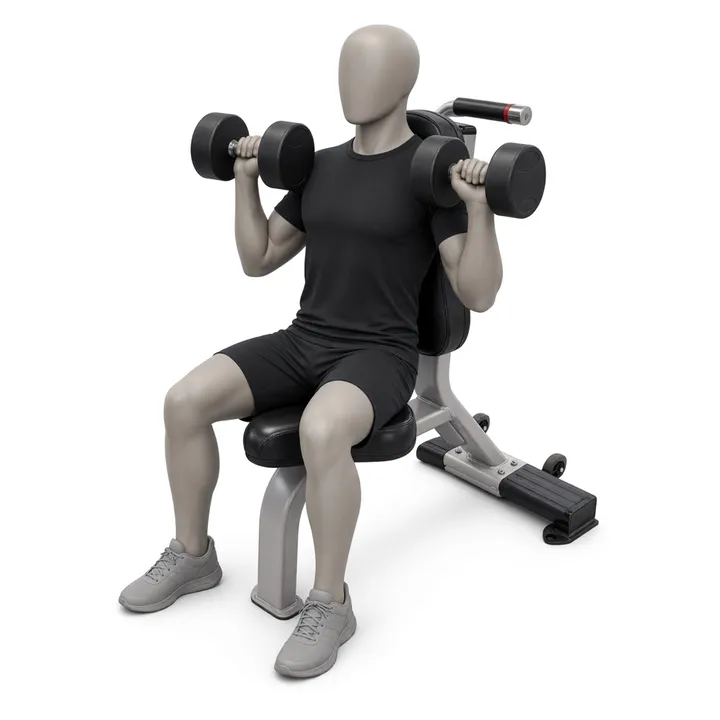
- You can do the exercise seated to limit lower-body momentum and focus more on the shoulders.
- You can raise the dumbbells slightly forward on a small diagonal if that feels easier to control for you.
Sets and reps
In strength training, you’ll often see 3 sets of 10 to 15 reps for this exercise, with a weight that lets you keep full control. Some people use it as a shoulder “finisher”, with a slower tempo, especially on the lowering phase.
Equipment
Alternatives for the same muscles
Log your Dumbbell lateral raise sets with GoSet
GoSet remembers your last time, starts your rest on its own and notes your records. Even with no signal in the basement. Coming soon to iPhone and Android.
Common questions
Where should I feel dumbbell lateral raises?
Mainly in your shoulders. It’s normal to feel some work in your traps too, but if everything goes into your neck or upper back, lighten the weight and focus on keeping your shoulders down.
Why do I swing my body when I lift the dumbbells?
Usually the weight is too heavy or you’re going too fast. Go lighter, keep a small bend in your knees, brace your core, and lift and lower in control instead of trying to squeeze out as many reps as possible.
Can I do lateral raises one arm at a time?
Yes. Many people like to hold on to something with the free hand for stability. It can help you focus more on one side at a time.
What if I feel shoulder pain during this exercise?
Stop the exercise and talk to a health professional before continuing. You can use another shoulder movement that doesn’t cause pain for you in the meantime, like a type of press that feels more comfortable.