Exercise · Chest
Smith machine incline press
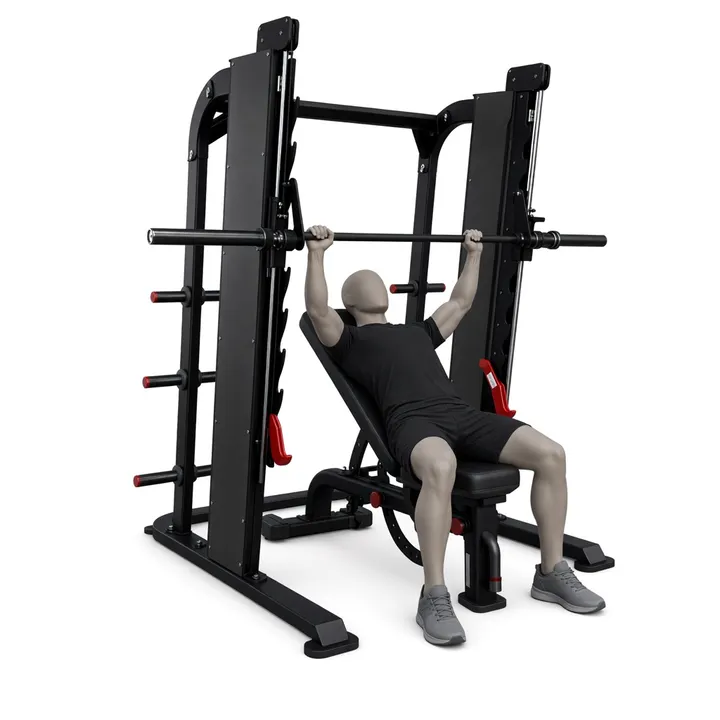
The Smith machine incline press is a guided version of the incline press that targets the upper chest. The fixed path of the machine helps keep the movement stable and makes it easier to feel the chest working, with help from the shoulders and triceps. It’s a solid option if you want to press heavier in control or if you’re new to incline presses.
Doable at all 76 gyms GoSet follows
The essentials
- Bench inclined between 30° and 45°.
- Lower the bar to your upper chest.
Muscles worked
- Primary
- Chest
- Secondary
- Shoulders · Triceps
How to do it
- Place an adjustable bench under the Smith machine and set the incline between 30° and 45°.
- Adjust the bar height so you can unrack it with your arms almost straight when you’re lying on the bench.
- Lie down, plant your feet on the floor, grab the bar just wider than shoulder-width, and squeeze your shoulder blades into the bench.
- Unrack the bar, keep your wrists straight, then lower the bar toward your upper chest in control over 2 to 3 seconds.
- As the bar approaches your upper chest, press it back up while exhaling, until your elbows are almost straight without forcefully locking out.
- At the end of the set, guide the bar back onto the Smith hooks before relaxing your arms.
Common mistakes
Bench angle set too high
Instead : Stay between 30° and 45°. Higher than that and your shoulders do most of the work and your chest gets less involved.
Bar coming too low on the chest
Instead : Aim for the upper chest, not the middle or lower. Adjust the bench position under the bar so the bar path lines up properly.
Elbows flaring straight out to the sides
Instead : Keep your elbows slightly in front of your shoulders instead of straight out. That tends to load the chest more and keeps the shoulders more comfortable.
Bouncing the bar off your chest
Instead : Keep control before the bar touches. Slow the descent, add a brief pause, then press up with power but without using momentum.
Coach tips
- Think about inhaling on the way down and exhaling as you press the bar up.
- Keep your shoulder blades pinched and pressed into the bench to feel your chest working more.
- Start closer to a 30° incline if your shoulders often feel sensitive on incline pressing.
- Increase the weight only when you can keep a controlled 2 to 3 second descent on all your reps.
Variations
- Slightly narrower grip to shift a bit more work toward the triceps.
- Feet tucked a bit farther back under your knees to create more lower-body tension if you feel stable like that.
- One-second pause at the bottom of each rep to remove momentum and feel the chest more.
Sets and reps
This exercise often shows up for 3 to 4 sets of about 6 to 12 reps, depending on load and focus, with a controlled lowering and a stronger push while keeping form solid.
Equipment
Alternatives for the same muscles
Log your Smith machine incline press sets with GoSet
GoSet remembers your last time, starts your rest on its own and notes your records. Even with no signal in the basement. Coming soon to iPhone and Android.
Common questions
What incline should I use for the Smith machine incline press?
At your gym, aim between 30° and 45°. Closer to 30° you’ll usually feel more chest, higher angles bring the shoulders in more. Stay within that range and keep the same angle for the whole set.
Where should the bar touch on Smith incline press?
Bring the bar toward your upper chest. Too low and the bar path gets awkward; too high toward your neck can feel uncomfortable. Adjust the bench position under the bar so it feels natural.
Do I need to touch my chest with the bar?
You can bring the bar close to your chest, but keep control. If your shoulders feel strained or you need to arch excessively, reduce the range a bit and stop if there’s pain, then talk to a health professional.
Why use the Smith machine for incline press instead of dumbbells?
The Smith gives you a guided path, so it’s more stable. That can help you press a bit heavier or focus on the chest without worrying as much about balance. Dumbbells require more stabilizing and coordination; both options work well together in a training plan.