Exercise · Legs and glutes
Smith machine hip thrust
The Smith machine hip thrust is a guided version of the hip thrust that mainly works your glutes using a Smith machine and a bench. Your hamstrings help with the movement too. It’s a solid option if you want to focus on driving your hips up without worrying too much about balance.
Doable at all 76 gyms GoSet follows
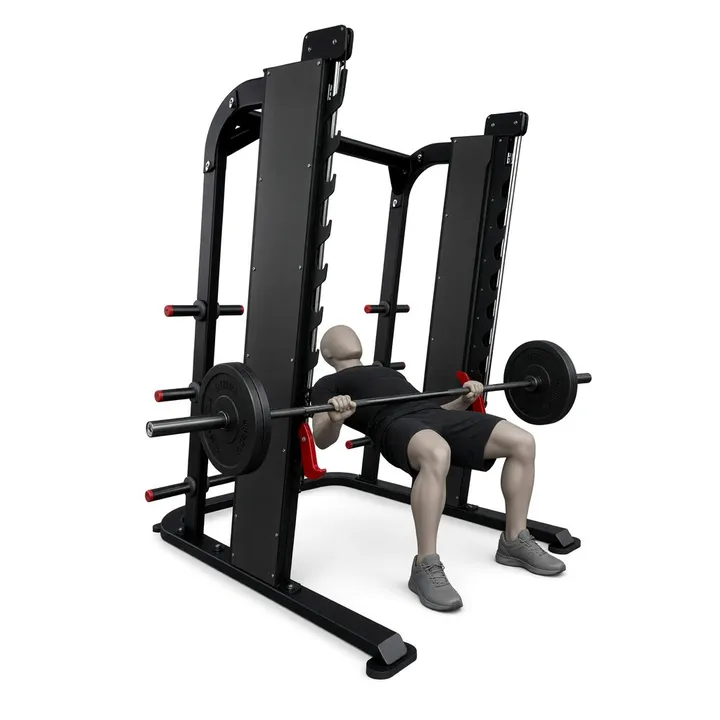
The essentials
- Upper back on the bench, padded bar on your hips.
- Rise until shoulders, hips and knees line up.
Muscles worked
- Primary
- Glutes
- Secondary
- Hamstrings
How to do it
- Place an adjustable bench perpendicular to the Smith machine, roughly under the middle of the bar.
- Sit on the floor with your upper back on the edge of the bench and slide yourself under the Smith bar.
- Set the padded bar in the crease of your hips so it feels comfortable to push from.
- Plant your feet firmly on the floor with bent knees, then unrack the Smith bar.
- Drive your hips up until your shoulders, hips and knees line up at the top.
- Lower your hips under control, without dropping the bar, then repeat.
Common mistakes
Bar resting on the hip bones
Instead : Use a pad or cushion on the bar and position it in the crease of your hips so the pressure feels tolerable before you start your set.
Not reaching a straight line at the top
Instead : Aim for a straight line from shoulders to hips to knees on every rep. If you can’t reach it, lower the weight and focus on driving with your hips.
Feet in the wrong spot
Instead : If you feel it mostly in the front of your thighs or in your lower back, adjust your foot distance. Move your feet a bit forward or back until you feel it mainly in your glutes and the back of your thighs.
Dropping too fast on the way down
Instead : Control the lowering phase and take about 2 to 3 seconds to bring your hips down instead of letting the bar fall.
Coach tips
- Breathe out as you drive your hips up, then breathe in as you lower under control.
- Keep your eyes forward or slightly up to help keep your upper back stable on the bench.
- Start with a moderate load to get used to the Smith bar path before you add more weight.
- At the end of the set, make sure to lock the bar back onto the Smith hooks before you crawl out from under it.
Variations
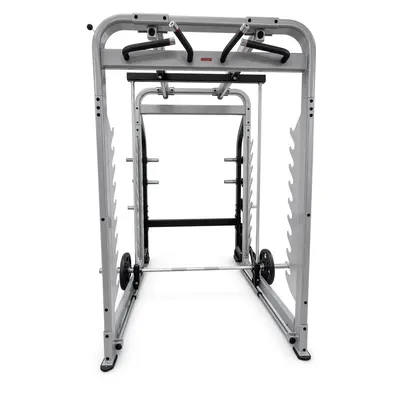
- You can use a Smith machine with a built‑in pull‑up bar if that’s what your gym has, keeping the same bench and bar position.
- You can change the bench height slightly to find a spot where your upper back feels stable and the hip drive feels comfortable.
Sets and reps
For strength training, the Smith machine hip thrust is often done for 3 to 4 sets of 8 to 15 reps, with a load that still allows good form on every repetition.
Equipment
Alternatives for the same muscles
Log your Smith machine hip thrust sets with GoSet
GoSet remembers your last time, starts your rest on its own and notes your records. Even with no signal in the basement. Coming soon to iPhone and Android.
Common questions
Which muscles does the Smith machine hip thrust work?
The Smith machine hip thrust mainly targets your glutes. Your hamstrings on the back of your thighs also help with the movement.
Why use the Smith machine instead of a free barbell for hip thrusts?
The Smith machine guides the bar, so you can focus more on driving your hips and feeling your glutes, with a bit less balance and bar control than a free barbell.
What equipment do I need for the Smith machine hip thrust?
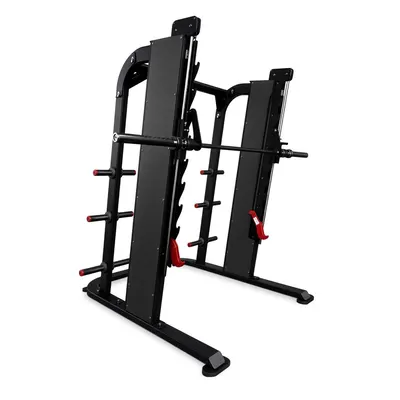
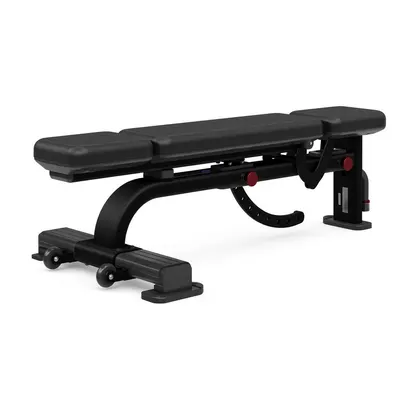
You can do it with a Smith machine and an adjustable bench. Some gyms also use a Smith machine with an attached pull‑up bar for this, with the same body and bench position.
What if my back hurts during Smith machine hip thrusts?
Stop the exercise and talk to a health or training professional. Changing bench height, foot position or load may help, but the priority is to train without sharp pain.