Exercise · Legs and glutes
Barbell hip thrust at the gym
The barbell hip thrust is a go-to exercise to load your glutes heavy. Your hamstrings help as well, especially at the top of the lift. It’s a good option to train the back of your legs while keeping your lower back in a more stable position, as long as you control the range of motion.
Doable at all 76 gyms GoSet follows
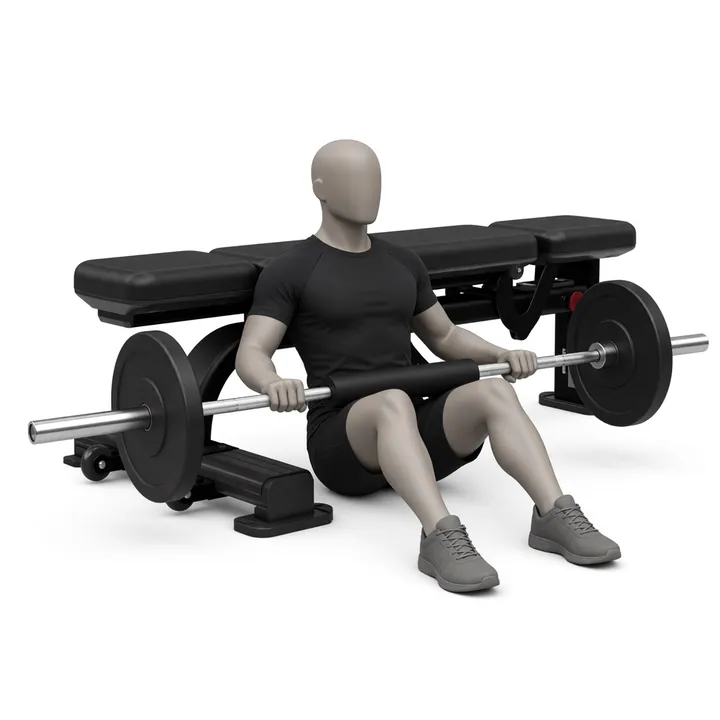
The essentials
- Upper back on the bench, padded bar on your hips.
- Chin tucked, rise until your hips are level.
Muscles worked
- Primary
- Glutes
- Secondary
- Hamstrings
How to do it
- 1. Set a bench behind you, perpendicular, and sit on the floor in front of it with the bar over your legs and a pad on the bar to protect your hips.
- 2. Roll the bar into the crease of your hips, place your upper back on the edge of the bench, feet flat on the floor slightly wider than hip-width, toes slightly turned out.
- 3. Tuck your chin toward your chest, keep your ribs down, then drive through your heels to lift your hips toward the ceiling.
- 4. Rise until your hips are roughly in line with your shoulders and knees, squeeze your glutes hard for a second at the top without arching your lower back.
- 5. Lower the bar under control over 2 to 3 seconds, until your butt is close to the floor, keeping solid contact between the bench and your upper back.
- 6. Keep your foot position the same throughout the set, breathe steadily, and repeat for the planned number of reps.
Common mistakes
Pushing too high and over-arching the lower back
Instead : Stop the lift when your hips line up with your knees and torso. Think of gently tucking your pelvis toward your ribs at the top to keep your abs engaged.
Feet too close or too far from the hips
Instead : If you feel mostly your quads, move your feet a bit farther away. If you feel mostly your hamstrings stretching, bring them a bit closer. Look for the spot where you mainly feel your glutes.
Staring straight ahead
Instead : Keep your chin tucked, looking toward your knees. This helps keep your ribs down and reduces the chance of arching your lower back at the top.
Bar feels painful on the hips
Instead : Use a proper bar pad or wrap a towel around the bar. Also adjust your hand width on the bar so you can steady it without pressing it harder into your hips.
Coach tips
- Take 2 to 3 seconds to lower and add a brief pause at the top while you squeeze your glutes instead of bouncing quickly.
- Breathe out as you drive your hips up, breathe in as you lower to keep a steady rhythm.
- Start light to practice the setup first: bench height, foot distance, chin tucked, then build the weight gradually.
- If the bench slides, wedge it against a wall or sturdy structure before going heavier.
Variations
- Hip thrust with a longer pause at the top (2 to 3 seconds) to focus on glute tension.
- Slow-tempo hip thrust with a 3 to 4 second descent for more control and less load.
- Top-half barbell hip thrust focusing on the upper range to emphasize the squeeze in the glutes.
Sets and reps
For strength training, people often do 3 to 5 sets of 6 to 12 reps, depending on load and experience. Some also use it later in the workout for 2 to 3 lighter, more controlled sets.
Equipment
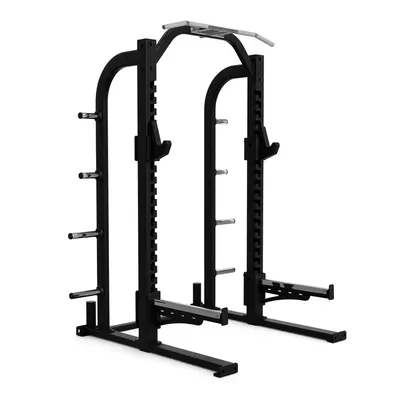
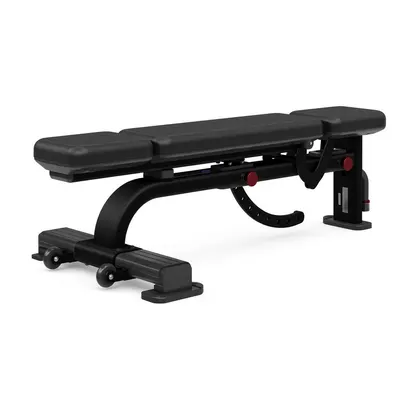
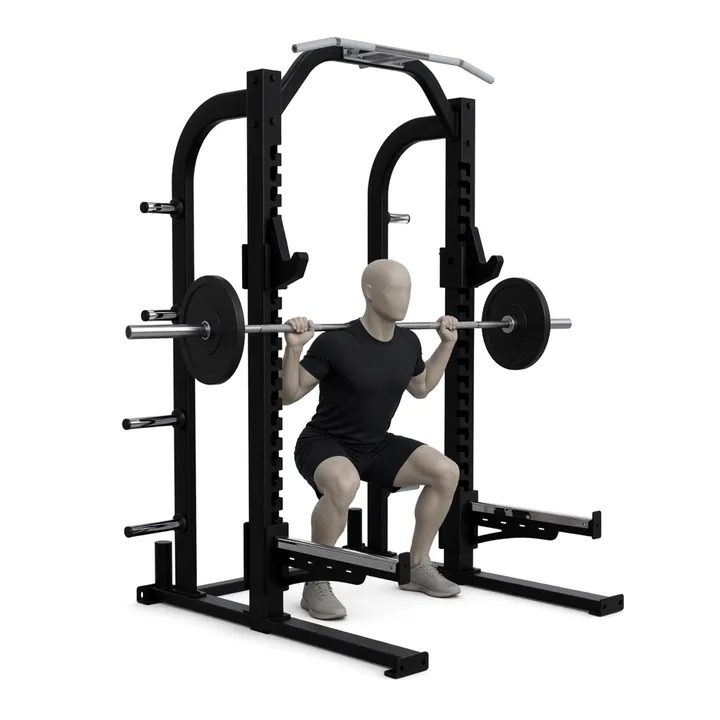
Alternatives for the same muscles
Log your Barbell hip thrust sets with GoSet
GoSet remembers your last time, starts your rest on its own and notes your records. Even with no signal in the basement. Coming soon to iPhone and Android.
Common questions
Where should my upper back be on the bench?
Set the edge of the bench just under your shoulder blades, not on your neck and not too low on your back. If you feel like you’re sliding or pushing mostly with your legs, adjust your back position a couple of centimetres and try again.
What bench setting should I use for barbell hip thrusts?
Use the bench flat. The height should let you keep your upper back firmly on it and your feet solid on the floor. If the bench is very high and your feet lift, choose a lower bench or slightly raise your feet on stable plates.
Where do I put my hands during the barbell hip thrust?
Hold the bar a bit wider than hip-width, just to keep it steady. Your arms shouldn’t be pushing the bar up; the work should come from your hips and glutes.
I feel it more in my hamstrings than my glutes, is that ok?
Your hamstrings do help in this exercise, so feeling them is normal. To shift more toward the glutes, bring your feet a bit closer, keep your chin tucked, and think about squeezing your glutes hard at the top for a second before lowering back down.