Exercise · Legs and glutes
Dumbbell reverse lunge: how to do it right
The dumbbell reverse lunge is a strength exercise that targets your quadriceps and glutes, with extra help from your hamstrings. Because you step backward, many people find it more comfortable for the knees than lunging forward. It’s a solid choice to train your lower body when you only have dumbbells at your gym.
Doable at all 76 gyms GoSet follows
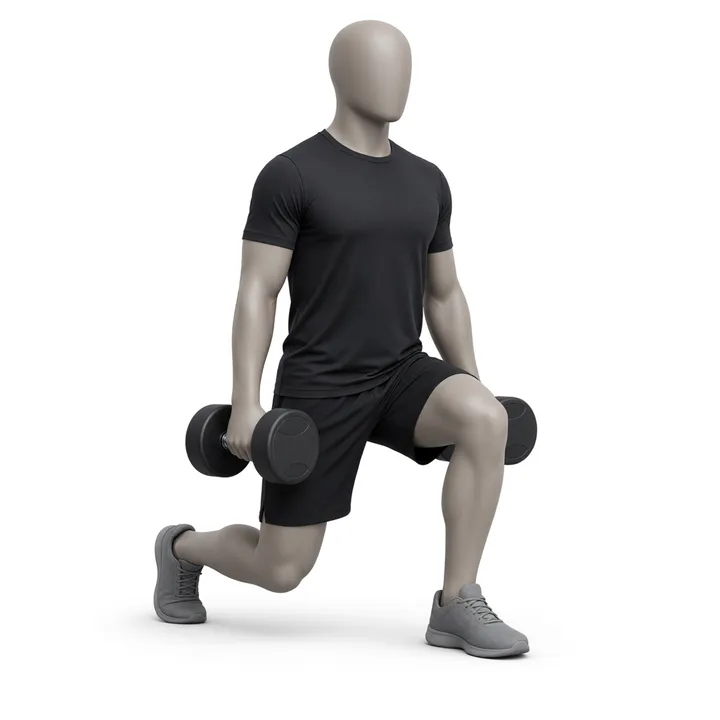
The essentials
- Step back with a long stride.
- Push through your front heel to come back.
Muscles worked
- Primary
- Quadriceps · Glutes
- Secondary
- Hamstrings
How to do it
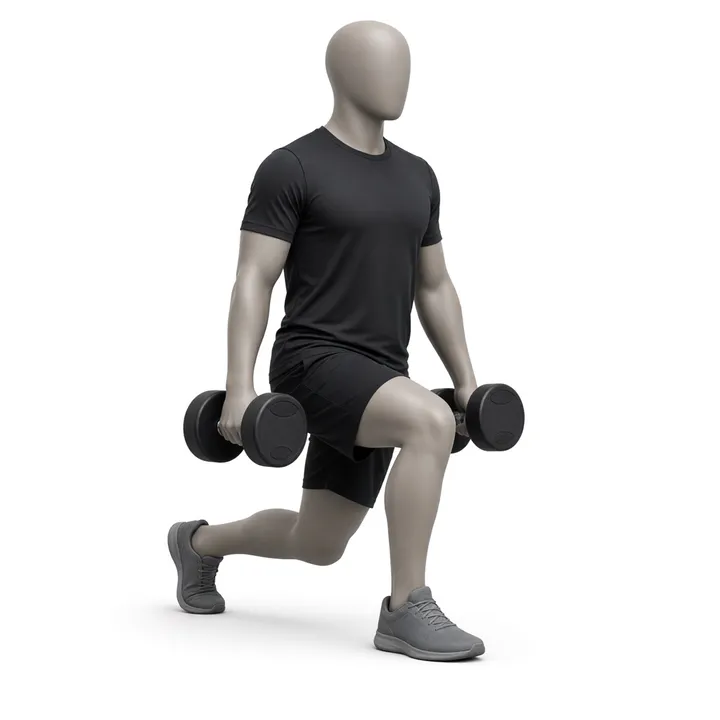
- Grab a dumbbell in each hand, arms hanging by your sides, shoulders relaxed, eyes looking straight ahead.
- Set your feet about hip-width apart and brace your core lightly so your body stays stable.
- Step back with a long stride and let your body lower toward the floor, keeping most of your weight on your front leg.
- Lower until your back knee approaches the floor without bouncing, and keep your torso fairly upright without folding forward.
- Push through your front heel to come back up, bringing the back foot forward beside the other leg.
- Repeat the same movement with the other leg, alternating sides, and keep a controlled pace, about 2 to 3 seconds to go down.
Common mistakes
Taking too short a step back
Instead : Step back with a long stride so your front knee doesn’t drift too far past your toes and you feel the work in your front quad and glute.
Letting the front heel lift up
Instead : Keep your whole front foot on the floor, especially the heel. Focus on pushing through your front heel to come back up, like you’re driving it into the ground.
Leaning the torso too far forward
Instead : Keep your chest open and eyes forward. Think about dropping straight down like an elevator instead of bending forward at the waist.
Dropping down too fast
Instead : Control the descent over 2 to 3 seconds. Think about gently “riding the brakes” with your core engaged and your front leg working the whole way down.
Coach tips
- Start with lighter weight to find a comfortable stride length, then increase the load once your balance feels solid.
- Inhale as you lower and exhale as you push through your front heel to stand back up.
- Keep the dumbbells close to your body without swinging your arms to stay more stable and avoid pulling on your shoulders.
- If you keep losing balance, fix your eyes on a point on the wall in front of you and slow the movement down a bit.
Variations
- Static reverse lunge with dumbbells: keep your feet in a lunge stance and do all your reps on one side before switching legs.
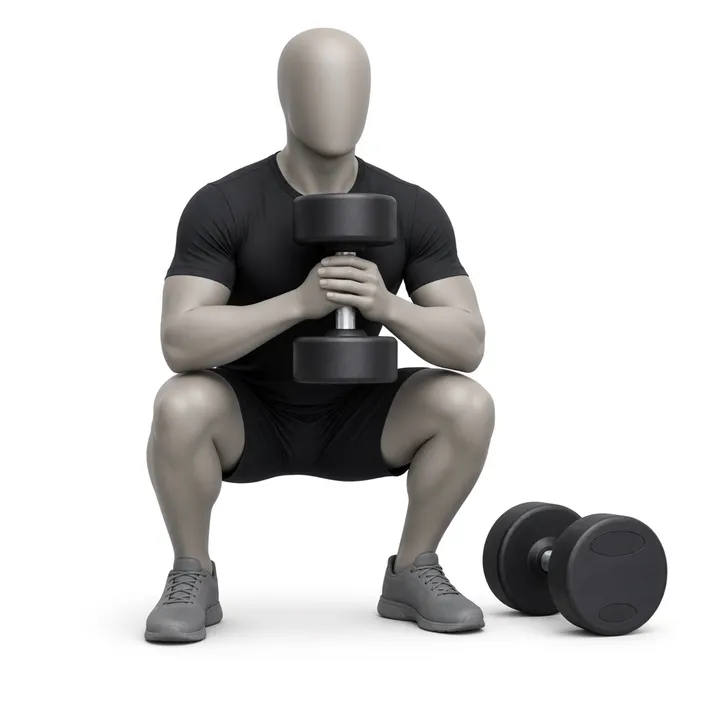
- Reverse lunge with one goblet dumbbell: hold a single dumbbell against your chest to simplify the balance and reduce the load on your arms.
- Reverse lunge with a pause at the bottom: add a one-second pause near the floor before coming up to feel your quads and glutes working harder.
Sets and reps
People often do dumbbell reverse lunges for 3 to 4 sets of 8 to 12 reps per leg with a weight they can control well. Since they can be demanding on your breathing, many lifters place them after a heavier squat movement.
Equipment
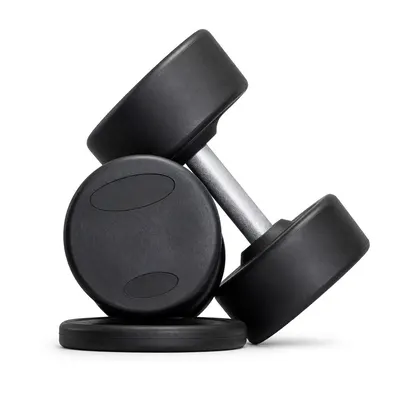
Alternatives for the same muscles
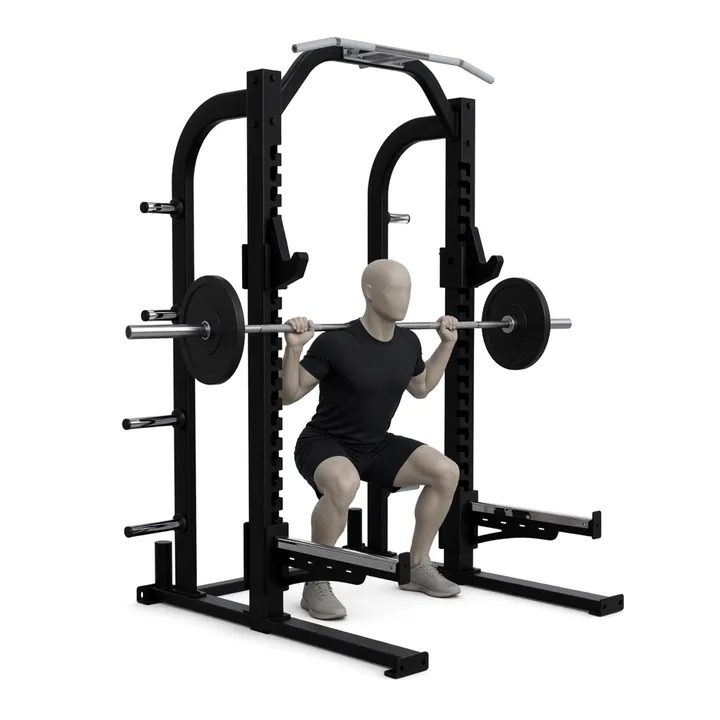
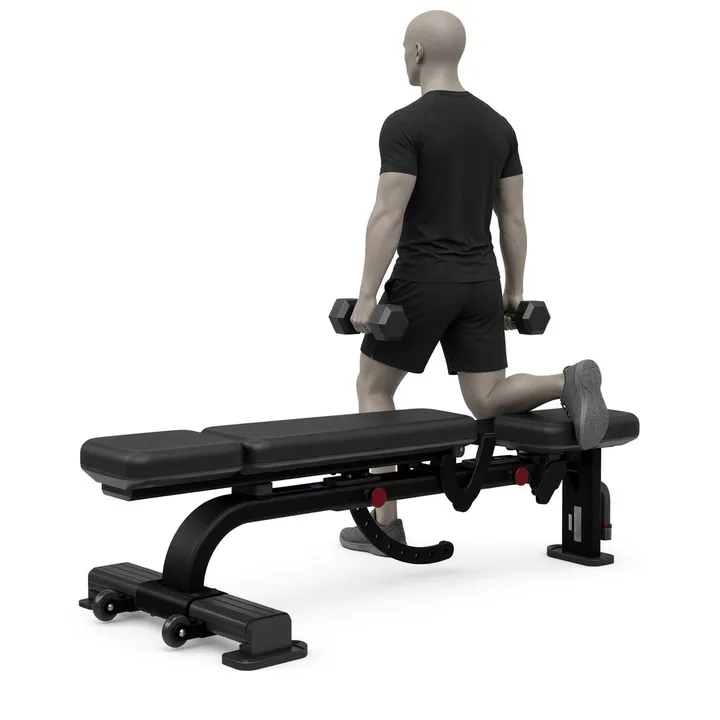
Log your Dumbbell reverse lunge sets with GoSet
GoSet remembers your last time, starts your rest on its own and notes your records. Even with no signal in the basement. Coming soon to iPhone and Android.
Common questions
Where should I look during dumbbell reverse lunges?
Look straight ahead, not down at the floor. This helps you keep your torso more upright and makes it easier to stay balanced as you lower and stand back up.
Is it normal to feel this mostly in my quads?
Yes, your quads work a lot in this exercise. You can put a bit more emphasis on your glutes by keeping a longer step back and focusing on pushing strongly through your front heel to return.
What if I feel knee pain during reverse lunges?
Stop the set right away. Talk with a health professional or a qualified trainer before continuing to see if this movement is right for you and how it might be adjusted.
Should I alternate legs or do all the reps on one side?
Both options are common. Alternating legs gives each side a brief break between reps, while doing all your reps on one side makes the work more intense for that leg before you switch.