Exercise · Chest
Smith machine bench press
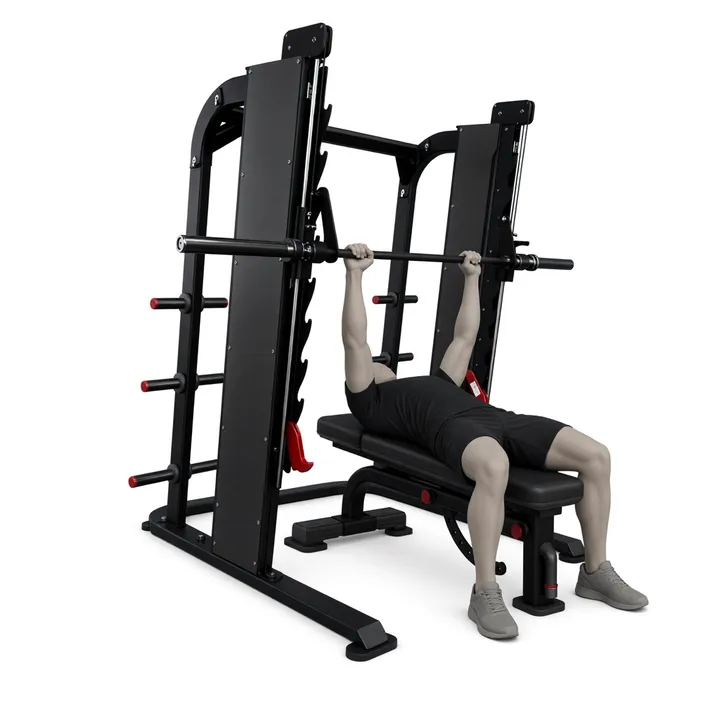
The Smith machine bench press targets mainly the chest, with help from the shoulders and triceps. The fixed bar path makes it easier to focus on pushing hard without having to stabilize as much as a free bar, which can be handy if you’re new to benching or pushing heavier loads.
Doable at all 76 gyms GoSet follows
The essentials
- Place the bench so the bar lowers to mid-chest.
- Set the safety stops.
Muscles worked
- Primary
- Chest
- Secondary
- Shoulders · Triceps
How to do it
- Set the bench flat under the Smith so that when you lie down, the bar lines up with the middle of your chest.
- Lie down with your feet planted on the floor and your eyes roughly under the bar. Grab the bar a bit wider than shoulder width with your wrists straight.
- Set the safety stops just slightly lower than your usual bottom position, then unrack the bar by rotating it off the hooks.
- Inhale, squeeze your shoulder blades together into the bench, and lower the bar toward mid-chest under control for about 2–3 seconds.
- Lightly touch or come close to your chest without bouncing, then press the bar up as you exhale, almost locking your elbows while staying in control.
- At the end of your set, press the bar all the way up and rotate it back onto the hooks before you let go.
Common mistakes
Bench too far forward or back
Instead : Before going heavy, do a few reps with an empty bar to check that it comes down to mid-chest, not your neck or stomach. Shift the bench a few centimetres at a time until the bar path feels right.
Bouncing the bar off your chest
Instead : Slow down the descent and think about just brushing your chest. If you’re bouncing, drop the weight a bit and keep the contact soft and controlled.
Shoulders lifting and upper back loose
Instead : Before each set, pinch your shoulder blades together and down, and keep them pressed into the bench. A slight arch in your lower back is fine, but keep your glutes on the bench.
Safety stops too low or not set
Instead : Take a short moment to set the stops just below your normal bottom position. Test them with the empty bar so you know they’ll catch it without pinning your chest if you fail a rep.
Coach tips
- Use a controlled tempo: about 2–3 seconds down, a brief pause at the bottom, then a stronger but still smooth push up.
- Match your breathing to the reps: inhale on the way down, exhale as you press the bar back up.
- If your shoulders feel uncomfortable, bring your grip a bit closer or stop the bar slightly above your chest instead of going as low.
- To progress, slowly add weight or extra reps on your working sets, keeping the same good form and bar path.
Variations
- Smith bench press with the bench on a slight incline to put a bit more focus on the upper chest.
- Slightly closer grip on the Smith bench press to shift more work toward the triceps, as long as your wrists stay comfortable.
Sets and reps
The Smith machine bench press is often done for 3–4 sets of about 6–12 reps, depending on whether the focus is more on strength or muscle tension. Some lifters use it after free bar or dumbbell bench as a way to add extra chest work with a guided bar path.
Equipment
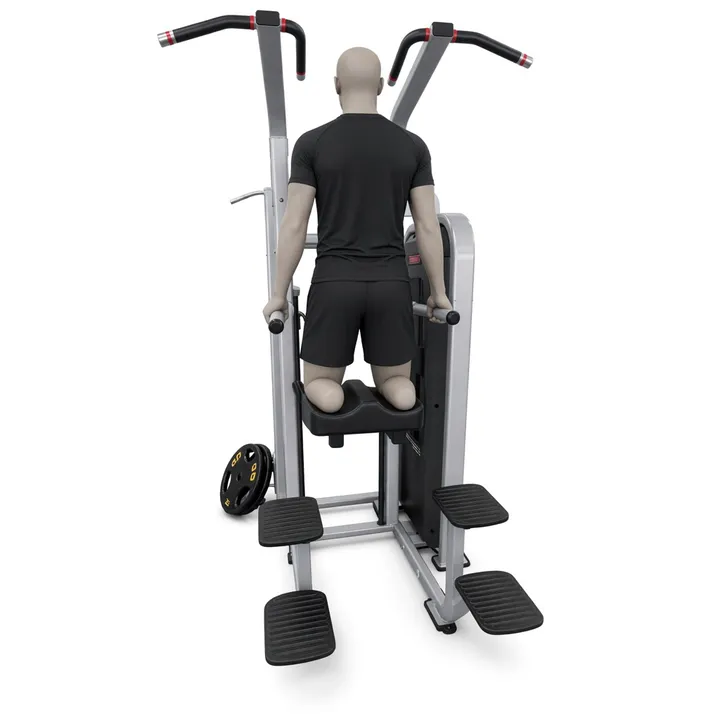
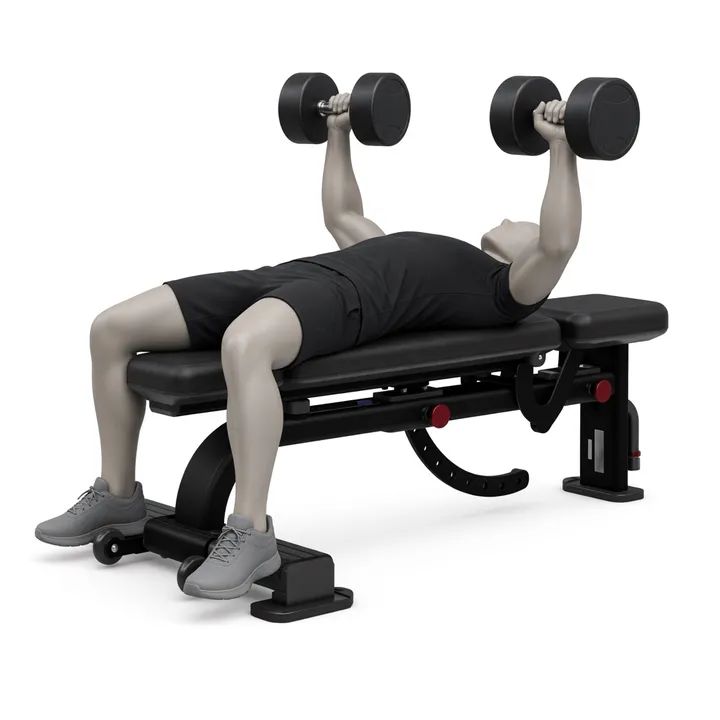
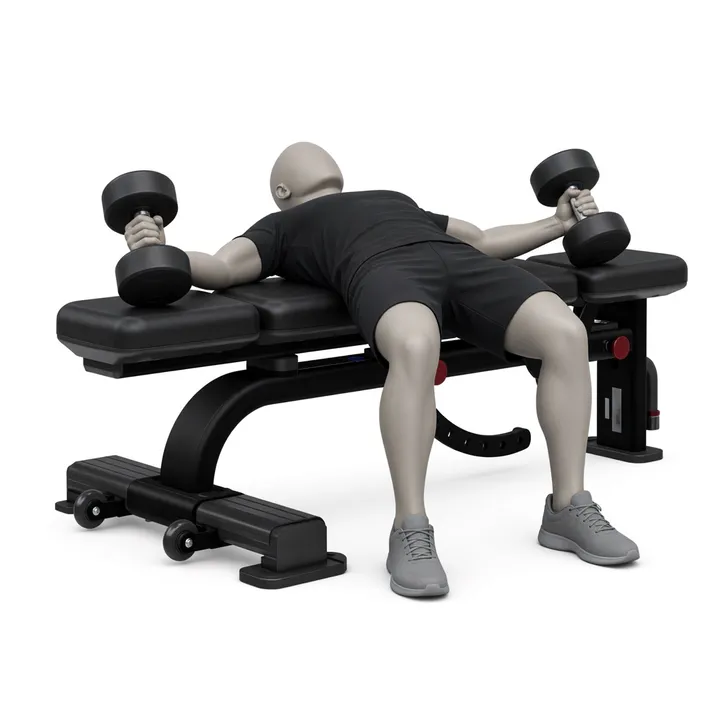
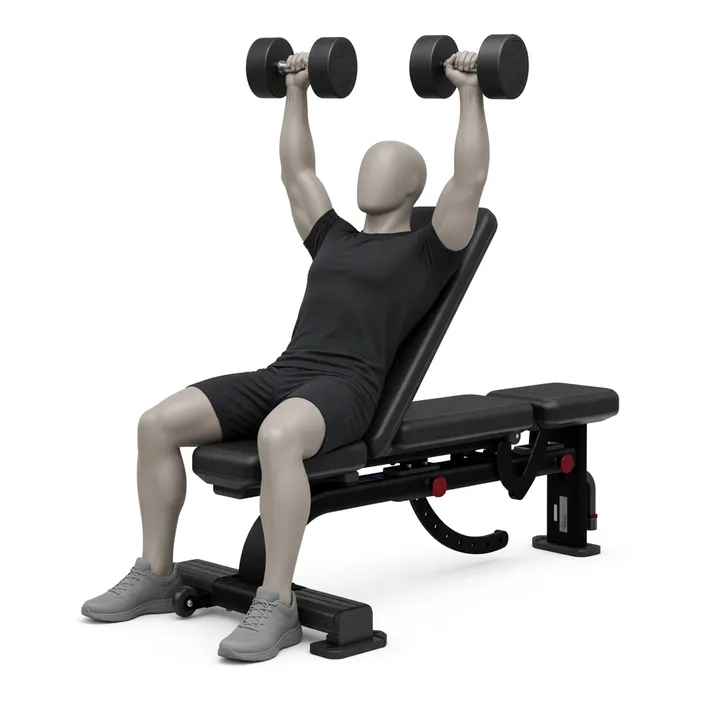
Alternatives for the same muscles
Log your Smith machine bench press sets with GoSet
GoSet remembers your last time, starts your rest on its own and notes your records. Even with no signal in the basement. Coming soon to iPhone and Android.
Common questions
Where should I place the bench under the Smith machine?
Set the bench so that when you lower the bar, it lines up with the middle of your chest. Do a few test reps with a light bar and slide the bench toward your head or feet until the bar path feels right.
How do I know the safety stops are at the right height?
Get into your bench position, lower the empty bar to your normal bottom depth, then set the stops just below that. If you let go, they should catch the bar without crushing your chest.
Does the Smith machine replace free bar bench press?
It’s a different variation. The Smith gives you a fixed path, which is useful to focus on pushing and muscle fatigue. If you also want to work stability and control, free bar or dumbbell bench presses are a good complement.
What if I feel a sharp pain in my shoulder?
Stop the set right away and rest. If the pain keeps coming back or doesn’t go away, talk to a health professional before you continue with this movement.