Machine
Poulie haute (Lat Pulldown) at the gym
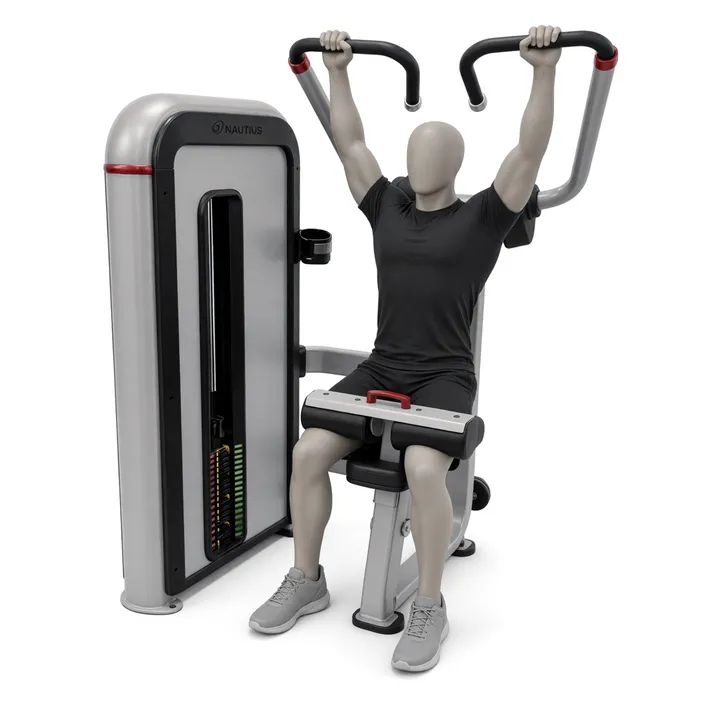
The lat pulldown machine is made for seated vertical pulls. It’s a simple way to work your upper body and learn to pull with your back, not just your arms. It fits beginners and more advanced lifters because you can adjust the load easily.
At all 76 gyms GoSet follows
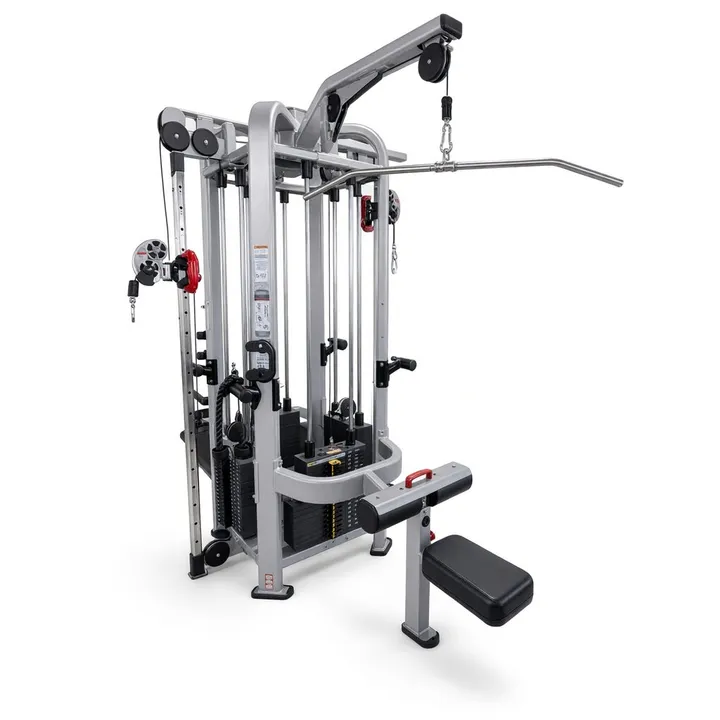
The essentials
- Use the V-handle or a close grip.
- Pull to your sternum, torso steady.
Muscles worked
- Primary
- —
Setup
- Set the seat so that, when you sit, your feet are flat on the floor and you feel stable.
- Adjust the thigh pad so it holds your legs firmly down when you pull the bar.
- Pick the bar or handle that matches the exercise you want to do (close, medium, wide, overhand or underhand grip).
- Set the weight pin to choose your load, and start lighter if the machine is new to you.
- Sit facing the pulley with your thighs under the pad, and check that the bar will come down to a comfortable spot near the top of your chest.
How to do it
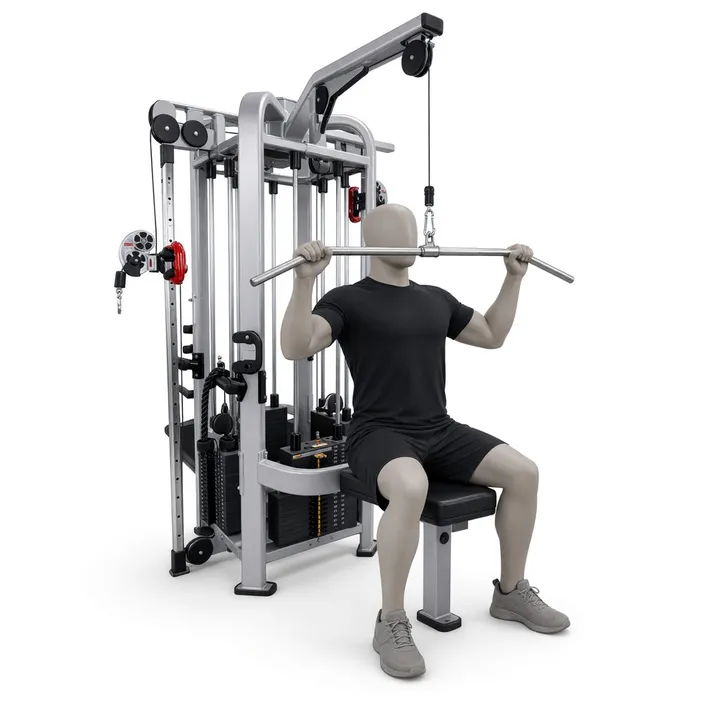
- Stand up slightly, grab the bar or handle you chose, then sit down with your thighs locked under the pad.
- Sit tall with your chest open, eyes forward, shoulders away from your ears.
- Start the pull by gently drawing your shoulders down, then bring the bar toward the top of your torso, not behind your neck.
- Control the bar down over about 2 to 3 seconds until it touches or gets close to your upper chest without collapsing your torso forward.
- Let the bar go back up slowly, keeping control, and don’t let the weight stack slam or yank your shoulders up.
- Stay stable on the seat for the whole set, then carefully guide the bar back up to rack it before you let go.
Common mistakes
Pulling the bar behind the neck
Instead : Keep the bar in front of you, toward the top of your chest. That keeps your neck in a safer position and lets your shoulders move more freely.
Swinging your body to move the weight
Instead : If you have to lean far back to finish a rep, the weight is too heavy. Drop the load, keep your hips on the seat and your torso steady.
Letting the weight stack crash at the top
Instead : Slow down the way up and keep a bit of tension at the top. The stack shouldn’t bang on every rep.
Doing all the work with your arms
Instead : Think about starting the move by drawing your shoulders down, then driving your elbows down, instead of just curling the bar with your arms.
Coach tips
- Breathe out as you pull the bar down toward you, breathe in as you let it rise under control.
- Use about 1 second to pull down and 2 to 3 seconds to go back up to feel the upper back working better.
- Start with a solid, medium grip before trying close, wide, overhand, or underhand options.
- Once your form feels consistent, you can increase the load gradually while keeping the same clean technique.
Variations
- Close-grip lat pulldown using a V-handle or short bar to change how the pull feels.
- Medium-grip overhand lat pulldown with the straight bar as a good all-around option.
- Underhand lat pulldown with the bar for a different feel in your hands and forearms.
Sets and reps
On the lat pulldown, people often do 3 to 4 sets of 8 to 15 reps, depending on load and experience. Many use it early or mid-way through an upper-body workout for their vertical pulling work.
Exercises on this machine
Log your Poulie haute (Lat Pulldown) sets with GoSet
GoSet remembers your last time, starts your rest on its own and notes your records. Even with no signal in the basement. Coming soon to iPhone and Android.
Common questions
Where should I place my hands on the lat pulldown bar?
You can use close, medium, or wide grip. A good starting point is a medium grip, a bit wider than shoulder-width, to get solid control before you try closer or wider.
Do I have to touch the bar to my chest on every rep?
Aim to bring the bar near the top of your chest while staying comfortable. If you have to over-arch your back or shrug your shoulders, stop a bit higher and stay in a range you can control well.
Is the lat pulldown good for beginners?
Yes. The load is easy to adjust and you’re seated, so it’s more stable than a free-weight pull. Start light, focus on control, and keep your torso calm while you pull.