Exercise · Legs and glutes · One side at a time
Cable glute kickback: how to do it right
The cable glute kickback is a single-leg exercise that mainly works your glutes, with help from your hamstrings. Because it’s unilateral, it’s useful to balance strength between sides and really feel each glute working. It’s a good option if you want to target glutes without loading your spine heavy.
Doable at all 76 gyms GoSet follows
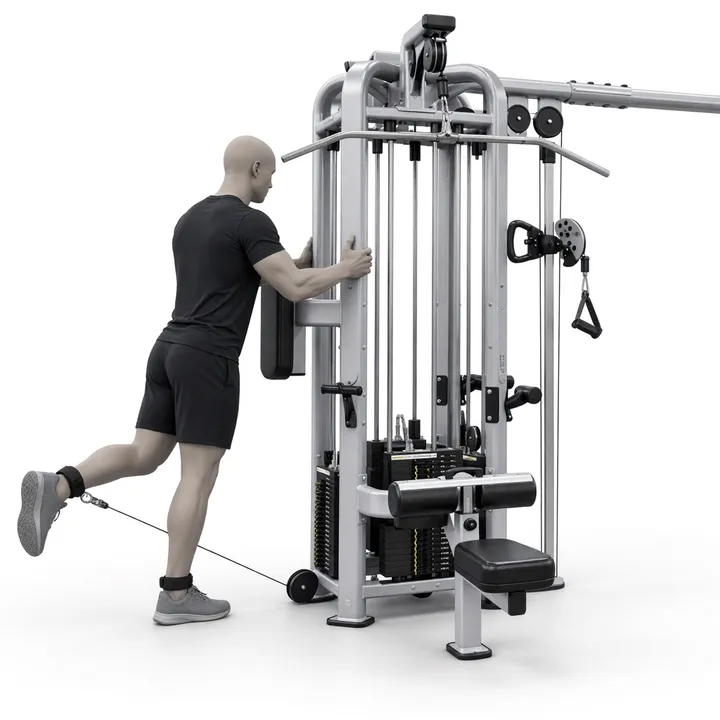
The essentials
- Ankle strap on, low pulley.
- Push your leg back without arching your back.
Muscles worked
- Primary
- Glutes
- Secondary
- Hamstrings
How to do it
- Set the pulley to the lowest setting and strap the ankle cuff on, facing the cable machine or slightly leaning toward a stable support.
- Keep your torso still, back neutral, belly gently braced, and use one hand on the frame if you want more stability.
- Start with the working leg slightly bent at the knee, foot under your hip, without pushing your hips forward toward the machine.
- Exhale and push your leg back, keeping a soft bend in the knee, without arching or twisting your hips.
- Lift until you feel a strong squeeze in the glute, without forcing your lower back, then pause briefly.
- Inhale and bring your leg back in with control over 2–3 seconds, without letting the stack slam or the cable pull your hips. Repeat, then switch sides.
Common mistakes
Arching the lower back to lift higher
Instead : Stand a bit closer to the pulley, lean your torso slightly forward, and think of pushing the foot back, not up. If you feel your lower back working, reduce the weight.
Swinging the leg with no control
Instead : Slow the way down to about 2–3 seconds and keep a bit of tension at the front. Pick a weight that lets you control every centimetre, especially on the way back.
Letting the hips rotate outward
Instead : Keep your hips facing the machine and imagine you’re locking them in place. If you need to twist to finish the rep, shorten your range of motion.
Starting too far from the pulley
Instead : Step back just enough to have light tension at the start, without the cable pulling your torso. Adjust your distance until you feel stable and not dragged forward.
Coach tips
- Use a controlled tempo: a slightly faster push back to squeeze, then a slower 2–3 second return to keep tension on the glutes.
- Exhale as you kick back, inhale on the way in. That helps keep your torso stable and reduces the urge to arch your back.
- Start light to find your glutes first, then increase the load only if you can keep your hips steady and the same range of motion on both sides.
- You can hold the last rep of each set for 2–3 seconds at the back to really feel the glute contraction, as long as your back stays still.
Variations
- Do the exercise slightly bent over with both hands on the machine to make it easier to keep your lower back from arching.
- Use a shorter range of motion and stay in the middle of the movement if the cable pulls too much at the ends of the range.
Sets and reps
People often use this as an accessory movement for 2–4 sets of 10–20 reps per leg, with a moderate load that allows a clear glute squeeze and steady hips.
Equipment
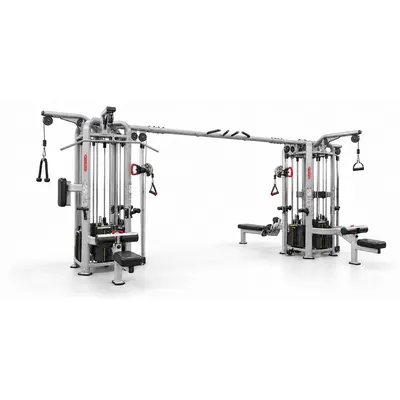
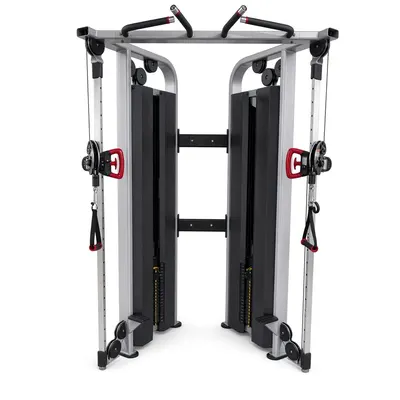
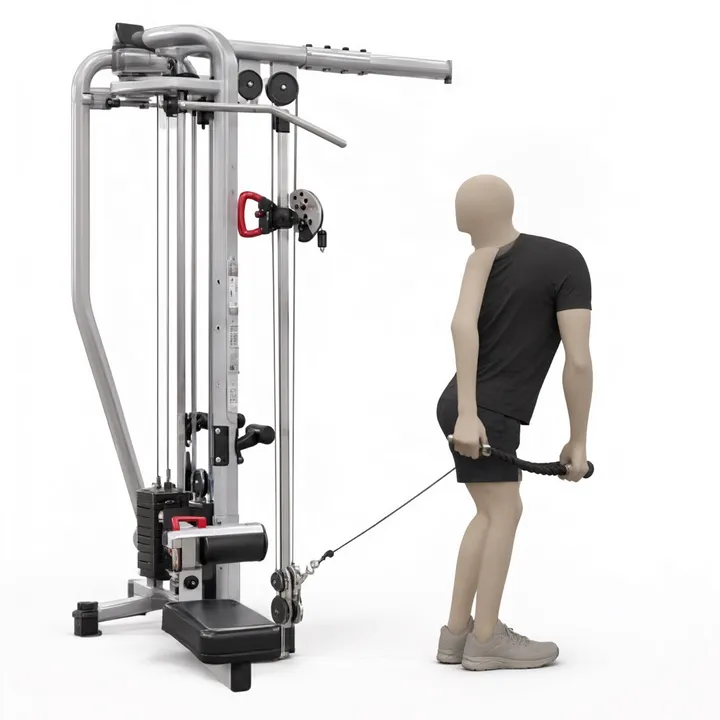
Alternatives for the same muscles
Log your Cable glute kickback sets with GoSet
GoSet remembers your last time, starts your rest on its own and notes your records. Even with no signal in the basement. Coming soon to iPhone and Android.
Common questions
Should I feel my hamstrings too?
Yes, your hamstrings help with the movement. You should mainly feel your glutes, but some work in the back of the thigh is normal. If you only feel hamstrings, lower the weight and focus on initiating from the glute.
Where should I look during cable glute kickbacks?
Look straight ahead or slightly toward the floor if you’re leaning forward. Keep your neck in line with your torso, without lifting your chin or staring straight down.
What if I keep losing balance on one leg?
Hold the machine or a stable support with your free hand, bring your stance foot a bit closer in, and drop the weight. Stability usually comes first, load after.
I feel my lower back, not my glutes. Is that normal?
No, your lower back shouldn’t be doing the work. Stop, reduce the load, lean slightly forward, and don’t lift the leg as high. If your lower back still hurts, stop the exercise and talk to a health professional.