Exercise · Cardio
Incline treadmill walk: how to do it right
Incline treadmill walk is simply walking on a treadmill with the deck set on a slope. You work your cardio while getting extra work for your glutes and calves. It’s a joint-friendly option that suits beginners and more advanced people.
Doable at 75 of the 76 gyms GoSet follows
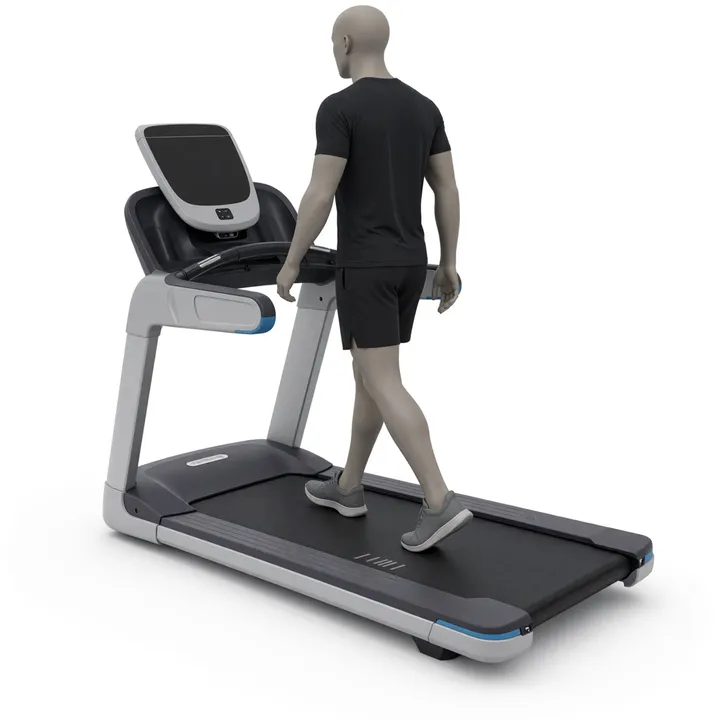
The essentials
- Raise the incline gradually.
- Stand tall without hanging on the handles.
Muscles worked
- Primary
- —
- Secondary
- Glutes · Calves
How to do it
- 1. Step onto the treadmill, set a comfortable flat walking speed, and start the belt.
- 2. Raise the incline gradually so your breathing and legs can adapt to the slope.
- 3. Stand tall, look ahead, relax your shoulders, and avoid hanging on the handles so you don’t lean forward.
- 4. Keep your feet under you, roll from heel to toes with each step, and use a natural stride that’s not too long or too short.
- 5. Breathe steadily through nose and mouth, aiming for a pace where you can still speak in short sentences.
- 6. When you’re done, first lower the incline and speed gradually, then wait until the belt is almost stopped before stepping off.
Common mistakes
Hanging on the handles
Instead : Use the handles mainly for balance when needed. If you always have to grab them to keep up, lower the speed or incline a bit.
Leaning forward over the console
Instead : Bring your hips under you, gently lift your chest, and imagine a string pulling the top of your head toward the ceiling.
Cranking the incline too fast
Instead : Increase the slope in small steps and give your body 30 to 60 seconds to adjust before going higher, as long as you still feel in control.
Taking overly long strides
Instead : Shorten your stride slightly and let your step rate go up a bit. You should feel a smooth walk without heavy heel strikes on the belt.
Coach tips
- Start with a few minutes on flat, then raise the incline gradually to warm up your glutes and calves properly.
- Think of a smooth, steady walking tempo you could hold for several minutes, instead of rushing each step.
- Keep your hands free when you can, so your lower body and posture do more of the work.
- You can track your sessions by time or by distance on the treadmill screen, whichever keeps you more consistent.
Variations
- Alternate a few minutes on incline with a few minutes flat to recover while staying active on the treadmill.
- Play with different incline levels in blocks, using steeper and easier segments within the same session.
Sets and reps
For incline treadmill walks, people often focus on total time (for example a set number of minutes) or distance covered. Some also like to keep one incline and speed setting for the whole session and compare how it feels over time.
Equipment
Log your Incline treadmill walk sets with GoSet
GoSet remembers your last time, starts your rest on its own and notes your records. Even with no signal in the basement. Coming soon to iPhone and Android.
Common questions
Should I always walk without holding the handles?
Try to keep your hands free most of the time for better posture and lower-body work. But if you feel off balance or are changing settings, it’s fine to grab the handles briefly for safety.
How do I know if the incline is too high for me?
If you have to cling to the handles, lean forward, or you’re out of breath after only a few minutes, the slope is likely too steep. Drop the incline or speed a bit and aim for an effort you can maintain longer.
Does incline walking replace running on the treadmill?
It’s a different feel. Incline walking challenges your glutes and calves more, often with less impact. Some people use both at different times depending on how they feel and what they want to work on.
What should I look at on the treadmill screen to track progress?
Focus mainly on time and distance. You can also note your incline and speed choices sometimes, to see if you can keep the same settings more comfortably over the weeks.