Machine
Presse poitrine convergente (plates) at the gym
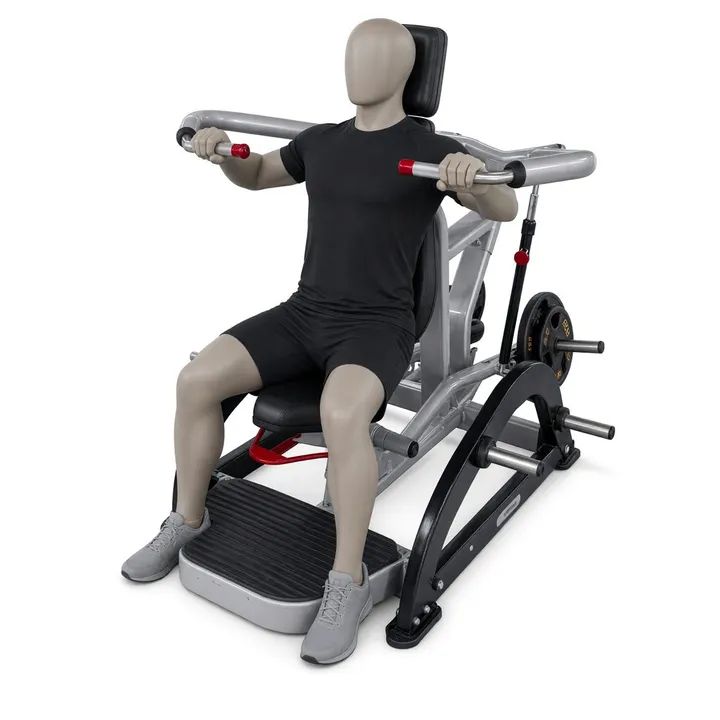
The converging chest press (plates) is a seated machine where you press the handles forward with your arms. It targets the front of your upper body without having to balance a bar or dumbbells. It works well for beginners and for heavier loads, since you add plates on each side.
At all 76 gyms GoSet follows
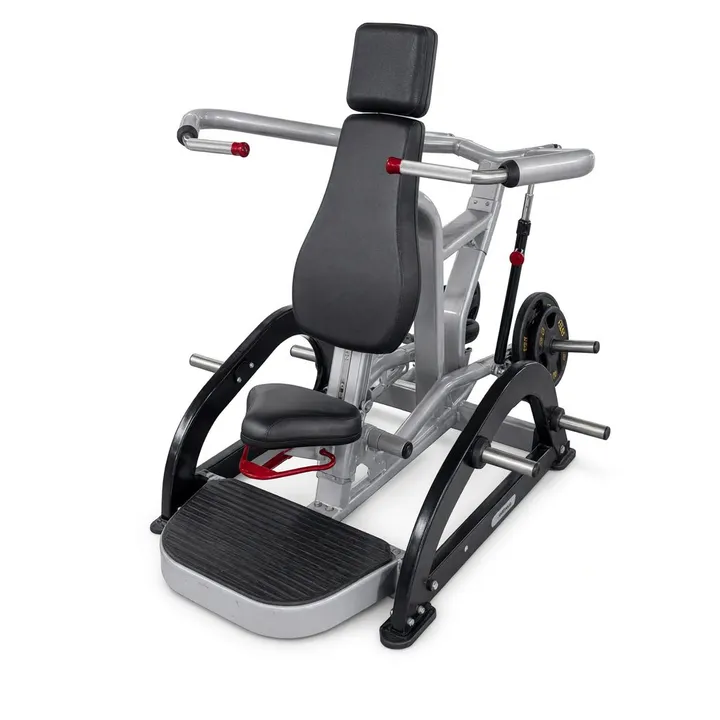
The essentials
- Set the seat so the handles line up with mid-chest.
- Press without locking your elbows.
- Return slowly, shoulder blades against the pad.
Muscles worked
- Primary
- —
Setup
- Adjust the seat so the handles are roughly at mid‑chest height when you sit up tall.
- Press your back and shoulder blades into the pad, with your hips all the way back in the seat.
- Pick your grip on the handles (regular, close, or neutral), based on what the machine offers and what feels good on your shoulders.
- Set your feet flat on the floor, slightly wider than hip width, so you’re stable.
- Add plates on both sides evenly and start lighter to test your movement first.
How to do it
- Sit down, press your back and head into the pad, grab the handles with both hands, elbows bent and forearms roughly vertical.
- Take a deep breath and brace your core lightly so you stay solid on the seat.
- Press the handles forward as you exhale, until your arms are almost straight, without locking or jamming your elbows.
- Control the way back as you inhale, letting the handles come toward your chest over 2 to 3 seconds without dropping the weight.
- Keep your shoulders down and against the pad the whole time, without pushing your head forward or rounding your upper back.
- At the end of your set, slowly bring the handles back to the starting position, then let go and step out of the machine.
Common mistakes
Locking out the elbows hard at the end
Instead : Stop the press just before your elbows fully lock. Keep a tiny bend so it’s your upper body muscles doing the work, not your joints taking the hit.
Letting your back or head come off the pad
Instead : Keep your lower back, upper back, and head against the pad. If you feel you have to come off the seat to finish a rep, drop the weight and focus on staying stable first.
Letting the handles crash back
Instead : Always control the return for 2 to 3 seconds. If the weight stack or arms slam or drop on the way back, take some weight off so you can slow the movement down.
Going too heavy when switching to close or neutral grip
Instead : When you change to a close or neutral grip, reduce the load at first. Check how your shoulders feel with the new grip before building the weight back up.
Coach tips
- For most sets, use a controlled tempo: about 1 second to press, 2 to 3 seconds to come back.
- Match your breathing with the movement: exhale as you press, inhale as you bring the handles back in.
- If you’re doing single‑arm machine chest press, hold the seat or opposite handle with your free hand to stay tight against the pad.
- Get used to the regular two‑arm machine chest press first before moving on to single‑arm work or grip variations.
Variations
- Machine chest press: both arms pressing with the regular grip, good for strength and control.
- Single‑arm machine chest press: one arm at a time to feel each side better and work on stability.
- Close‑grip or neutral‑grip converging chest press: change how you hold the handles for a different feel at the wrists and shoulders.
Sets and reps
On this machine, people often do 3 to 4 sets of 8 to 15 reps, depending on load and fatigue. Some like it early in the workout for heavier pressing, others later for more controlled sets.
Exercises on this machine
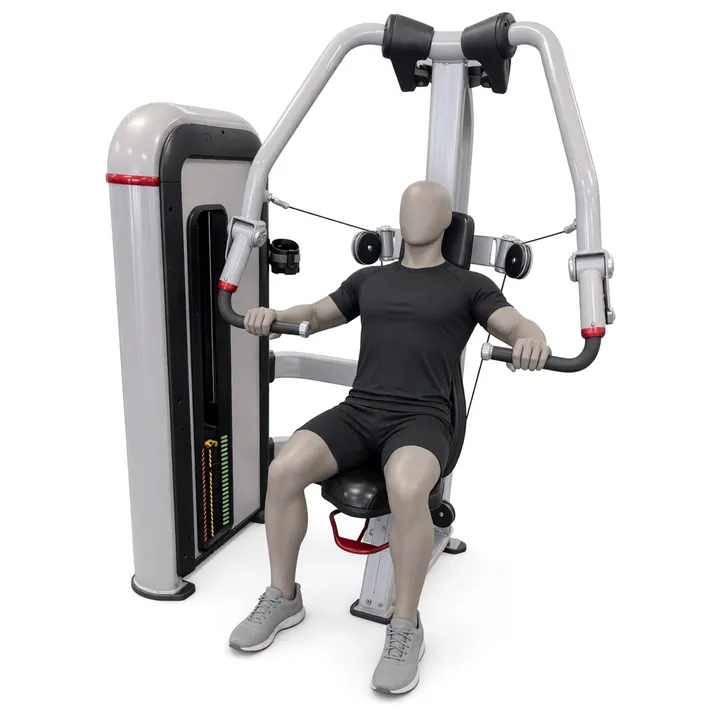
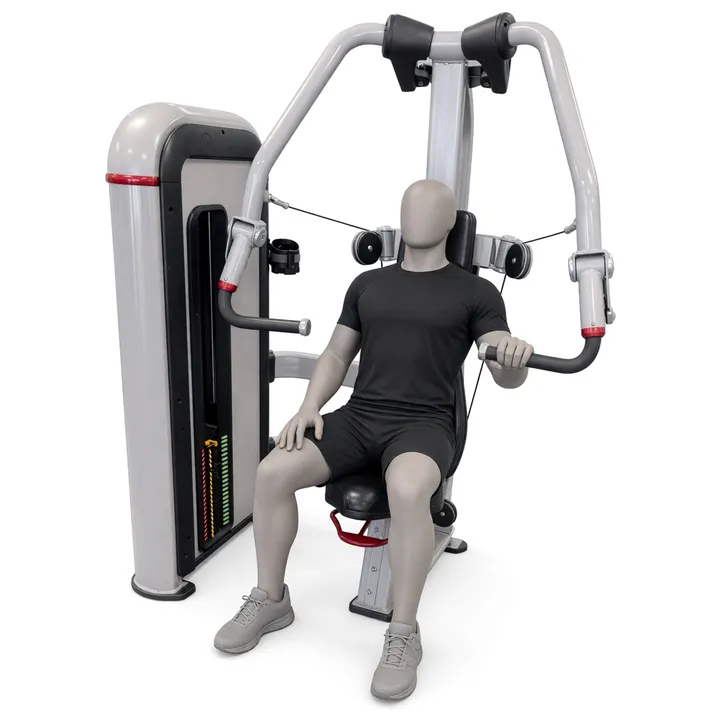
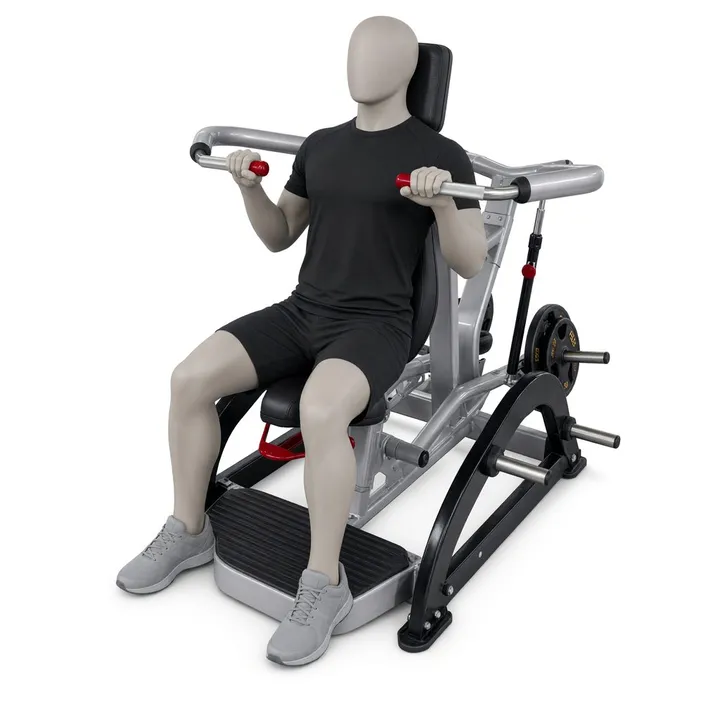
Log your Presse poitrine convergente (plaques) sets with GoSet
GoSet remembers your last time, starts your rest on its own and notes your records. Even with no signal in the basement. Coming soon to iPhone and Android.
Common questions
How high should the seat be on the converging chest press?
Set the seat so the handles line up roughly with the middle of your chest when your elbows are bent. If the handles are too high, it often feels rough on the shoulders; too low and you lose comfort and strength.
Can I go heavy on this machine?
The machine is built to handle a good amount of plates, but control comes first. If you have to bounce, twist, or the arms slam at the bottom, the weight is probably too heavy for clean reps.
Is this better than barbell or dumbbell press?
They’re just different tools. The converging chest press removes the balance part of a barbell or dumbbells so you can focus on the press itself. A lot of people use it as a complement, not as a replacement for everything else.
What if I feel sharp shoulder pain on the machine?
Stop the set right away and take the weight off. If the pain comes back or sticks around, talk to a health professional before continuing with that movement or setup.