Exercise · Chest
Machine chest press: how to do it right
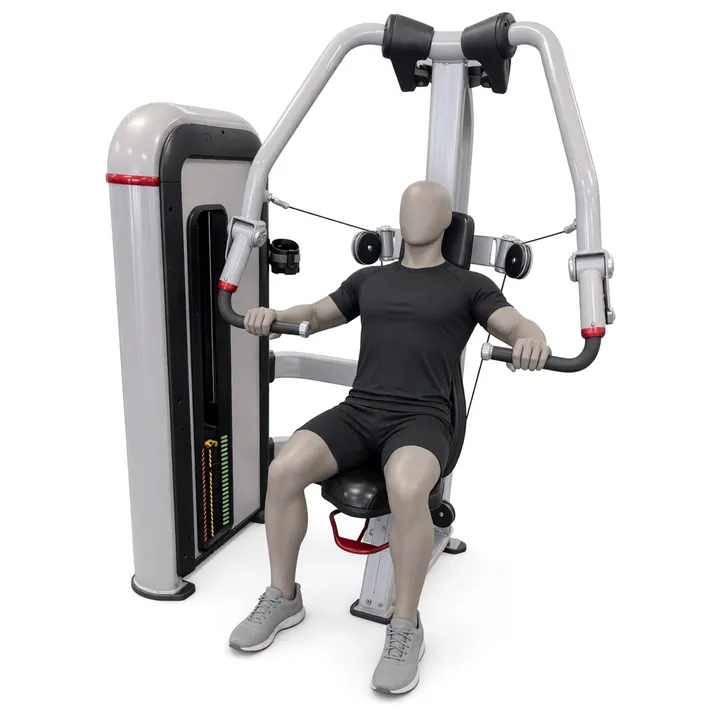
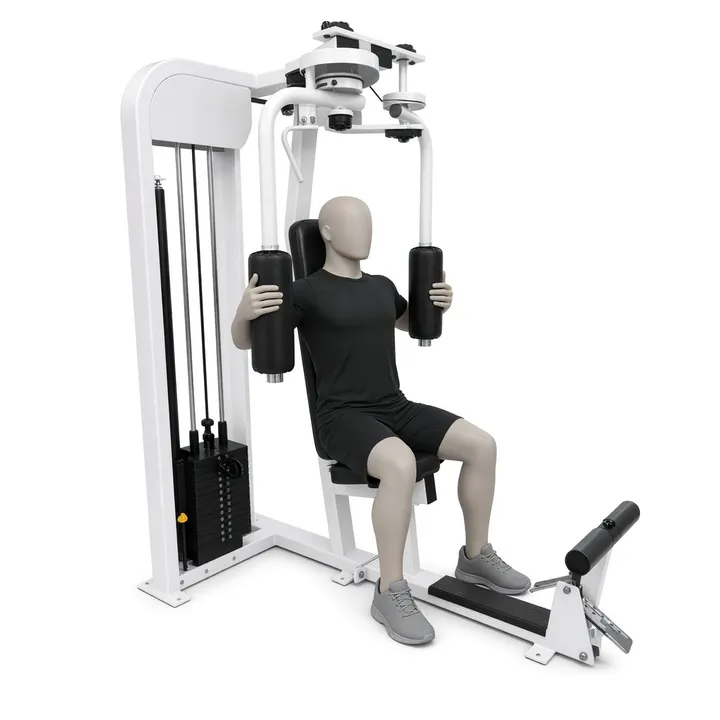
The machine chest press works mainly your chest, with help from your shoulders and triceps. The machine stabilizes the movement, so it’s great to push heavier with control, or when you want something simpler than free weights.
Doable at all 76 gyms GoSet follows
The essentials
- Set the seat so the handles line up with mid-chest.
- Press without locking your elbows.
- Return slowly, shoulder blades against the pad.
Muscles worked
- Primary
- Chest
- Secondary
- Shoulders · Triceps
How to do it
- 1. Set the seat so the handles line up with the middle of your chest, feet flat on the floor.
- 2. Press your shoulder blades and lower back into the pad, grab the handles with a firm grip, wrists straight.
- 3. Inhale, keep your chest slightly up, elbows under control and not flared too far out to the sides.
- 4. Press the handles forward as you exhale, until your arms are almost straight without locking your elbows.
- 5. Control the way back for 2 to 3 seconds, bringing the handles toward your chest, shoulder blades always against the pad.
- 6. Pause briefly when the weight stack touches or almost touches, keep tension, then go into the next rep.
Common mistakes
Seat too low or too high
Instead : If the seat is too low you’ll press upward and hit your shoulders more. Too high and you’ll press downward and lose chest tension. Adjust so the handles are level with mid-chest.
Locking out the elbows at the top
Instead : Stop just before your elbows lock. Keep a slight bend so the tension stays on your chest and your joints stay happier.
Letting the shoulders roll forward
Instead : Keep your shoulder blades pressed into the pad the whole time. If you feel your shoulders rounding forward, lower the weight and reset your posture.
Letting the weight drop on the way back
Instead : Control the return over 2 to 3 seconds. If the stack slams, it’s too fast or too heavy for now.
Coach tips
- Use a controlled tempo: about 1 second to press, 2 to 3 seconds to return, no bouncing at the bottom.
- Keep breathing simple: inhale as the handles come back toward you, exhale as you press the machine away.
- If your wrists bend back, squeeze the handles a bit tighter and keep your wrists straight in line with your forearms.
- To progress, increase the weight gradually when you can hit your reps without losing control or slamming the weight stack.
Variations
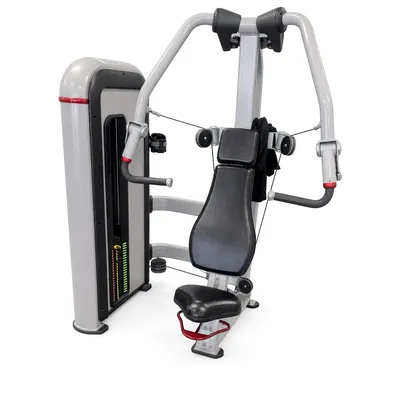
- On a converging chest press, you can focus on one side at a time (keeping the other hand on the handle) to better feel each side of your chest.
- If the machine allows, slightly change your grip width to find the spot where you feel your chest the most without shoulder discomfort.
Sets and reps
People often use this for 3 to 4 sets of about 8 to 15 reps, depending on the load and level. Some put it early in the workout for heavier pressing, others later to finish off the chest more safely.
Equipment
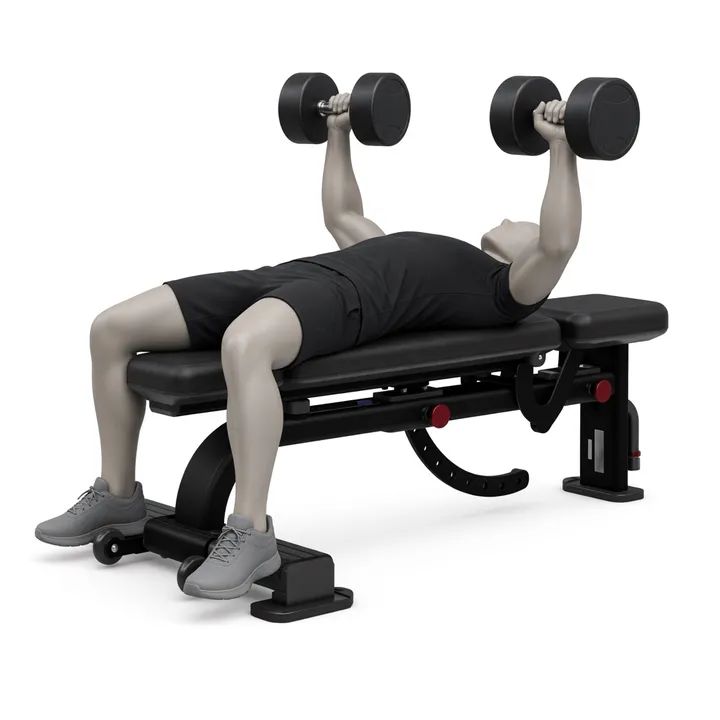
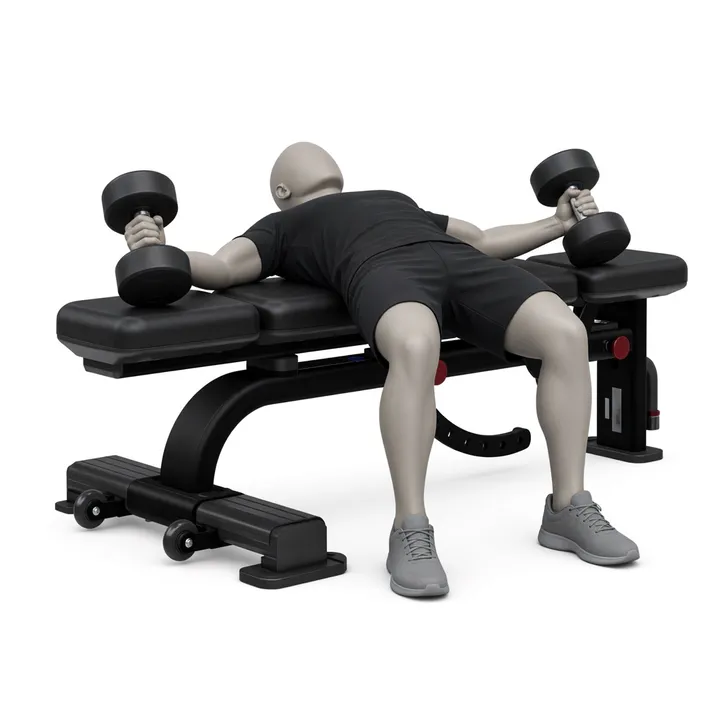
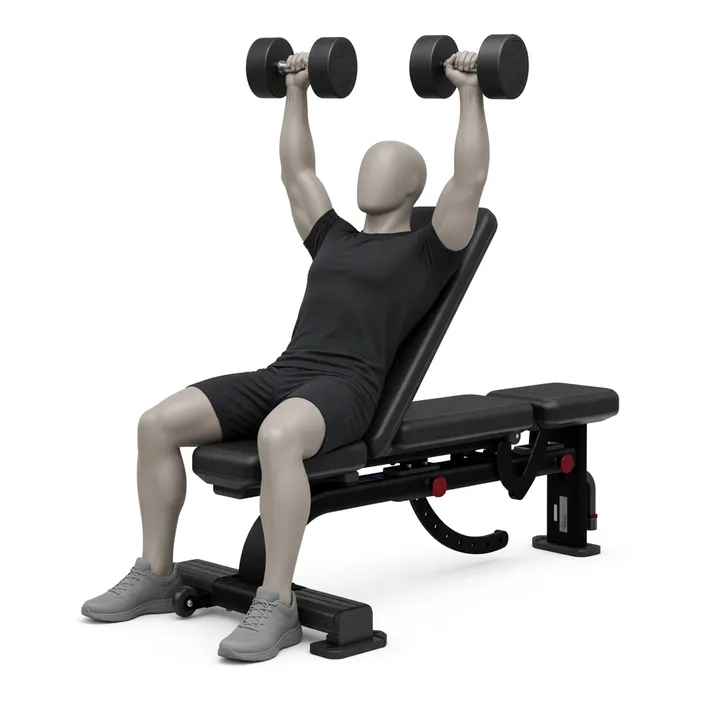
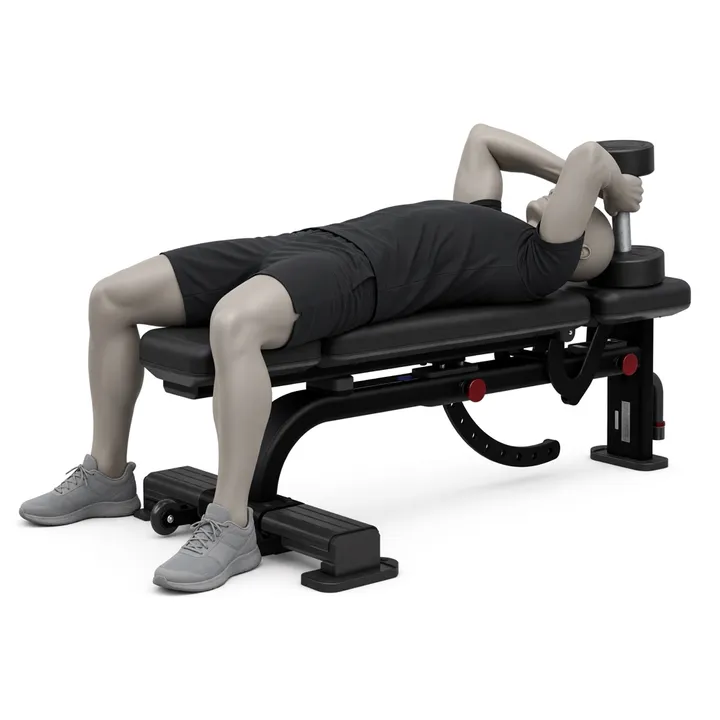
Alternatives for the same muscles
Log your Machine chest press sets with GoSet
GoSet remembers your last time, starts your rest on its own and notes your records. Even with no signal in the basement. Coming soon to iPhone and Android.
Common questions
Should I feel the machine chest press more in my chest or triceps?
You should mainly feel it in your chest, with help from your shoulders and triceps. If you only feel triceps, pull your shoulder blades back, lift your chest a bit, and control the way back instead of just pushing with your arms.
Does the machine chest press replace the bench press?
It’s not exactly the same, but it also works your chest, shoulders, and triceps. The machine is more stable and easier to learn. You can use it as a main press or as a complement to barbell or dumbbell bench press.
If my shoulder hurts during the machine chest press, what should I do?
Stop the exercise right away. Talk to a health professional before you continue. After that, you can pick another chest option like dumbbell bench press or a pec deck, depending on what they recommend.
I’m a beginner. Is the machine chest press a good place to start?
Yes, the machine chest press is often easier to control than free weights. You can focus on position, range of motion, and breathing without worrying as much about balance.