Exercise · Chest
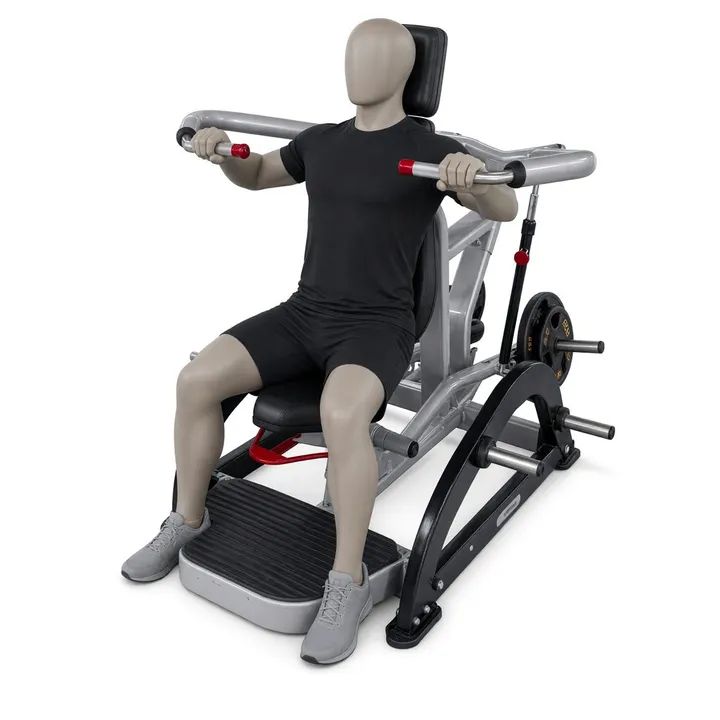
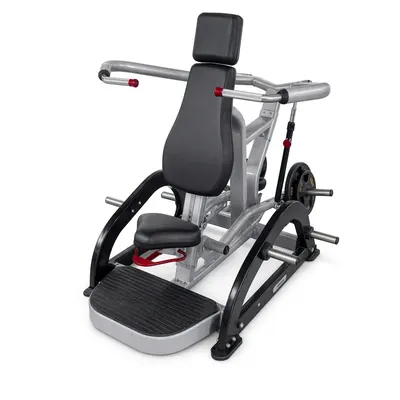
Neutral-grip chest press on converging machine
On the converging chest press, the neutral-grip press lets you load your chest while your back stays fully supported. The neutral grip often feels more stable and shoulder-friendly. It’s a solid option both for beginners and as a swap for barbell bench press.
Doable at all 76 gyms GoSet follows
The essentials
- Adjust seat so handles are at chest height.
- Keep your back on the pad and press the outer handles forward.
- Don’t arch your lower back.
Muscles worked
- Primary
- Chest
- Secondary
- Triceps · Shoulders
How to do it
- Adjust the seat so that when you grab the neutral handles, they’re at chest height, with your feet flat on the floor.
- Sit down, press your lower back and shoulder blades into the pad, and grab the outer handles with a neutral grip (palms facing each other).
- Inhale, brace your chest and core, and press the handles forward until your elbows are almost straight, without locking them hard.
- Keep your shoulders down and don’t arch your lower back while you press.
- Exhale near the end of the press, then slowly let the handles come back toward you, controlling the return the whole way.
- Repeat with the same path and control, without bouncing or using your torso to swing the weight. Keep your back on the pad.
Common mistakes
Arching the lower back to move more weight
Instead : Use a weight you can control and keep your lower back on the pad. Think about keeping your ribs down. If you feel your back peeling off the pad, stop the set and lower the weight.
Letting the handles snap back
Instead : Control the full return. Aim for about 2 to 3 seconds as the handles come back toward your chest so your chest and triceps do the work, not momentum.
Elbows flared and shoulders creeping up
Instead : Keep your shoulders down and your shoulder blades on the pad. Adjust your elbow angle so they point slightly down instead of straight out to the sides if your shoulders feel jammed.
Cutting the range of motion short
Instead : Bring the handles close enough to feel a good stretch in your chest, without slamming into the machine stops. Then press to almost full extension but keep a small bend in your elbows.
Coach tips
- Think smooth reps: about 1–2 seconds to press, 2–3 seconds to return, no sudden stops in the middle.
- Match your breathing to the movement: inhale as the handles come back, exhale as you press them forward.
- If you’re new to this machine, start light to learn the seat setting and the path, then build the weight gradually.
- Plant your feet wide and stable on the floor so your hips don’t shift and your back stays firmly against the pad.
Variations
- Slightly reduce the stretch at the back if your shoulders feel sensitive, keeping tension on the chest without discomfort.
- Add a brief one-second pause with the handles close to your chest to build control and avoid bouncing off the stops.
- Use a slower tempo (especially on the way back) to increase tension on the chest while using less weight.
Sets and reps
On this machine, people often do 3 to 4 sets of 8 to 12 reps with a load they can control without arching their back. You can track progress by logging the weight used and how many reps you complete.
Equipment
Alternatives for the same muscles
Log your Neutral-grip chest press on converging machine sets with GoSet
GoSet remembers your last time, starts your rest on its own and notes your records. Even with no signal in the basement. Coming soon to iPhone and Android.
Common questions
How high should I set the seat for the neutral-grip chest press?
Raise or lower the seat so that when you hold the neutral handles, they line up with your chest. If they end up near your neck or down by your stomach, adjust until they’re roughly in line with the middle of your chest.
I feel this mostly in my triceps. Is that okay?
Yes, your triceps are heavily involved in pressing on this machine. To feel your chest more, keep your back glued to the pad, control the return, and focus on bringing the handles together by squeezing your chest, not just straightening your elbows.
What if I get shoulder pain on this exercise?
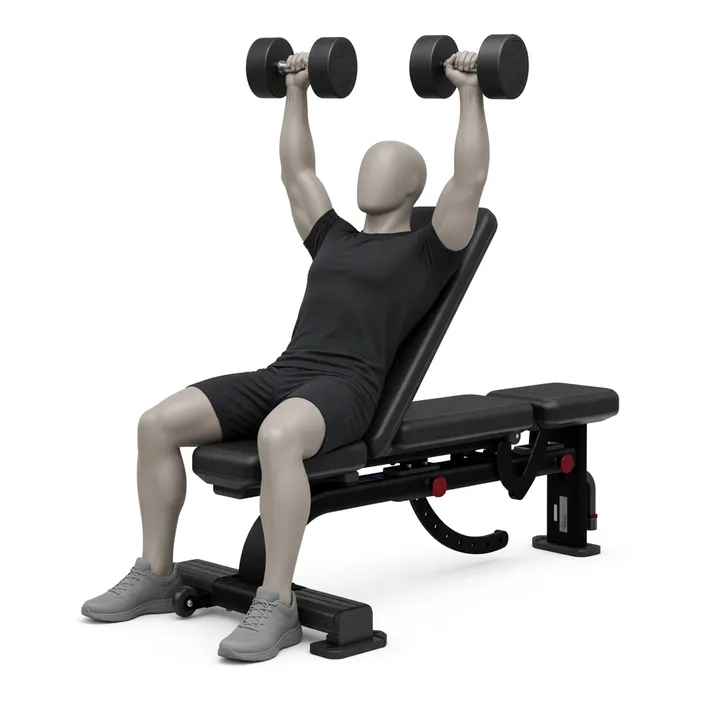
Stop the exercise right away and talk to a health professional before you continue. You can also try another chest option like dumbbell bench press or incline dumbbell press if those feel comfortable for you.
What can I do instead if this machine is busy?
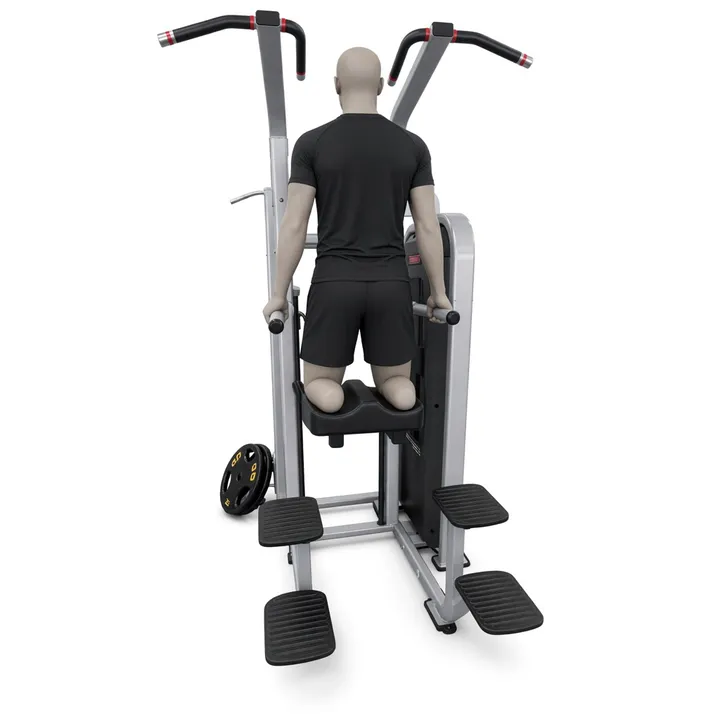
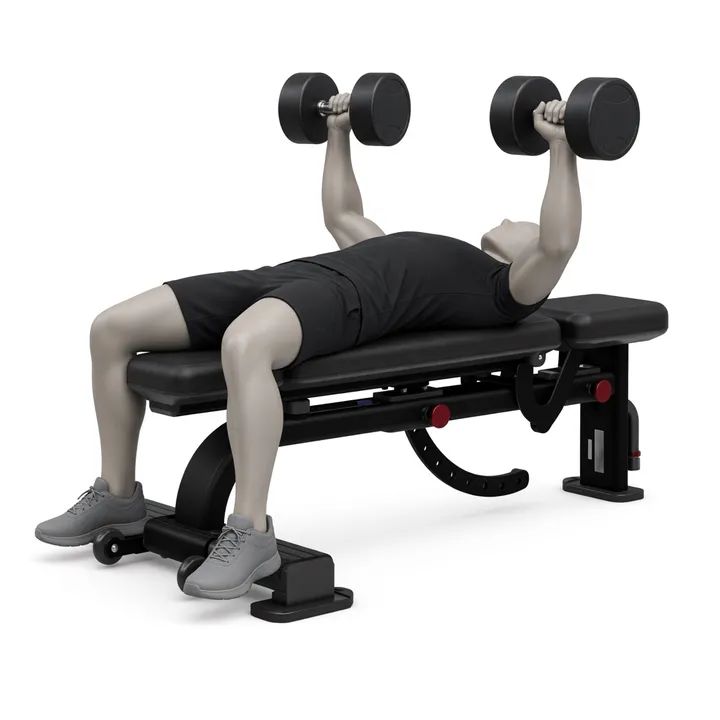
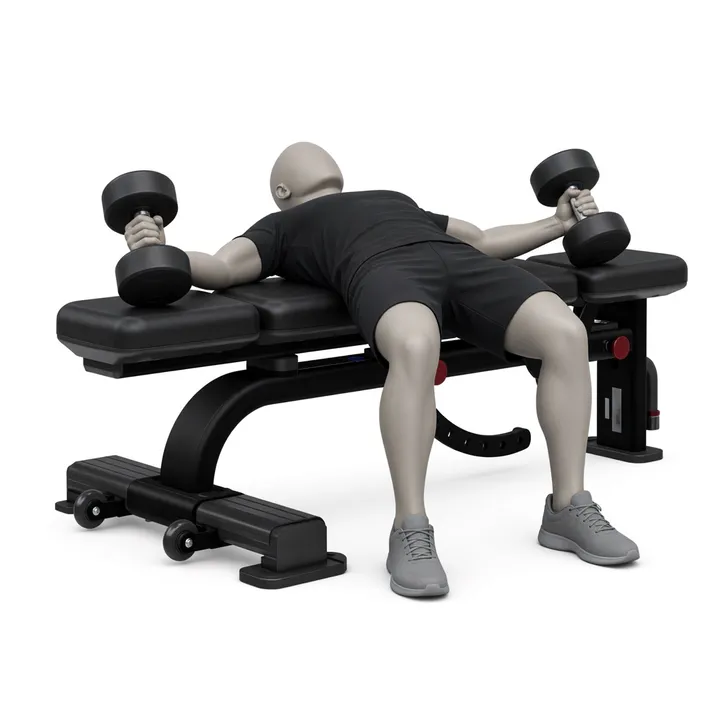
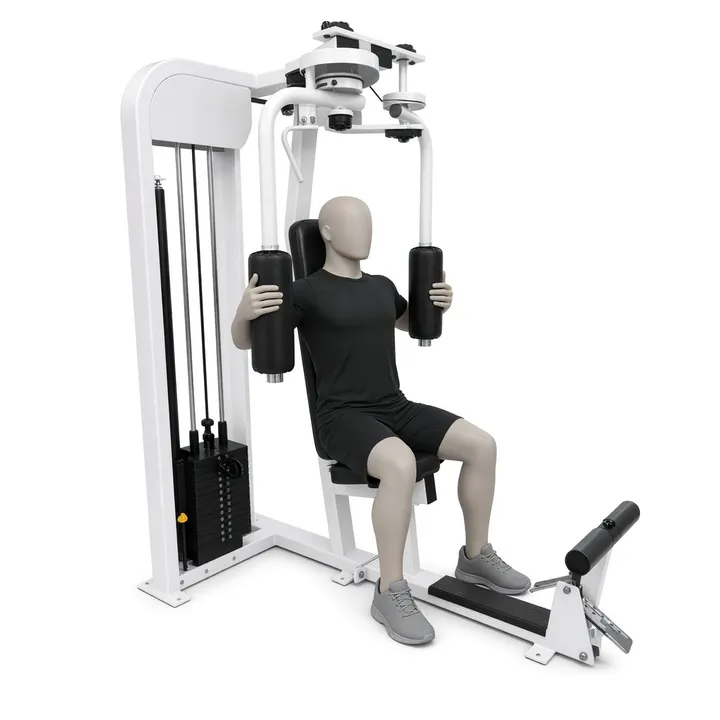
You can train your chest with assisted dips, dumbbell bench press, dumbbell incline press, dumbbell fly, dumbbell pullover, or a machine chest fly (pec deck).