Exercise · Arms
Barbell reverse curl
The barbell reverse curl is a curl done with your palms facing down to work your forearms and biceps. It’s a solid add-on to regular curls to build grip and forearm strength. It works well for all levels as long as you control the weight and your form.
- Forearms
- Biceps
Doable at all 76 gyms GoSet follows
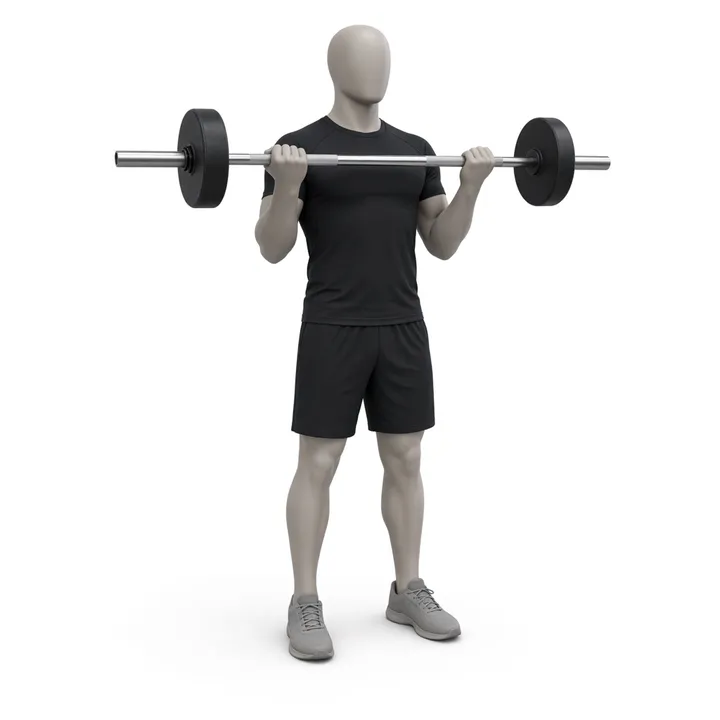
The essentials
- Palms facing down.
- Keep your wrists straight.
Muscles worked
- Primary
- Forearms · Biceps
How to do it
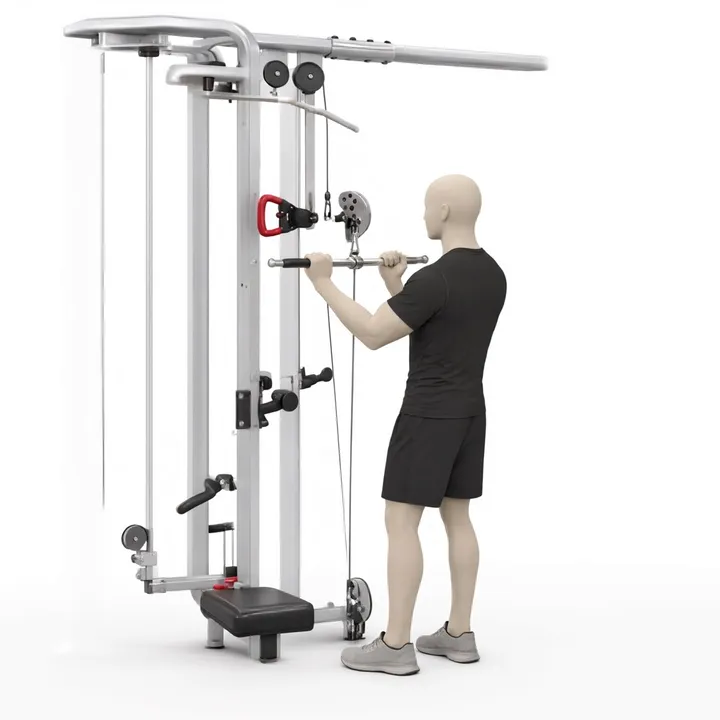
- Grab a fixed-weight barbell with your palms facing down, hands just wider than shoulder width, wrists straight.
- Stand with your feet under your hips, knees slightly bent, bar resting against the top of your thighs, elbows close to your sides.
- Inhale, brace your core, and keep your upper body steady throughout the movement.
- Bend your elbows to curl the bar up in front of you, keeping your wrists straight and your palms facing the floor.
- Lift until your forearms are roughly parallel to the floor or slightly higher, without letting your elbows drift forward.
- Lower the bar under control over 2 to 3 seconds, keeping your wrists neutral, until you’re back at the starting position, then repeat.
Common mistakes
Bent or collapsed wrists
Instead : Use a lighter bar and focus on keeping your wrists in line with your forearms, as if you were crushing the bar in your hands without bending them.
Elbows drifting forward or backward
Instead : Think of your elbows as glued to your sides. Only the forearms move. If your elbows are swinging around, lower the weight and slightly reduce your range of motion.
Using momentum with your hips or back
Instead : Keep a soft bend in your knees and your torso steady. If you need to kick your hips to get the bar up, the weight is too heavy.
Dropping the bar too fast
Instead : Count 2 to 3 seconds on the way down. Focus on “braking” with your forearms the whole descent to stay in control and protect your wrists.
Coach tips
- Start lighter than with regular barbell curls; the pronated grip makes it more demanding on your forearms.
- Keep your palms clearly facing down for the whole set. If your hands start turning toward you, the bar is probably too heavy.
- Exhale as you curl the bar up, inhale as you lower it to keep a steady rhythm and a tighter core.
- To feel your forearms more, pause for one second at the top before lowering the bar slowly.
Variations
- Slightly narrower grip to place even more emphasis on certain forearm muscles.
- One-arm reverse curl using a small bar or similar tool to work on symmetry and stability.
Sets and reps
In strength training, you’ll often see 3 to 4 sets of 8 to 15 reps with light to moderate loads, focusing on forearm tension and solid wrist position.
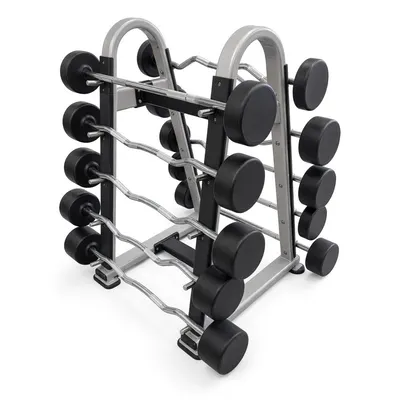
Equipment
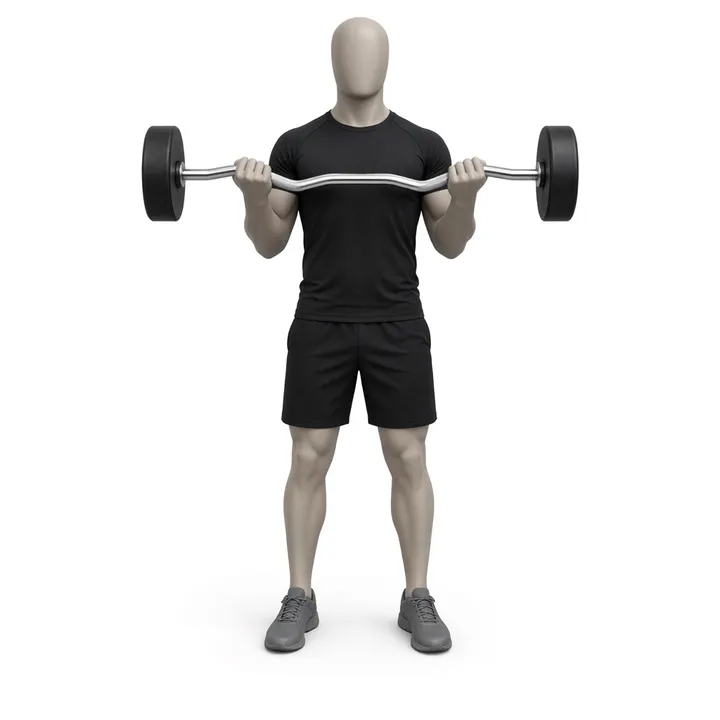
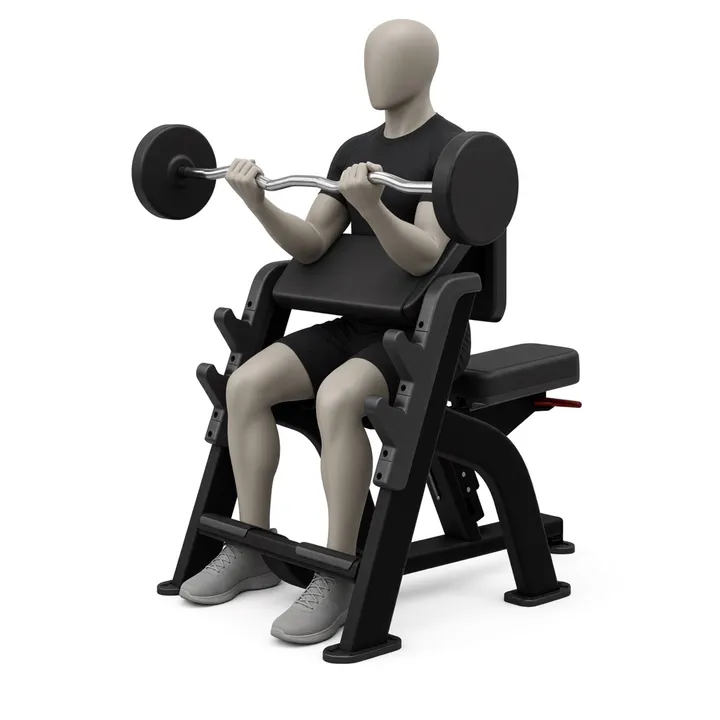
Alternatives for the same muscles
Log your Barbell reverse curl sets with GoSet
GoSet remembers your last time, starts your rest on its own and notes your records. Even with no signal in the basement. Coming soon to iPhone and Android.
Common questions
What should I feel working on barbell reverse curls?
You should mainly feel your forearms, with your biceps helping as well. If you mostly feel your lower back or you’re swinging the weight, go lighter and focus on moving only at the elbows with a controlled tempo.
Why does the reverse curl feel harder than regular curls?
The pronated grip puts more demand on the forearms and changes how the biceps contribute to the movement. That often makes it feel tougher even with less weight, which is normal.
Can I replace my regular curls with reverse curls?
You can, but most people use reverse curls as a complement. Regular curls already work your biceps well, and the reverse version adds extra focus on the forearms and grip strength.
What if I feel discomfort in my wrists?
Stop the set right away. Check that you’re keeping your wrists straight and the weight isn’t too heavy. If the discomfort keeps coming back, talk to a health professional before continuing with this exercise.