Exercise · Legs and glutes
Smith deadlift: how to do it properly
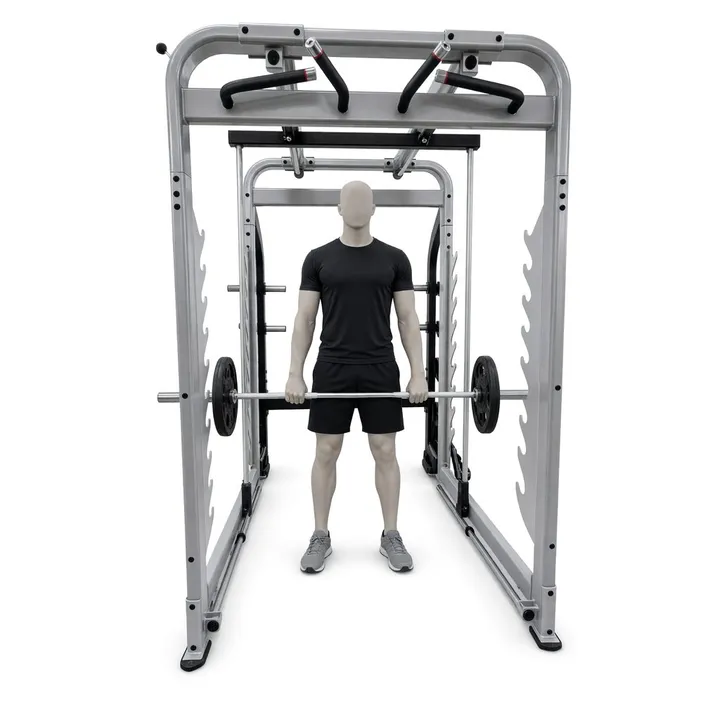
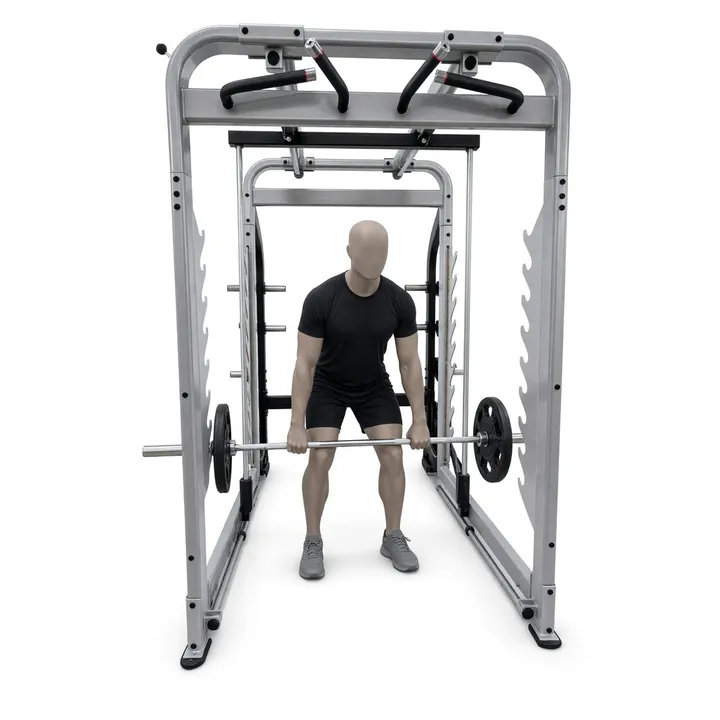
The Smith deadlift is a guided version of the regular barbell deadlift. The fixed bar path helps you control the movement while mainly working your glutes and hamstrings, with help from your lower back, traps and forearms. It’s a solid option if you’re learning the pattern or prefer less balance work.
- Glutes
- Hamstrings
- Lower back
- Traps
- Forearms
Doable at all 76 gyms GoSet follows
The essentials
- Set the bar at floor or shin height.
- Keep your back straight and push with your legs.
- Lock out your hips at the top without overextending.
Muscles worked
- Primary
- Glutes · Hamstrings
- Secondary
- Lower back · Traps · Forearms
How to do it
- 1. Set the Smith bar at floor or shin height, then place your feet about hip-width apart, 5 to 10 cm in front of the bar.
- 2. Hinge at your hips and bend your knees to reach the bar, keep your back straight, chest open, eyes forward or slightly down, and grab the bar with an overhand or mixed grip.
- 3. Inhale, brace your core, keep the bar close to your shins, then push into the floor with your legs, lifting hips and shoulders at the same time.
- 4. At the top, stand tall and lock out your hips by squeezing your glutes, without arching your lower back excessively or leaning backward.
- 5. Control the descent for 2 to 3 seconds by pushing your hips back and bending your knees, keeping the bar close to your legs all the way down to the start position.
- 6. Let the bar settle if it touches the floor, or pause briefly at the bottom, reset your breath, then start the next rep with the same guided path.
Common mistakes
Rounding the lower back
Instead : Keep the bar close to your legs, brace your core before pushing, and stop the set if you feel you’re losing a neutral lower back.
Driving the hips too far forward at the top
Instead : Think about simply standing tall. Finish by squeezing your glutes, not by leaning back and shoving your hips forward hard.
Starting with the bar too far away
Instead : Set your feet slightly in front of the bar, then test your setup: when you bend down, the bar should be very close to your shins. A bar that’s too far forward pulls on your lower back for no reason.
Pulling mostly with your back
Instead : Focus on “pushing the floor away” with your feet. Lift hips and shoulders together instead of cranking your torso up first.
Coach tips
- Use a controlled tempo: about 2 to 3 seconds on the way down, then come up with intent but without jerking the bar.
- Exhale as you pass the hardest part of the lift on the way up, inhale at the bottom as you reset your tension.
- On the Smith, try 1 or 2 different bar heights to find the one that lets you keep a straight back and feel your glutes and hamstrings working well.
- Start with a weight you can control perfectly for every rep, then increase gradually when your technique stays consistent.
Variations
- Smith deadlift with a full pause at the bottom to reinforce your start position.
- Smith deadlift with a brief stop just above the knees to build strength in the mid-range.
- Smith deadlift with partial range of motion if your mobility limits a full descent with a straight back.
Sets and reps
The Smith deadlift is often done for 3 to 6 sets of 3 to 10 reps, depending on load and focus. Heavier work usually means fewer reps and longer rests between sets.
Equipment
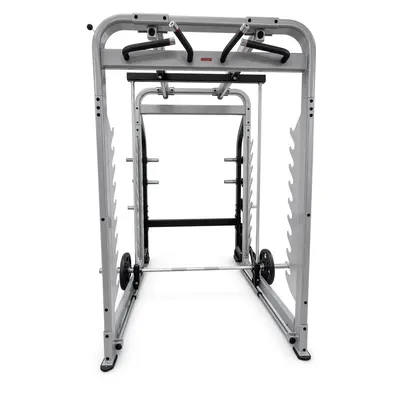
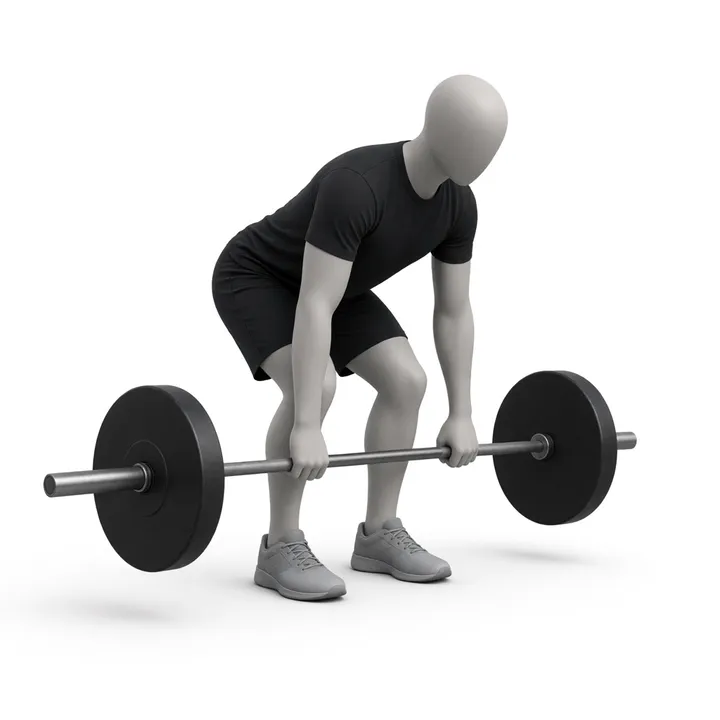
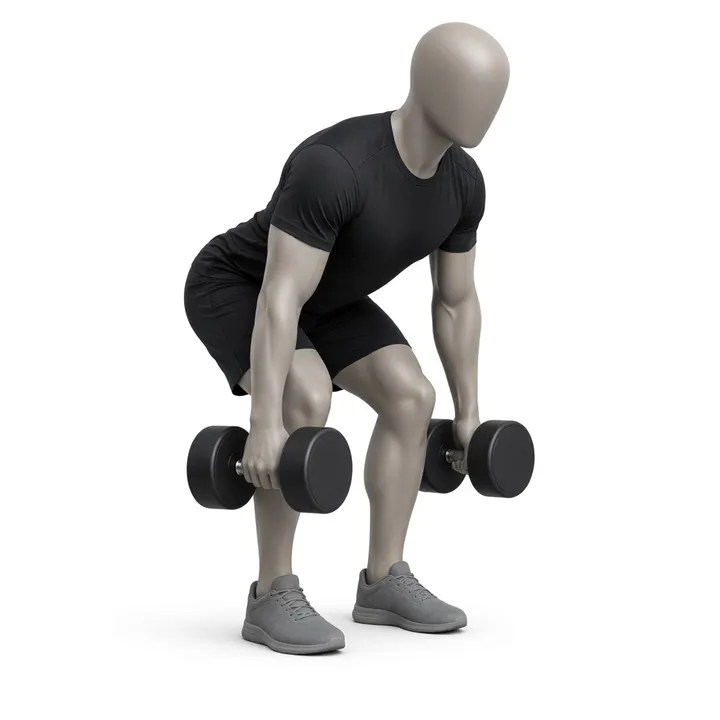
Alternatives for the same muscles
Log your Smith deadlift sets with GoSet
GoSet remembers your last time, starts your rest on its own and notes your records. Even with no signal in the basement. Coming soon to iPhone and Android.
Common questions
What bar height should I use for the Smith deadlift?
Most lifters set the bar at floor level or just above shin height. Choose a height where you can keep your back straight, bar close to your legs, and push strongly with your legs without any odd stress in your lower back.
I only feel my lower back on Smith deadlifts, is that normal?
Your lower back will work, but if the feeling turns into pain, stop the exercise. Check that the bar stays close to your legs, that you’re pushing with your legs, and that your back stays straight. If pain stays, talk with a professional.
Does the Smith deadlift replace regular deadlifts?
It’s not exactly the same. The Smith helps you manage the bar path and balance, which is handy for learning the movement or if you like a more guided pattern. Regular deadlifts demand more stabilization. Both can have a place in your training.
Where should I grip the bar on the Smith deadlift?
Grab the bar just outside shoulder-width so your arms are straight and outside your knees. The key is feeling solid and keeping the bar close to your legs throughout the whole movement.