Machine · Back
T-bar row: how to use the machine
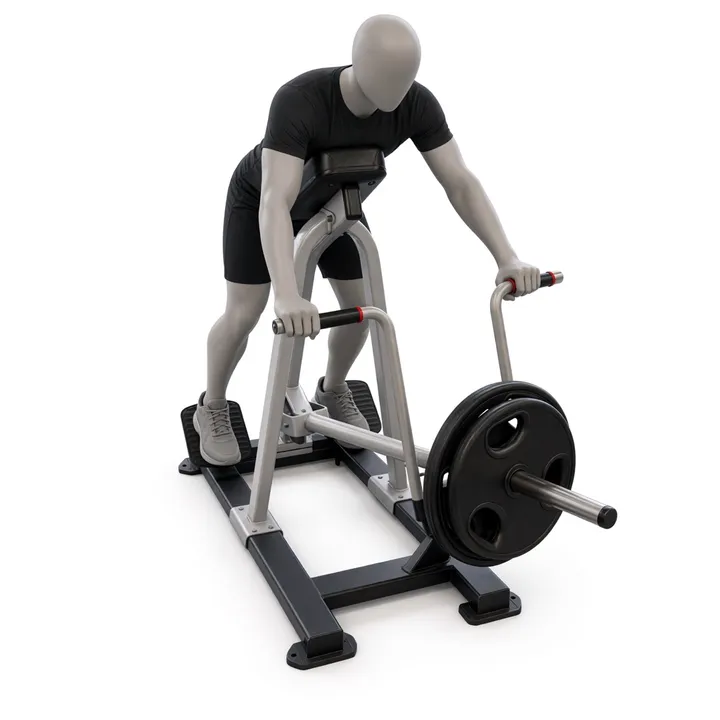
The T-bar row is a bent-over rowing machine where your chest is supported and the load comes from plates. It mainly trains your back and your biceps while giving your lower back some support. It’s a solid option if you want to row heavier while staying stable.
At all 76 gyms GoSet follows
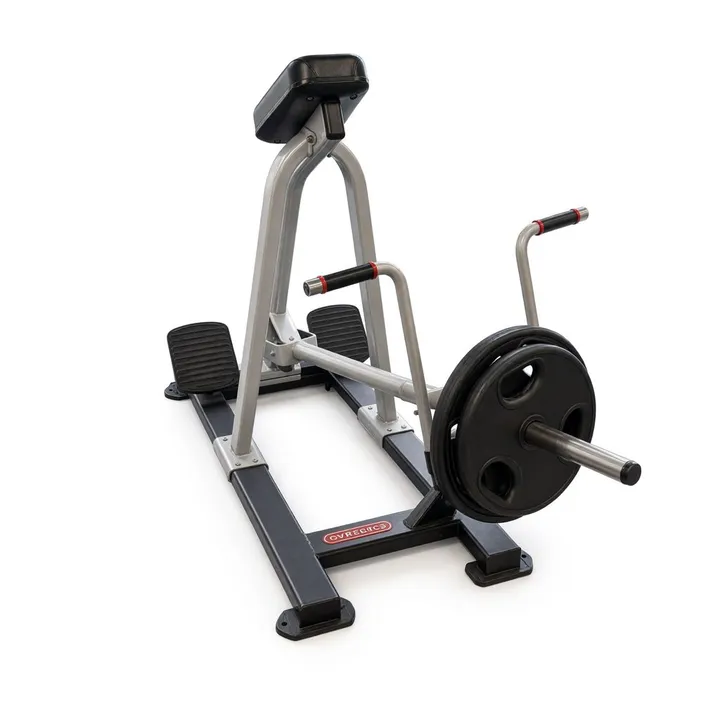
The essentials
- Chest on the pad.
- Drive your elbows back, then lower slowly.
Muscles worked
- Primary
- Back · Biceps
Setup
- Set the chest pad height so you can keep your torso firmly against it and still reach the handle without twisting.
- Place your feet in a stable stance with a slight bend in your knees and both feet flat on the floor.
- Choose a comfortable grip on the handle, usually about shoulder-width.
- Load the machine with plates, leaving yourself room to move with control.
- Do one or two light test reps to make sure the range of motion feels good on your shoulders and arms.
How to do it
- Press your chest into the pad, keep your back neutral, brace your abs, and plant your feet firmly on the floor.
- Let your arms reach down without dropping the weight; keep your shoulders slightly pulled back.
- Inhale, then start the row by driving your elbows back close to your body until the handle comes near your torso.
- Squeeze your back for about a second at the top without shrugging your shoulders up or over-arching your lower back.
- Lower the weight slowly for about 2 to 3 seconds, controlling the whole way down until you’re back near the start position.
- Keep a smooth rhythm for all your reps and stop before you lose control or start lifting your chest off the pad.
Common mistakes
Arching the lower back and lifting the chest
Instead : Move yourself closer into the pad, brace your core, and keep your chest in contact with the support through the whole movement. If you have to lift off, drop the weight.
Pulling mostly with the arms
Instead : Focus on leading with your elbows and bringing your shoulder blades together instead of just bending your elbows. Your biceps will help, but your back should do most of the work.
Very short range of motion
Instead : Use less weight so you can almost fully extend your arms at the bottom and bring the handle close to your torso at the top without losing your position.
Using momentum or jerking the weight
Instead : Slow down your tempo, especially on the way down, and keep your body glued to the pad. If you need to swing to lift it, it’s too heavy.
Coach tips
- Aim for a controlled tempo: around 1 second to pull, a 1-second squeeze at the top, then 2 to 3 seconds to lower.
- Breathe with the movement: inhale with your arms extended, exhale as you pull the handle toward you.
- Adjust your grip width to where you feel your back working well without shoulder discomfort.
- Increase the load gradually from workout to workout as long as you keep the same control and full range of motion.
Variations
- Use a closer grip to involve the biceps and mid-back a bit more.
- Use a slightly wider grip to feel more of your upper back.
- Add a 2-second pause at the bottom to break momentum and force a controlled start to each rep.
Sets and reps
On this machine, people often do 3 to 4 sets of 8 to 12 reps to train back and biceps with control. Some also use slightly higher reps at the end of a back workout.
Exercises on this machine
Machine taken? Try instead
Log your T-bar row sets with GoSet
GoSet remembers your last time, starts your rest on its own and notes your records. Even with no signal in the basement. Coming soon to iPhone and Android.
Common questions
Where should I feel the T-bar row?
Mainly in your back and biceps. You may feel some tension in your forearms from gripping the handle, but you shouldn’t feel pain in your lower back or shoulders. If you do, stop and talk to a professional.
What can I do if the T-bar row machine is taken?
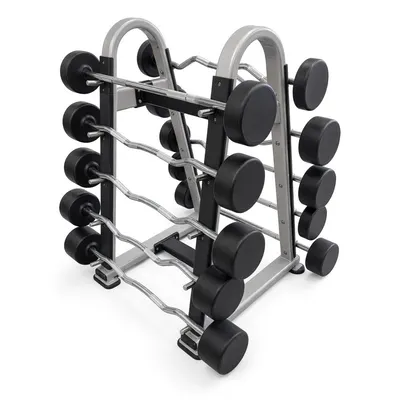
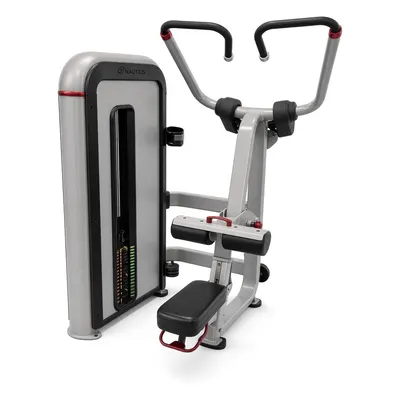
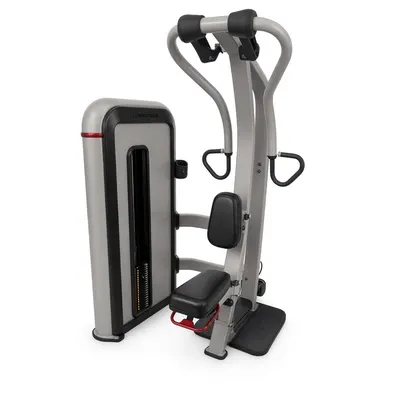
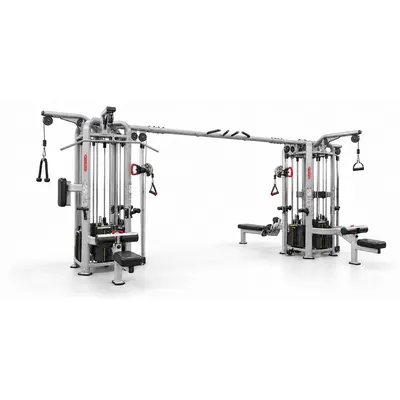
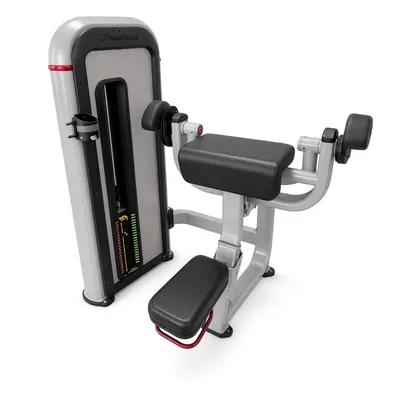
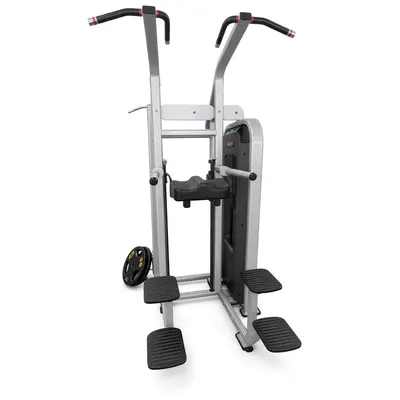
You can swap it for a seated row, a lat pulldown, a multi-station cable row, or use fixed-weight barbells for another rowing variation. To focus more on biceps, you can also use a biceps curl machine.
How do I choose the right weight on the T-bar row?
Start with a weight that lets you keep your chest on the pad and control the lowering phase. Adjust from there: if you have to cheat or lose your range of motion, it’s too heavy; if you finish your set with lots of energy left, you can add a bit.
Does the T-bar row replace chin-ups or pull-ups?
It’s not the same angle, but it’s still a big back exercise. If you don’t have access to chin-ups, using a mix of T-bar row, lat pulldown, and seated or cable rows can help you train your back well.