Exercise · Legs and glutes
Bodyweight squat: how to do it properly
The bodyweight squat, or air squat, is a squat with no added weight that you can do anywhere. It mainly works your quadriceps and glutes, with your adductors helping to control your legs. It’s great to learn squat technique before adding load, or for a quick lower body workout at home or at the gym.
- Quadriceps
- Glutes
- Adductors
Doable at all 76 gyms GoSet follows
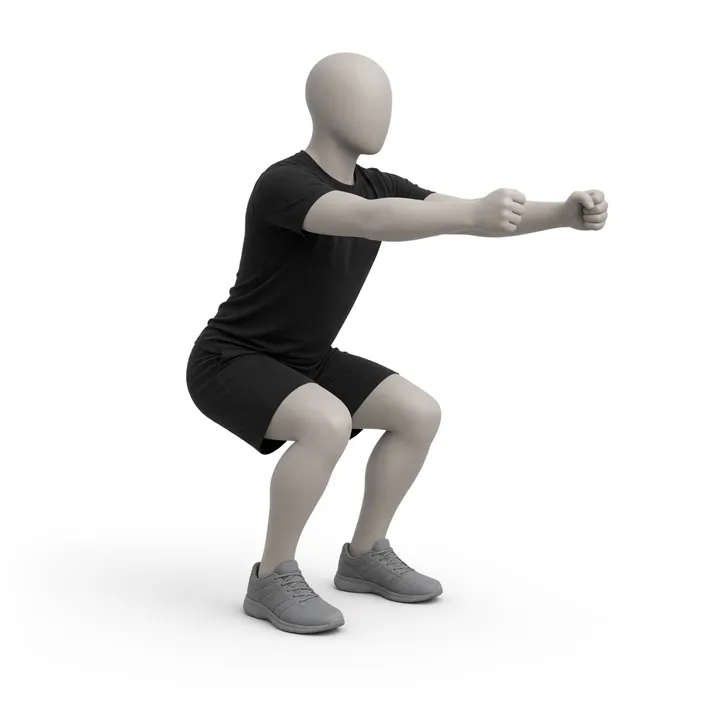
The essentials
- Feet shoulder-width apart.
- Lower with your heels down.
Muscles worked
- Primary
- Quadriceps · Glutes
- Secondary
- Adductors
How to do it
- Place your feet shoulder-width apart, toes slightly turned out if that feels more natural.
- Brace your core lightly, look straight ahead, and keep your chest open without over-arching your back.
- Lower by bending your hips and knees, keeping your heels down on the floor the whole time.
- Bring your thighs toward parallel to the floor, or as low as you can go without pain or losing control.
- Keep your knees in line with your feet, following the same direction as your toes.
- Push the floor away with your feet to stand back up, exhaling, until your hips and knees are fully straight.
Common mistakes
Heels lifting off the floor
Instead : Bring your feet a bit closer, limit your depth at first, and think about “driving your heels into the floor” through the whole movement.
Knees collapsing inward
Instead : Try a slightly wider stance and focus on keeping your knees in the same direction as your toes on the way down and up.
Back rounding at the bottom
Instead : Only go as low as you can while keeping your chest open and your back neutral, even if that means a shorter range of motion at first.
Dropping too fast and bouncing
Instead : Control the way down over 2 to 3 seconds, pause briefly at the bottom, then come up with a smooth, powerful but controlled push, not a bounce.
Coach tips
- Inhale as you lower and exhale as you stand up; this helps with rhythm and stability.
- Spread the pressure through your whole foot, especially the heel, to feel your quadriceps and glutes working more.
- If you’re new to squats, use a bench behind you as a depth target: lightly touch it at the bottom, then stand back up.
- To progress, gradually increase reps or move on to variations like the goblet squat or barbell back squat later on.
Variations
- Bodyweight squat with a 1–2 second pause at the bottom to build control and remove the bounce.
- Partial range bodyweight squat (halfway down) if a full range feels too hard for now.
- Bodyweight squat to a bench or box as a fixed target to keep a consistent depth every rep.
Sets and reps
Bodyweight squats are often done in sets of 10 to 20 reps, depending on your level and goal. They can also be used in time-based circuits, for example blocks of 30 to 45 seconds of work.
Equipment
No equipment: bodyweight.
Alternatives for the same muscles
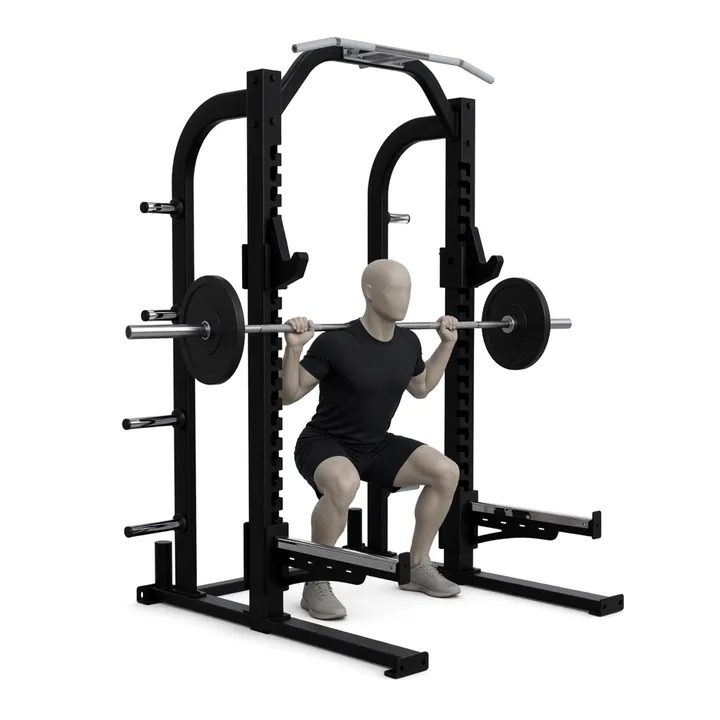
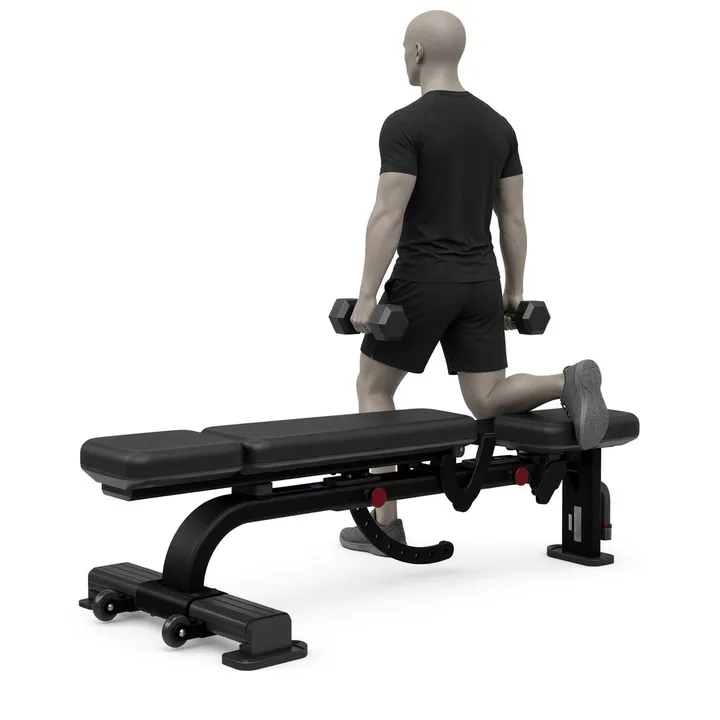
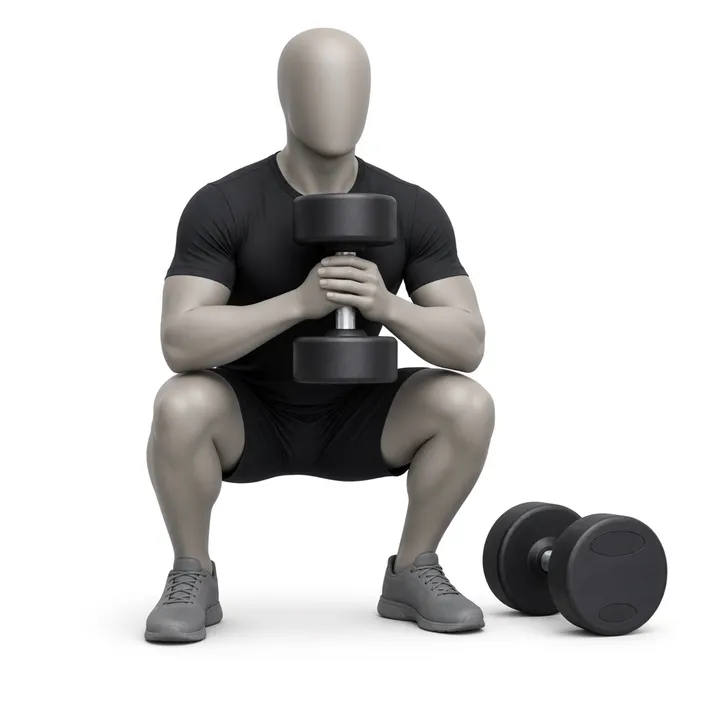
Log your Bodyweight squat sets with GoSet
GoSet remembers your last time, starts your rest on its own and notes your records. Even with no signal in the basement. Coming soon to iPhone and Android.
Common questions
Which muscles does the bodyweight squat work?
The bodyweight squat mainly works your quadriceps and glutes. Your adductors also help control your leg position during the movement.
I can’t keep my heels down, what should I do?
Start with a smaller range of motion and focus on keeping your heels on the floor. You can also squat to a bench, touching it lightly and standing back up, until you’re more comfortable with the pattern.
Can I do bodyweight squats every day?
Many people use bodyweight squats quite often, since there’s no extra load. Go by how you recover and how your legs feel from one session to the next.
How can I make bodyweight squats harder?
You can do more reps, slow down the lowering phase to 2–3 seconds, add a pause at the bottom, or later move to loaded versions like the goblet squat, barbell back squat, or dumbbell lunge variations.