Exercise · Back
Independent-arm lat pulldown (neutral grip)
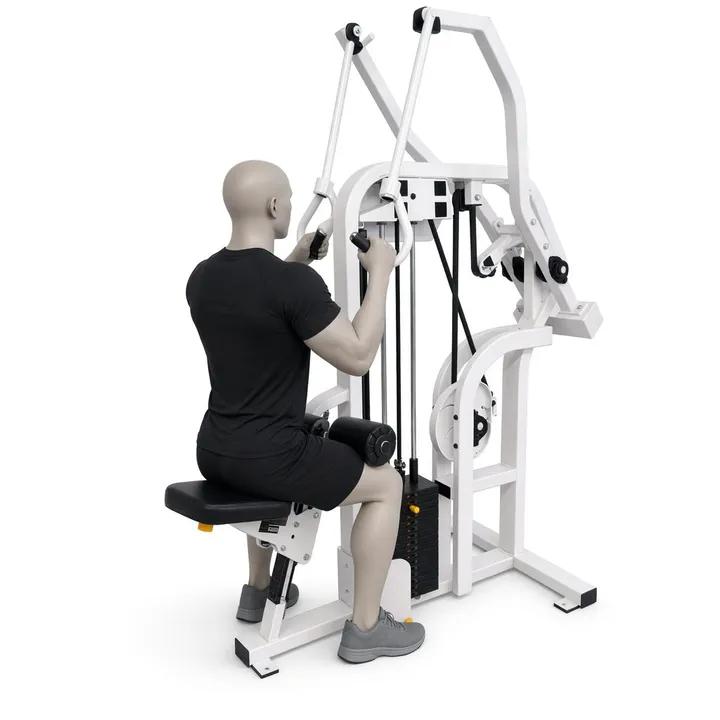
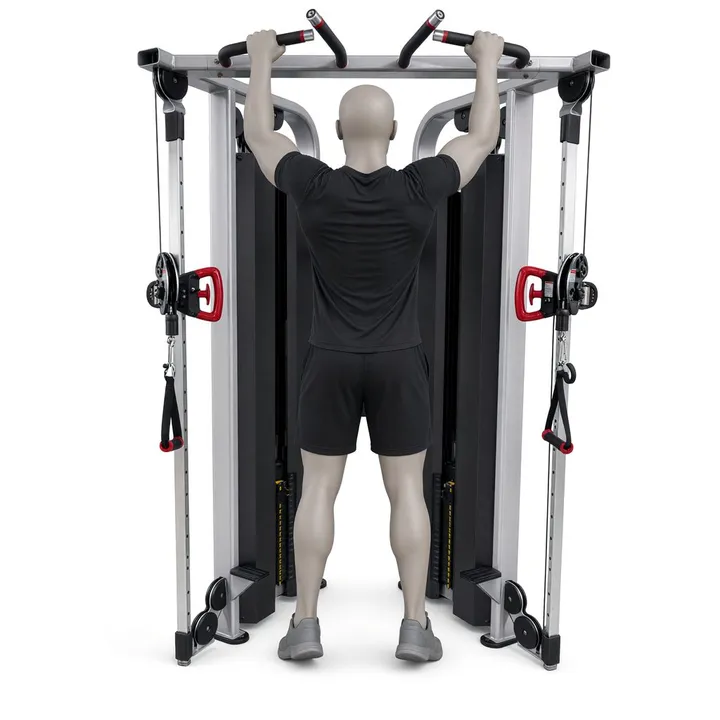
The independent-arm neutral-grip lat pulldown is done on a machine where each arm moves on its own. It mainly targets your back, with help from your biceps. It’s a good option if you want a controlled, stable movement that feels more accessible than pull-ups.
Doable at all 76 gyms GoSet follows
The essentials
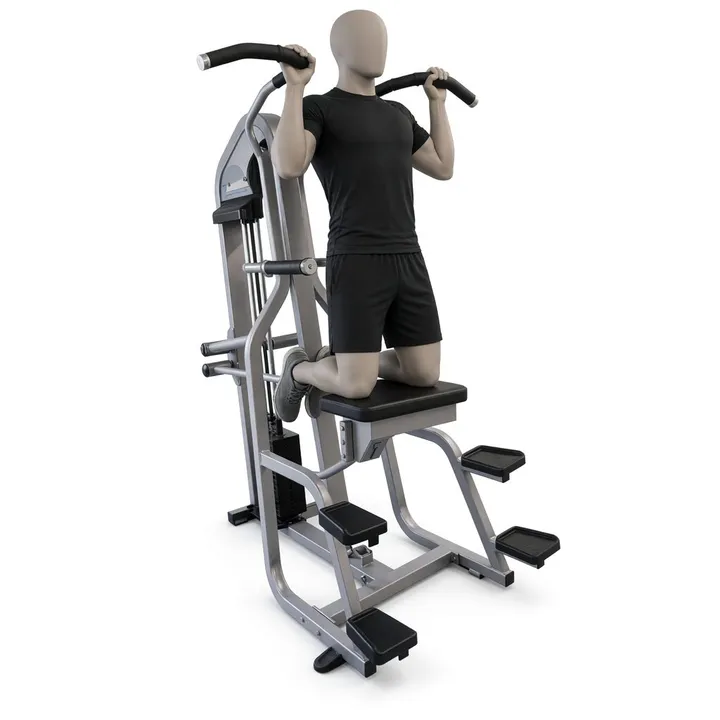
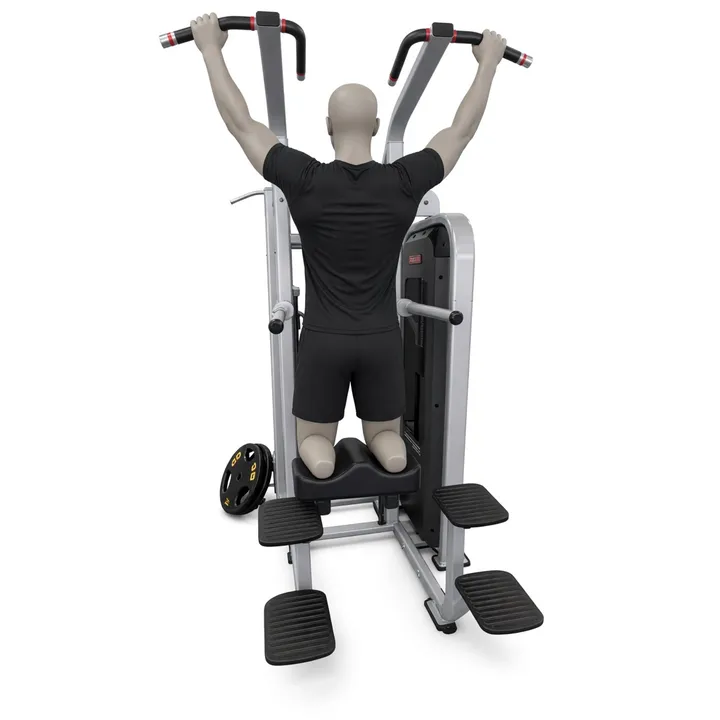
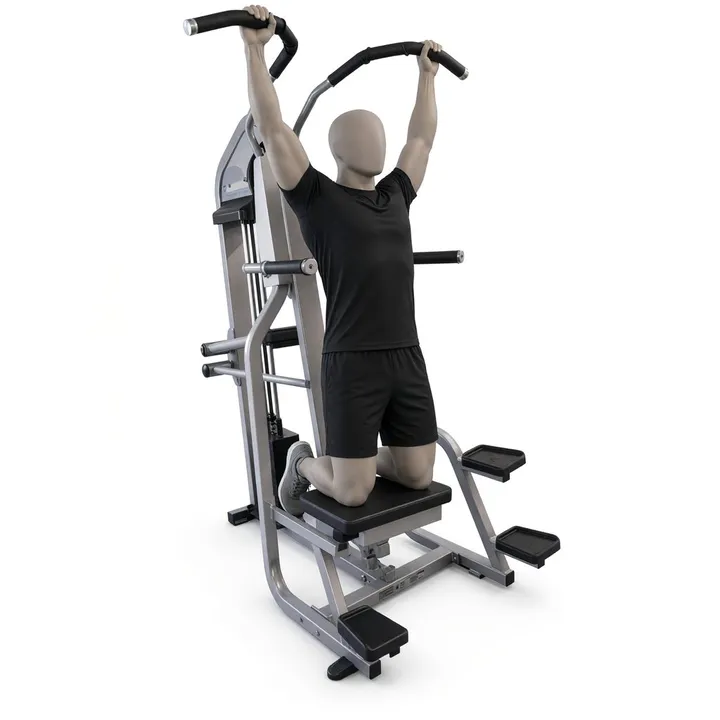
- Adjust the thigh pads to secure your legs.
- Grab the inner handles with a neutral grip, palms facing each other.
- Pull the handles down, keeping elbows close to your body.
Muscles worked
- Primary
- Back
- Secondary
- Biceps
How to do it
- Adjust the seat so that when you sit, the thigh pads lock your legs in place without crushing them.
- Sit up tall with a straight back, chest slightly up, feet flat on the floor.
- Grab the inner handles with a neutral grip, palms facing each other, arms almost straight at the top without letting your shoulders shrug to your ears.
- Inhale, then pull the handles down, keeping your elbows close to your body and thinking about bringing your shoulder blades together, until your hands are near your upper chest.
- Control the way up over 2 to 3 seconds, letting your arms straighten without losing back tension and without being pulled off the seat.
- Repeat while keeping your back straight, no swinging with your torso and no excessive arching.
Common mistakes
Only pulling with the biceps
Instead : Think about starting the movement with your back: like you want to slide your shoulders down before bending your elbows. Focus on squeezing your shoulder blades instead of just moving your hands down.
Leaning far back to move the weight
Instead : Keep your torso almost vertical with only a small angle. If you need to throw your body back to finish the rep, the weight is too heavy.
Overarching the lower back
Instead : Keep your abs lightly braced and your hips planted on the seat. If you feel your lower back arching hard, lower the weight and focus on smooth, controlled reps.
Letting the shoulders shrug at the top
Instead : At the top, stay in control: shoulders down, neck long. Do not relax to the point where you’re just hanging from your joints.
Coach tips
- Use about 2 to 3 seconds on the way up and 1 to 2 seconds on the way down to help you feel your back working instead of just moving the stack.
- Breathe out as you pull the handles down, breathe in as you let them rise.
- If one side feels stronger, focus on matching speed and range with both arms so the movement stays even.
- Start lighter to find the right seat and pad settings, then increase the weight gradually as your form feels solid.
Variations
- You can do sets where you mentally focus more on one side at a time while still using both arms, to improve the mind–muscle connection on that side of your back.
- If you lose tension at the very top, slightly shorten the top range so you keep control instead of being pulled up by the weight stack.
Sets and reps
This exercise is often used for 3 to 4 sets of about 8 to 12 reps, usually in the middle or toward the end of a back session. The weight is usually chosen so you can keep clean form from the first to the last rep.
Equipment
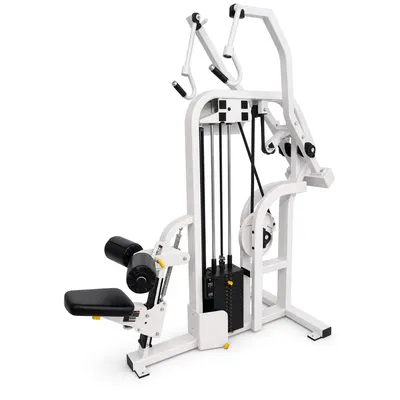
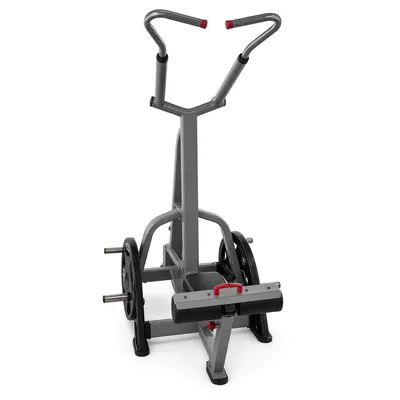
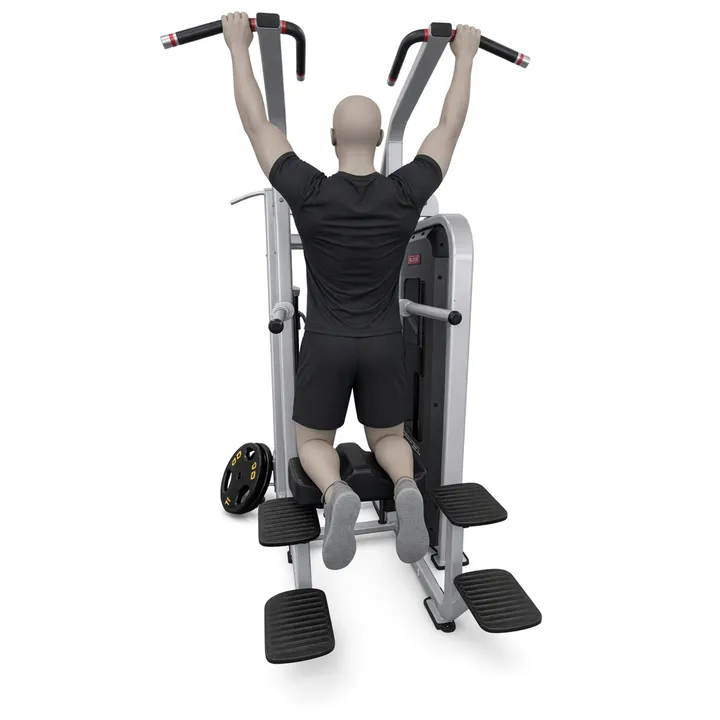
Alternatives for the same muscles
Log your Independent-arm lat pulldown (neutral grip) sets with GoSet
GoSet remembers your last time, starts your rest on its own and notes your records. Even with no signal in the basement. Coming soon to iPhone and Android.
Common questions
What should I feel during the independent-arm lat pulldown?
You should mainly feel your upper and mid-back working, with your biceps helping. If you mostly feel your forearms burning, slow the tempo and focus on driving your elbows down instead of pulling with your hands.
How high should I set the seat?
Set the seat so the thigh pads hold your legs firmly without digging in. At the top of the movement your arms are almost straight, and you can keep your shoulders down without being lifted off the seat.
Can I use this instead of pull-ups?
Yes, it’s a solid machine alternative to pull-ups if you want more stability or if pull-ups are too hard for now. You’re still working your back and biceps, but with a guided path from the machine.
What if I feel joint pain during the movement?
Stop the set right away and don’t push through the pain. Talk to a health or movement professional before you continue or change the exercise.