Exercise · Legs and glutes
Barbell front squat: how to do it right
The barbell front squat is a squat variation where the bar rests at the front. It mainly works your quadriceps, with strong help from your glutes and core to keep your torso upright. It’s a good option if you want a squat that shifts a bit more emphasis to the front of your thighs.
Doable at all 76 gyms GoSet follows
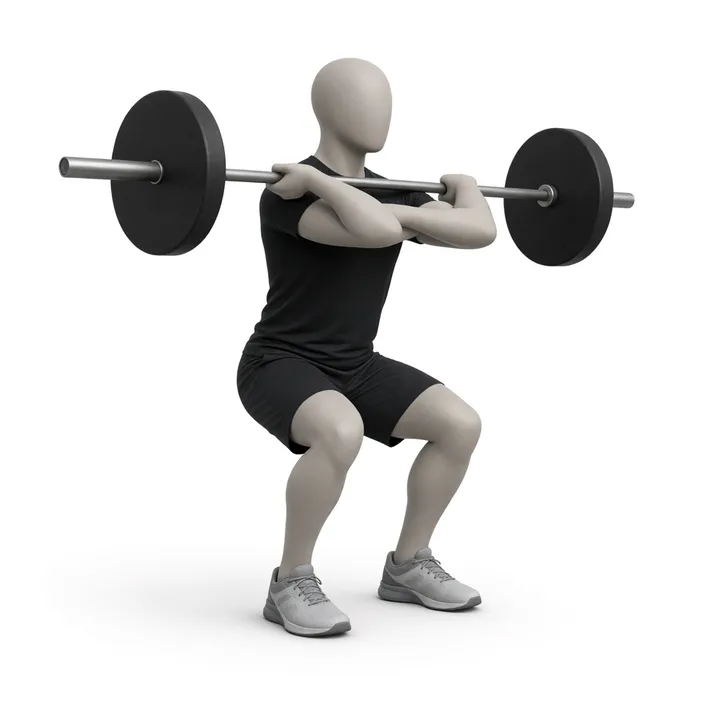
The essentials
- Bar on the front of your shoulders, elbows high.
- Keep your torso upright as you lower.
Muscles worked
- Primary
- Quadriceps
- Secondary
- Glutes · Core
How to do it
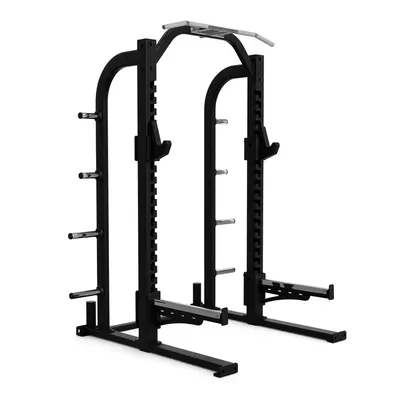
- Set the bar on the squat rack slightly below shoulder height, then step in so it rests on the front of your shoulders, with your elbows high in front of you.
- Grip the bar slightly wider than shoulder-width, take a deep breath, and lift the bar out of the rack by standing up tall.
- Take one or two small steps back and place your feet about shoulder-width apart, toes slightly out, your weight spread across your whole foot.
- Keep your torso upright and your elbows high, then bend your knees and hips to lower in 2 to 3 seconds, as if sitting down between your heels.
- Lower until your thighs are at least parallel to the floor while keeping your core tight and your heels on the ground.
- Push the floor away with your feet, mainly through the middle of your foot, exhaling as you come back up to standing without snapping your knees hard at the top.
Common mistakes
Letting your elbows drop
Instead : Think about “showing your elbows forward” throughout the movement. High elbows help keep the bar in place and your torso more upright.
Heels lifting at the bottom
Instead : Bring your feet a bit closer and focus on pushing through your whole foot. Reduce the weight if your heels still pop up.
Rounding your back at the bottom
Instead : Brace your core before you lower, keep your chest open, and only squat as deep as you can with a solid back. If your back starts to bend, stop the set and lower the weight.
Dropping too fast and bouncing
Instead : Control the way down in 2 to 3 seconds and use a brief pause at the bottom without bouncing. This gives you better control of your position.
Coach tips
- Take a deep breath before each rep, hold the air in your core on the way down, then breathe out as you drive up.
- Aim for a vertical path: the bar should move mostly straight up and down over the middle of your feet.
- Start with lighter weight than your barbell back squat. The front squat asks more from your core for control.
- If the movement feels unstable, shorten your range of motion at first and gradually squat deeper as you gain control.
Variations
- Slightly narrower stance to put even more emphasis on your quadriceps.
- One to two second pause at the bottom to increase time under tension and improve control.
- Slower 3-second descent to better feel your core working and maintain a solid alignment.
Sets and reps
For strength and muscle, people often use 3 to 5 sets of 3 to 8 reps with moderate to heavy loads and solid rest between sets. To focus more on technique, many use lighter sets of 5 to 10 reps with a controlled tempo on the way down.
Equipment
Alternatives for the same muscles
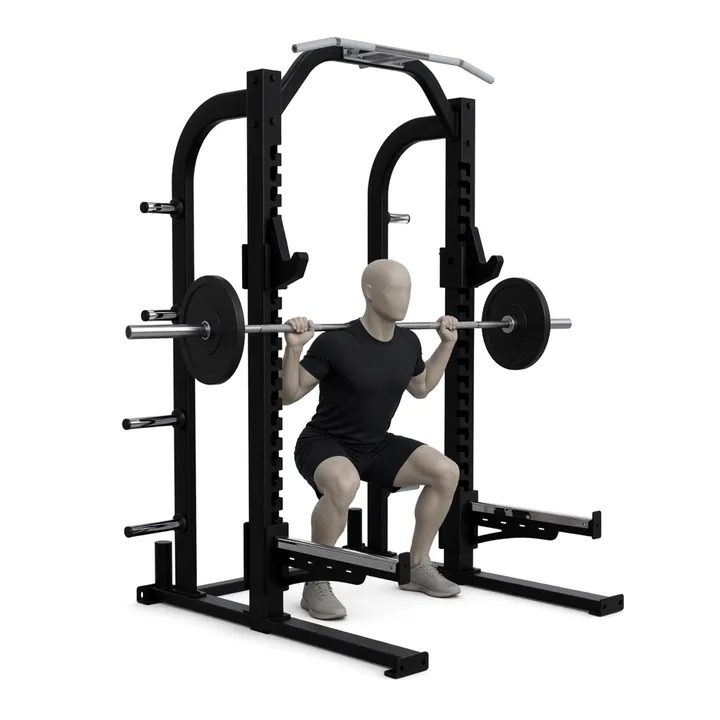
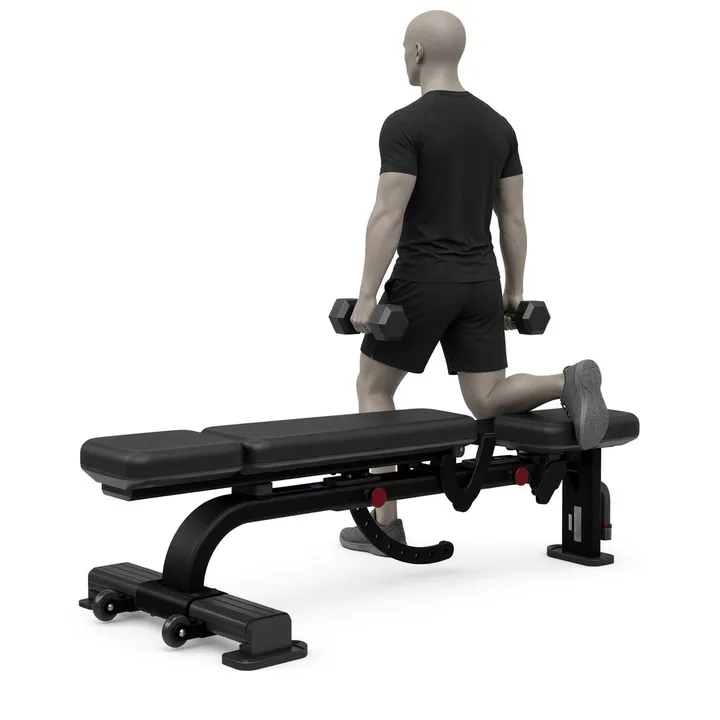
Log your Barbell front squat sets with GoSet
GoSet remembers your last time, starts your rest on its own and notes your records. Even with no signal in the basement. Coming soon to iPhone and Android.
Common questions
I keep tipping forward on front squats, what should I do?
It’s often a mix of dropping elbows and using too much weight. Keep your elbows high, make sure the bar sits firmly on the front of your shoulders, focus on keeping the weight over the middle of your foot, and drop the load to practice a vertical bar path.
Why is the barbell front squat harder than the back squat?
The front squat asks more from your core to keep your torso upright. It’s normal to use less weight than on the back squat. Many people use it with slightly lighter loads for more technical work or as an accessory exercise.
I mostly feel my quads. Is that okay?
Yes. The barbell front squat puts a lot of emphasis on your quadriceps, with your glutes and core helping to move and stabilize the weight.
What if I get knee discomfort during front squats?
Stop the set, reduce the weight, and check your technique. If the discomfort keeps coming back or gets worse, talk to a health professional before continuing with this exercise.