Exercise · Legs and glutes · One side at a time
Smith machine split squat: how to do it
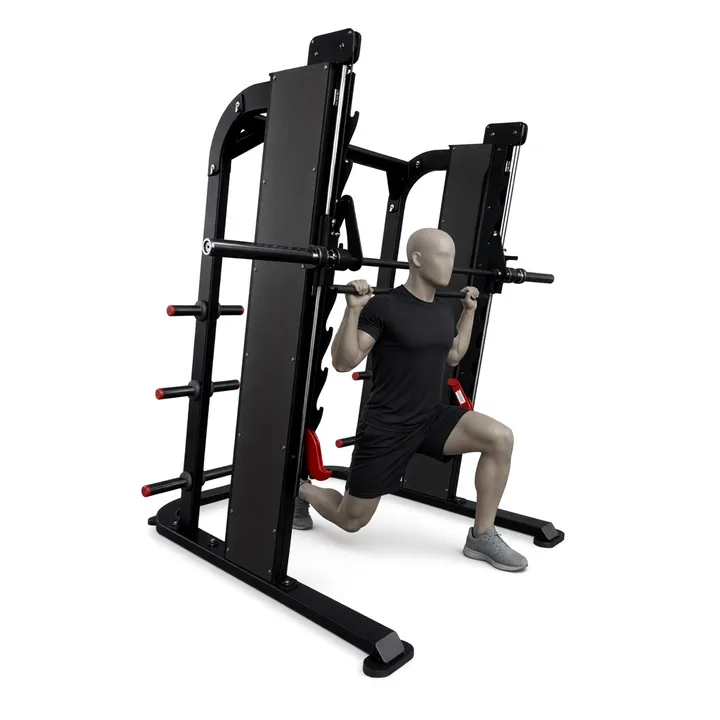
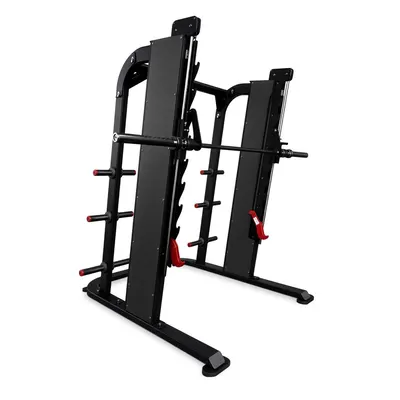
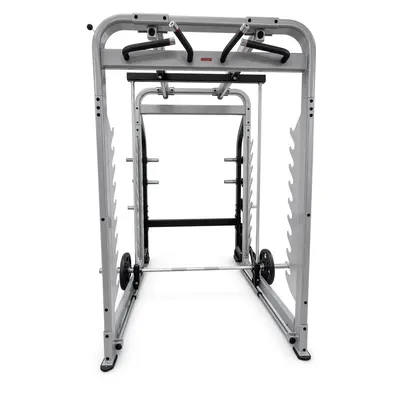
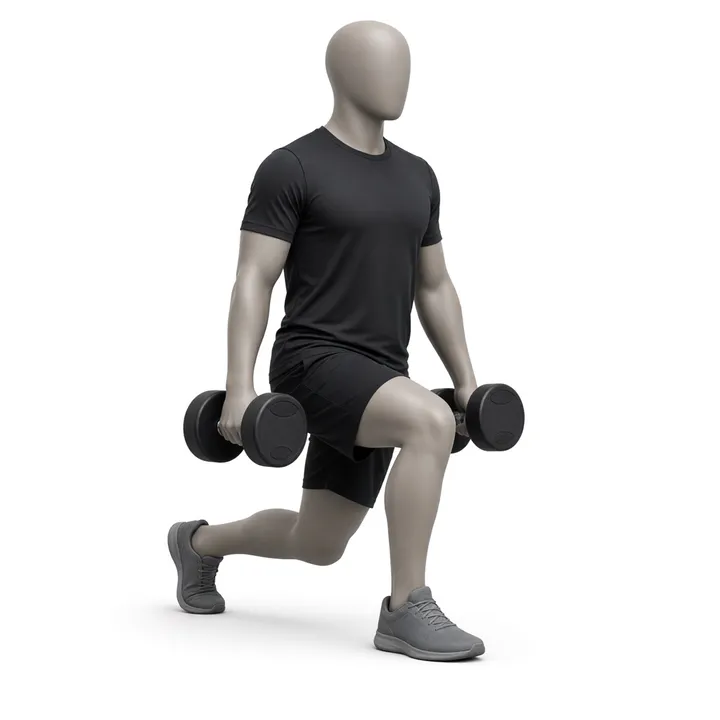
The Smith machine split squat is a split stance squat done with the bar on rails. It mainly works your quadriceps and glutes, with your adductors helping for stability. It’s a solid option if you want a unilateral leg exercise without having to balance a free bar.
- Quadriceps
- Glutes
- Adductors
Doable at all 76 gyms GoSet follows
The essentials
- One foot forward, one back, torso upright.
- Lower your back knee toward the floor.
- Do all reps on one side, then switch.
Muscles worked
- Primary
- Quadriceps · Glutes
- Secondary
- Adductors
How to do it
- Set the bar at upper-shoulder height, lock the hooks safely, then step under with the bar on your upper back and your hands slightly wider than shoulder-width.
- Step one foot forward and the other back: feet on two parallel tracks, not heel-to-toe. Keep your torso upright and eyes forward.
- Unhook the bar by turning it, brace your core, and keep your front foot flat on the floor.
- Lower down over 2 to 3 seconds by bending both knees until your back knee moves toward the floor and your front knee stays roughly over your foot.
- Push through the heel of your front foot to come back up in 1 to 2 seconds, returning close to full extension without aggressively locking your knee.
- Do all your reps on one side, rerack the bar if needed, reset your stance, then repeat on the other side.
Common mistakes
Feet on a tight line and losing balance
Instead : Move your feet a bit wider, like you’re standing on two rails. That usually feels more stable and makes it easier to drive through your front leg.
Torso tipping forward
Instead : Bring your front foot a bit closer, brace your core, and look straight ahead. Think about dropping your back knee toward the floor instead of leaning your chest forward.
Front knee way past the toes
Instead : Take a slightly bigger step forward or move your back foot back. At the bottom, your front knee should sit roughly over the middle of your foot.
Bouncing at the bottom
Instead : Control the way down for 2 to 3 seconds and add a small pause at the bottom. Push through the floor to come up instead of bouncing off your knee or hip.
Coach tips
- Start light to find your ideal foot position, even if that means a few practice reps before loading the bar much.
- Inhale as you lower down, then exhale as you drive up through the front foot.
- If you want more glute focus, take a slightly longer step and think about pushing hard through the heel of your front foot.
- To progress, many people first add reps or depth before increasing the load significantly on the Smith machine.
Variations
- Short-stance Smith split squat to shift a bit more emphasis to the quadriceps.
- Smith split squat with a one-second pause at the bottom to build control and stability.
- Smith split squat with the front heel slightly raised on a small plate to change the quadriceps angle a bit.
Sets and reps
For strength or muscle gain, people often use 3 to 4 sets of 6 to 12 reps per leg. For more endurance-focused work, some go for 12 to 15 reps or more per side with a lighter load.
Equipment
Alternatives for the same muscles
Log your Smith machine split squat sets with GoSet
GoSet remembers your last time, starts your rest on its own and notes your records. Even with no signal in the basement. Coming soon to iPhone and Android.
Common questions
Where should I place my feet on the Smith split squat?
Position your front foot under or slightly in front of the bar, flat on the floor. Step the back foot far enough so that at the bottom your front knee stays over your foot and your back knee points toward the floor without you losing balance.
Do I have to touch the floor with my back knee?
No. Lower your back knee toward the floor like you’re aiming close, but keep a bit of space. If you feel pain in your knee or hip, stop and talk with a professional.
I mostly feel my back leg, is that normal?
You should mainly feel your front leg, especially your quadriceps and glutes. Check that your front foot is far enough forward, push mostly through that foot, and keep your weight centred or slightly forward instead of sitting on the back leg.