Exercise · Legs and glutes · One side at a time
Landmine reverse lunge
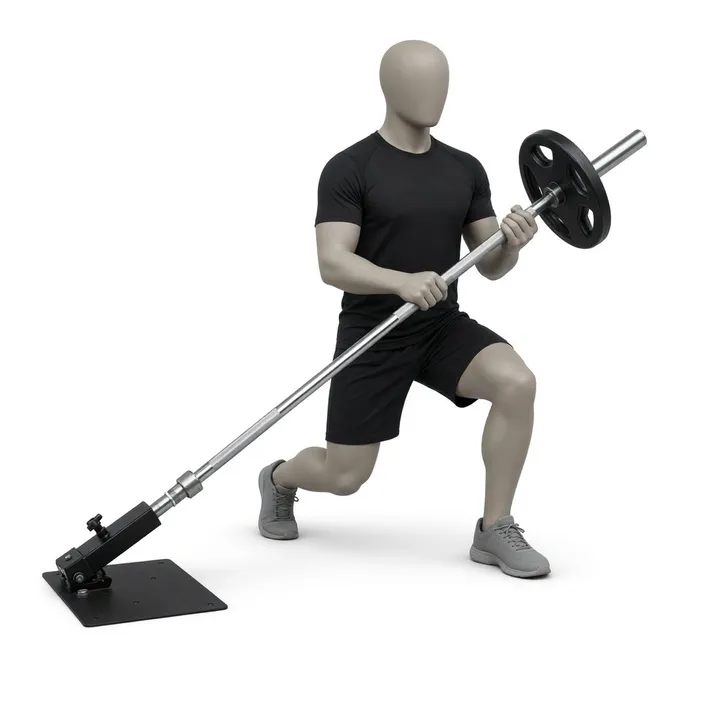
The landmine reverse lunge is a lunge variation using a bar fixed to the floor. It mainly targets your quadriceps, with extra work from your glutes and core for stability. It’s a good option if you want a guided, more controlled lunge than a fully free-weight version.
Doable at all 76 gyms GoSet follows
The essentials
- Hold the bar end with both hands near your shoulder.
- Step back into a lunge, keep your torso upright.
- Push through the front leg to stand back up.
Muscles worked
- Primary
- Quadriceps
- Secondary
- Glutes · Core
How to do it
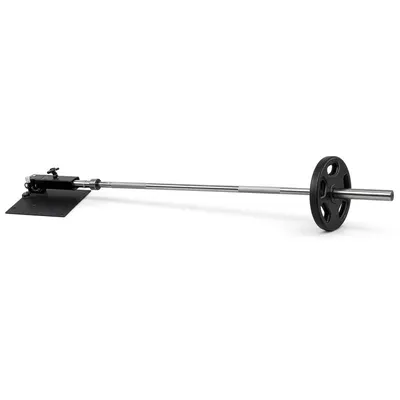
- Place a bar in the landmine base on the floor and hold the bar end with both hands near one shoulder, keeping your elbows close to your body.
- Stand tall, feet about hip-width, front leg in place and the other ready to step back.
- Keep your torso upright, brace your core lightly, and inhale.
- Step one leg back and lower into a lunge until the back knee approaches the floor without bouncing.
- Push through the front foot as you exhale to stand back up and bring the back leg near the front.
- Do all your reps on one side, then switch legs and shoulder side for the other leg.
Common mistakes
Letting the front knee cave in
Instead : Keep your front knee in line with your toes. Gently push the knee outward and press your whole foot into the floor.
Stepping too far back
Instead : Adjust your step length so your front heel stays flat on the floor and you can lower down without straining your lower back.
Leaning the torso too far forward
Instead : Keep your chest open and look straight ahead. Brace your core and think of lowering between your legs, not folding over the front thigh.
Letting the bar pull you down
Instead : Control the way down for about 2 to 3 seconds. The bar guides the path, but your front leg should be doing the work to bring you back up.
Coach tips
- Breathe in as you lower, breathe out as you push through the front leg to stand back up.
- Keep your hands tight together on the bar end and your elbows close to your body so you can better control the bar path.
- Start with a light weight to master balance, then add load gradually once your lunge feels stable and smooth.
- If you lose balance, cut the range of motion a bit and practice controlled half-lunges before going deeper.
Variations
- Landmine reverse lunge with a 1–2 second pause at the bottom to increase control and core work.
- Landmine reverse lunge with a more explosive push up, while still keeping a controlled descent.
Sets and reps
You’ll often see the landmine reverse lunge done for 3 to 4 sets of 6 to 12 reps per leg, depending on load and experience. It’s often used after a main lower-body lift like a squat or leg press.
Equipment
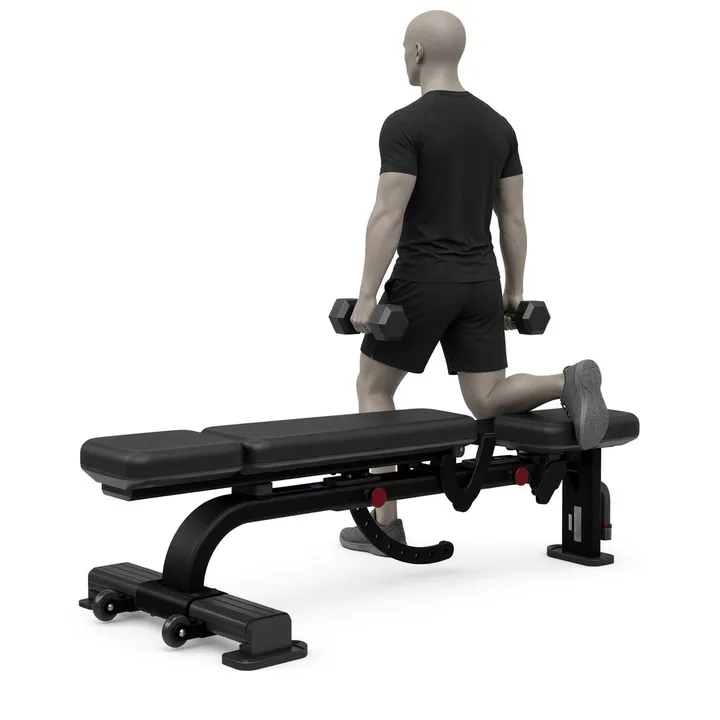
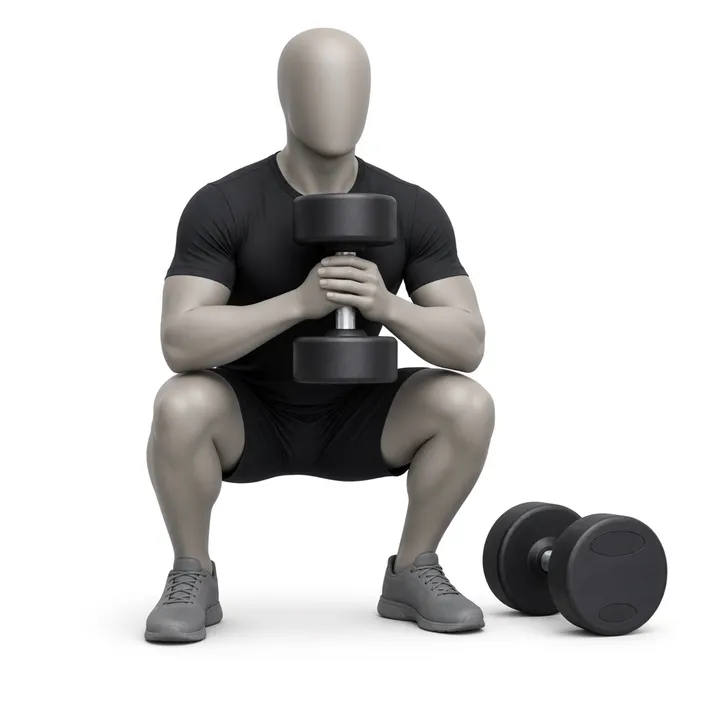
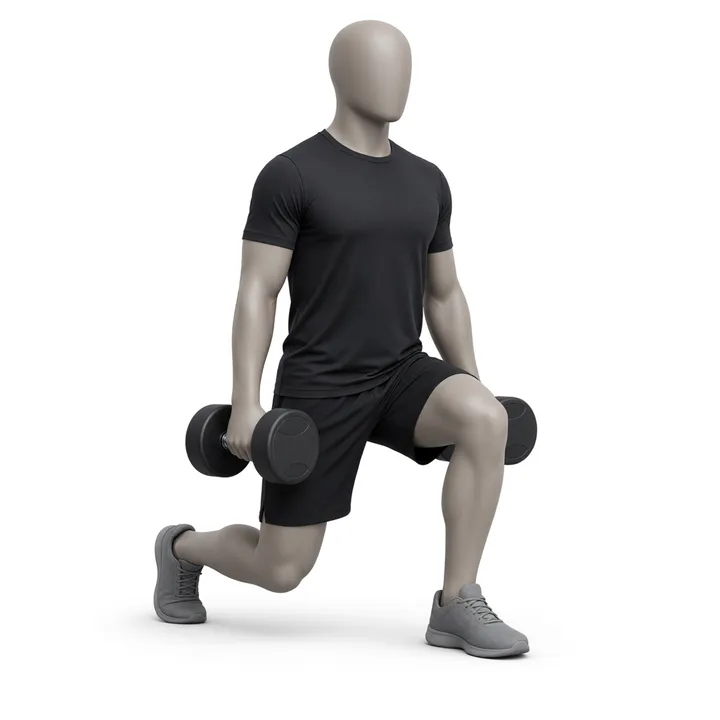
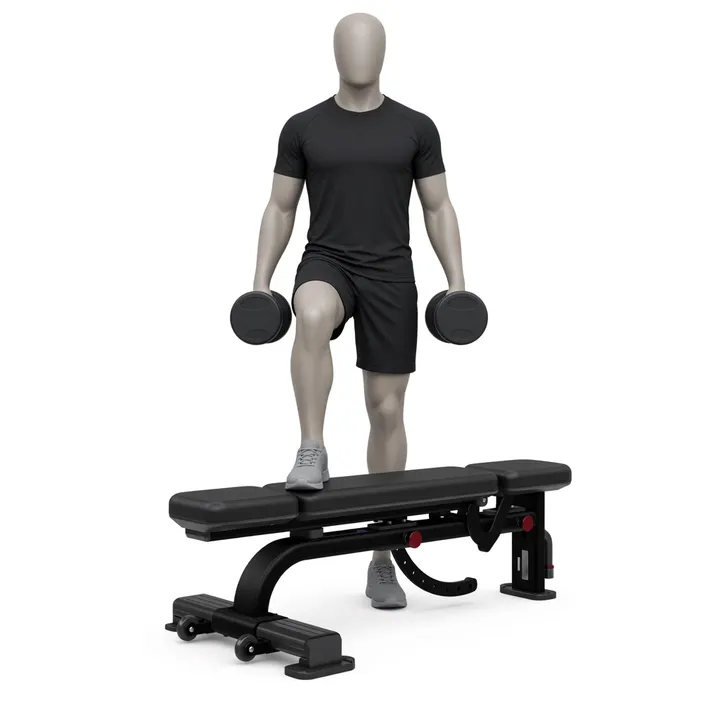
Alternatives for the same muscles
Log your Landmine reverse lunge sets with GoSet
GoSet remembers your last time, starts your rest on its own and notes your records. Even with no signal in the basement. Coming soon to iPhone and Android.
Common questions
Which muscles does the landmine reverse lunge work the most?
The landmine reverse lunge mainly works your quadriceps. Your glutes and core also help to stabilize your body as you lower and stand back up.
Where should I hold the bar end during the lunge?
Hold the bar end with both hands near one shoulder without letting it press into your shoulder. Keep your elbows close to your body so the bar follows a controlled path in front of you.
Which leg does most of the work in the landmine reverse lunge?
The front leg does most of the work. Focus on driving through the front foot, keeping the heel down, and controlling the movement with that leg.
What if I feel sharp pain in my knee or back?
Stop the exercise right away and talk to a health or training professional before doing it again. The lunge should not cause sharp pain.