Exercise · Back · One side at a time
Landmine single-arm row
The landmine single-arm row mainly trains your back, with help from your biceps and your core to keep you stable. It’s a unilateral movement, great to work each side on its own, balance strength, and feel your back working more clearly.
Doable at all 76 gyms GoSet follows
The essentials
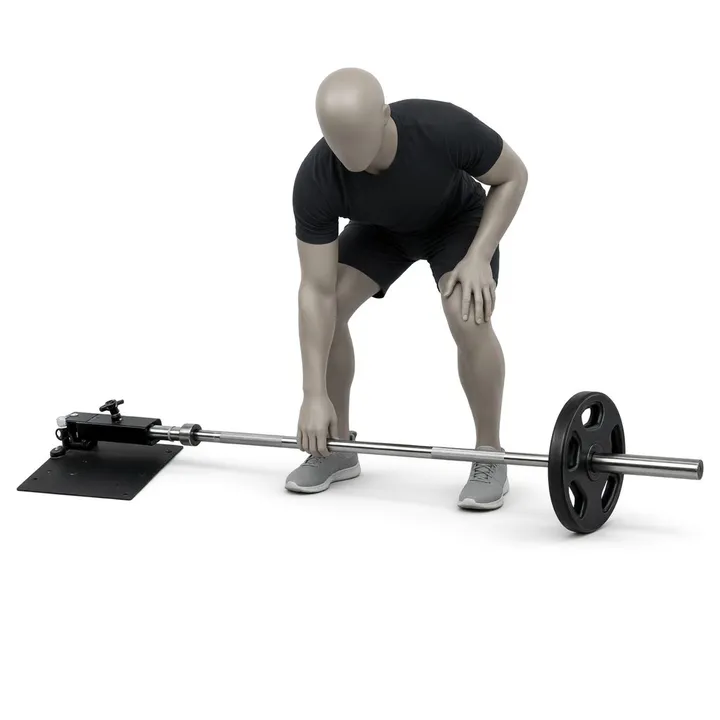
- Stand beside the bar, one hand on the sleeve.
- Keep your back straight and pull your elbow toward your hip.
- Control the descent, avoid twisting your torso.
Muscles worked
- Primary
- Back
- Secondary
- Biceps · Core
How to do it
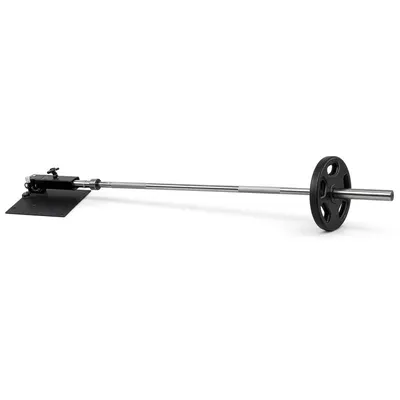
- Set a bar into the landmine pivot on the floor and load the free end with the weight you want.
- Stand beside the loaded end of the bar, feet planted, one hand gripping the sleeve, the other hand free near your torso or on your thigh.
- Hinge your torso slightly forward while keeping your back straight and your core braced, the working arm almost straight down toward the floor.
- Inhale, then pull the bar by driving your elbow toward your hip, close to your body, until you feel your back contract strongly.
- Pause briefly at the top, then lower the bar over 2 to 3 seconds, staying in control and avoiding any twisting of your torso.
- Repeat for your reps, then switch sides and work the other arm.
Common mistakes
Twisting your torso to lift the bar
Instead : Bring your feet a bit closer, brace your abs, and think about keeping your belly button facing straight ahead. Pull with your back and arm, not by rotating your body.
Rounding your lower back
Instead : Bend your knees a bit more, lift your chest slightly, and look at the floor a bit in front of you. If you lose your position, drop the weight.
Pulling only with your arm
Instead : Think about starting the movement by bringing your shoulder blade toward your spine, then bend your elbow. Keep the elbow close to your body to feel your back working more.
Letting the bar drop too fast
Instead : Count 2 to 3 seconds on the way down and keep tension in your hand and back. Use a load that lets you control the full range of motion.
Coach tips
- Use a controlled tempo: about 1 second to pull up, 2 to 3 seconds to lower the bar.
- Breathe with the movement: inhale at the bottom, exhale as you pull your elbow toward your hip.
- Adjust how far you stand from the bar until you find a stance where your back stays straight and stable.
- Start with a lighter weight to really feel each side of your back working before adding more load.
Variations
- Keep the bar closer to your body to focus on a strong squeeze near your spine.
- Work with a slightly deeper forward lean to increase back tension, as long as your back stays straight.
Sets and reps
For strength training, people often do 3 to 4 sets of 8 to 12 reps per side on this exercise, depending on the load and the rest of their back workout.
Equipment
Alternatives for the same muscles
Log your Landmine single-arm row sets with GoSet
GoSet remembers your last time, starts your rest on its own and notes your records. Even with no signal in the basement. Coming soon to iPhone and Android.
Common questions
Which muscles does the landmine single-arm row work most?
The landmine single-arm row works mainly your back muscles, with your biceps helping to pull and your core helping to keep your body stable during the movement.
Where should I stand in relation to the bar for this exercise?
Stand beside the loaded end of the bar, at a distance where you can hold the sleeve with your arm almost straight down, your back straight, and your torso slightly leaned forward without feeling like the bar is pulling you off balance.
How do I know if I’m twisting too much?
If your pulling-side shoulder moves way back or your belly button turns toward the bar as you row, you’re twisting too much. Keep your ribs closer to your hip on the working side, hips and belly button facing forward, and lower the weight if needed.
Should I use a belt or lifting straps for this movement?
Most people do it without a belt or straps. If your grip gives out before your back, straps can help, as long as you still control the movement. If you’re unsure about using a belt, talk with a trainer at your gym or a health professional.