Exercise · Core · One side at a time
Pallof press on the cable machine
The Pallof press is a cable core exercise where you press the handle away from your chest without letting your torso rotate. It builds a strong, stable core and hits the obliques. It’s joint‑friendly and works well for both beginners and more advanced lifters.
Doable at 72 of the 76 gyms GoSet follows
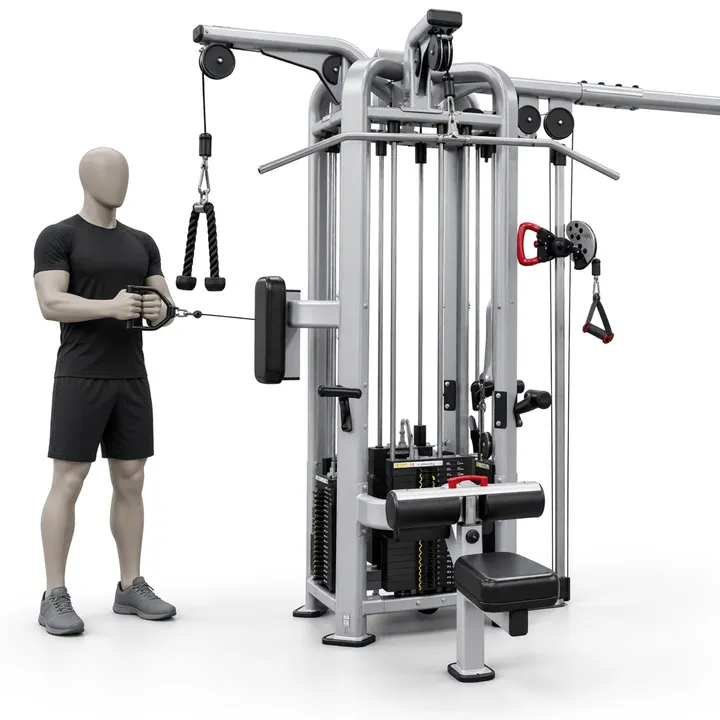
The essentials
- Stand side-on to the pulley, handle at your chest.
- Press your arms out without letting your torso rotate.
Muscles worked
- Primary
- Core
- Secondary
- Obliques
How to do it
- Set the cable around chest height and attach a single handle.
- Stand side-on to the pulley, feet about hip-width apart, knees slightly bent.
- Grab the handle with both hands and bring it to your chest, arms close to your body, torso upright.
- Take a deep breath, brace your core, then press your arms straight out in front of you without letting your torso turn toward the pulley.
- Pause briefly with your arms extended, keep tension on the cable, then bring the handle back to your chest over 2–3 seconds.
- Do all your reps on that side, then turn and repeat facing the opposite way to work the other side of your core.
Common mistakes
Letting the torso rotate toward the pulley
Instead : Bring your feet a bit closer, keep a soft bend in your knees, and brace before you press. Think of your belly button pointing straight ahead the whole time.
Pressing too fast and jerking the weight
Instead : Drop the weight and aim for about 1 second to press out and 2–3 seconds to come back in. Controlling the return is just as important as the press.
Overarching or rounding the back
Instead : Gently tuck your ribs down, keep your hips under you, and pull your shoulders slightly back. If you feel your lower back more than your core, lower the weight.
Standing too close or too far from the pulley
Instead : Step back just enough to feel solid tension with your hands at your chest, without being pulled toward the machine. Adjust one small step at a time.
Coach tips
- Start light. The goal is to keep your torso still and stable, not to max out the cable stack.
- Exhale slowly as you press your arms out, then inhale as you bring the handle back to your chest.
- Keep your hands at chest height the whole time. If your hands drift up or down, you lose some of the core focus.
- People often use 2–4 sets of 8–15 reps per side, depending on their level and how they’re training their core.
Variations
- Do the Pallof press in a split stance (one foot forward) to challenge your balance more.
- Do it kneeling, facing side-on to the pulley, if you want less leg involvement and more focus on the core.
- Add a 2‑second hold with your arms extended each rep to increase time under tension for your core.
Sets and reps
For core strength, the Pallof press is often done for 2–4 sets of 8–15 reps per side, with a load you can control smoothly. Some people also hold the extended position for a few seconds on each rep to emphasize stability.
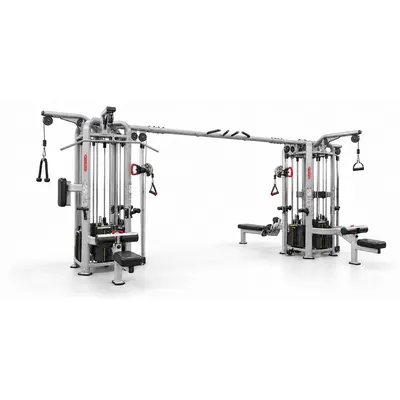
Equipment
Alternatives for the same muscles
Log your Pallof press sets with GoSet
GoSet remembers your last time, starts your rest on its own and notes your records. Even with no signal in the basement. Coming soon to iPhone and Android.
Common questions
What should I feel during a Pallof press?
Mainly your core working to stop your body from rotating, usually around your midsection and along the sides of your abs. You shouldn’t feel sharp pain in your back. If you do, stop and talk with a professional.
Should I rotate my torso at the end of the movement?
No. The whole point of the Pallof press is to resist rotation. Your hips and torso stay facing forward; only your arms move.
Which side should I start with?
Either is fine. You can alternate from workout to workout, or start with the side that feels weaker or less stable while you’re fresh.
What if my gym doesn’t have this cable setup?
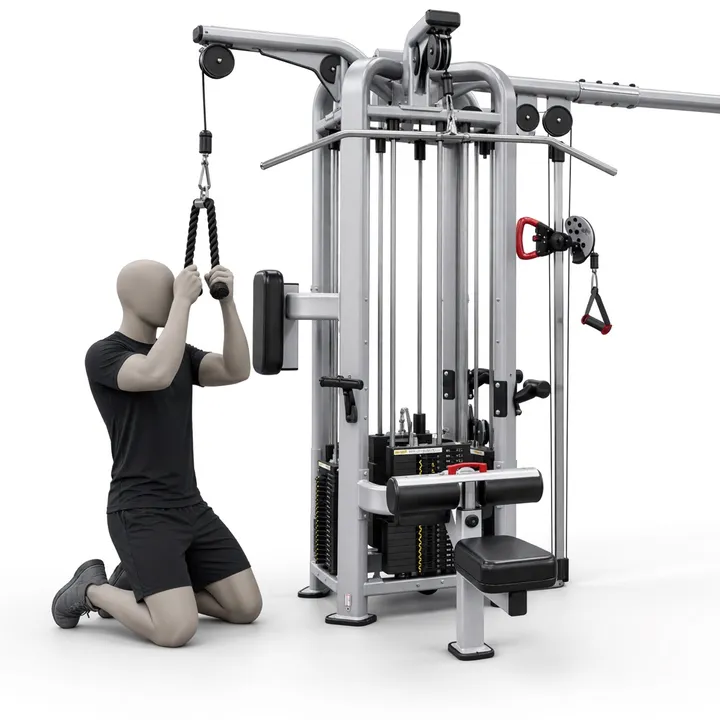
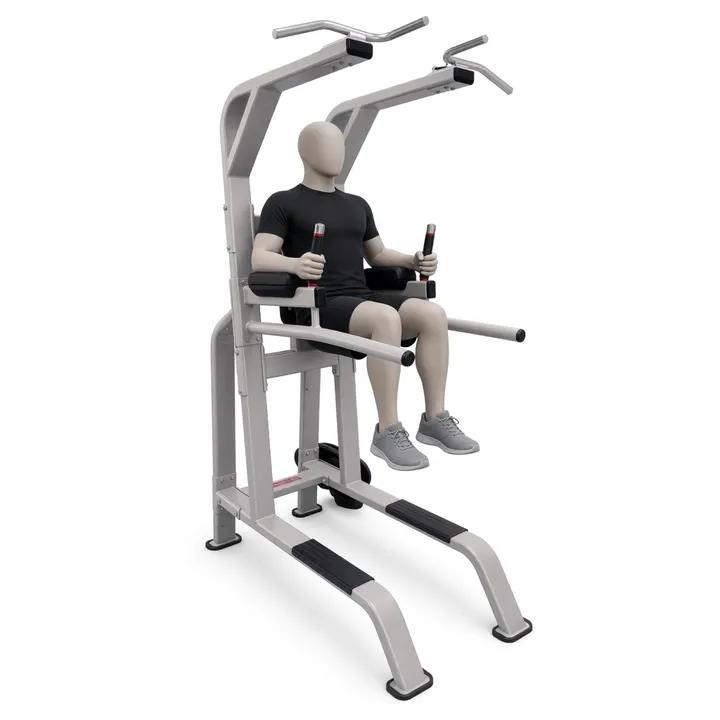
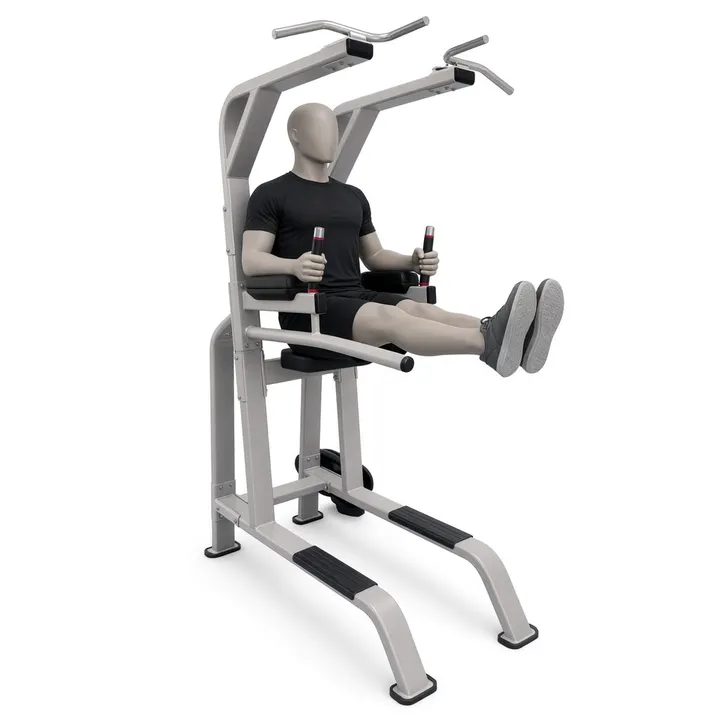
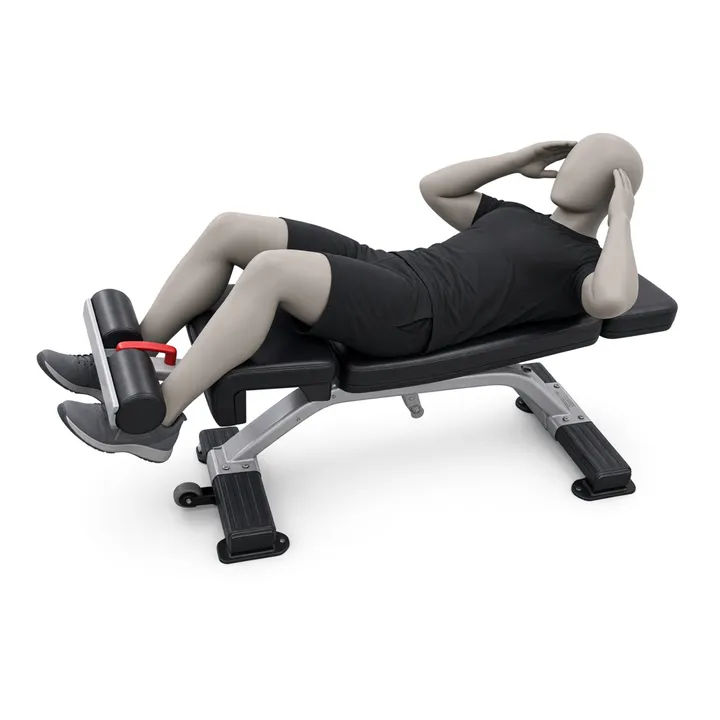
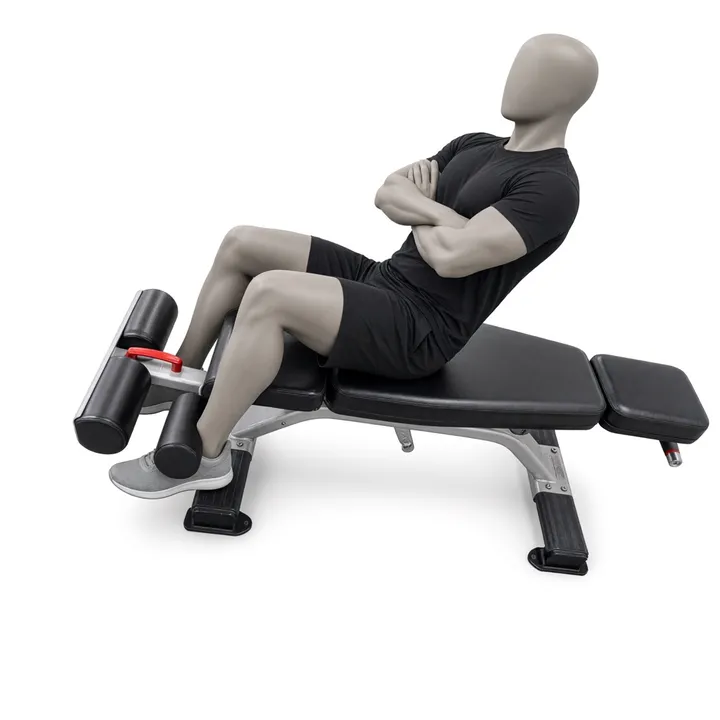
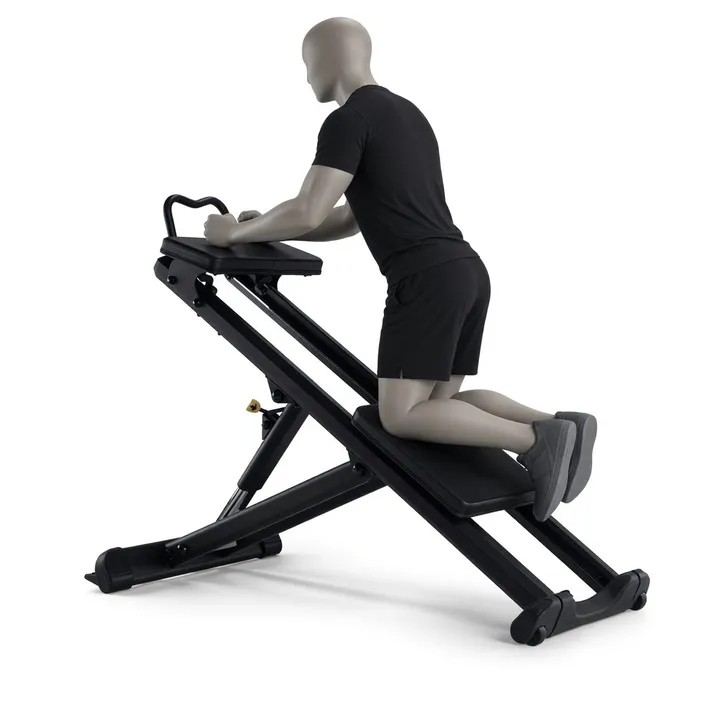
Depending on what you have, you can use other core options like the kneeling cable crunch, captain’s chair knee or leg raises, or crunches/sit-ups on a decline bench.